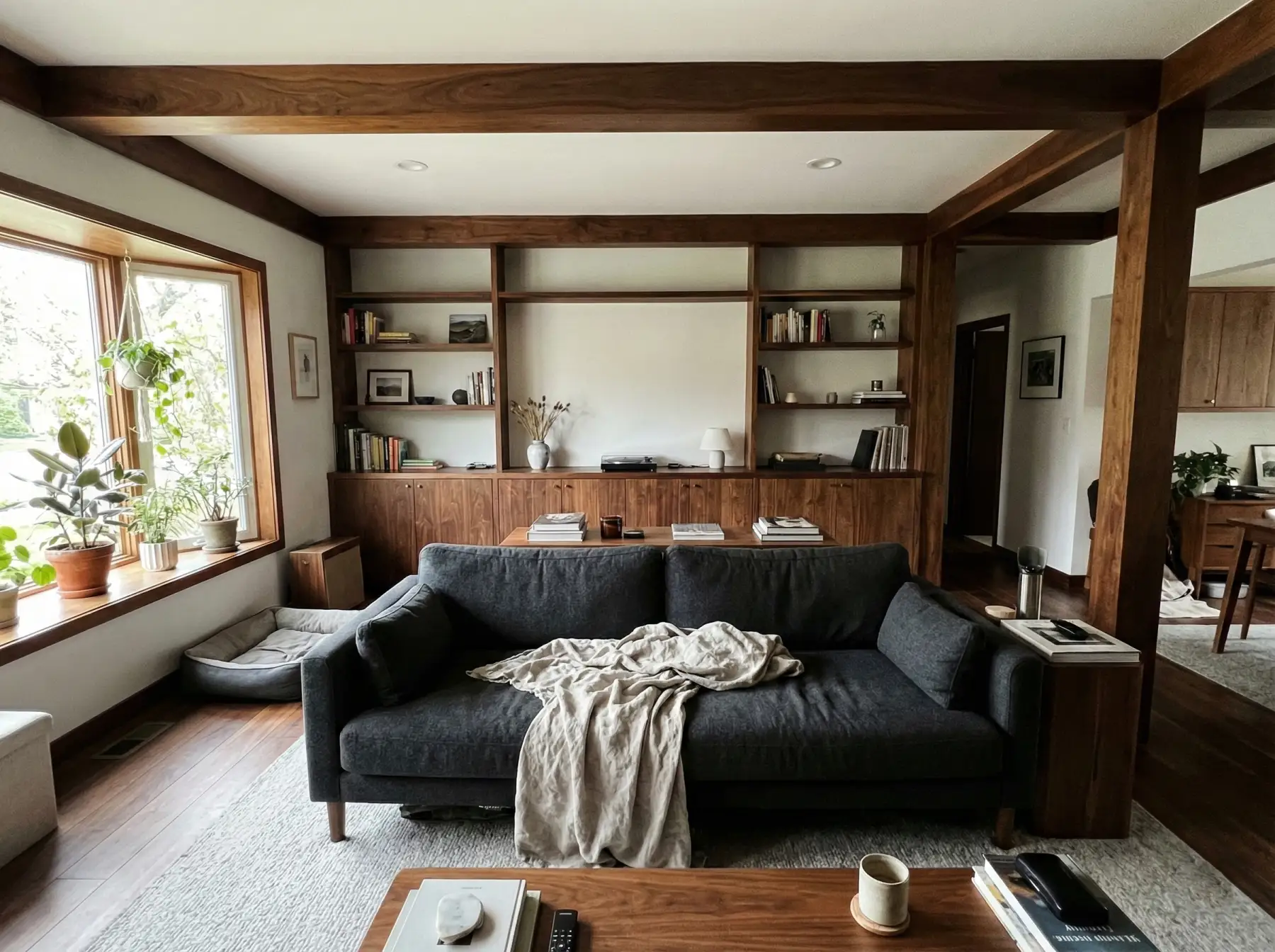
You don’t need more ideas. You need better decisions. For years, the default advice for making a living room feel finished was to hang floor-to-ceiling drapes. We spent weekends wrestling with curtain rods, agonizing over fabric weights, and steaming out stubborn wrinkles.
But the mood is shifting. Real homes are moving away from heavy, dust-collecting fabric. Instead, we are leaning into something far more structural, effortlessly chic, and surprisingly affordable.
We are returning to classic venetian blinds. And the version worth copying happens to be sitting right on the shelves at IKEA.
What Is Happening Right Now
If you look at the most compelling homes right now, you will notice a distinct lack of fuss. The heavily layered window treatments are gone.
People want spaces that feel breathable. They want natural light that they can actually control, rather than just blocking it out entirely.
Venetian blinds offer a crisp, architectural element to a room. They add texture without adding visual bulk. When you tilt the slats, you get this beautiful, diffused light that instantly elevates the atmosphere of an everyday living room.
It ties perfectly into the Lived-In Interiors trend we have been tracking. It is about creating warmth without the clutter.
My Filter: Copy vs. Skip
Not all blinds are created equal. If you are going to make this swap, you need to know exactly what works.
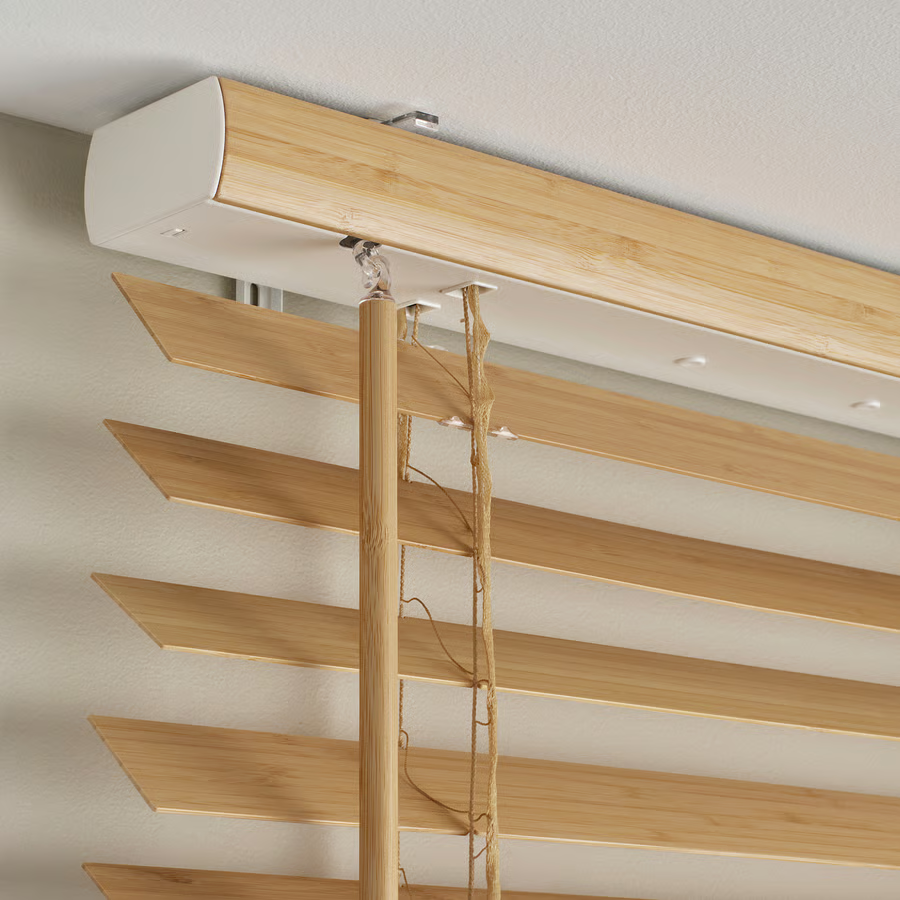
- Copy: Wide slats (around 2 inches). They look custom, classic, and intentional.
- Copy: Real wood or high-quality wood-effect finishes in warm oak or rich walnut tones.
- Copy: Crisp, matte white aluminum if you are working with a smaller, modern space and need maximum light reflection.
- Skip: The flimsy, ultra-narrow plastic mini-blinds from the 1990s. They will warp, snap, and look like a temporary rental fix.
- Skip: Faux-wood blinds with a shiny, artificial plastic sheen.
Here is my shortcut: stick to natural textures and matte finishes. That is the secret to making an affordable blind look expensive.
The Easiest Way to Try It
You do not need a custom blind budget to pull this off.
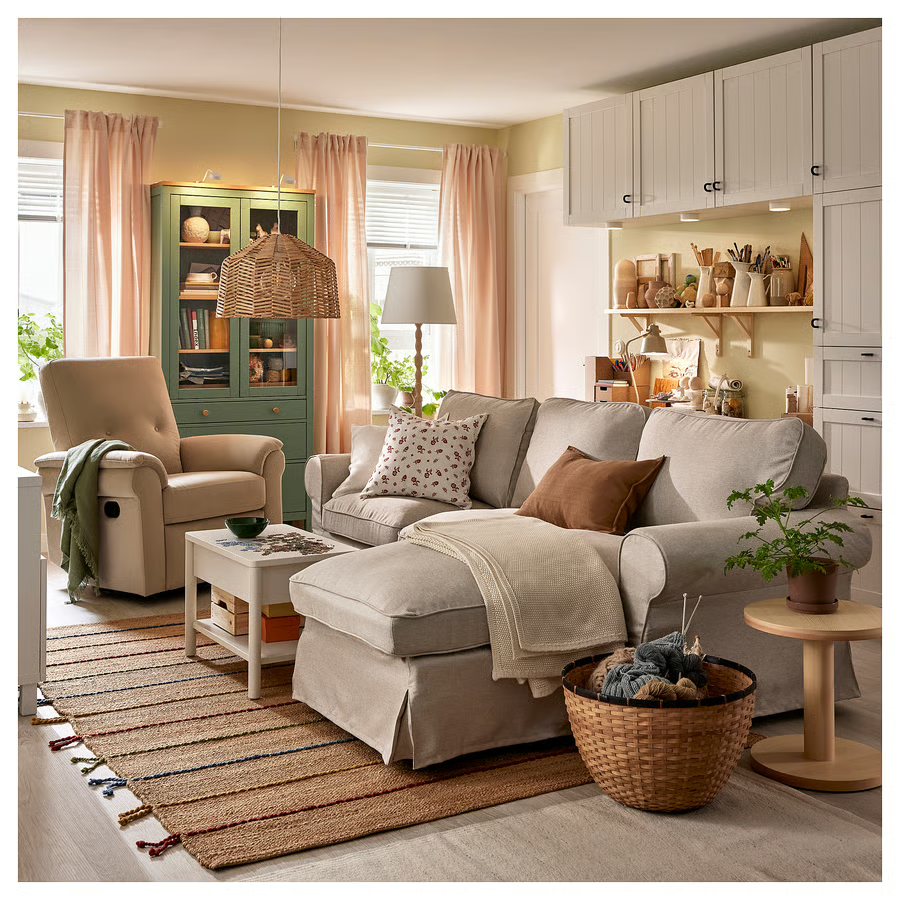
IKEA’s current lineup of venetian blinds—specifically their wood and aluminum options—hits the sweet spot between price and design. They have mastered that clean, Scandinavian simplicity that works as a brilliant neutral base for any room.
If your living room feels dark or heavy, swapping out thick fabric curtains for IKEA’s white aluminum blinds is an instant facelift. The light bounces off the slats, making the whole room feel larger.
If your room feels cold or sterile, their wood-tone blinds add immediate architectural warmth. It is the same principle we use when building a Moody Decor Base: introduce organic, grounding textures.
The Mistake Most People Make
The mistake most people make is getting the mounting position wrong.
You generally have two options: inside mount or outside mount.
An inside mount (where the blind sits inside the window frame) looks incredibly clean and custom. However, it only works if your window frame has enough depth. If you try to force an inside mount on a shallow window, the blind will stick out awkwardly.
If your window trim is shallow or unattractive, do an outside mount. Mount the blind above the window frame, extending slightly past the edges. This actually tricks the eye into thinking the window is larger than it is.
Always measure twice. A blind that is half an inch too narrow will let in frustrating slivers of light at the edges.
Styling Shortcuts for Real Homes
Once your blinds are up, you might feel like the window looks a bit bare. That is a normal reaction when you are used to voluminous fabric.
Give your eyes a few days to adjust to the new, clean lines.
If the space still feels a bit too rigid, soften the edges of the room with textiles elsewhere. Add a heavily textured throw blanket to the sofa. Bring in a plush, patterned rug.
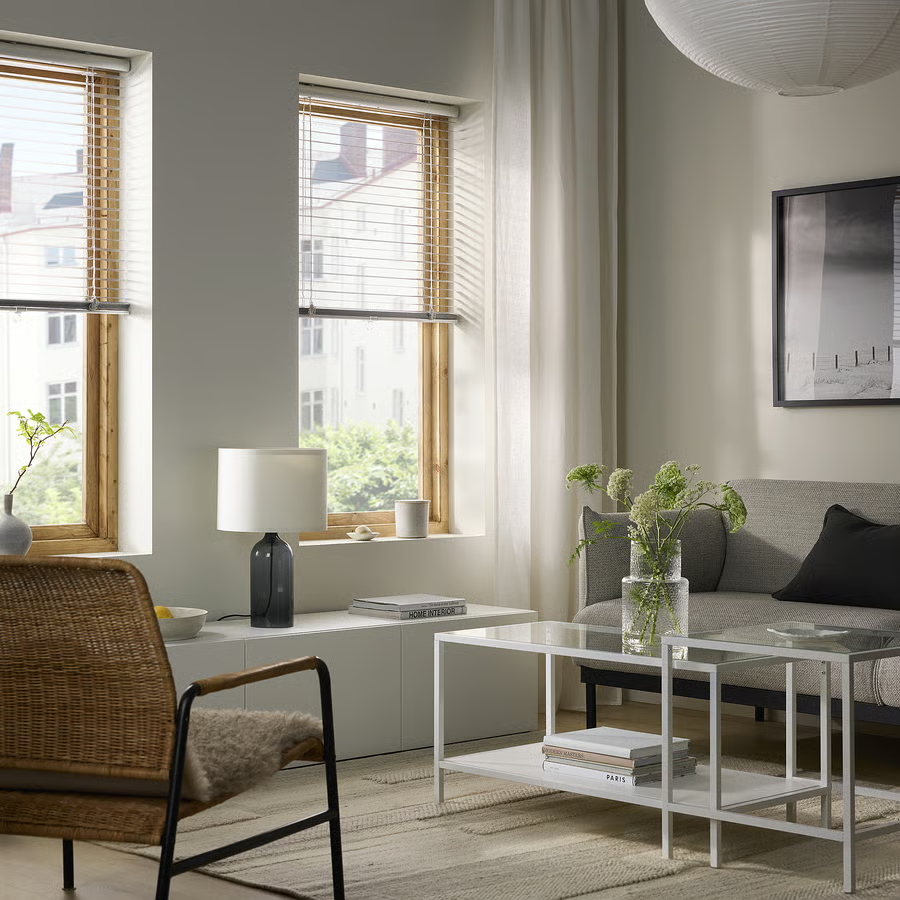
You can also layer the blinds. If you love the light control of the venetian blinds but miss the softness of fabric, frame the window with simple, stationary linen panels on either side. You get the function of the blinds and the warmth of the drapes.
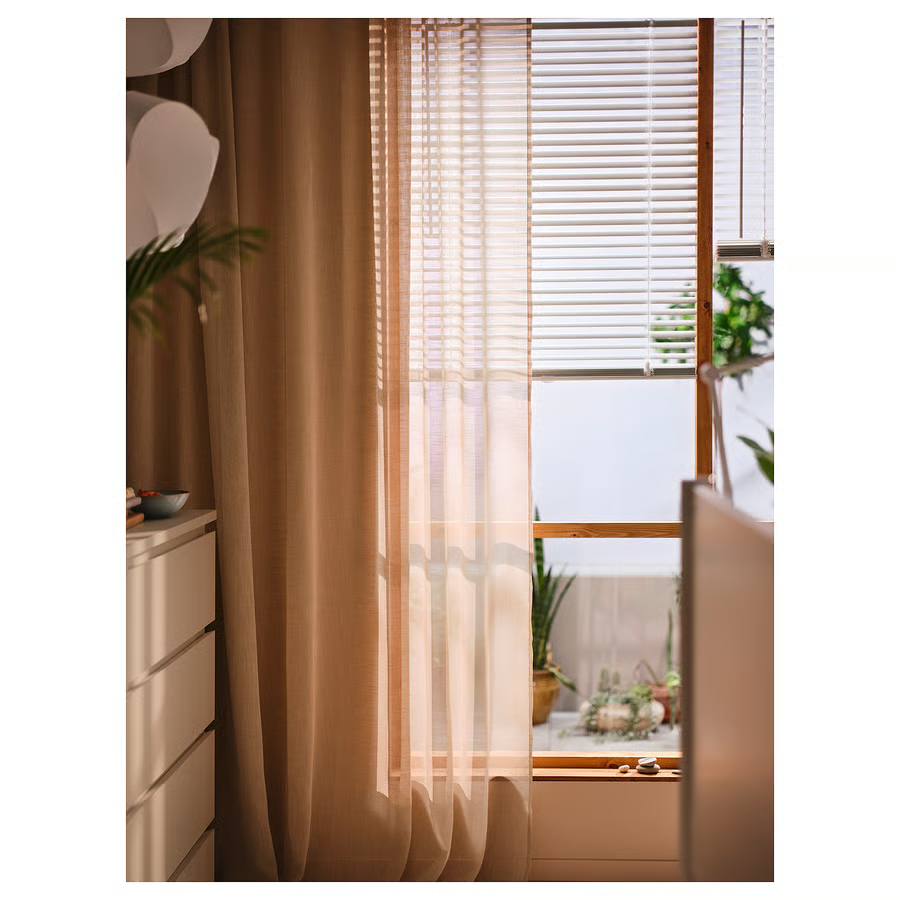
Making the switch from heavy curtains to crisp blinds is one of the most transformative updates you can make in an afternoon. It is an affordable, practical decision that instantly updates the architecture of your home.
Skip the custom showroom. Grab the tape measure, head to IKEA, and let the light back in.