There is a specific kind of frustration that comes with staring at a large, blank wall. You know the feeling. You’ve got the furniture right, the rug is down, but that big expanse of white drywall is just… staring back at you. It feels cold. Unfinished.
The standard advice is usually “buy a big piece of art,” but let’s be honest: large-scale framed art is expensive. And sometimes, even a beautiful print feels a bit flat.
This is where textile art changes the game. Whether it’s a woven tapestry, a simple macramé piece, or a fabric you’ve hand-stamped yourself, textiles add the one thing most cute bedrooms are missing: texture.
If you are looking for aesthetic room inspo that feels warm and personal, you are in the right place. Today, we aren’t just looking at pretty pictures; we are breaking down exactly how to bring texture to your walls, from styling store-bought tapestries to trying your hand at accessible printmaking.
Why Your Room Needs Textile Art
Before we dive into the how-to, let’s talk about the why. In the design world, we often talk about “layering.” Most people stop layering once they put throw pillows on the couch. But vertical layering is just as important.
Fabric on walls does two things immediately:
- It softens the acoustics. If your room sounds echoey or empty, a tapestry acts as a literal sound damper. It makes the space feel quieter and more intimate.
- It breaks the rigid lines. Most of our furniture is square or rectangular. A wall hanging—especially one with fringe, organic weaving, or soft drape—introduces movement that rigid frames just can’t replicate.
The Easiest Upgrade: Styling Fabric & Tapestries
You don’t always have to create something from scratch to get the look. Sometimes, the magic is in how you hang what you already have. If you’ve found a beautiful piece of fabric or a scarf with a pattern you love, don’t hide it in a drawer.
The “Structured Drape” Method
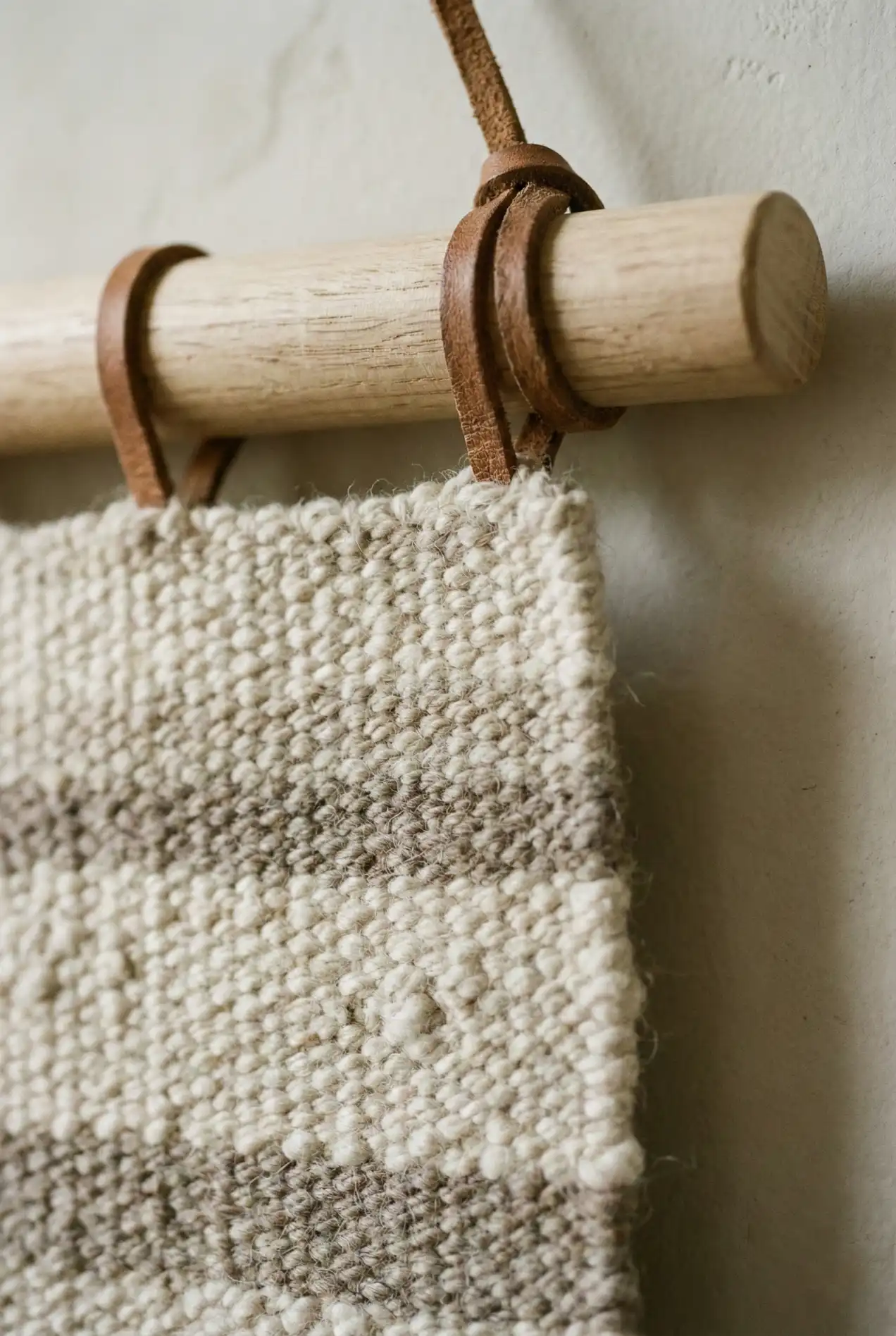
A common mistake is tacking a tapestry up by its corners. It tends to look a bit like a college dorm room (which is fine, but maybe not the elevated vibe we are going for). Instead, try using a wooden dowel or a copper pipe.
You can fold the top edge of your fabric over a wooden rod and use a simple running stitch or hem tape to create a pocket. This allows the fabric to hang straight and heavy, giving it intention and weight.
DIY Macramé: Easier Than It Looks
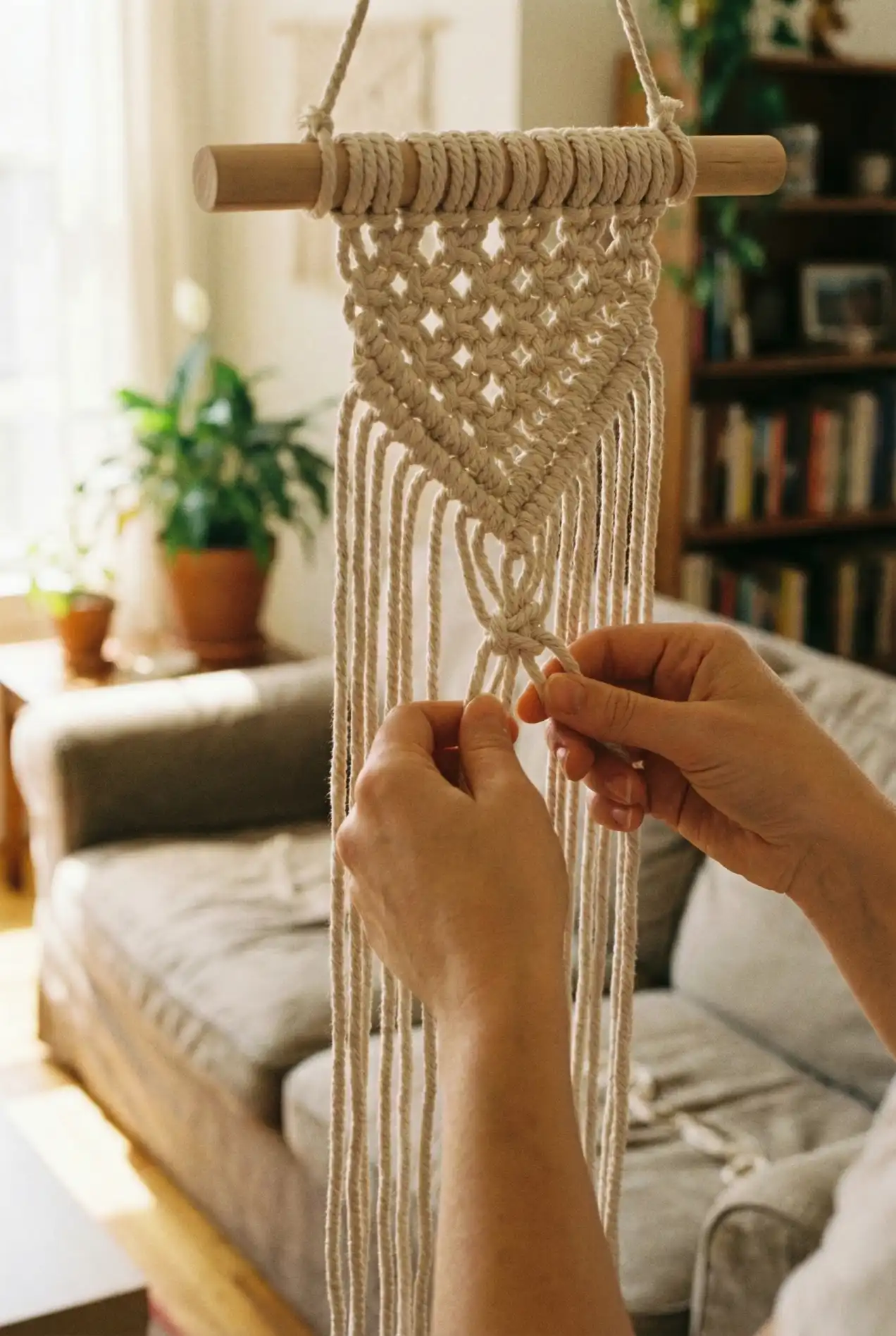
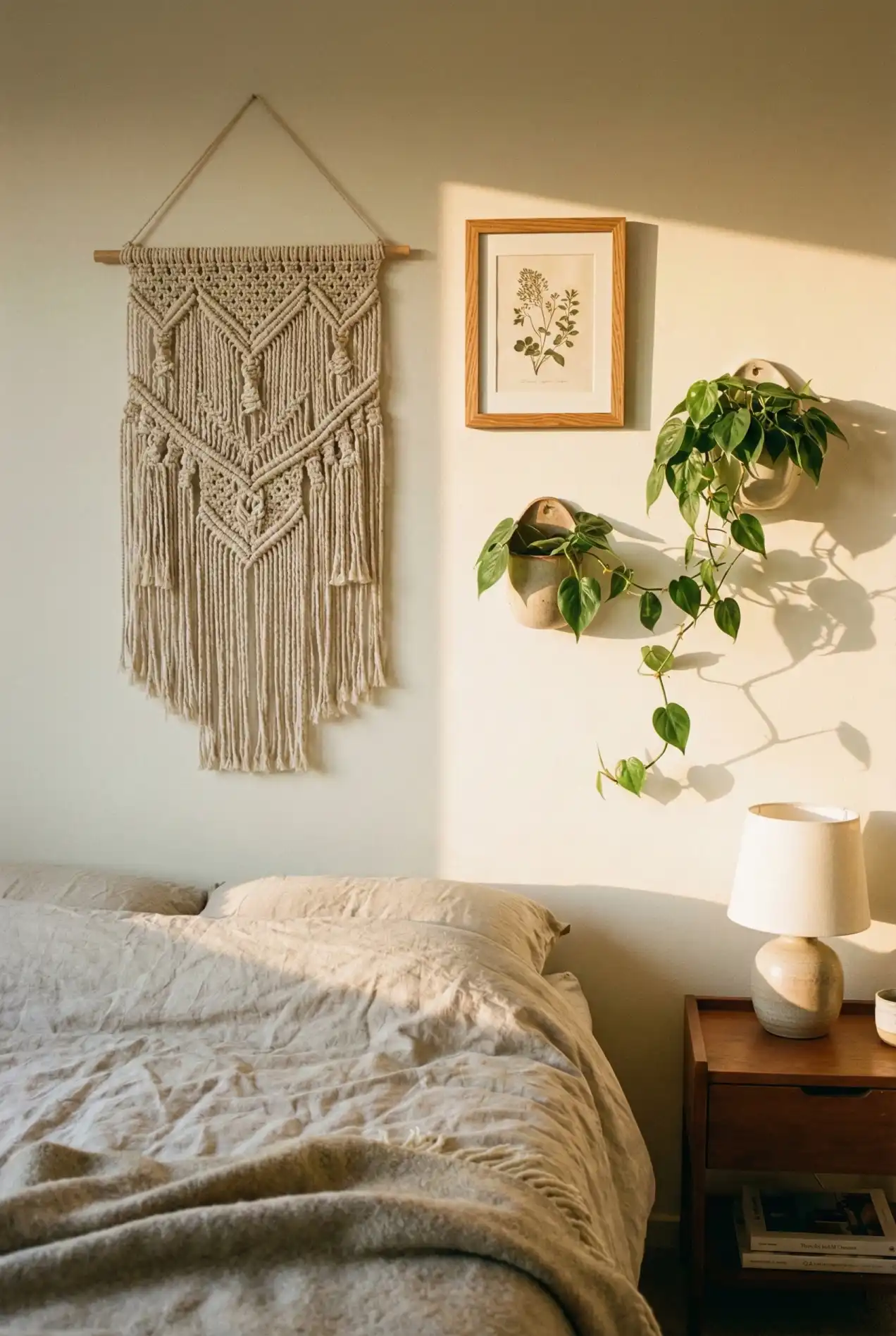
I hear you—macramé looks intimidating. Those intricate knots and complex weaving patterns can feel like you need a degree in fiber arts. But here is the secret: you can make a stunning wall hanging knowing only one or two basic knots.
The Modern Minimalist Macramé
Forget the overly complicated 70s owls. The current trend in macramé design is all about repetition and texture. You don’t need to create a complex image; you just need to create rhythm.
What you need:

Natural Macrame Cord 3mm x 220 Yards
Create beautiful, durable macramé projects with this soft, natural cotton cord. At 3 mm thickness and 220 yards (≈201 m) per skein, this undyed macramé cord is ideal for wall hangings, plant hangers, jewelry, and all kinds of fiber-art crafts.
Why Choose This Cord?
- Consistent thickness and smooth twist make it easy to achieve even knots and professional-looking results.
- The natural color provides a timeless, organic aesthetic or a perfect blank canvas for custom dyeing.
- Generous yardage gives you freedom to experiment and complete larger pieces without running short.
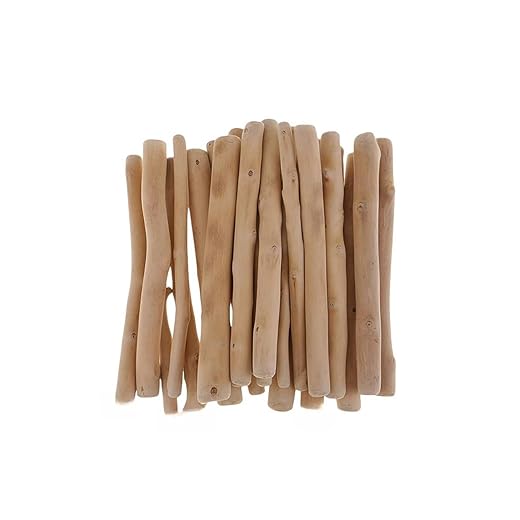
Driftwood for Crafts Irregular Wooden Sticks
These driftwood sticks are hand-selected for their organic shapes, smooth-worn surfaces, and authentic seaside patina. No two pieces are alike, expect a mix of curves, knots, and textures that add instant visual interest and tactile depth to any project.
Start with the “Lark’s Head Knot” to attach your cords to the branch. Then, honestly? You can just braid them. Or use a simple square knot repeated over and over. The beauty of a wall hanging often lies in the fringe at the bottom. Leave it long, brush it out, and let the texture do the talking.
DIY Printmaking: Create Your Own Patterned Fabric
This is my absolute favorite way to customize a room. If you want something that looks like high-end boutique decor but costs pennies, you need to try stamp carving and block printing.
You don’t need a press or a studio. You can do this at your kitchen table.
From Lino to Wall Art
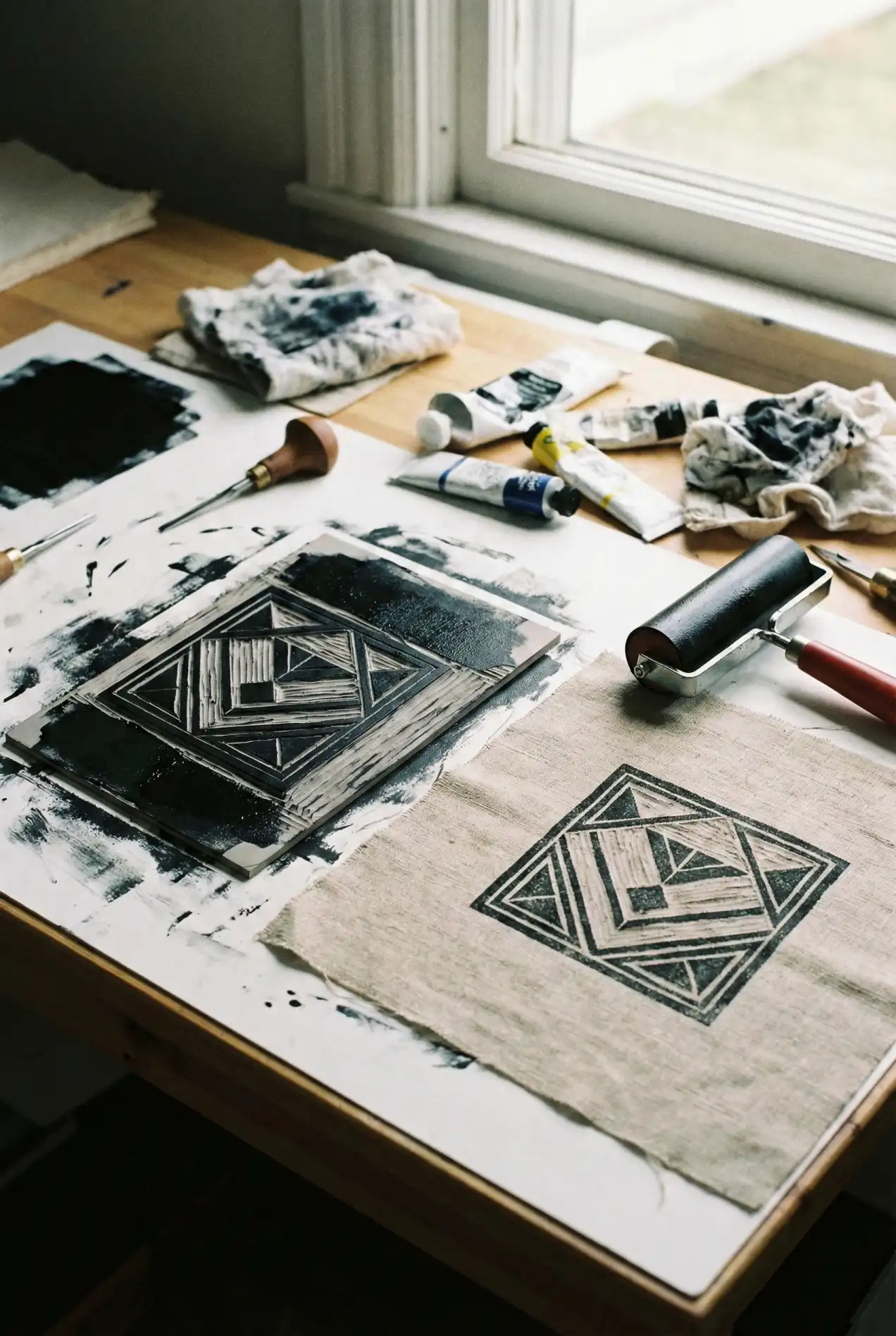
Linocut printmaking sounds technical, but it’s essentially just making your own fancy stamp. You can buy a “soft cut” lino block and a carving tool at any craft store. These soft blocks cut like butter—no band-aids required.
The Process:
- Design your motif. Keep it simple. Geometric shapes, leaves, or abstract arches work best for printmaking ideas. You aren’t trying to carve the Mona Lisa; you are creating a repeat pattern.
- Carve the negative space. Use your gouge tool to carve away the parts you don’t want to print. It’s incredibly satisfying, almost meditative.
- Ink and Stamp. Roll fabric ink onto your block and press it firmly onto a piece of canvas or linen.
The result is a custom fabric that you can then hem and hang. The imperfections-where the ink is lighter in some spots or the stamp is slightly rotated—are exactly what makes it look expensive and handmade.
Curating the “Cute Bedroom” Aesthetic
Once you have your textile art—whether it’s a macramé piece or your hand-printed canvas—the final step is integration. How do you make it fit the room?
If you are aiming for that cute bedroom decor look, placement is key. A single small weaving can look lost on a huge wall. Here are my rules of thumb:
- Above the bed: This is prime real estate. Make sure the piece is at least two-thirds the width of the bed headboard. If your weaving is too narrow, flank it with two sconces or smaller framed prints.
- The Gallery Wall Mix: Don’t be afraid to mix media. A cow skull (faux, of course) or a structured mirror looks incredible next to the softness of macramé. The contrast between hard and soft materials creates visual interest.
- Color Palette: If your room is neutral, this is your chance to add color without painting walls. A dip-dyed macramé or a fabric printed with terracotta ink can warm up a grey room instantly.
Final Thoughts on Handmade Home Decor
Adding decorative tapestries or handmade wall hangings isn’t just about filling space. It’s about adding a layer of humanity to your home. Whether you spent a Sunday afternoon carving a stamp or just five minutes hanging a beautiful piece of fabric on a dowel, you’ve added something tactile and real to your environment.
Your home should feel like you. And nothing tells your story better than art you’ve had a hand in creating.