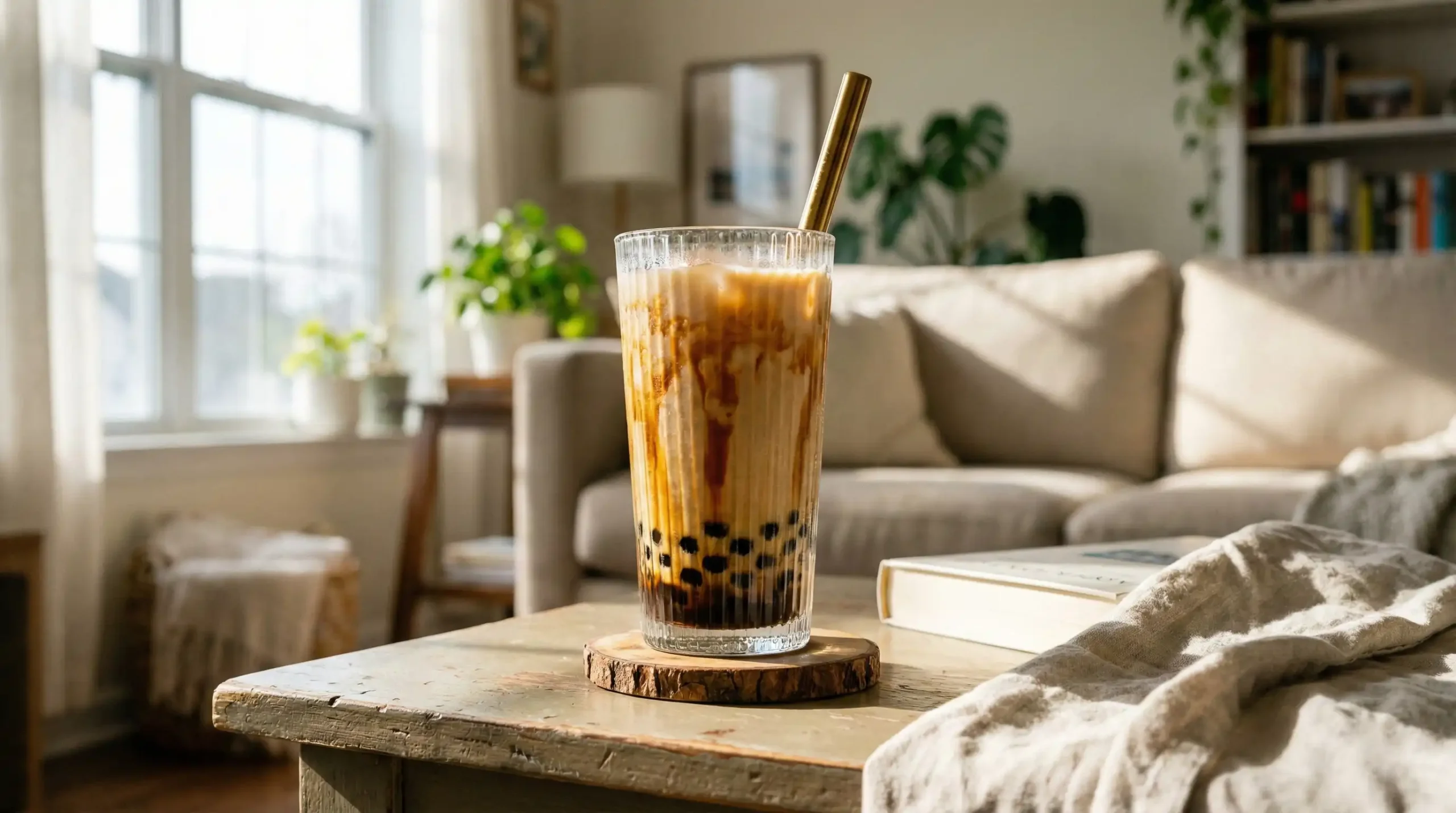
My boba habit hit a breaking point when I realized I was spending nearly $30 a week on tea and tapioca. That is over $1,500 a year, enough to buy a designer armchair or completely refresh a living room.
The markup on bubble tea is massive. The ingredients are incredibly cheap, yet we pay a premium for the convenience and the aesthetic cup. After testing dozens of methods to replicate that specific “chew” of store-bought pearls, I found that you don’t need barista equipment. You just need to understand how temperature affects starch.
This method produces a Brown Sugar Milk Tea with the correct texture-chewy on the outside, soft in the center-for pennies.
Ingredients
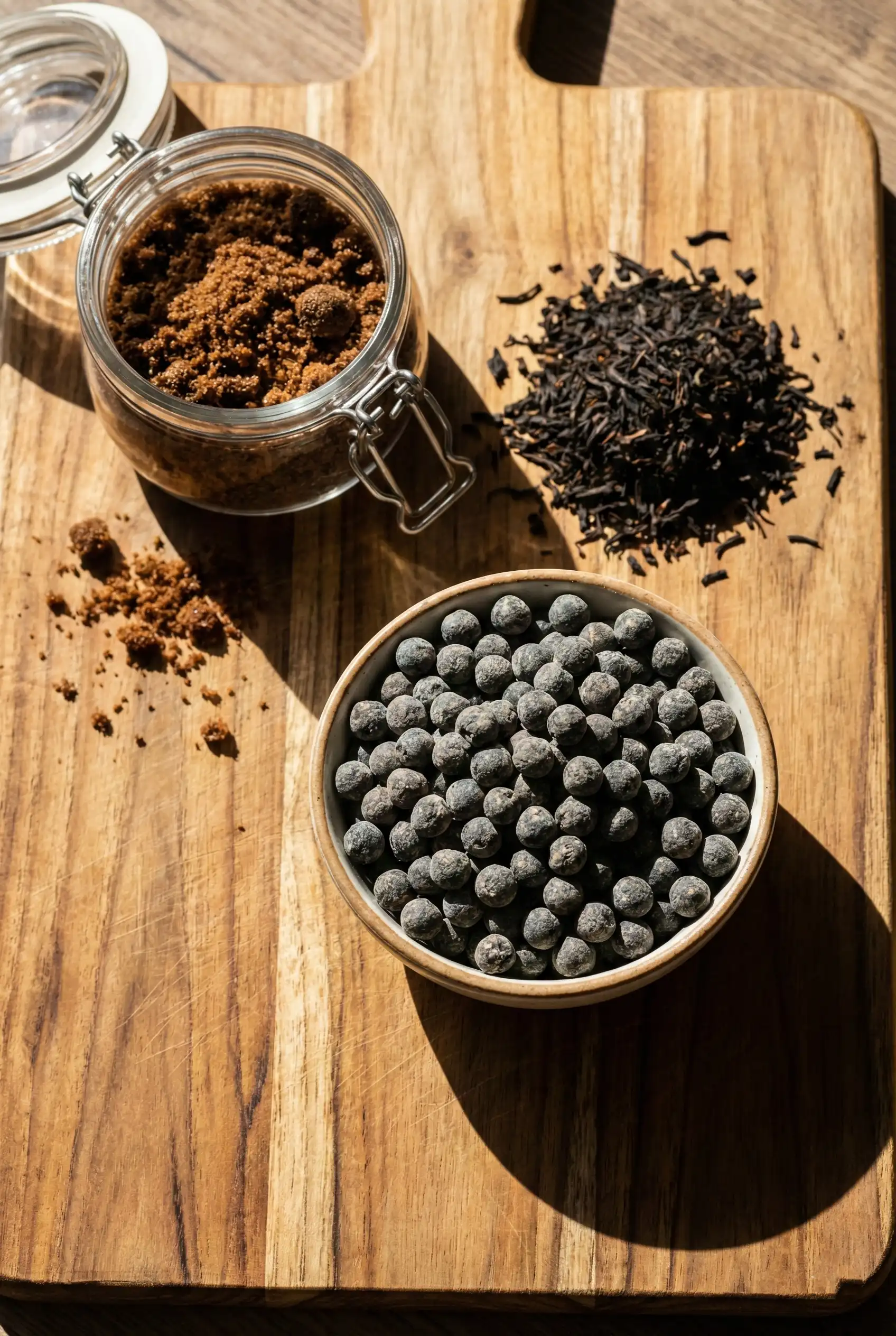
- The Pearls (Boba): Use "Quick Cooking" Black Tapioca Pearls (brands like WuFuYuan are reliable). Raw, dehydrated tapioca takes 60+ minutes to cook. The quick-cooking version takes 5 minutes and yields a 95% identical result.
- The Sugar: Dark Brown Sugar or Muscovado. Do not use white sugar or honey. You need the molasses content to create the thick, sticky syrup that clings to the glass walls.
- The Tea Base: Loose leaf Assam or a strong Breakfast Blend. Avoid delicate floral teas unless you are making a specific fruit variation.
- The Liquid: Whole milk or Oatly Barista Edition. Skim milk is too thin and will make the drink feel watery.
Instructions
1. Create the Tea Concentrate
Since we will dilute the drink with milk and ice, normal brewing ratios won't work.
Ratio: 1 tablespoon of tea leaves (or 2 bags) to 3 oz (approx 100ml) of boiling water.
Steep for 5-6 minutes. Squeeze the bags or press the leaves to extract all the tannins. Set aside to cool.
2. Boil the Pearls
Bring a small pot of water to a rolling boil. Add the pearls.
Critical Step: Wait for them to float to the top. Once floating, cover the pot, turn the heat to medium, and cook for 3 minutes. Drain the water, but do not rinse the pearls cold. They need to stay warm to absorb the sugar.
3. Braise in Syrup (The "Tiger" Effect)
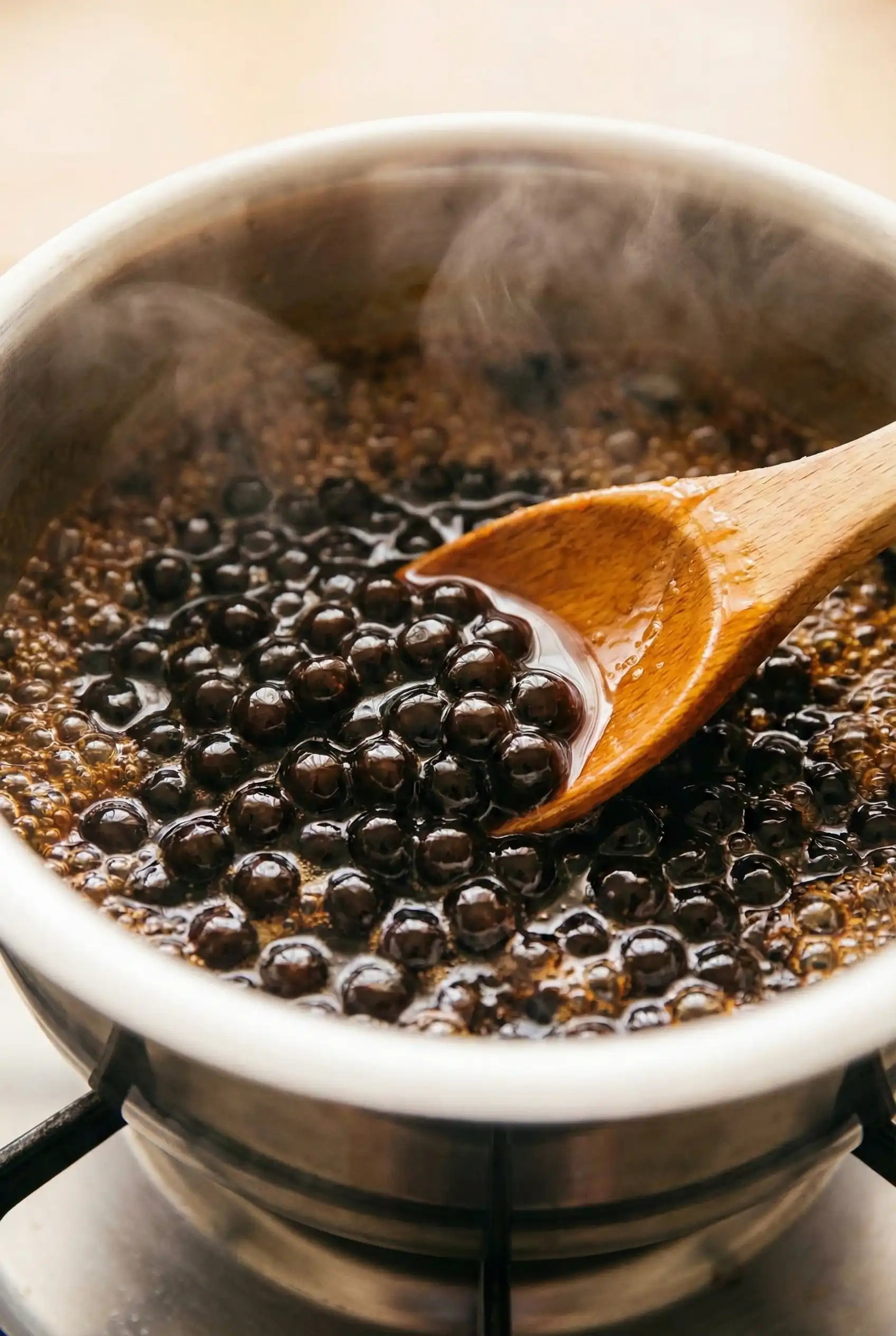
In the same empty pot, combine roughly 50g of brown sugar and a splash of water (just enough to wet the sugar). Heat until it bubbles into a syrup.
Toss the cooked pearls back in. Stir constantly on low heat for 2 minutes. The syrup will thicken and glaze the pearls. This sticky glaze is what creates the famous "tiger stripes" in the glass.
Assembly Technique
The visual appeal of boba comes from physics—density and temperature.
- Base: Spoon the warm pearls and a generous amount of syrup into the bottom of the glass.
- Coat: Tilt the glass and rotate it so the syrup coats the walls. Because the syrup is hot and thick, it will stick.
- Ice: Add ice immediately. This "shocks" the syrup on the walls, freezing the design in place.
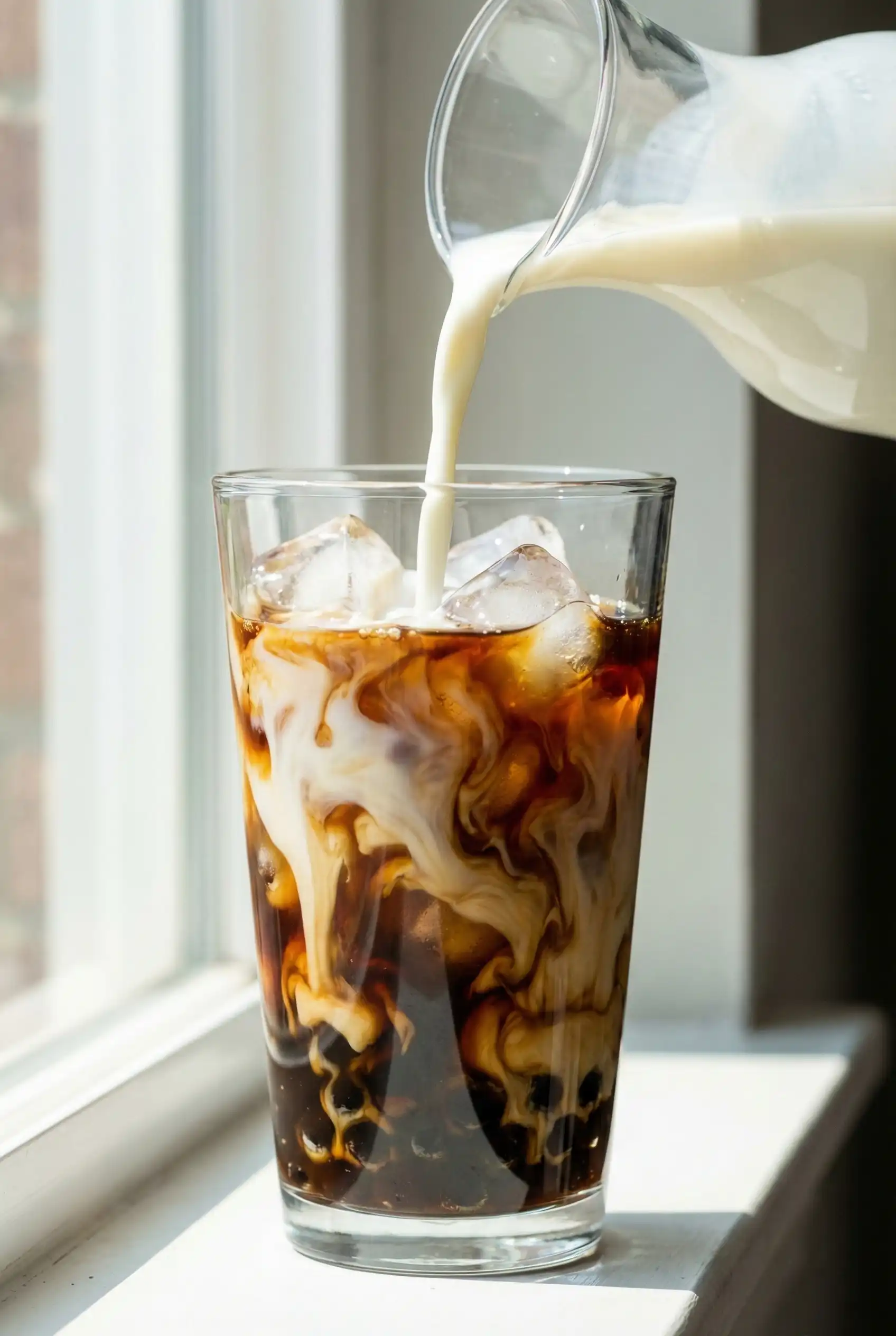
- Liquid: Pour the cold milk over the ice.
- Top: Pour the tea concentrate last for a layered gradient effect.
Notes
Troubleshooting Texture
Problem: The pearls got hard immediately.
Cause: The drink was too cold, or the pearls were undercooked. Tapioca starch retrogrades (hardens) at low temperatures. Fix: Consume the pearls within 15 minutes of adding ice. If they harden, you can microwave the drink for 10 seconds to soften them again.Problem: No "stripes" on the glass.
Cause: The syrup was too watery. Fix: Simmer the sugar and water longer before adding the pearls. It needs to reach a honey-like consistency.Why Homemade Usually Fails (And How to Make it Right)
Most home attempts fail for two reasons: the pearls are hard, or the tea tastes watery. In a coffee shop, they use high-pressure espresso machines for tea and keep pearls in heated warmers.
To get that same result at home without the machines, we have to cheat. We use a concentrated steep method for the tea and a “braising” technique for the pearls. This ensures the flavor punches through the milk and the texture stays soft even when ice is added.
The Financial Reality
Making this switch isn’t just about a drink; it’s about reallocation of funds.
Cafe Cost: $7.00
Home Cost: $0.60
If you drink two cups a week, switching to homemade saves you $665 a year. That is a substantial amount of money recovered for ten minutes of effort in the kitchen.