Every spring, people buy the same kinds of plants for their patio. Something cheerful. Something “easy.” Something that looks great in the nursery and tired three weeks later.
That is why I keep coming back to creeping thyme.
Not because it is dramatic. Not because it is trendy in some forced, internet-made way. But because this is the kind of plant that quietly fixes the exact spots that make an outdoor space feel unfinished.
The empty gap between stepping stones. The harsh edge of a gravel patio. The sunny patch near the chair that always looks bare. The container that needs softness, not more height.
Creeping thyme is the plant I would use if I wanted a patio to feel better fast, without accidentally giving myself another spring maintenance project.
Why this plant hits differently in spring
Some plants are all promise. Creeping thyme is all payoff.
It stays low, spreads gently, smells fresh when you brush past it, and makes hard surfaces feel softer without creating visual clutter. It is one of those rare outdoor plants that can make a space look more styled and more relaxed at the same time.
And right now is exactly when it makes sense.
Early spring is when patios, porches, and balconies start waking up, but most of them still look a little flat. Furniture is back out. The light is better. You want to sit outside again. But the space still feels winter-empty.
This is where creeping thyme earns its place. It fills that awkward in-between stage better than most spring flowers because it does not read as temporary. It reads as intentional.
This is not your “look at me” plant. That is the whole point.
If you want something tall, tropical, or loud, this is not it.
If you want something that makes everything around it look more thought-through, this is exactly it.
That is the difference.
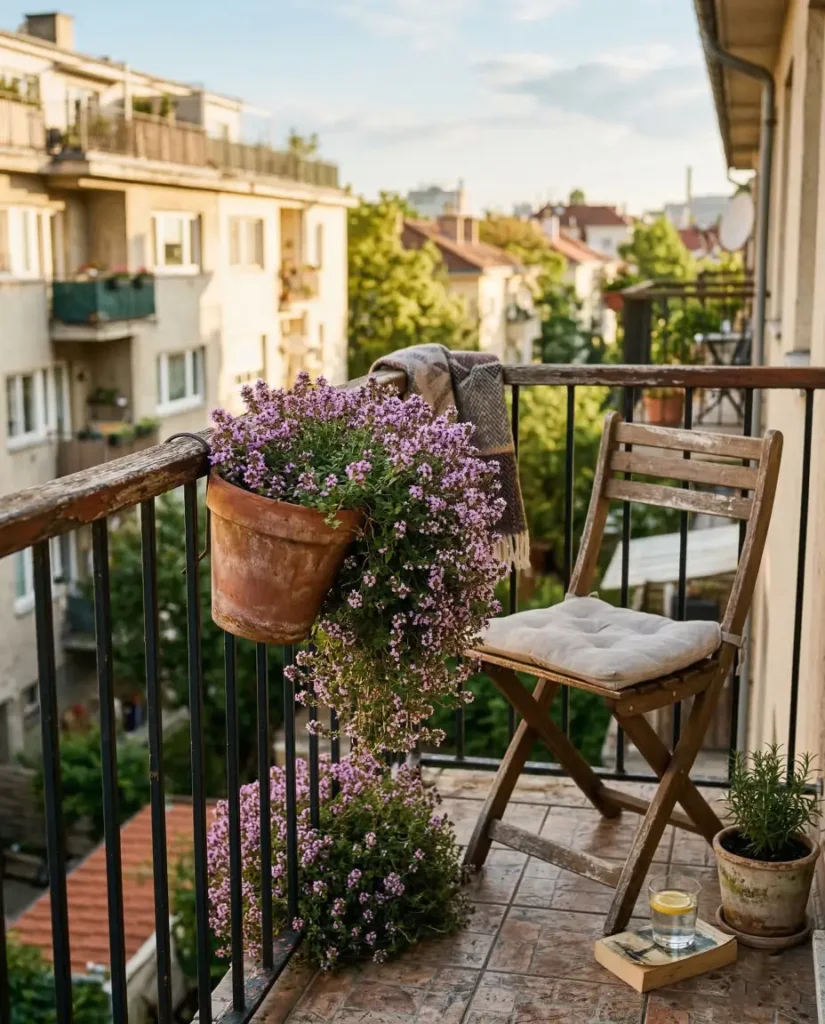
Creeping thyme is what I would call a visual fixer. It helps a patio feel layered instead of patchy. It makes stone look older in a good way. It makes terracotta feel warmer. It makes gravel feel less harsh. It can even make a small balcony pot feel more finished just by spilling softly over the edge.
In other words, it does a lot of design work without shouting about it.
Where I would actually use it
Not in some fantasy garden that needs a full renovation. In real-life spaces.
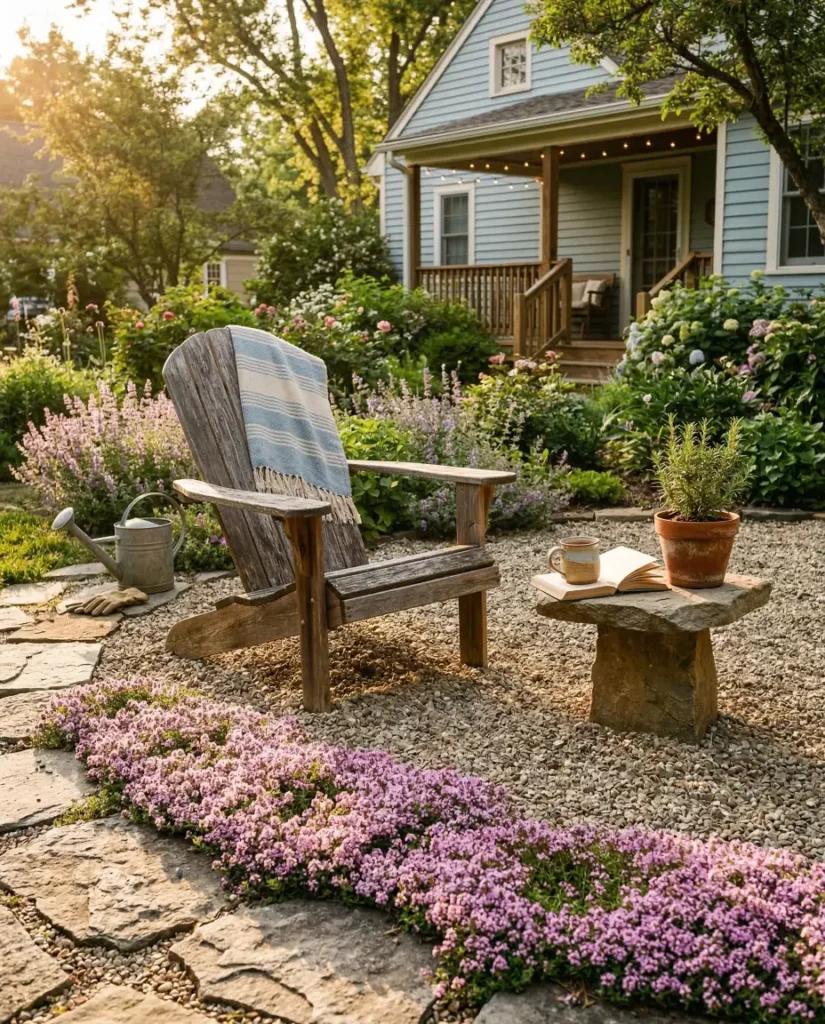
1. Between stepping stones
This is the prettiest use and probably the one that gets saved the most for a reason. Creeping thyme between pavers instantly makes a path feel more established, more charming, and less builder-basic.
2. Along the front edge of a patio bed
If the border of your patio looks abrupt or unfinished, this plant softens that line without turning it messy.
3. In a sunny pot that needs texture
Containers often fail because every plant is trying to be the star. Creeping thyme works better as the calmer layer. It grounds the arrangement.
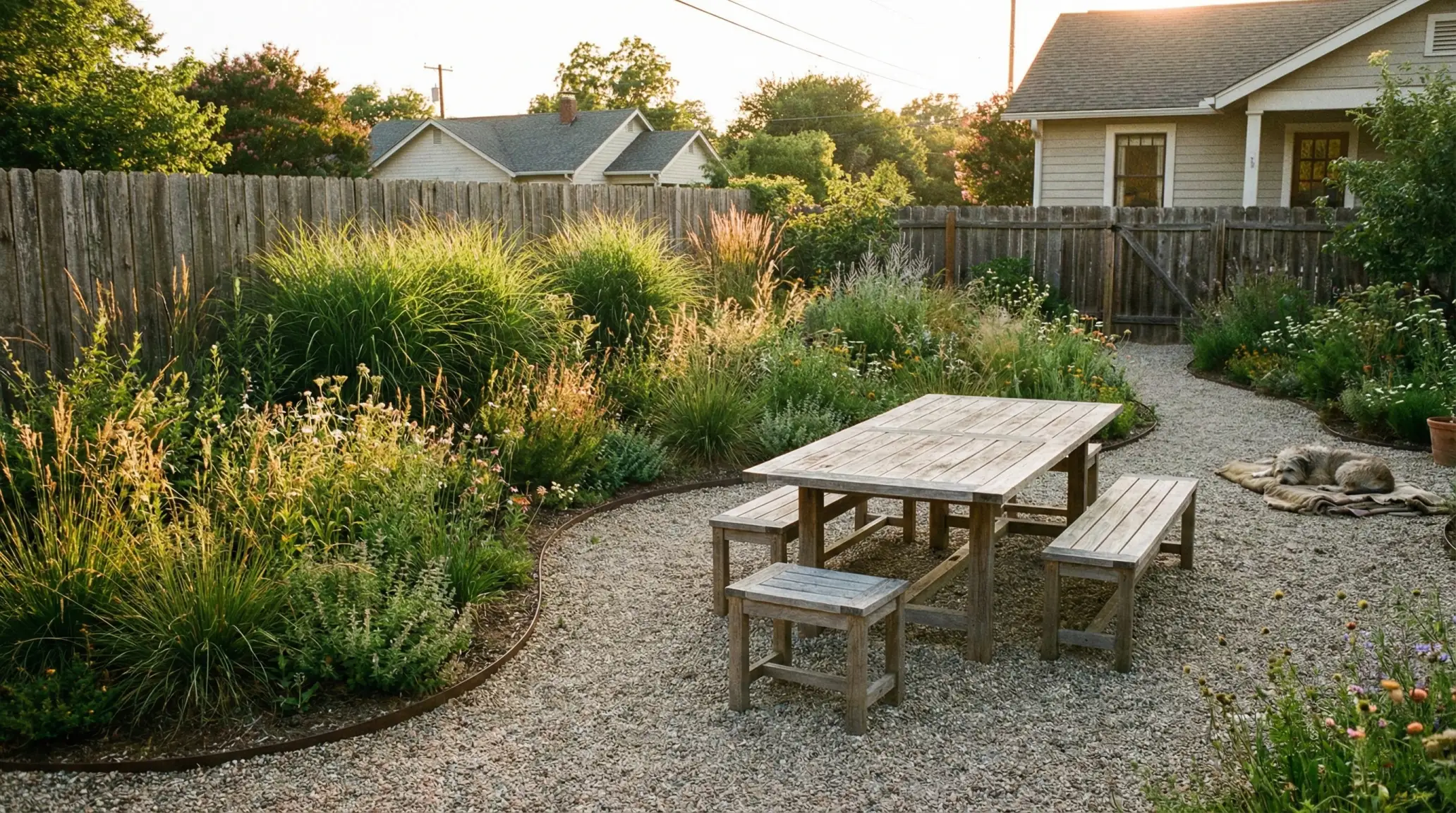
4. Around gravel or dry stone
This is where it really shines. The contrast between rugged materials and tiny flowers is what makes the whole thing feel expensive without actually being expensive.
If you are trying to make an outdoor space feel pulled together on a real budget, this works especially well alongside ideas like gravel zoning, larger containers, and simpler layout choices. That is also why it pairs naturally with these backyard landscaping ideas on a budget instead of needing a full garden makeover to make sense.
What people get wrong about it
The biggest mistake is treating it like a generic spring plant.
It is not one of those “put it anywhere and hope” plants. Creeping thyme likes sun. It likes drainage. It likes being left alone more than being fussed over. Wet soil is where the dream dies.
So if your yard stays soggy, or the only available spot is deep shade, this is not the smart pick.
But if you have a dry, sunny area that feels bare every year around this time, it is one of the easiest wins you can get.
Let’s be honest about the mosquito thing
You have probably seen versions of this story framed around mosquitoes.
That is where a lot of garden content starts drifting into fantasy.
Yes, thyme is aromatic. Yes, many people associate fragrant herbs with bug-repelling benefits. But if what you actually want is meaningful mosquito control, planting a few herbs near your chair is not the answer.
I would still plant creeping thyme. I just would not plant it for that reason.
I would plant it because it is low, pretty, useful, drought-tolerant once established, and much better at making a patio look finished than most of the flashier spring buys people regret by early summer.
Why this feels more Discover-worthy than a basic plant guide
Because this is not really a story about thyme.
It is a story about that moment every spring when your outdoor space starts calling you again, but still looks a little tired, a little empty, a little unresolved.
And if one simple plant can make a patio look softer, calmer, and more intentional without turning into a project, that is exactly the kind of idea people save.
Not because it is groundbreaking. Because it is useful immediately.