My son turned 14 last year and I realized his room still looked like it belonged to a 10-year-old. The problem wasn’t the decor. It was that I kept trying to make it “cool” without asking what he actually needed. Turns out, he didn’t want a themed room. He wanted somewhere he could study without distraction, display his stuff without it looking cluttered, and have friends over without feeling embarrassed.
Designing a bedroom for older boys is genuinely tricky. They’re caught between wanting independence and still needing structure. Get it wrong and you either end up with something too childish or something that’s trying too hard to look like a college apartment. The sweet spot is a room that feels mature enough for a teenager but still works like a bedroom should. Somewhere to sleep, study, and actually relax.
Why Older Boys’ Bedrooms Need a Different Approach
There’s a shift that happens around age 13 or 14. The colorful posters and themed bedding that worked fine a year ago suddenly feel wrong. Your son might not be able to say why. But he’s signaling something. He needs a space that reflects who he’s becoming, not who he was. If you’re also working on a teen girl’s bedroom, the transition challenges are similar, though the solutions go in a different direction.
This isn’t just about aesthetics. Older boys need bedrooms that support different activities. More homework. More time alone. Gaming, hobbies, creative projects that need dedicated space. The room has to multitask in ways a child’s room never had to.
The mistake I see everywhere? Parents going too far in one direction. Some hold onto the kid-room aesthetic too long, assuming bright colors and playful themes are still fine. Others swing hard toward what looks like a dorm room, forgetting that a 14-year-old still needs some structure around him. Neither works. The goal is that middle ground: mature but not pretentious, functional but not sterile.
Choosing Colors That Grow With Them
Color is the biggest visual decision you’ll make. Get it right and everything else falls into place. Get it wrong and you’ll be fighting the room at every step.
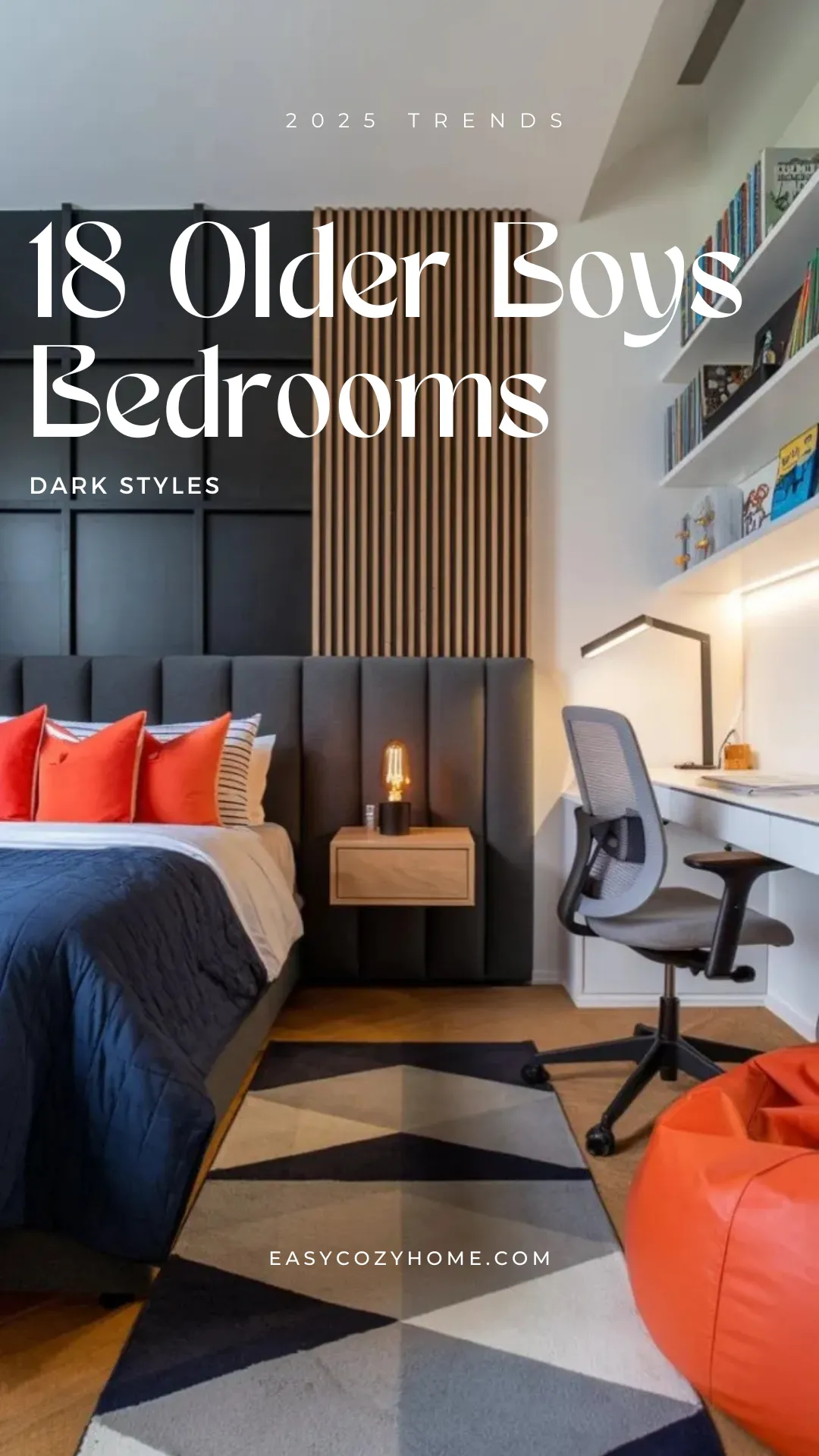
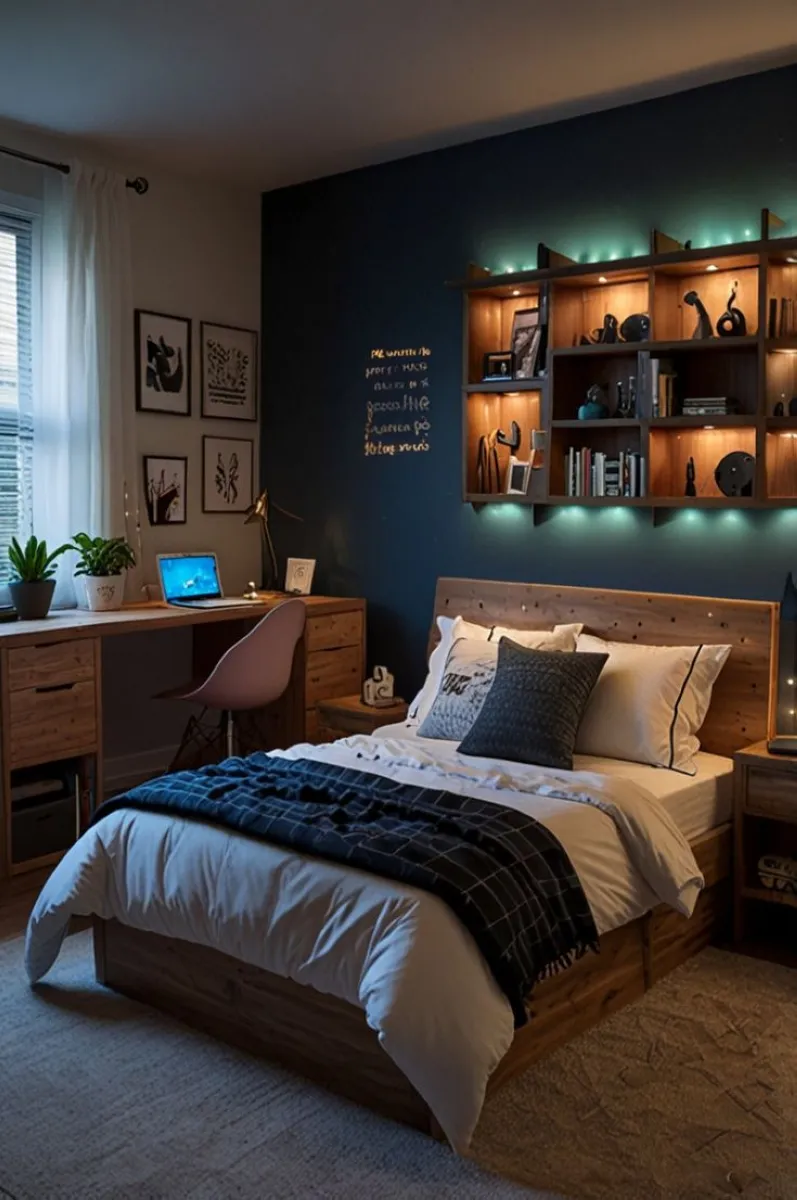
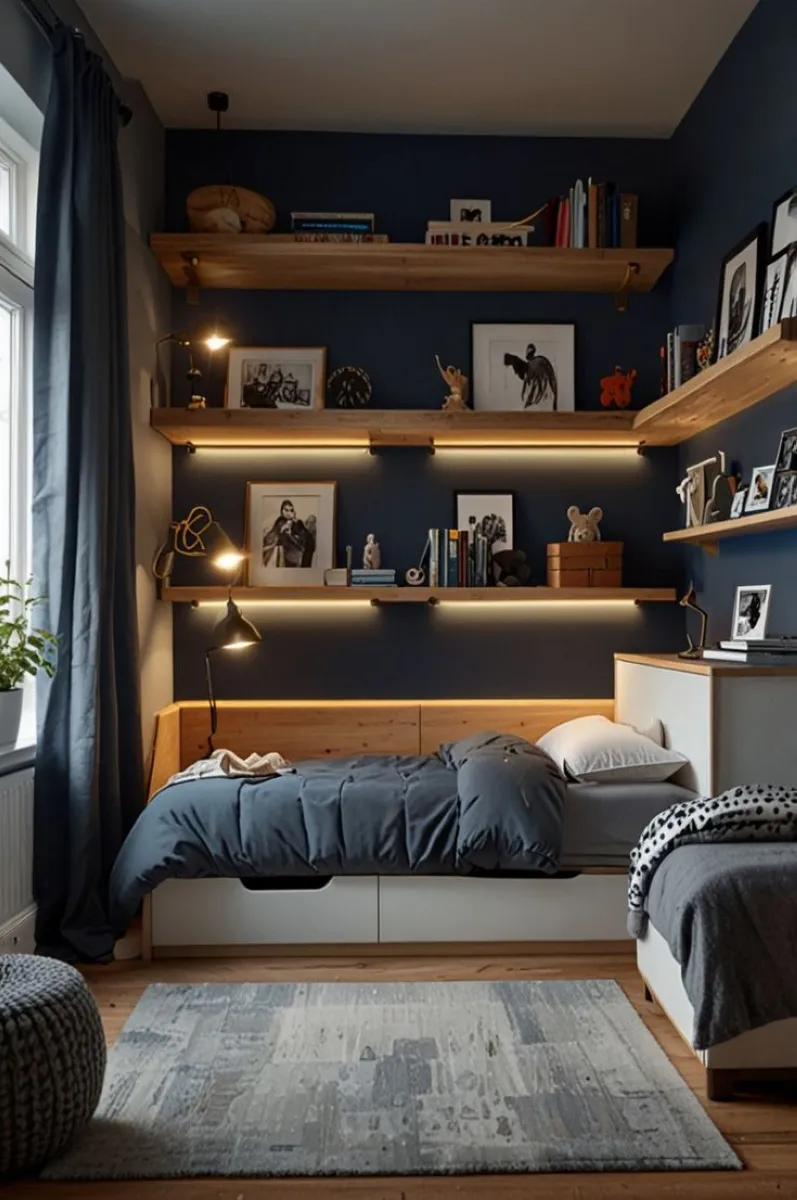
Navy blue is the most common choice for older boys’ bedrooms, and it works. But only if you commit to good lighting alongside it. I’ve seen this go wrong too many times. Parents choose navy because it looks sophisticated in photos, then realize the room feels like a basement. Dark walls need multiple light sources. Not just an overhead fixture. That’s non-negotiable.
Navy earns its place because it’s mature without being boring. It pairs with almost everything: grays, whites, warm wood tones, bold accents like orange or mustard yellow. It also hides wear better than lighter colors, which matters when you’re dealing with an active teenager.
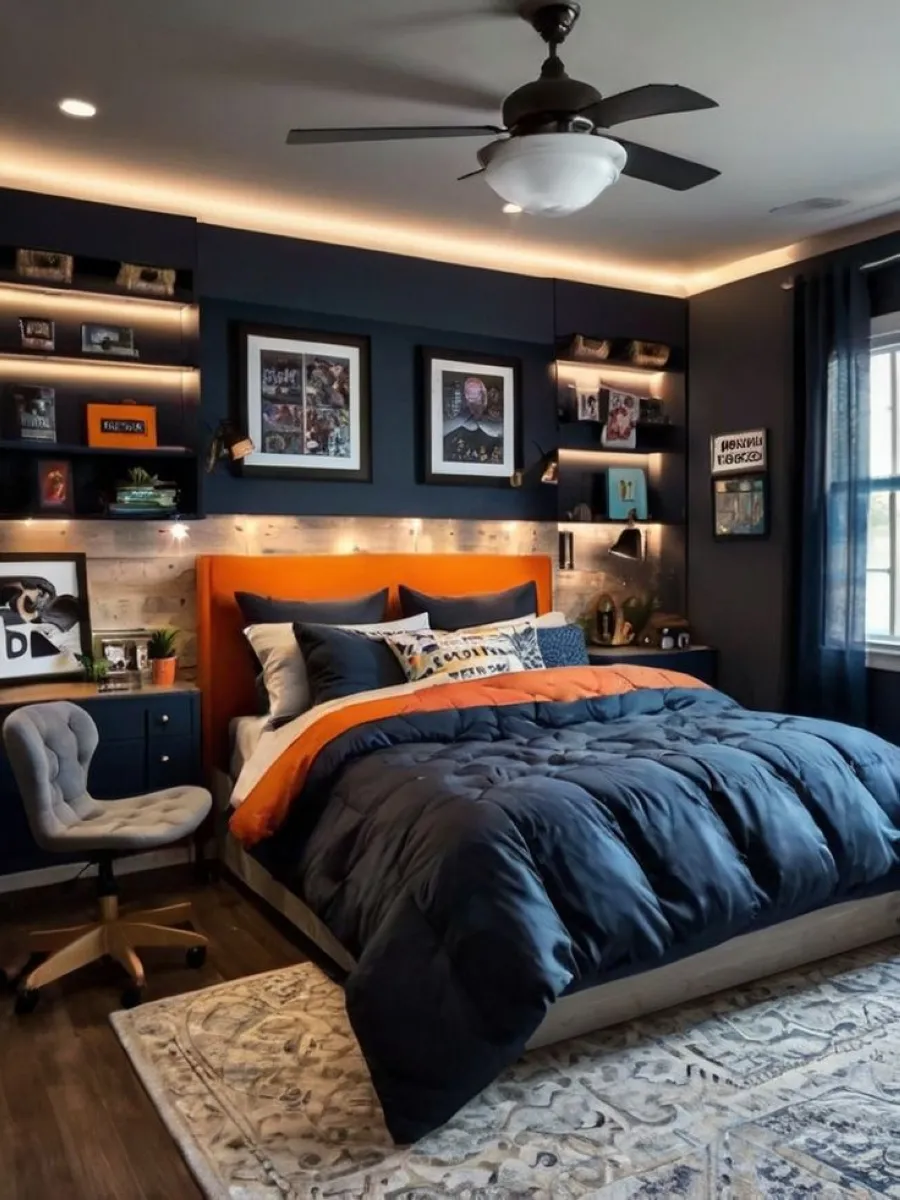
Navy Blue: The Safe Bet (With Caveats)
If you’re going with navy, here’s what actually matters. First: lighting. A north-facing room with one small window is not a great candidate for full navy walls. Do an accent wall instead. South-facing with big windows? Navy can be stunning.
Second, pair it with warmth. Navy with white trim is classic but can feel cold. Add wood furniture, textured bedding, a rug in a warmer tone. The goal is inviting, not nautical.
Third, and most people skip this: the finish matters. Matte and eggshell absorb light, making dark colors feel heavier. A satin finish reflects more light and balances the depth. Small detail. Real difference.
Beyond Navy: Alternative Palettes
Navy isn’t right for every space or every kid. Gray-based schemes are more flexible. Light gray reads modern and clean. Charcoal goes moodier. Both work with almost any accent color and are easier to update as your son’s tastes shift. For a completely different direction, minimalist bedroom ideas built around natural materials are worth a look.
Earth tones are genuinely good for teen spaces right now. Warm browns, sage greens, terracotta as an accent. They feel grounded and calm without being boring, and they work naturally with wood and leather textures.
If he wants something bolder, an accent wall is the smarter move. Deep green, rich burgundy, or even black behind the bed creates drama without committing the whole room. You can paint over it. That alone makes it worth trying.
Storage Solutions That Actually Get Used
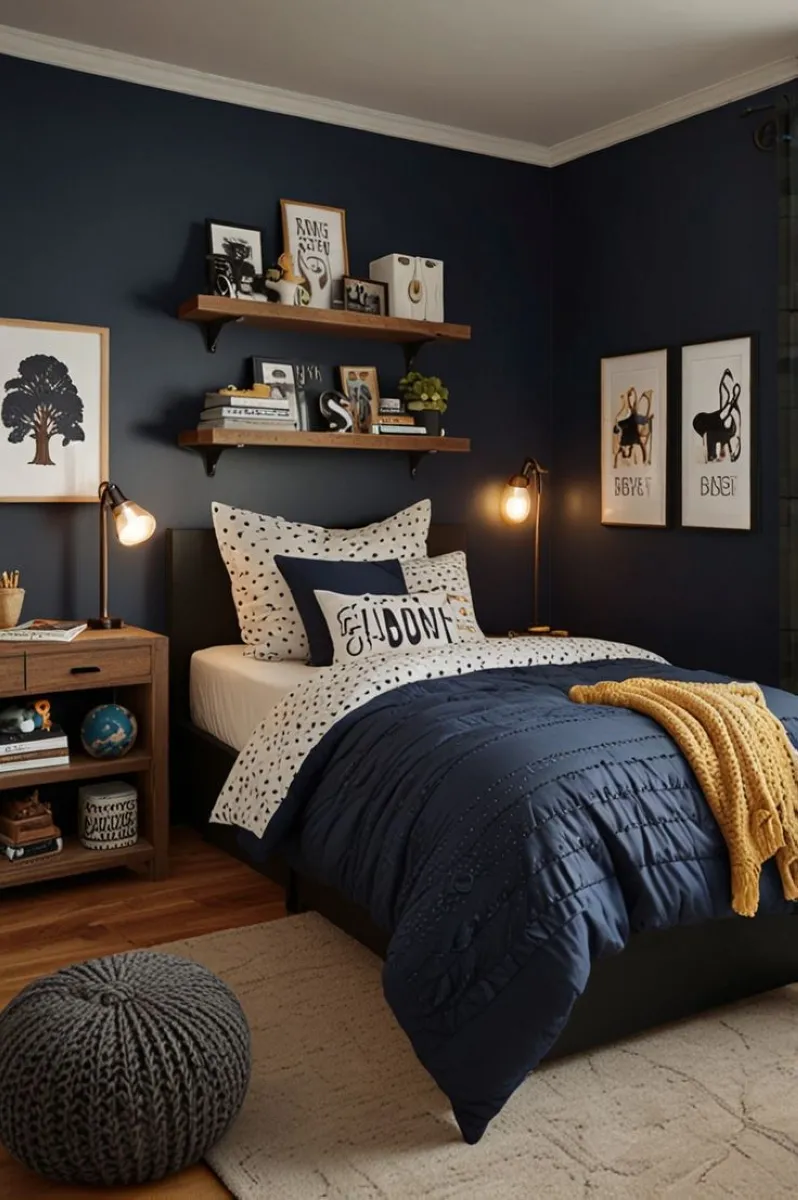
Teenage boys are not going to maintain a perfectly organized system. That’s not a character flaw. It’s just reality. The solution isn’t a better system. It’s a system built around how he actually moves through the room.
Watch where the backpack lands every day. That’s your drop zone. Put a hook or a low bench there, not in the closet where it will never go. Add a basket for shoes in the spot where they already end up. Work with the habit instead of against it, and things will actually get put away.
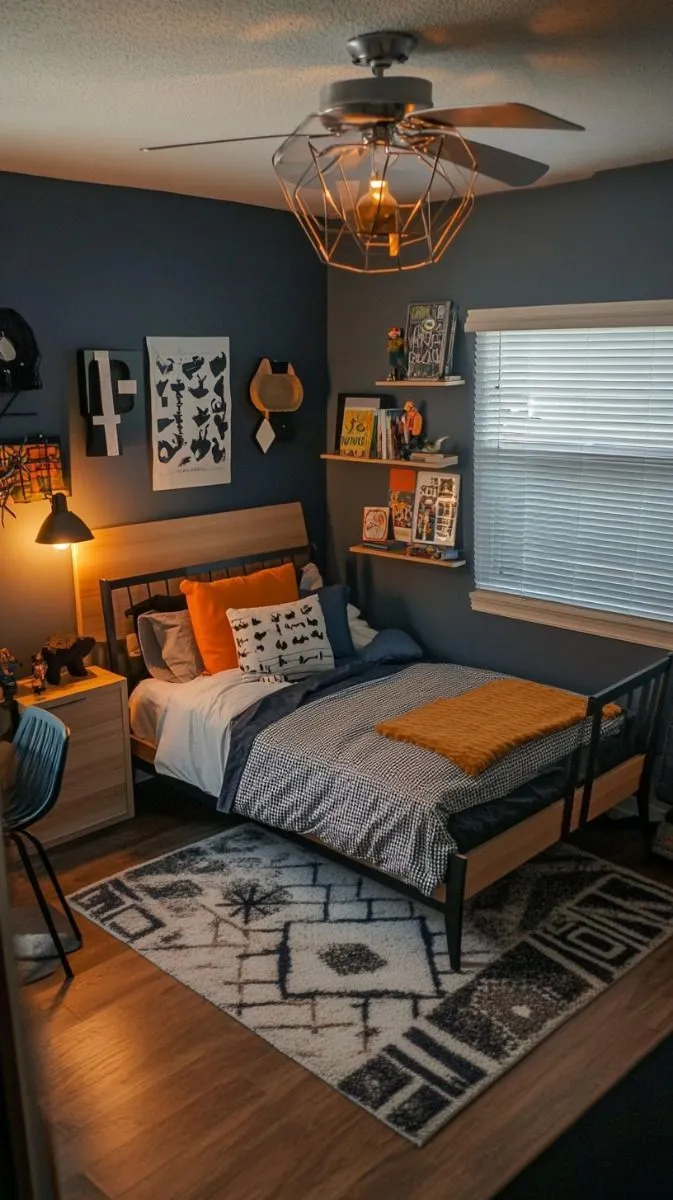
Vertical space is underused in almost every teen bedroom I’ve seen. Floor space is limited. The walls are not. Wall-mounted shelves, floating desks, tall bookcases: these maximize storage without shrinking the room. Keeping things off the floor also makes the space feel bigger and easier to clean.
Think in two categories: daily access and everything else. Clothes, school supplies, chargers: these need to be effortless to reach and put back. Seasonal items and extra bedding can live higher up or under the bed. The goal is making the everyday stuff so easy to put away that it actually happens.
Here’s where I’d spend the budget: good storage furniture. Dresser, desk with drawers, an adaptable bookcase. Those are the pieces that earn their keep for years. The trendy wall art and themed accessories? Buy those cheap. They’ll get replaced anyway.
The Study Corner: More Than Just a Desk
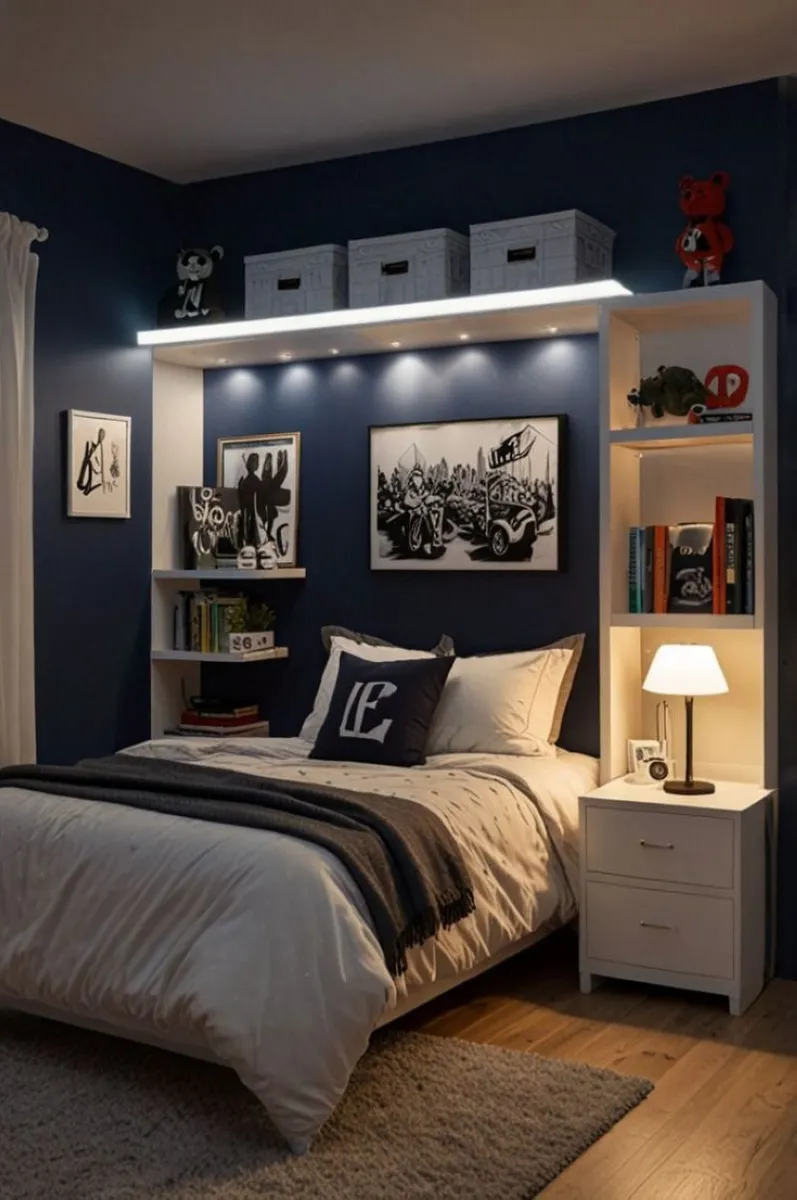
A study area needs a real setup, not just a surface. Where does the laptop go? Where do books and papers live between uses? How are cables managed? These details separate a corner that works from one that becomes a dumping ground.
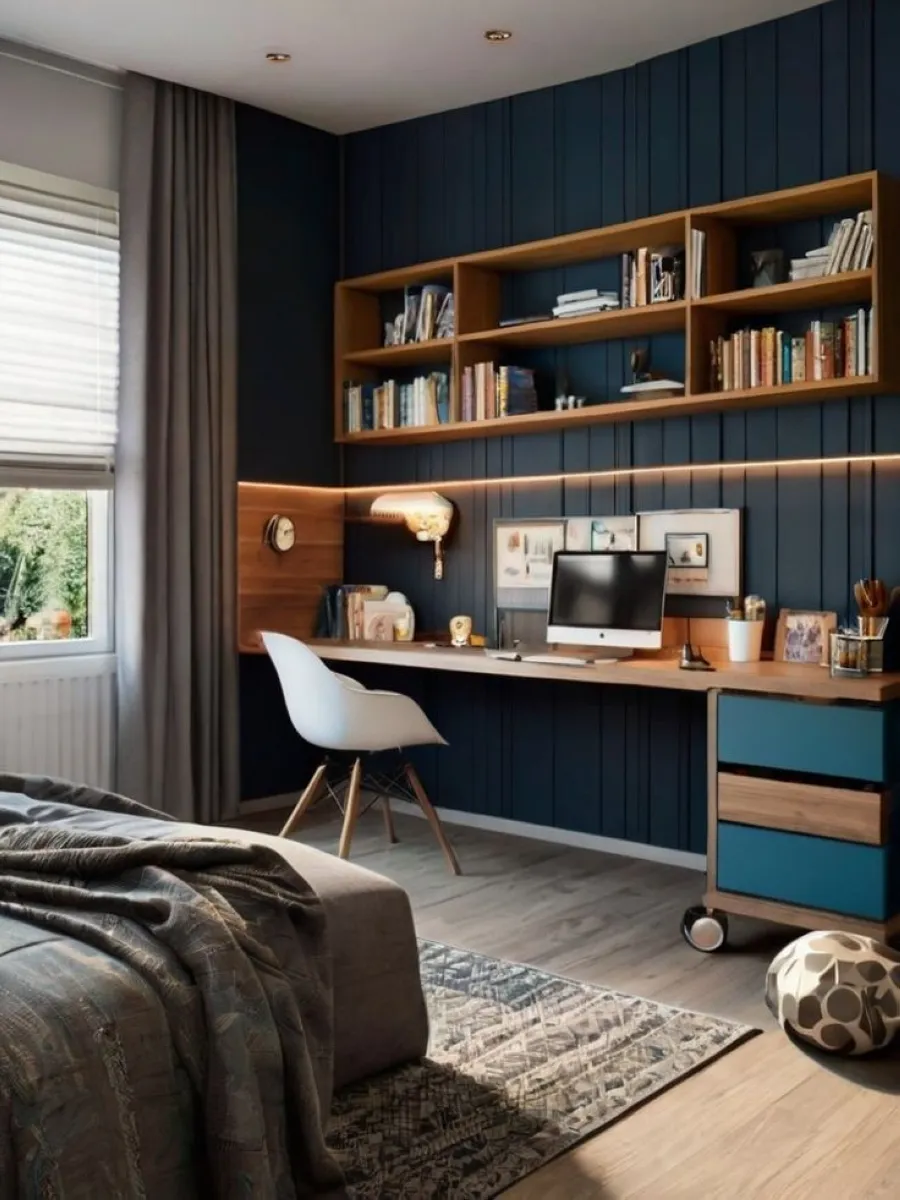
If space is tight, a wall-mounted desk or floating shelf works fine as a desk surface. Pair it with a chair that has actual back support, not a dining chair. Add a proper desk lamp. If he’s heading to college in a year or two, some of these dorm room setups translate directly to a home bedroom.
Cable management is not glamorous but it matters. A tangle of cords behind the desk makes the whole corner look chaotic. Cable clips, a grommet, a simple sleeve: any of these work. It takes twenty minutes and the visual improvement is immediate.
Furniture That Balances Style and Durability
Teenage boys are hard on furniture. Not on purpose. Just by existing in the space. Choose pieces built for that reality.
Start with the bed. A full-size frame is usually the right call: big enough to be comfortable, doesn’t dominate a smaller room. A frame with built-in storage drawers underneath earns its keep fast. Out-of-season clothes, extra bedding, anything that doesn’t need daily access lives there.
The desk needs to be big enough to actually work at. I’d say 48 inches wide as a minimum if the room allows it. Drawers help but aren’t essential if storage is handled elsewhere. Surface area matters more than anything else.
Seating gets overlooked almost every time. The desk chair should handle long study sessions without being uncomfortable. A reading chair or even a simple bean bag gives him somewhere to be that isn’t the bed. And if the room has space, a small sofa or futon changes the whole dynamic. Friends actually have somewhere to sit. The room becomes social instead of just functional.
Lighting: One Room, Three Different Needs
A teen bedroom has to do three things well: support focused study, allow real relaxation, and feel comfortable when friends are over. One overhead light cannot do all of that. It doesn’t matter how good the bulb is.
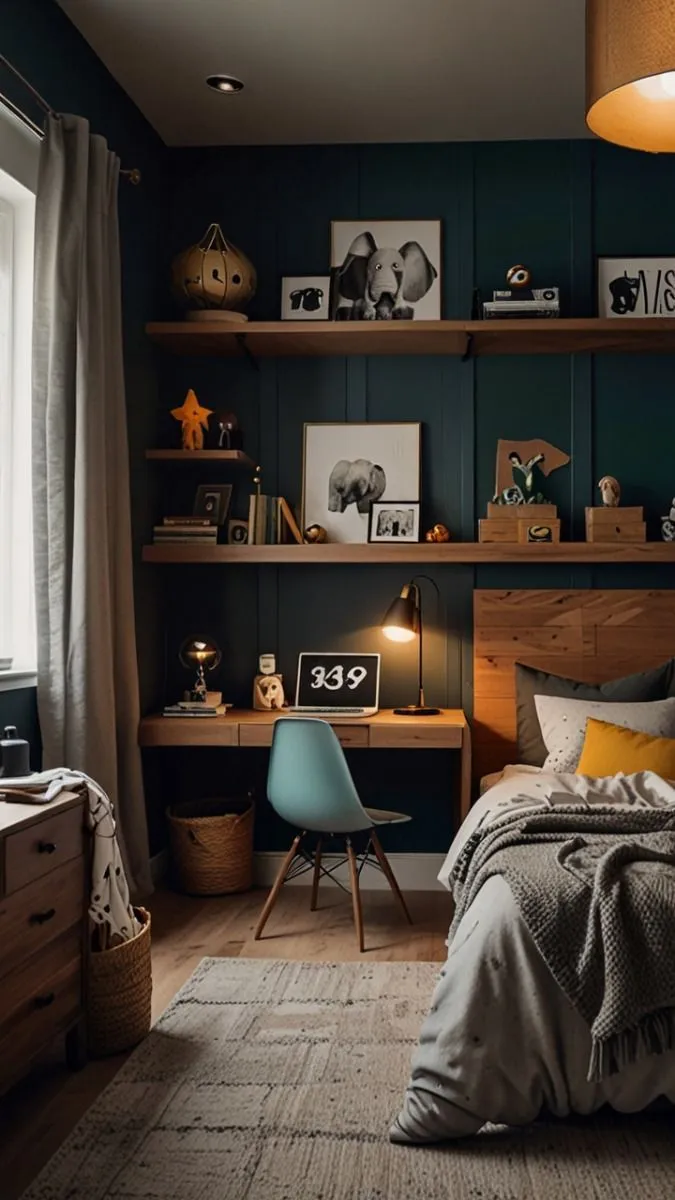
Layer it. Overhead fixture for general light. Desk lamp for task lighting. A floor lamp or LED strip for ambiance. That combination gives you flexibility to shift the mood depending on what’s happening in the room. One light source cannot carry a room. It never could.
For the study zone: bright, focused, no glare on the screen. An adjustable desk lamp positioned to the side works better than one directly overhead. Natural light is ideal during the day, but task lighting is still needed for evening sessions.
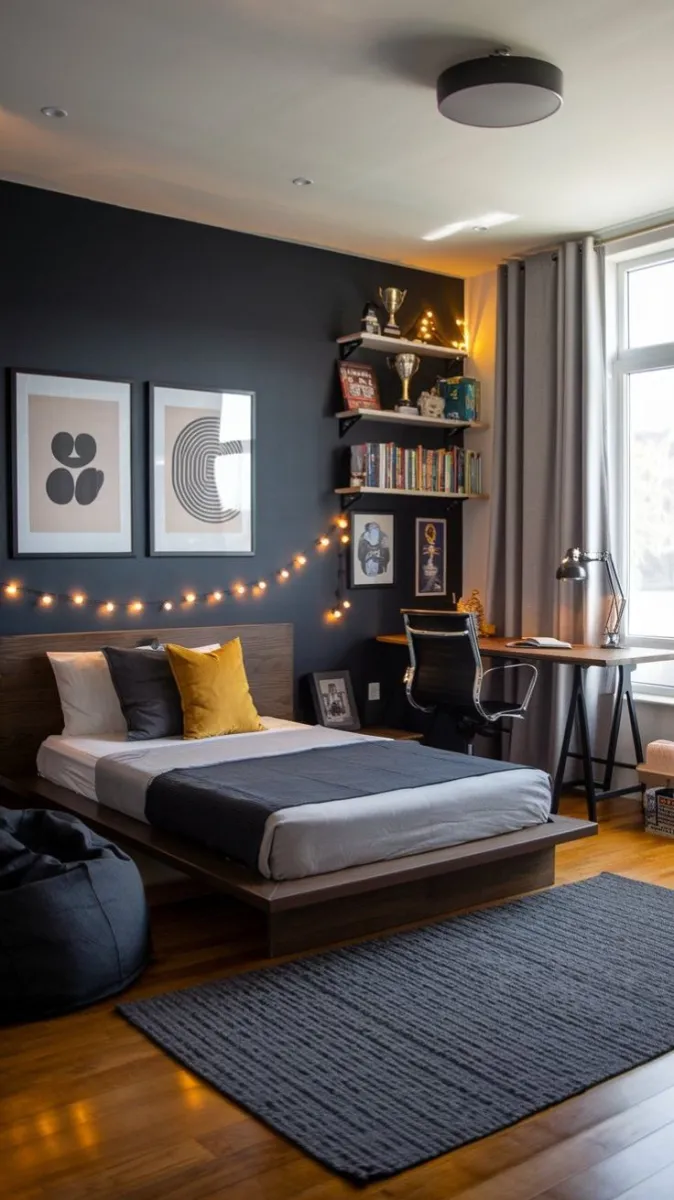
For winding down: warmer and softer. String lights, a dimmable lamp, LED strips behind a shelf. This matters more than most parents realize. Harsh light in the hour before bed makes it harder to fall asleep. The room should be able to shift from “homework mode” to something that actually lets him relax.
Personalization Without Permanent Damage
He needs the room to feel like his. That’s not negotiable at this age. But personalization doesn’t have to mean permanent.
Command strips are genuinely underrated. They hold framed posters, small shelves, even lightweight art. They come off cleanly when tastes change, which matters if you’re renting or planning to sell. I’m not going to recommend specific brands here. The format matters more than the brand.
Display systems work well for the stuff he wants to show: collectibles, trophies, gear from a sport or hobby. Floating shelves, a wall grid, a simple pegboard. The point is making it easy to rearrange as interests shift, because they will.
One thing worth saying directly: if your instinct is to let him cover every wall surface in posters, redirect that toward something more curated. One great poster, framed, does more for the room than twelve taped up at random. Personalization that looks intentional is personalization that still looks good in two years.
What to Do When the Room Is Small, Shared, or on a Tight Budget
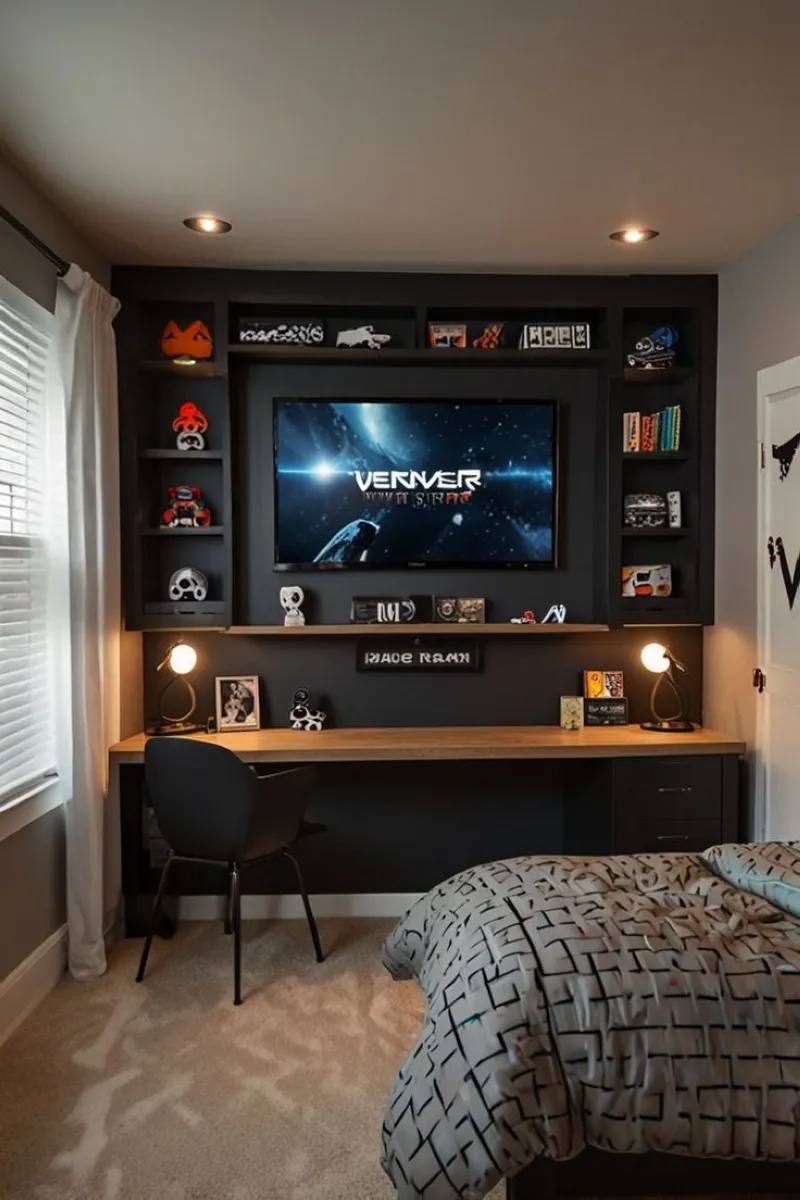
Small rooms need vertical thinking. Tall bookcases, wall-mounted desks, loft beds: all of these free up floor space that would otherwise disappear under furniture. If he wants dark walls, limit it to one accent wall. And one mirror, placed strategically, can make a smaller room feel notably bigger without any structural changes. For more ideas on working with limited space, the bedroom design section has options worth browsing.
Shared rooms need zones more than anything else. Clear boundaries between two brothers’ sides. Separate storage, separate lighting, separate visual identity per side. Bunk beds help with floor space. Rugs and furniture placement do the rest.
Budget rooms are not lesser rooms. Honestly, I think some of the most pulled-together teen bedrooms I’ve seen were done on almost nothing. Paint makes the biggest impact per dollar of anything in a room. The bed, desk, and main storage are worth spending on. Everything else can come from thrift stores, Facebook Marketplace, or be added gradually. The room doesn’t have to be finished before it works.
Age-Appropriate Considerations: 13 vs. 17
A 13-year-old and a 17-year-old are not the same person, and the room shouldn’t be designed as if they are.
For 13 to 14-year-olds: build a mature foundation that has room to grow. Choose furniture and colors that won’t feel childish in three years. Prioritize storage that helps establish habits. The study area matters, but it’ll matter even more in a year or two, so set it up right from the start.
For 16 to 17-year-olds: the room should feel genuinely independent. They’re writing college essays in there. Spending hours alone. The space needs to support that level of focus and that need for privacy. More sophisticated decor, better task lighting, furniture that could realistically go into a first apartment. That’s the target.
The Version Worth Actually Copying
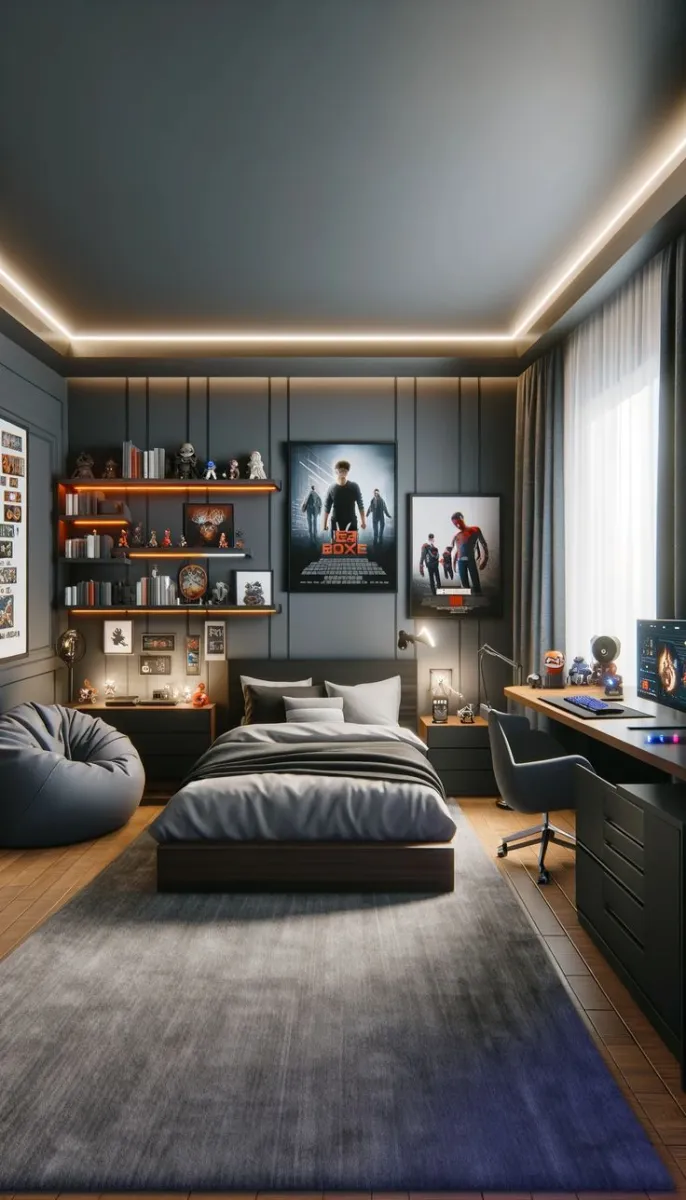
The rooms that work best for older boys don’t look like any particular style. They don’t match a specific Pinterest aesthetic. They work because someone thought about how the room actually gets used every day and designed around that instead of around how it looks in photos.
Nail the lighting. Get the storage right. Choose furniture that fits the space and the age. Let him have some say in how it looks. The rest follows.
The rooms that don’t work? They look great in the reveal photo and fall apart within a week. Because nobody thought about where the backpack goes.
Frequently Asked Questions
It depends entirely on what you’re starting with. Paint and new bedding alone can transform a room for under $200. A full furniture refresh with a new bed frame, desk, and dresser typically runs $800 to $1,500 if you’re buying new at mid-range stores. Buying secondhand can cut that in half. Focus the budget on the pieces that get daily use and save on decor.
Most of it, yes. Painting a room, installing floating shelves with a drill, and rearranging furniture don’t require any special skills. The one area worth calling in help: any electrical work for new lighting fixtures. Everything else is manageable on a weekend.
A focused weekend is enough to paint, rearrange furniture, and set up the main zones. If you’re waiting on furniture deliveries or doing it in phases, spread it over two to three weekends. The key is having a clear plan before you start so you’re not making decisions mid-project.
Most of them, yes. Command strips instead of nails, removable peel-and-stick wallpaper for an accent wall effect, freestanding furniture, floor lamps instead of hardwired fixtures. The lighting layering and storage strategies work completely without touching anything permanent. Check your lease before painting, but even that is sometimes allowed with landlord approval.
Neutral if you’re not sure. Navy if the room has good natural light and you’re committed to layering in warmth through furniture and textiles. Neutrals are more flexible long-term and easier to update. Navy makes a stronger immediate statement but requires more thought to pull off without the room feeling heavy. Neither is wrong. They just serve different rooms and different kids.
Share this post!