Picking one paint color is easy. Picking a bedroom that actually feels good at 10 p.m. and still looks good at 8 a.m. is harder.
That is why I would not start with a single swatch. I would start with a combination.
If you are here looking for the best color for bedroom walls, the real answer is this: the best bedrooms rarely rely on one flat color alone. They use two or three tones that balance each other. One carries the room. One softens it. One adds depth.
If you want a guide focused on individual shades first, read my guide to the best bedroom wall colors. This one is different. This is the palette guide.
Below, you will find 15 bedroom wall colour combinations that work in real homes, with real light, and without making your room feel either bland or overdesigned.
How to Choose the Right Bedroom Wall Colour Combination
Before you copy a palette from Pinterest, check three things.
- Light direction. North-facing rooms make cool colors feel colder. South-facing rooms can make warm colors glow.
- Undertones. Beige with pink undertones and gray with blue undertones do not always sit well together.
- Contrast level. The best bedroom paint color ideas usually have contrast, but not chaos.
A simple rule helps. Pick one main wall color, one lighter supporting color, and one grounding accent tone that can show up in trim, textiles, or furniture.
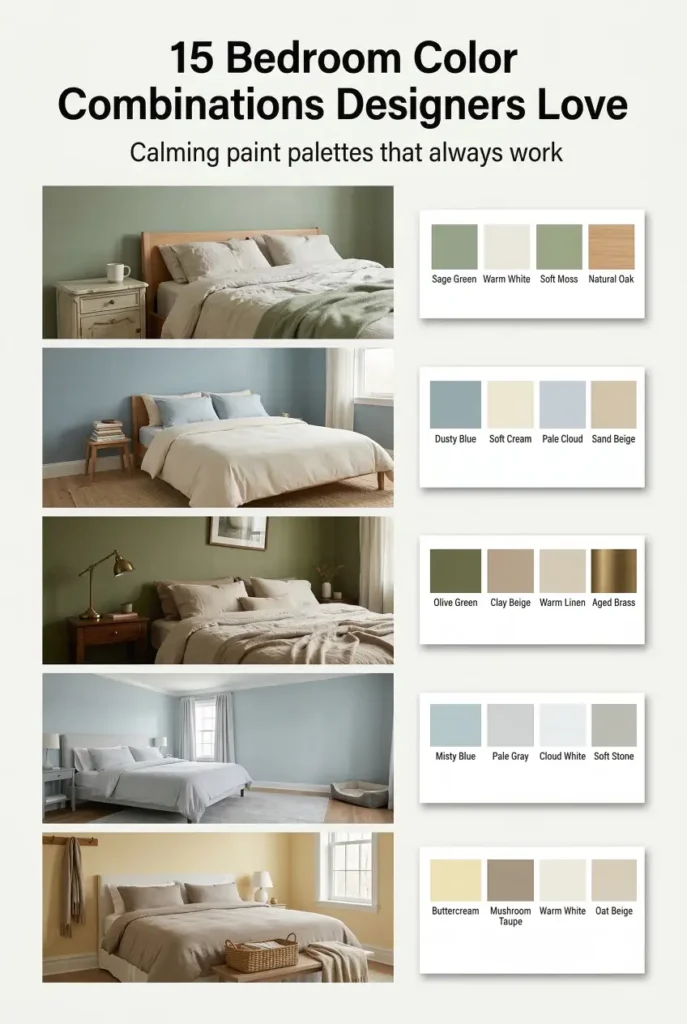
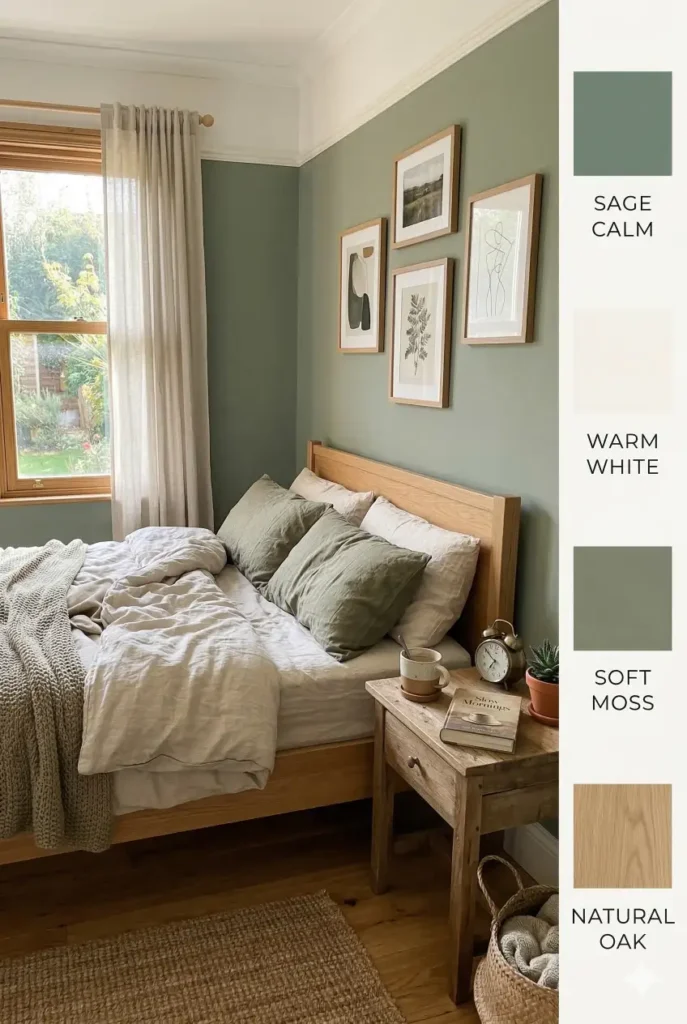
1. Sage Green + Warm White + Natural Oak
This is one of the safest combinations if you want the room to feel fresh but not cold. Sage gives you softness. Warm white stops the room from turning muddy. Oak keeps it human.
Use sage on the main walls and warm white on trim, ceiling, or built-ins.
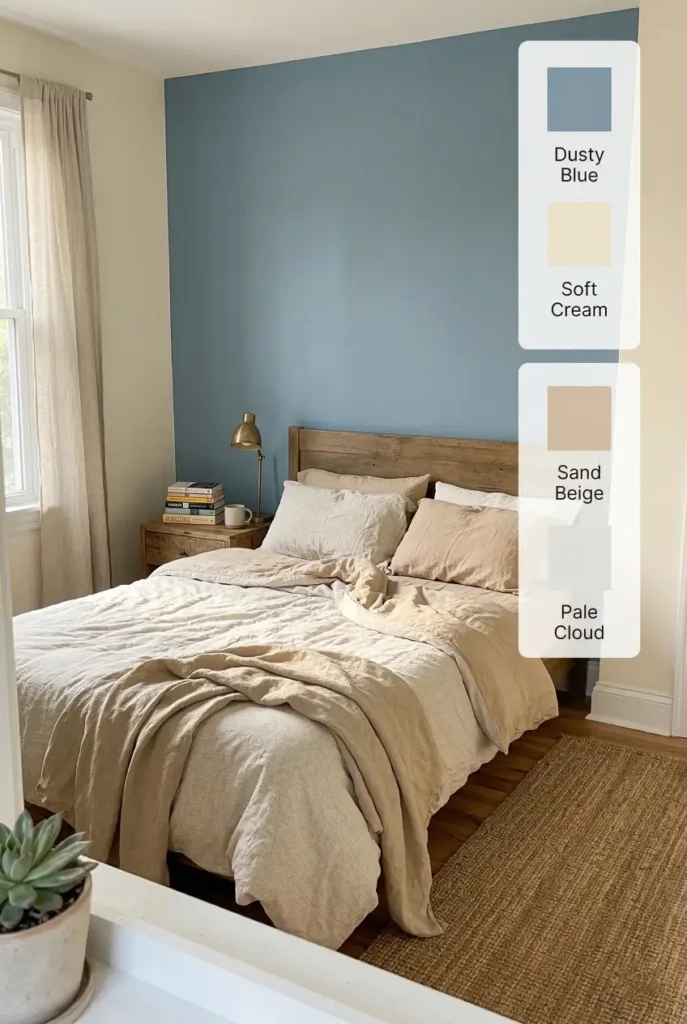
2. Dusty Blue + Soft Cream + Sand
Dusty blue works because it feels quiet, not icy. Pairing it with cream instead of bright white makes the room feel softer and more expensive.
This is one of the best bedroom paint color ideas for rooms that get strong daylight.
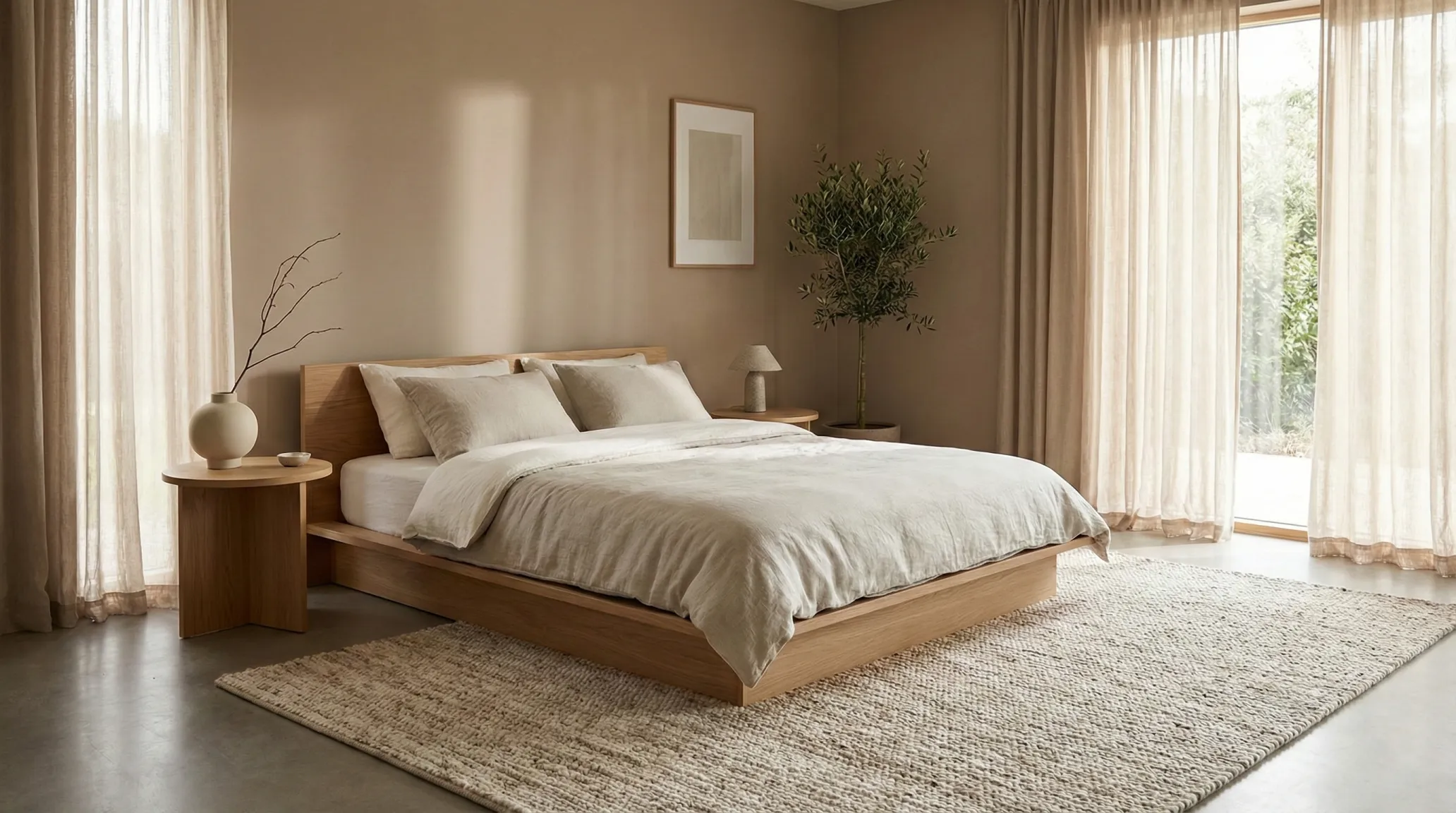
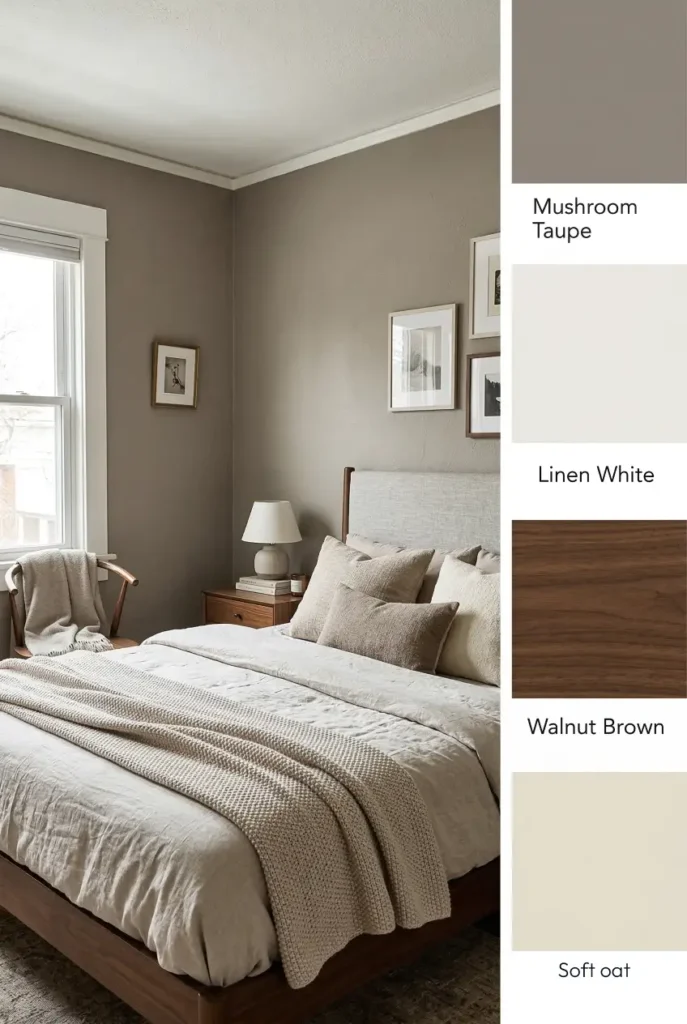
3. Mushroom Taupe + Linen White + Walnut Brown
If you hate gray but still want a neutral bedroom, start here. Mushroom taupe has enough warmth to feel cozy and enough depth to feel grown-up.
This combination is especially good for master bedrooms with upholstered headboards and layered bedding.
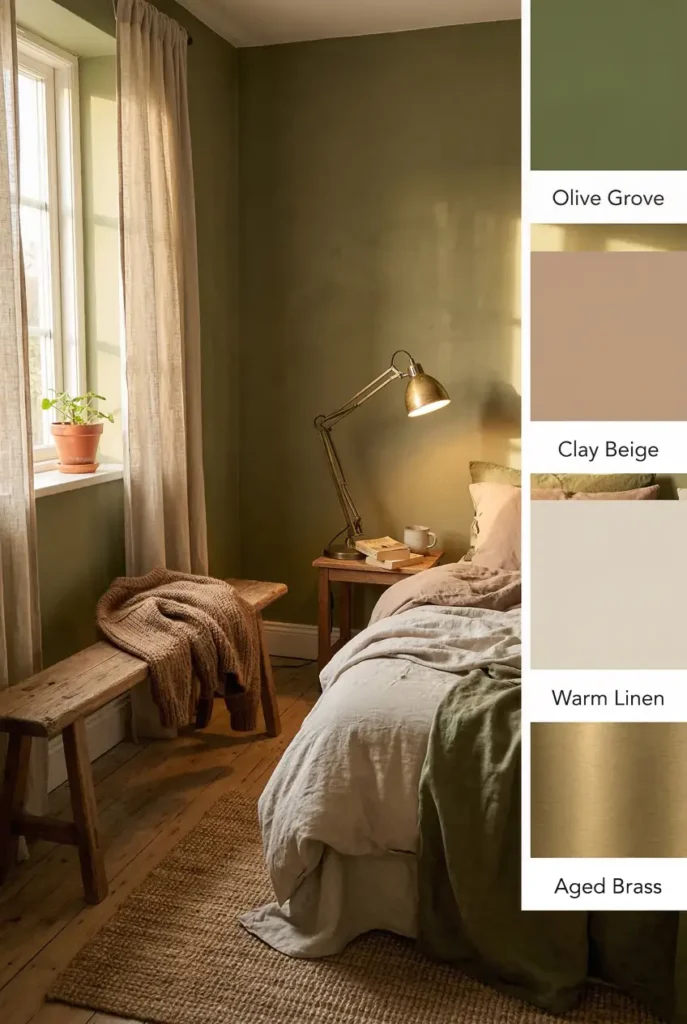
4. Olive Green + Clay Beige + Aged Brass
Olive is more grounded than sage and less trendy-looking over time. Beige warms it up. Brass gives the whole room a little edge without making it flashy.
This is a strong option if you want a bedroom wall colour combination that feels earthy and calm.
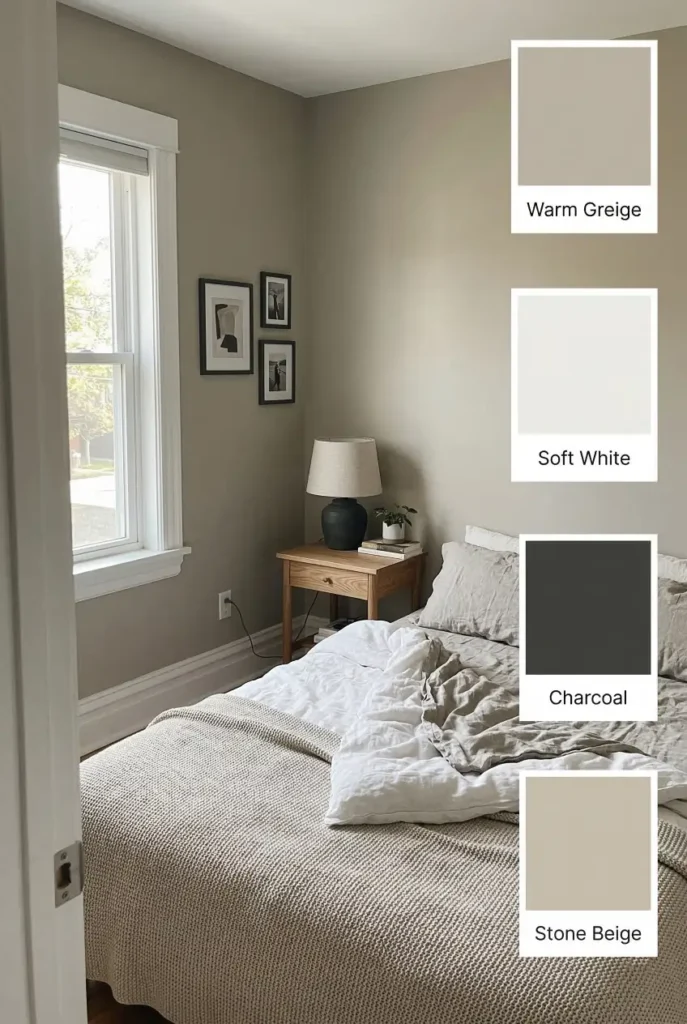
5. Greige + Soft White + Charcoal
Greige gets mocked because people use the wrong version of it. A warm greige paired with soft white still works beautifully. Add charcoal in lamps, frames, or one painted accent wall, and it stops feeling builder-basic.
6. Misty Blue + Pale Gray + Cloud White
This palette is for people who want calm without going beige. Misty blue brings the mood. Pale gray keeps it clean. White lifts the whole room.
Do not use a cold bright white here. It ruins the softness.
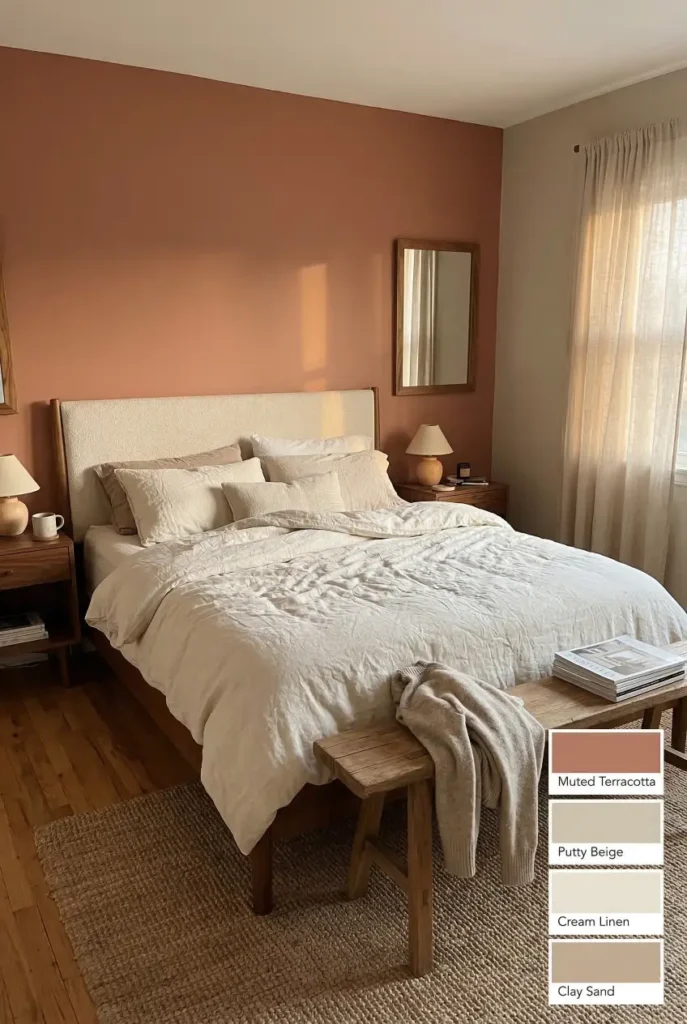
7. Warm Terracotta + Putty Beige + Cream
This is the palette for people who want warmth but are tired of plain neutrals. Muted terracotta feels cocooning when it is dusty, not orange.
Use it on the wall behind the bed and keep the other walls lighter.
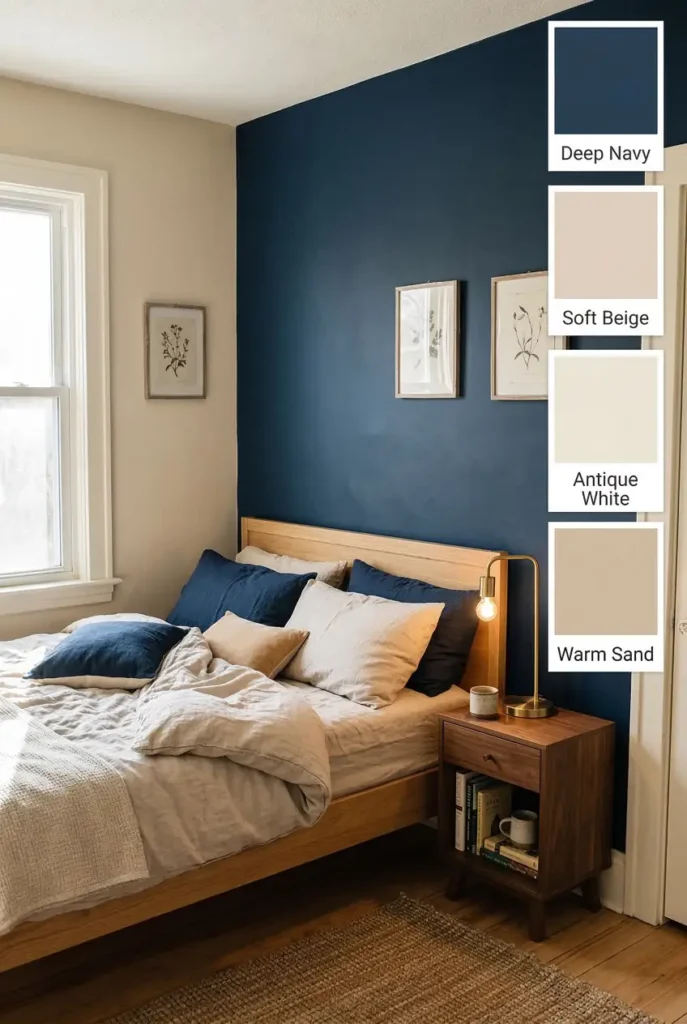
8. Deep Navy + Soft Beige + Antique White
Navy can absolutely be one of the best colors for bedroom walls, but only if you balance it. Beige stops it from feeling severe. Antique white keeps the room from looking like a hotel trying too hard.
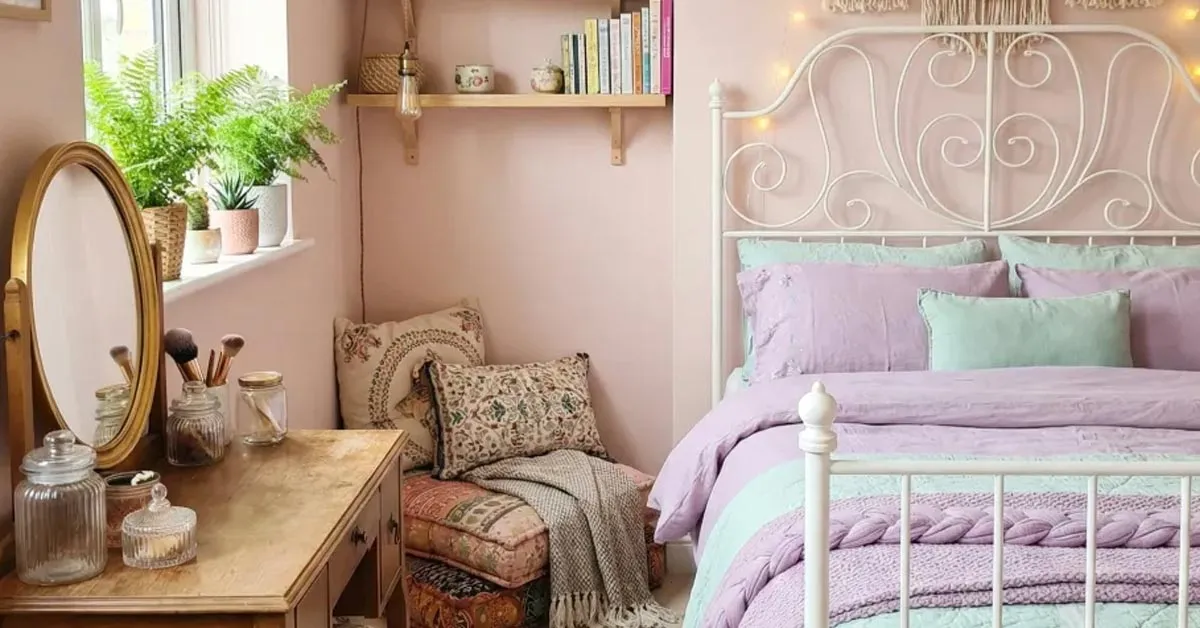
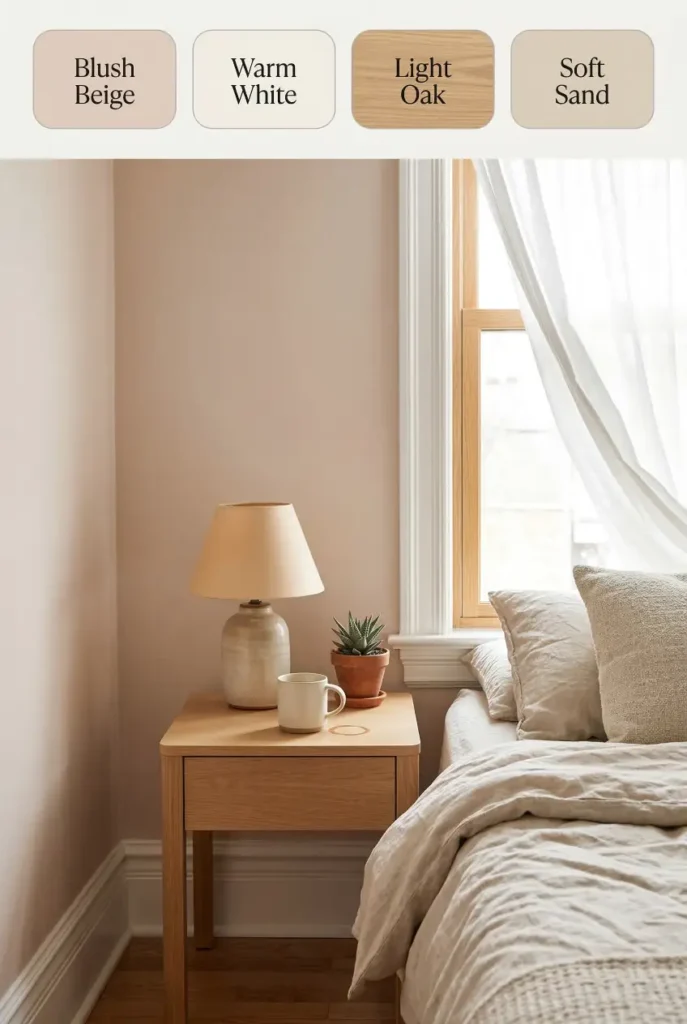
9. Blush Beige + Warm White + Light Wood
This is softer than pink and warmer than beige. It flatters skin tones, works well in smaller bedrooms, and looks surprisingly modern when the styling stays simple.
10. Forest Green + Linen + Black Accents
Forest green is darker, richer, and more cocooning than most people expect. Linen keeps it breathable. A little black in picture frames or sconces sharpens the palette.
This is not worth doing in a room with bad artificial lighting unless you are also fixing the lighting.

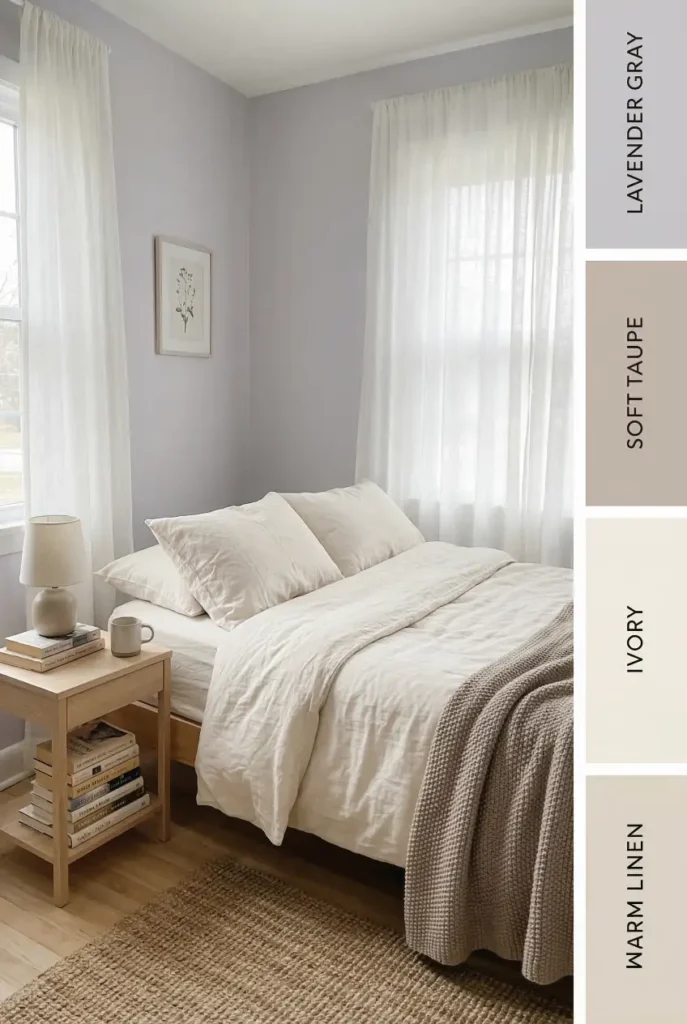
11. Pale Lavender Gray + Soft Taupe + Ivory
This combination works because it does not read purple first. It reads soft, quiet, and slightly elevated. Pale taupe warms the palette enough to stop it feeling chilly.
12. Buttercream + Mushroom + Warm White
Buttercream is coming back because it feels optimistic without screaming for attention. Paired with mushroom, it becomes calmer and more sophisticated.

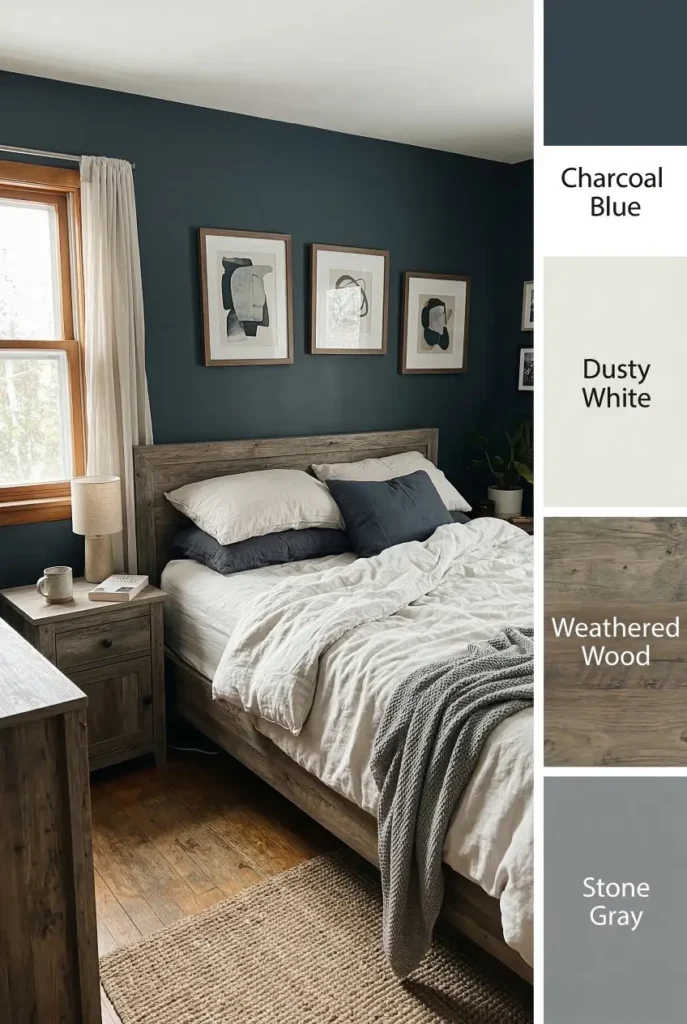
13. Charcoal Blue + Dusty White + Weathered Wood
If you like moody bedrooms but do not want them to feel too dark, this is the compromise. Charcoal blue has more softness than straight charcoal, and weathered wood keeps it from becoming flat.
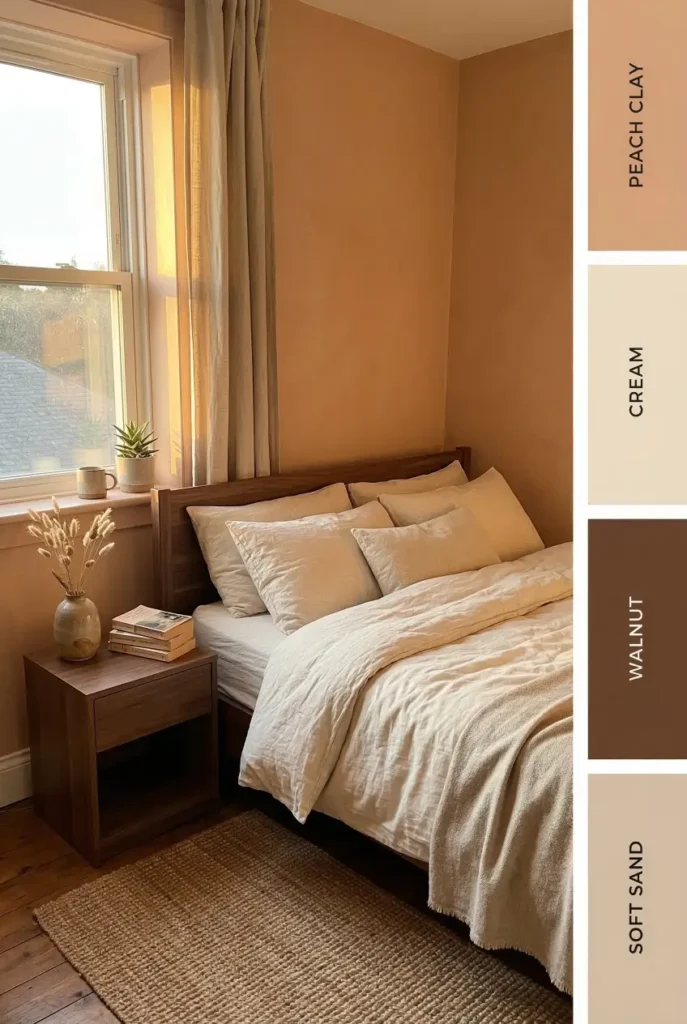
14. Soft Peach Clay + Cream + Walnut
Soft peach clay gives warmth to a bedroom without making it sweet. Walnut adds maturity. Cream keeps everything from becoming heavy.
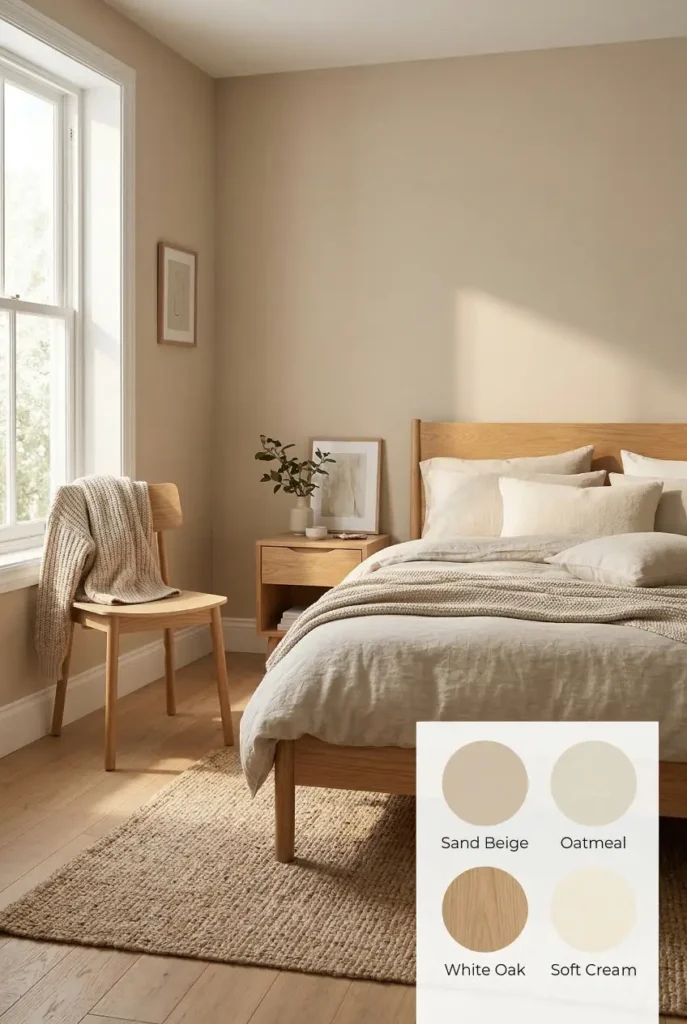
15. Sand Beige + Oatmeal + White Oak
This is the quiet luxury version of a neutral bedroom. Nothing shouts. That is the point. The room feels layered because the tones are close, not identical.
The 3 Mistakes That Ruin Bedroom Color Combinations
- Too much contrast. Black and white can feel sharp in a bedroom unless the rest of the room is heavily softened.
- No undertone control. A green-gray and a pink beige can fight each other all day long.
- One-note styling. Even the best bedroom wall colour combination falls flat if the bedding, wood tones, and lighting do not support it.
Save This Rule Before You Pick Paint
Use 60/30/10.
- 60% main wall color
- 30% supporting lighter tone
- 10% darker or warmer accent
That simple ratio is why some bedrooms feel balanced and others feel accidental.
The best color for bedroom walls is rarely just one color. It is a combination that makes the room feel softer, quieter, and more put together the second you walk in.
Pick the palette first. Then test the paint. Not the other way around.