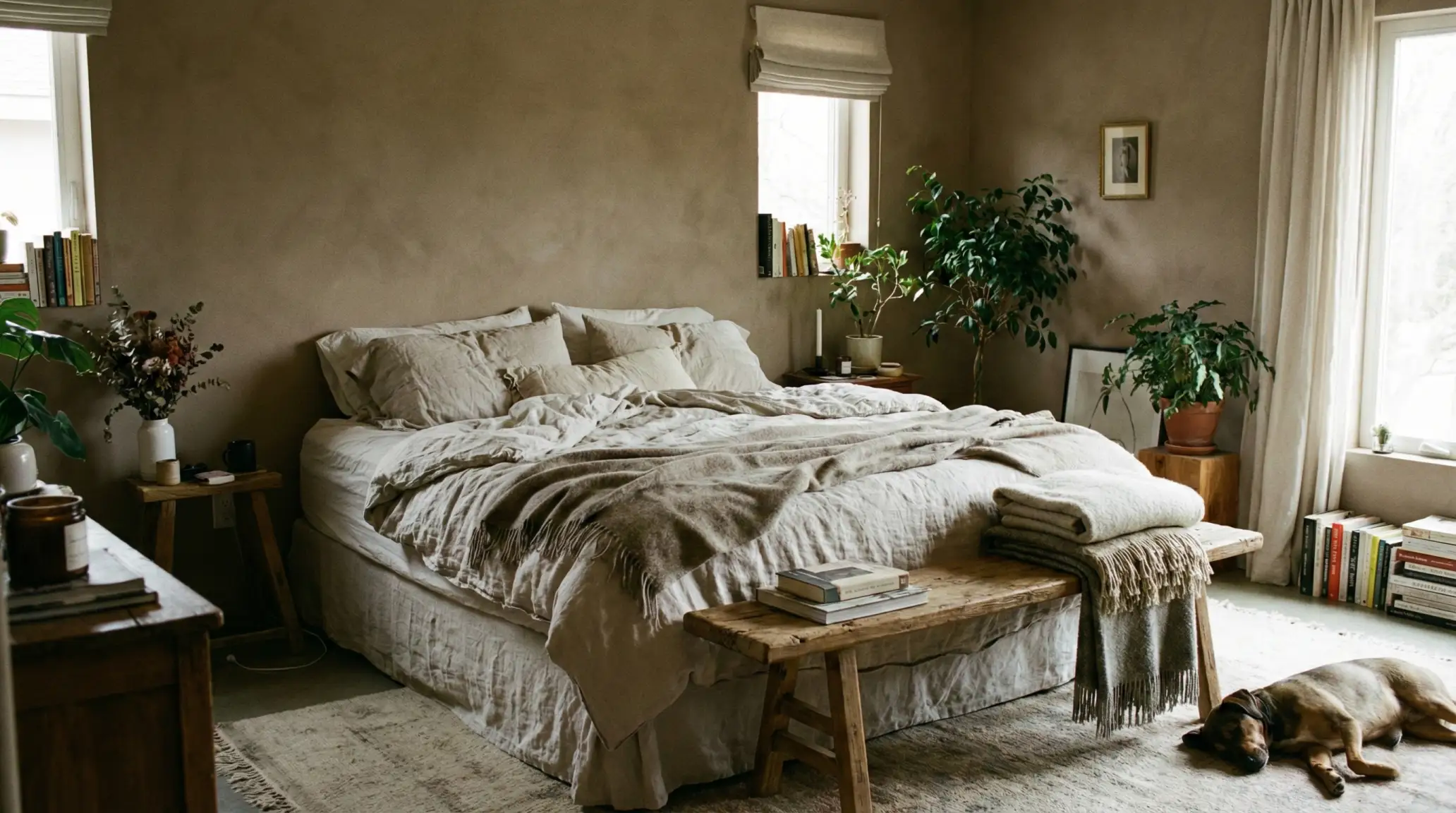
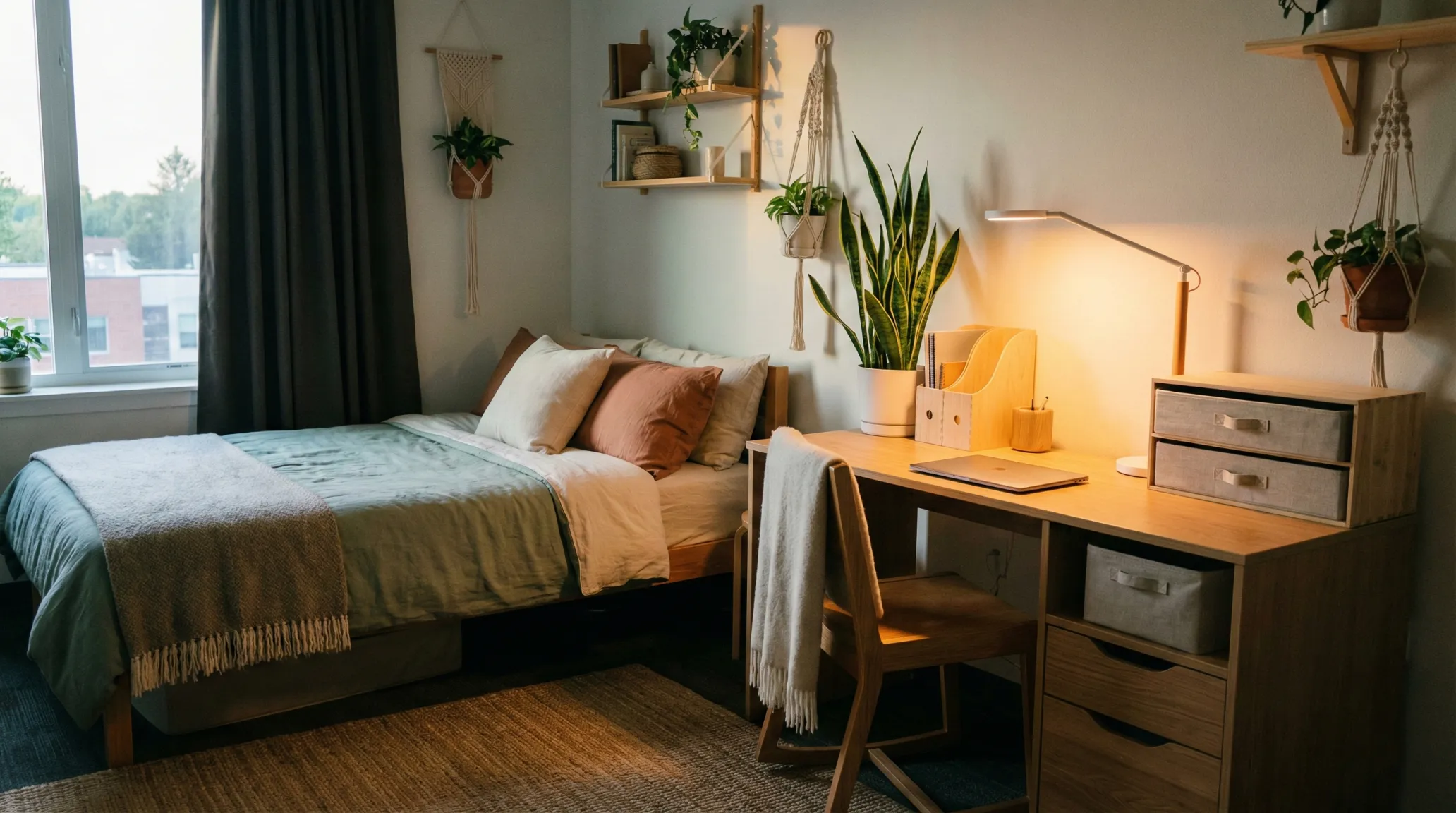
I tried to create a Japandi bedroom by buying beige everything. Big mistake. It felt cold and sterile, like a room someone forgot to finish.
Then I started paying closer attention to what actually makes these spaces feel good in real homes. In 2026, the best Japandi bedrooms are not just pale and minimal. They feel warm, tactile, and quiet in a way that comes from the materials, not just the color palette.
Once I swapped the flat beige pieces for warm wood tones and real natural textures, the room finally clicked. Actual oak. Washed linen. Wool with some weight to it. Not synthetic lookalikes trying to imitate the feeling.
The difference was not the color. It was the surfaces.
That is the part people skip. Japandi is not just Japanese elegance mixed with Scandinavian coziness. It is a commitment to restraint and honest materials. And that means cheap synthetic finishes usually ruin the effect immediately.
Real wood, real linen, real wool. That is where the calm comes from. If you are not ready to buy fewer but better pieces, this style can quickly turn into a sad beige Pinterest board instead of the sanctuary you were hoping for.
What Defines Japandi Style in Bedrooms?
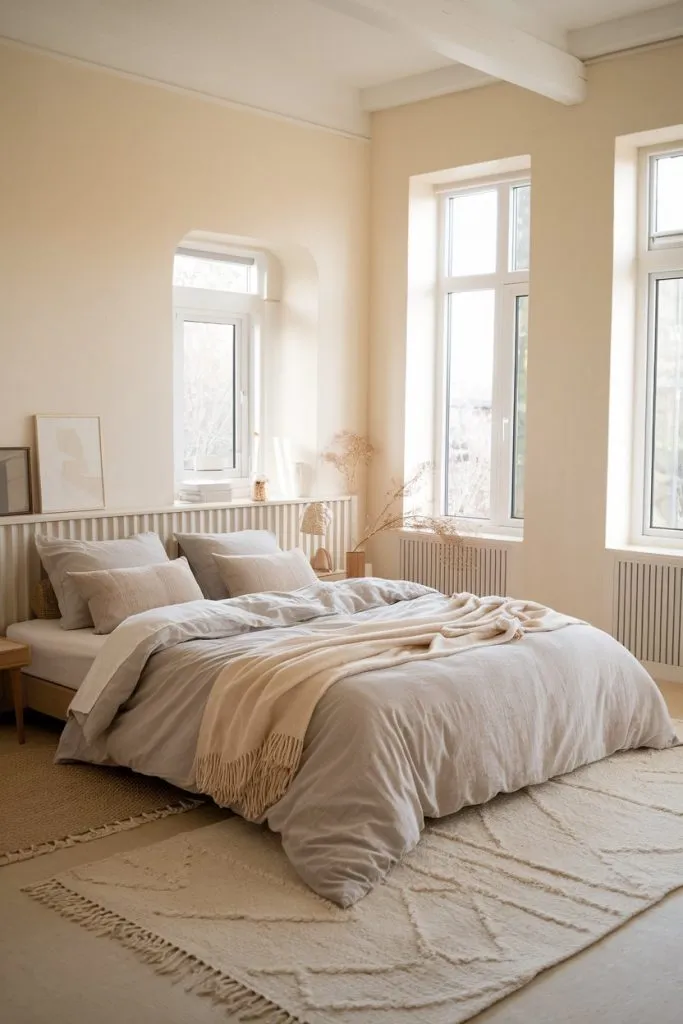
Japandi blends the quiet simplicity of Japanese interiors with the warmth and functionality of Scandinavian design. Clean lines matter. Natural materials matter more. Neutral tones create the backdrop, but texture is what stops the room from feeling lifeless.
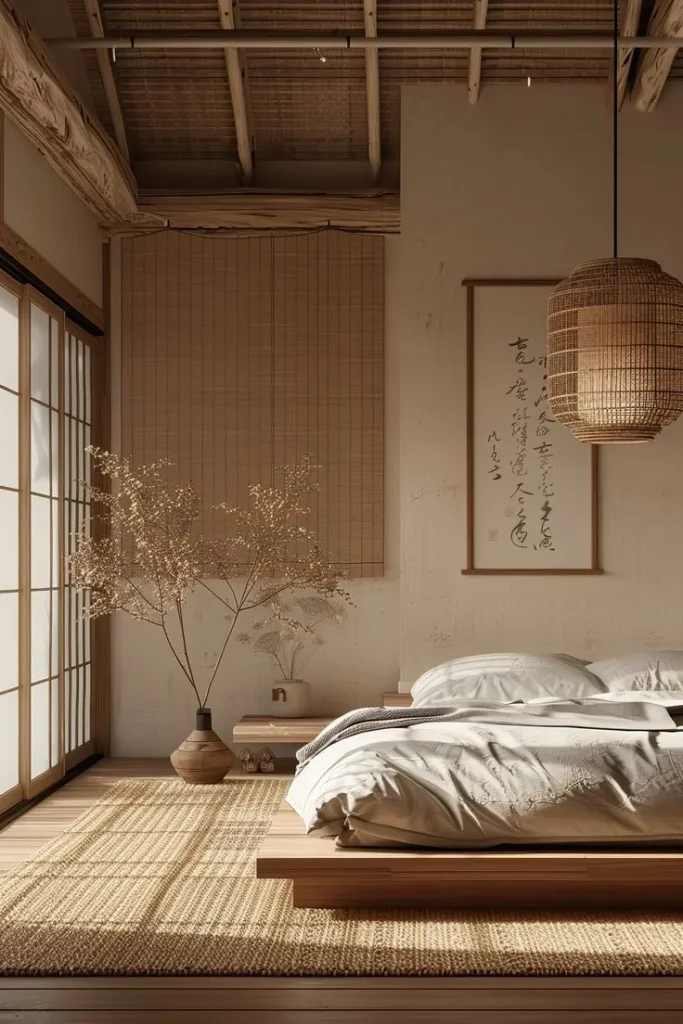
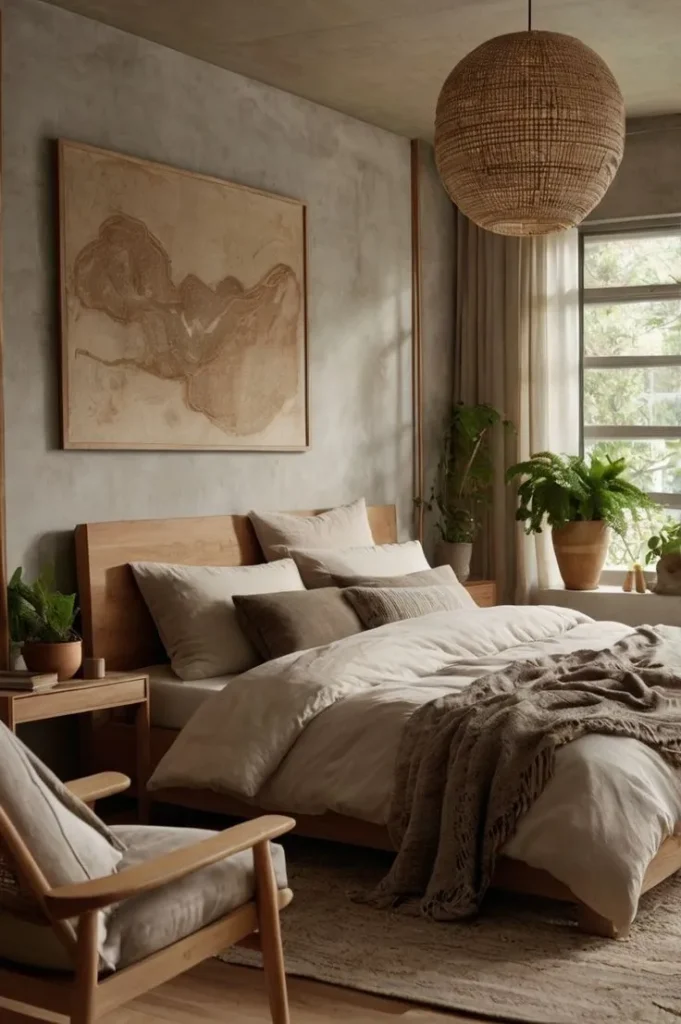
Think of a low wooden bed with visible grain, soft linen bedding in muted tones, and furniture that feels grounded instead of flashy. Every piece should earn its place. Function drives the room, but beauty never disappears.
That is where people often get it wrong. Minimalism does not mean empty. A Japandi bedroom should feel intentional, not abandoned.
That bench at the end of the bed is not there just to look pretty. It is where you sit to put on shoes. That ceramic vase is not filler decor. It holds the branch you brought home on a walk. Function and beauty are not separate here. They are the same thing.
Color Palette for a Japandi Bedroom in 2026
Muted earthy tones still define Japandi bedrooms, but the palette in 2026 feels more layered than the flat beige versions that took over social media a few years ago.
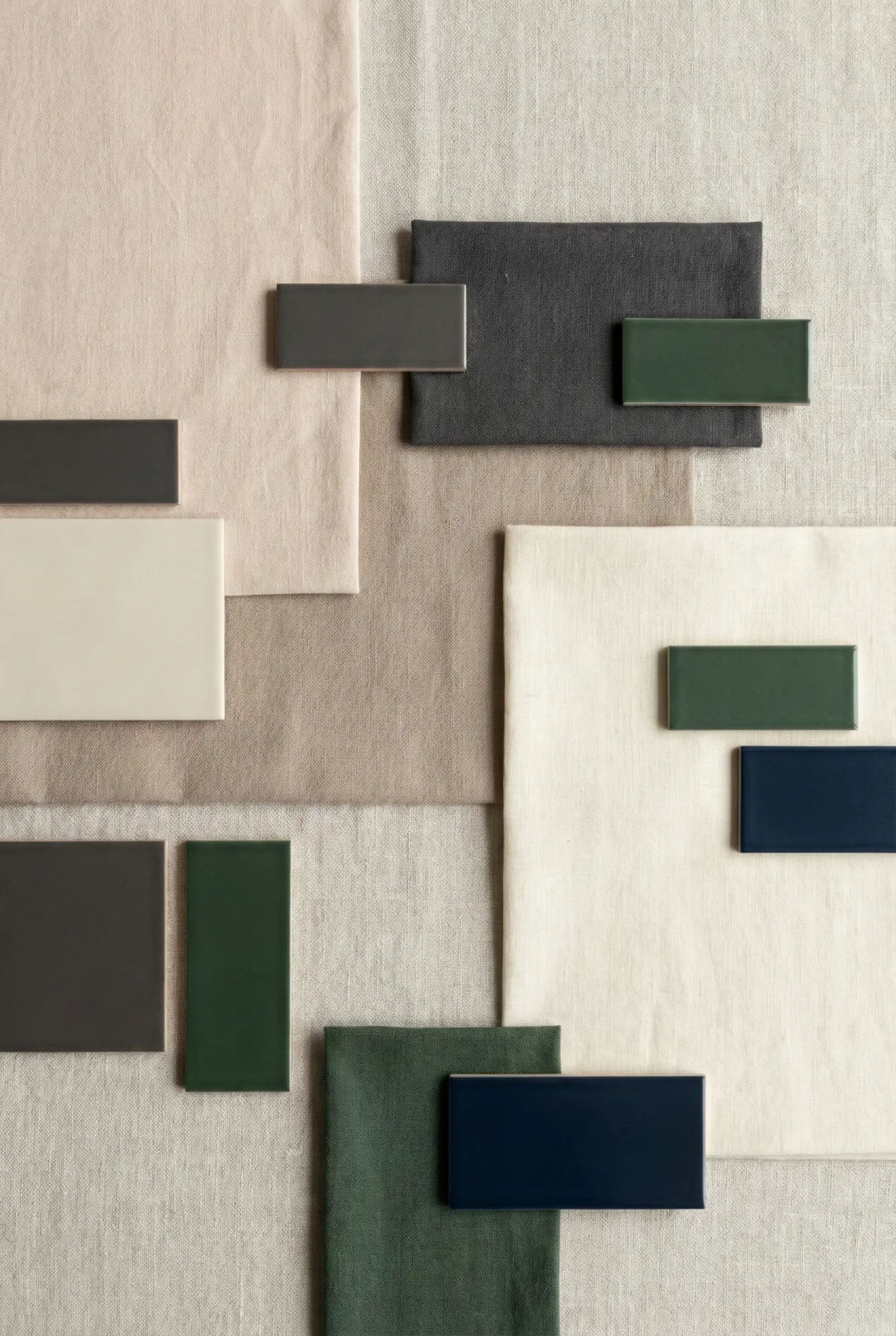
Cream, warm beige, taupe, sand, and soft gray still build the base. But now deeper contrast plays a bigger role. Charcoal, moss green, dark olive, smoked oak, and clay tones make the room feel more grounded and less one-note.
Walls usually stay soft. Off-white, warm gray, or pale clay work beautifully. Natural wood furniture adds warmth against them. Textiles in sage, dusty rose, oat, or muted brown keep the palette calm without making it feel bland.
Black accents still help. A lamp base. A simple frame. A narrow sconce. Used sparingly, they sharpen the room without making it feel harsh.
For more minimalist bedroom inspiration, it helps to look at how color and texture work together instead of focusing on paint alone.
Essential Furniture for a Japandi Bedroom
A low-profile bed inspired by traditional Japanese futons usually anchors the room. Wooden frames with visible grain work best. No fake laminate. No shiny plastic-looking veneer. If it is wood, let it look like wood.
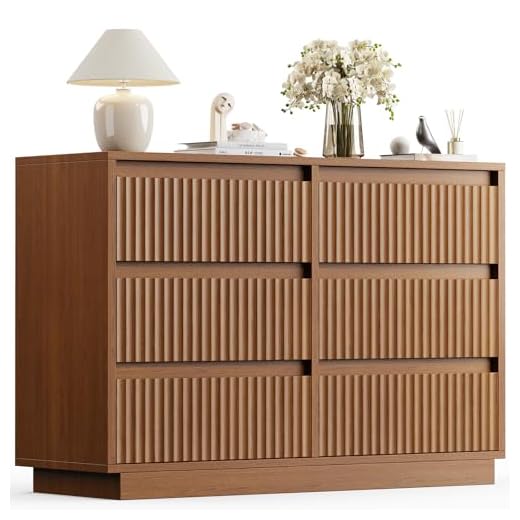
Nightstands stay simple. Dressers avoid ornate detailing. Wardrobes and storage pieces follow the Scandinavian instinct for practicality. A bench in oak or bamboo near the bed adds texture and function without cluttering the layout.
I made the mistake of buying a so-called Japandi bed from a big box store. The grain was printed, not real. In photos it looked acceptable. In person it felt flat and cheap. That was the moment I understood the difference between buying the label and buying the material.
Japandi furniture is not convincing because of its shape alone. It works because the materials feel honest. Real wood costs more, yes. But it also ages better and brings warmth that synthetic finishes never manage to fake.
Textures and Materials: The Japandi Balance
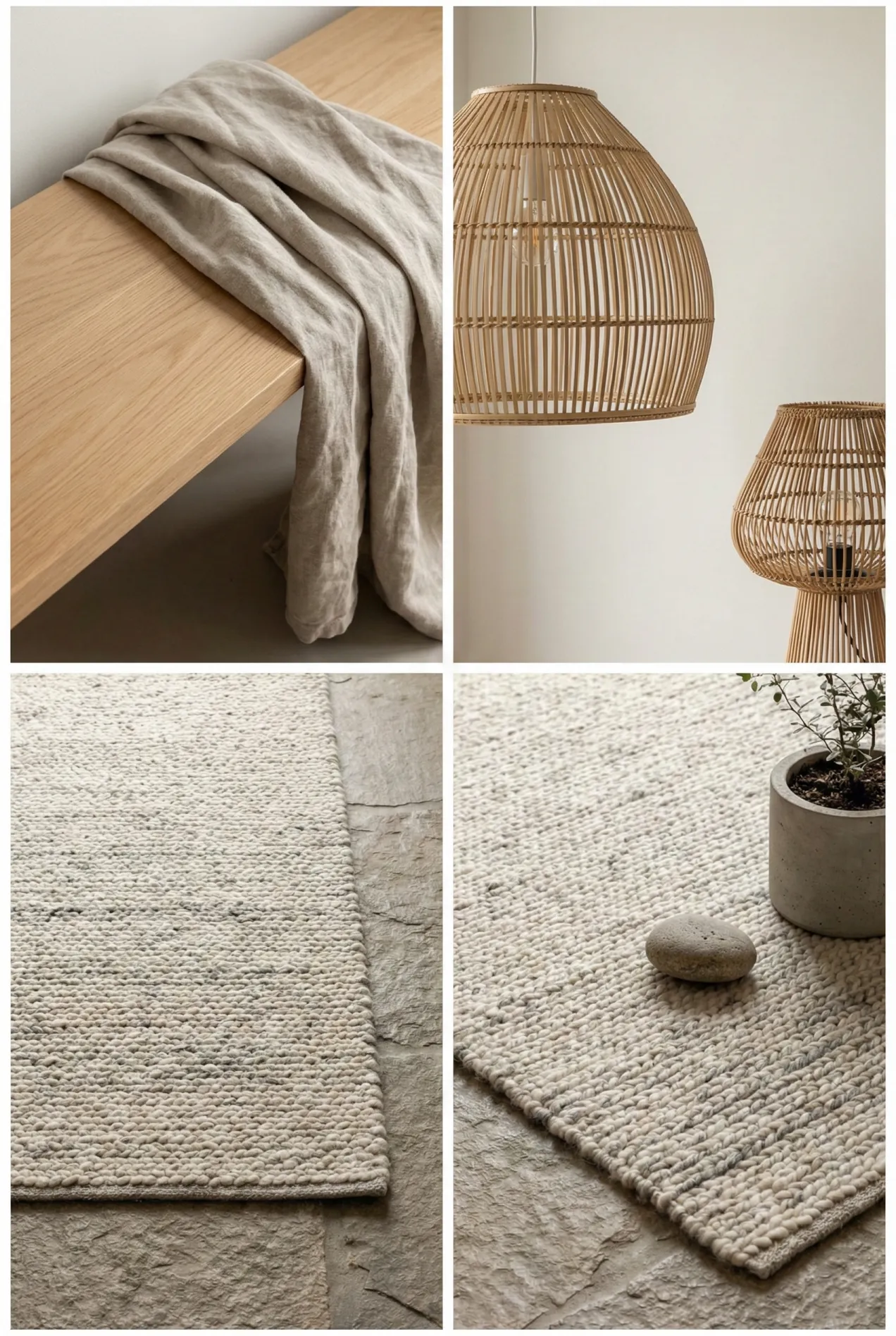
Texture is what makes Japandi bedrooms feel rich without becoming busy. Smooth wood against soft fibers. Washed linen next to wool. Matte ceramic against a woven rug.
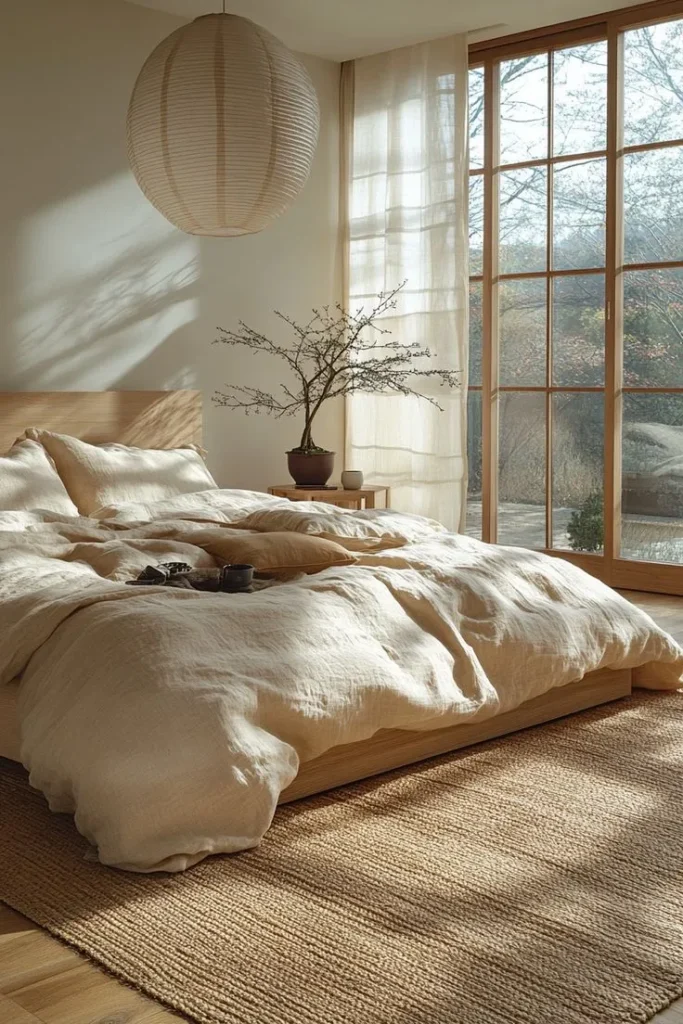
Crisp linen sheets. Cotton layering pieces. Knitted throws. Rattan or bamboo lighting. A wool rug underfoot. These are the combinations that create contrast while still keeping the room calm.
The minimalist apartment aesthetic shares part of this language, but Japandi pushes the tactile side further. It needs texture to feel complete.
Stone accents like a simple vase, a concrete planter, or a rough ceramic bowl add a quiet nod to Japanese restraint. The style really starts to work when your materials do more than look neutral. They need to feel different from one another.
That is the shift. You move your hand from rough clay to soft linen. From cool stone to warm wool. Those small contrasts are what separate Japandi from generic minimalism.
The key to Japandi is not minimalism for its own sake. It is intentional living. And that means you have to declutter first, not just hide your things more neatly.
I spent weeks trying to make old furniture fit the look. I tucked things into baskets, bought matching containers, and edited the shelves over and over. The room still looked heavy. The problem was not the arrangement. It was the volume.
Once I removed half the furniture, the room finally breathed. That is the uncomfortable truth. You cannot organize your way into minimalism if you still own too much stuff for the space.

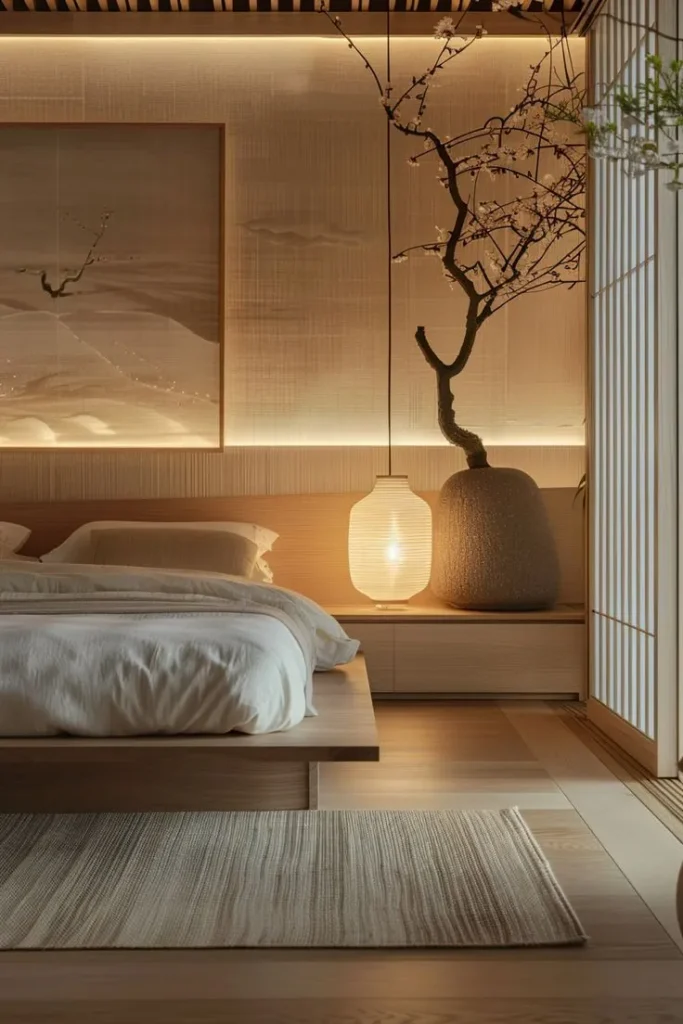

Lighting: Soft and Natural for Japandi Bedroom Style
Natural light should do most of the work during the day. Large windows, light-filtering curtains, and unobstructed layouts help the room feel soft and open.
Artificial lighting should stay understated. Paper lanterns, rattan shades, wooden pendants, and matte sconces fit naturally into the style. The goal is not dramatic statement lighting. It is quiet atmosphere.
Layered lighting matters here. Ambient light for the room. Task lighting for reading. Accent light to highlight texture, wood grain, or a corner that would otherwise disappear after sunset.
The layered lighting approach is especially helpful in Japandi bedrooms because the style relies on mood as much as simplicity.
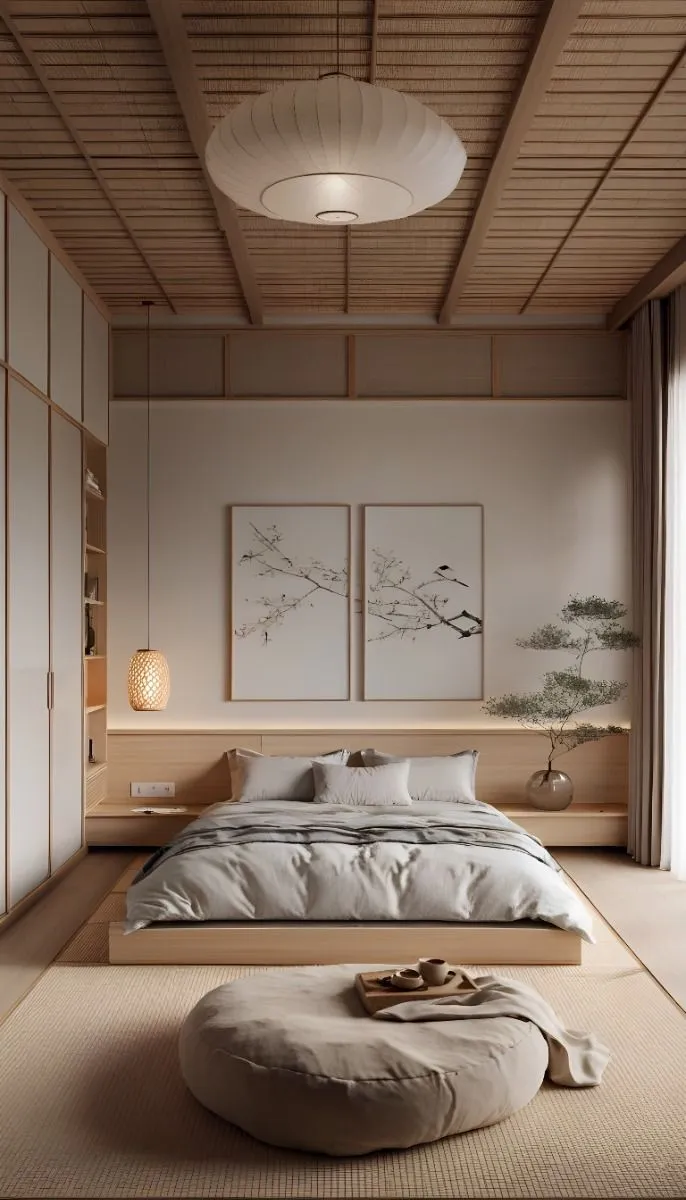
Decorative Elements: Minimalist Yet Meaningful
Decoration in a Japandi bedroom should stay restrained, but that does not mean personality disappears. The best rooms include a few pieces with shape, texture, or story.
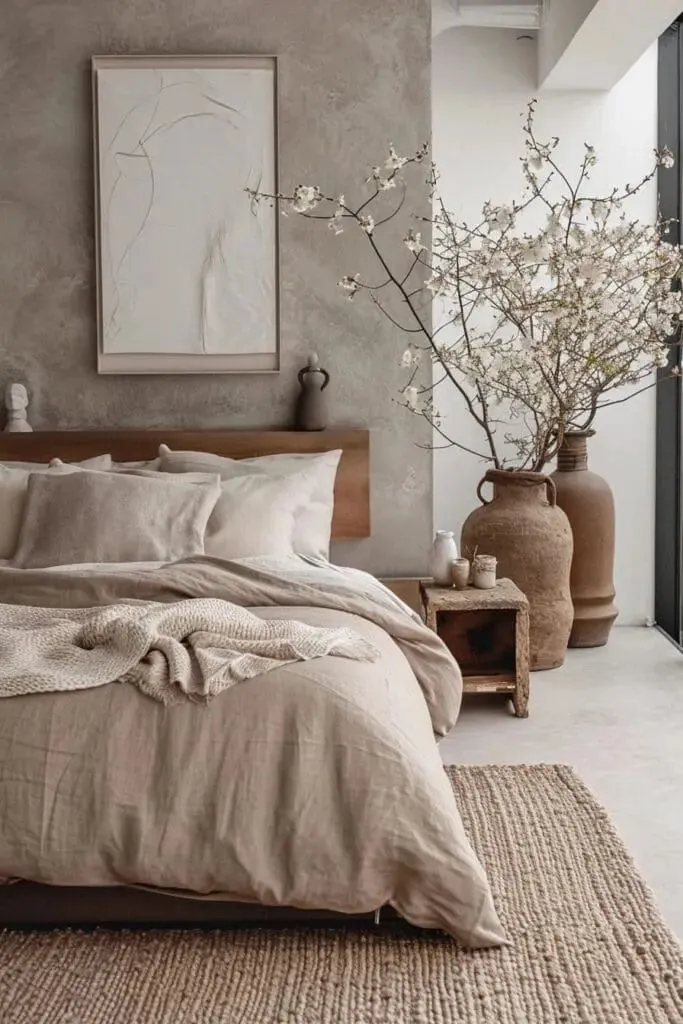
Handmade ceramic vases. Small pottery. A sculptural branch. A simple mirror with a thin frame. Quiet abstract art. These details add character without pulling the room out of balance.
One strong element often does more than five smaller decorative items. A large textile wall hanging. A slightly oversized lamp. A beautiful bench with visible grain. That is enough.
If an object does not add calm, texture, or usefulness, it probably does not need to be there.
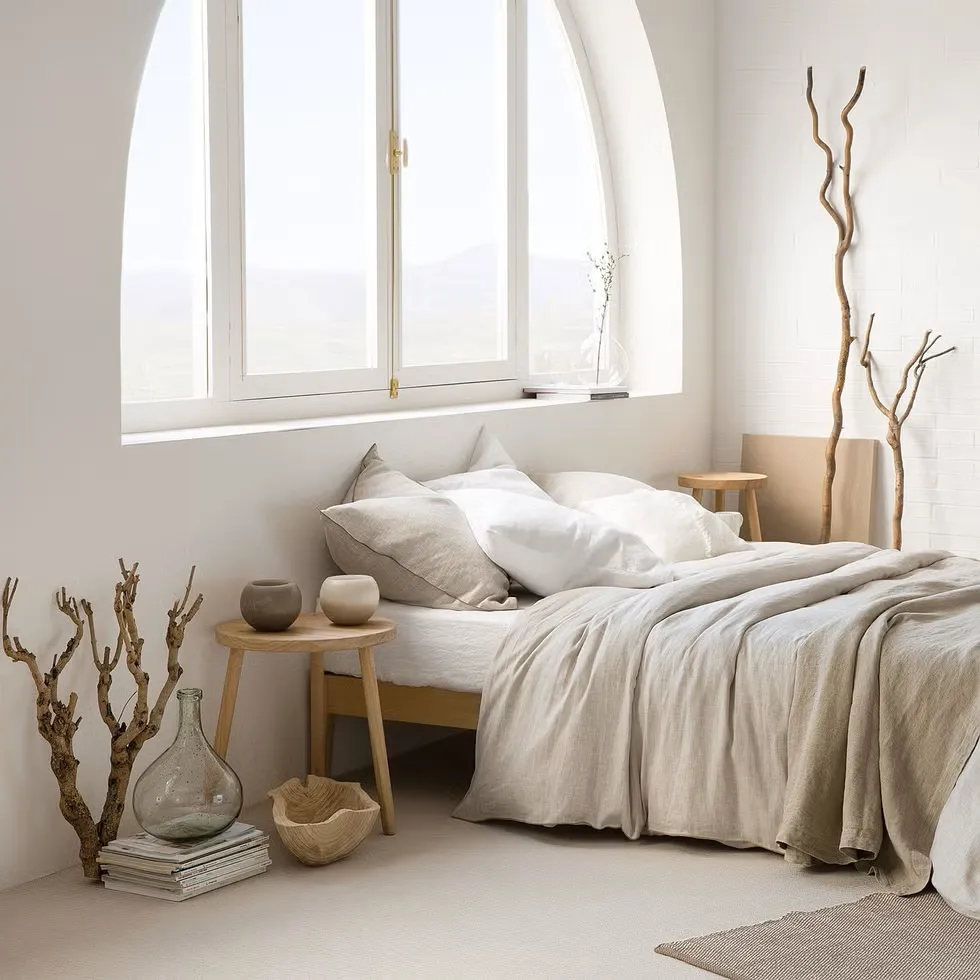
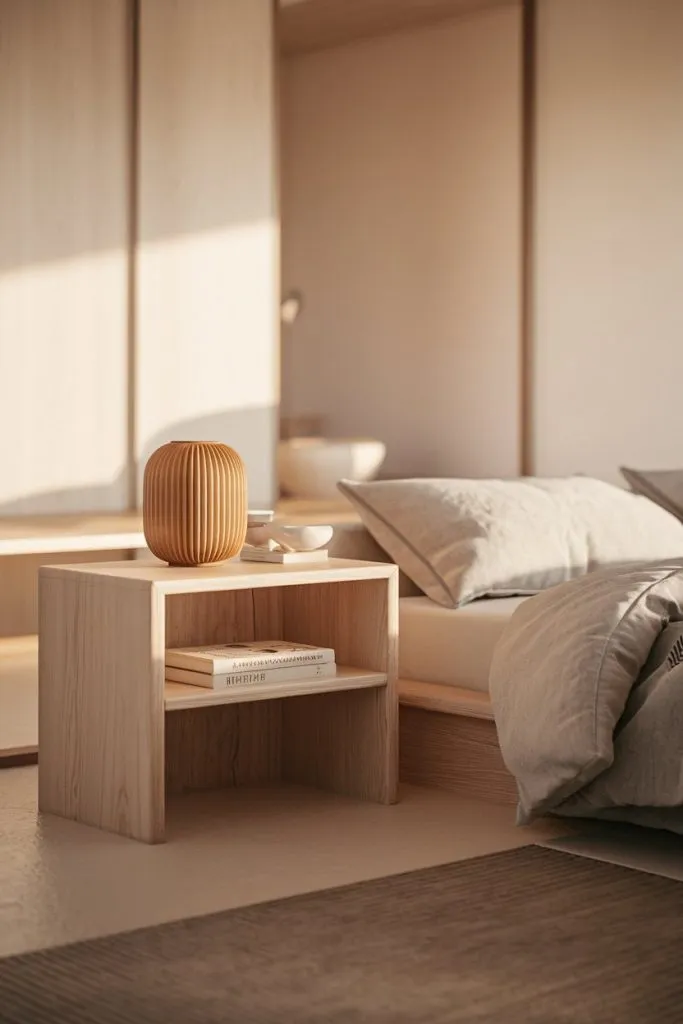

Incorporating Greenery: Zen and Scandinavian Influence
Plants bring life into Japandi bedrooms, but they should stay sculptural and calm rather than leafy and chaotic. Snake plants, peace lilies, bonsai trees, bamboo stems, and even a single branch in a vessel can do the job beautifully.
Simple planters in ceramic, stone, or clay keep the look grounded. One plant on a low shelf or beside the bed often feels more effective than filling every corner with greenery.
The point is connection to nature, not turning the room into an indoor jungle.
Storage Solutions for a Clutter-Free Space
Japandi needs order. Clutter ruins the entire effect faster than almost anything else.
Built-in wardrobes with sliding doors, simple drawers under the bed, and low-profile storage benches work well because they keep the room visually quiet. Open shelving can work too, but only when the contents are intentional and limited.
Natural baskets in rattan or woven fibers help with everyday storage while keeping the material palette cohesive. The real goal is simple. Everything needs a place, and that place should not visually compete with the room.
For smaller spaces, our guide on designing functional bedrooms offers useful storage ideas that still feel calm and practical.


Japandi Bedroom Mistakes Designers Still See in 2026
The most common mistake is assuming Japandi means buying everything in the same pale beige tone. That usually flattens the room instead of calming it.
The second mistake is relying on fake materials. Printed wood grain, stiff synthetic bedding, and decor that exists only to fill space all weaken the effect.
The third mistake is trying to keep too much furniture. Japandi rooms need breathing room. If your bedroom is full of storage you never use, decorative pieces with no purpose, and furniture that blocks the flow, the style will always feel forced.
In 2026, the strongest Japandi bedrooms look softer, warmer, and a little more imperfect. They feel lived in. Not staged. Not sterile.
Achieving Harmony: The Japandi Philosophy
Japandi is not just a decorating style. It is a way of editing a room until it feels lighter, quieter, and easier to live in.
Do not overcrowd it. Leave space around furniture. Let materials show their age and texture. Choose fewer pieces, but choose them carefully.
A good Japandi bedroom does not need to look perfect. It needs to feel calm when you walk into it.
That is why the best versions of this style in 2026 are moving away from flat beige minimalism and toward something warmer, more tactile, and more human.
If you want to keep exploring, browse more bedroom design ideas and compare how texture, storage, and lighting change the mood of a room.