Dark Bedroom Ideas for Teenage Boys
Most parents hesitate. The idea of painting a teenage boy’s room dark feels like a commitment to something gloomy, hard to fix, and impossible to keep looking good. That hesitation makes sense. But it’s almost always based on the wrong version of the dark bedroom.
The rooms that don’t work are the ones that go dark without a plan. Full black walls, no warm tones, one ceiling light, furniture that disappears into the background. Those rooms feel like a basement. That’s not what we’re doing here.
What actually works is dark with intention. A considered palette, layered light, one warm accent that pulls the whole room forward. Done right, a dark teen bedroom is one of the most effortlessly pulled-together spaces you can create. And it holds up better than any other color scheme when a teenager is actually living in it.
Why Teenage Boys Are Drawn to Dark Bedrooms (and Why That Instinct Is Right)
There’s a reason dark bedrooms show up constantly in what older boys save on Pinterest and screenshot from Instagram. It’s not just aesthetics. It’s about feeling like the space belongs to them.
Bright, cheerful rooms signal childhood. Dark rooms signal something else entirely. Maturity. Privacy. A space that takes itself seriously. At 14 or 15, that distinction matters more than most parents realize.
The instinct is correct. A dark bedroom done well is genuinely calm. It reads as intentional. It doesn’t show wear the way lighter rooms do. And for a teenager who spends real time in that room studying, gaming, and just existing, a space that feels settled makes a difference.
What most boys can’t articulate is the specific combination that makes it work. Dark walls are only part of it. The warmth is what does the heavy lifting.
The One Mistake That Makes Dark Bedrooms Feel Depressing
It’s not the color. It’s the light.
Every dark bedroom that fails does so for the same reason: one overhead fixture doing all the work. An overhead light in a dark room creates flat, shadowless illumination that drains the space of any warmth. The walls look heavy. The room feels smaller. Everything looks the same shade of dim.
The fix is not complicated. But it is non-negotiable.
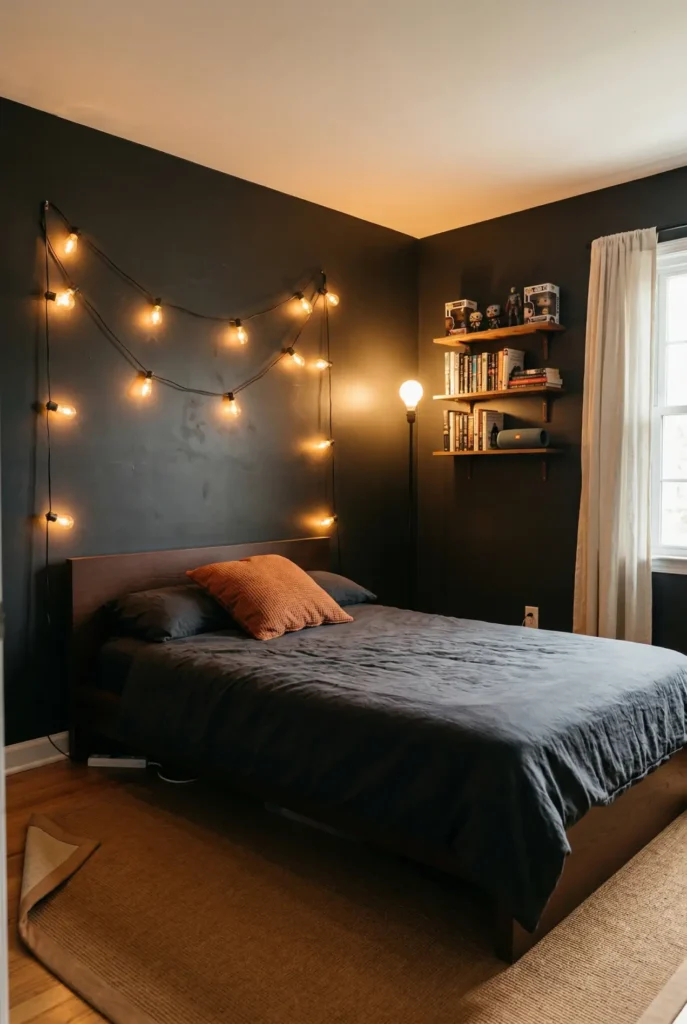
A dark bedroom needs at least three light sources, and none of them should be the dominant one. A desk lamp for the study zone. A floor lamp or wall sconce for ambient light. LED strip lighting behind a shelf or headboard for depth and mood. The overhead fixture becomes the last resort, not the default.
When you layer light in a dark room, something shifts. The shadows become intentional. The warm zones pull forward. The space starts to feel curated instead of closed-in. That’s the version worth copying.
Choosing the Right Dark Color: It’s Not Just Black or Navy
Most people default to navy. Navy is a good choice. But it’s not the only one, and for some rooms it’s not even the best one.
The dark palette for a teen bedroom has more range than most people use. Here’s what actually performs well in real rooms.
Charcoal gray is the most flexible. It reads dark without the weight of true black. It pairs with almost any accent color: warm wood, mustard, terracotta, sage green. It’s also the most forgiving in rooms with variable natural light, because it shifts tone depending on the time of day in a way that feels intentional rather than inconsistent.
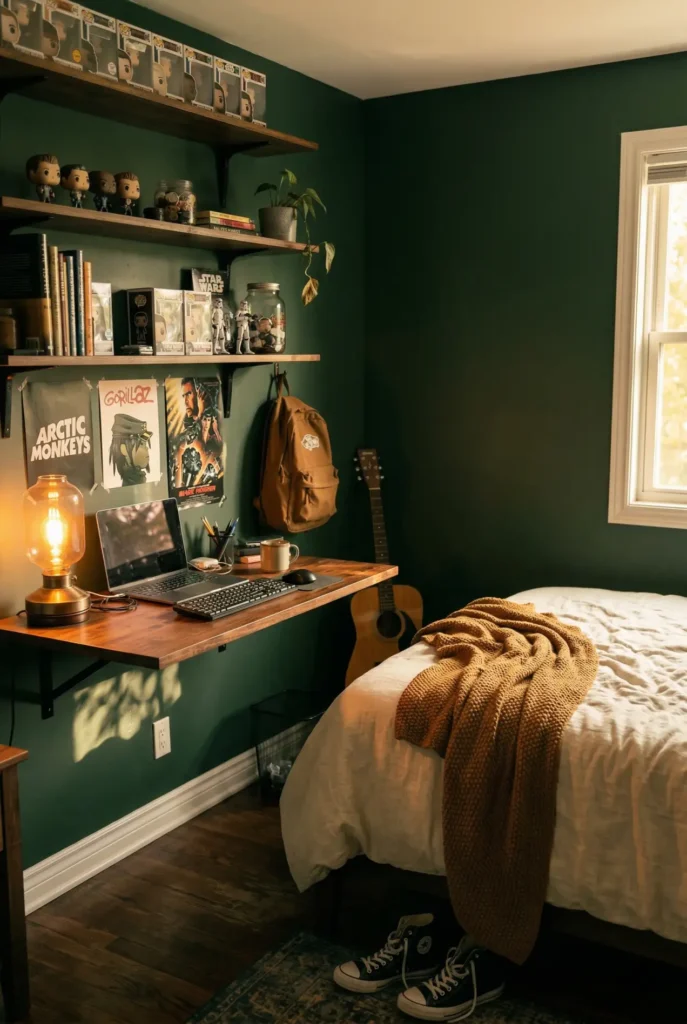
Deep forest green is having a real moment and for good reason. It brings warmth that navy doesn’t. It pairs naturally with wood tones and brass accents. In a teen bedroom with a desk setup and some shelving, it creates exactly the kind of focused, serious atmosphere that older boys are looking for without feeling cold.
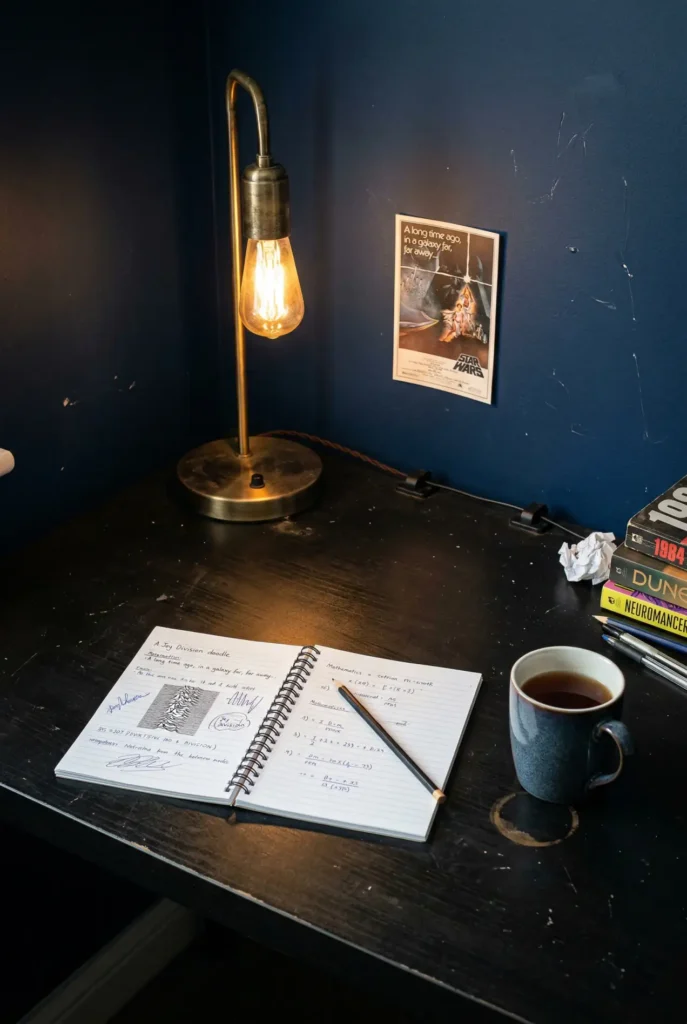
Navy blue works best in rooms with decent natural light. Commit to it fully if you go this direction. Navy on one wall with white on the others is the most common mistake I see. It looks incomplete. Navy earns its place when it’s the room’s dominant statement, not a half-measure.
Near-black (very deep charcoal or off-black) is the highest-risk, highest-reward option. It needs the most light layering and the most warmth in textiles and furniture. But when it works, it’s the version that stops people mid-scroll on Pinterest.
The Warm Accent Rule: Why One Color Changes Everything
A dark room without a warm accent is just a dark room. The accent is what makes it feel like a choice instead of an oversight.
This is the part no one talks about. You don’t need much. One consistent warm tone, showing up in two or three places, is enough to shift the whole atmosphere.
The combinations that work in real teen bedrooms, not just in staged photos:
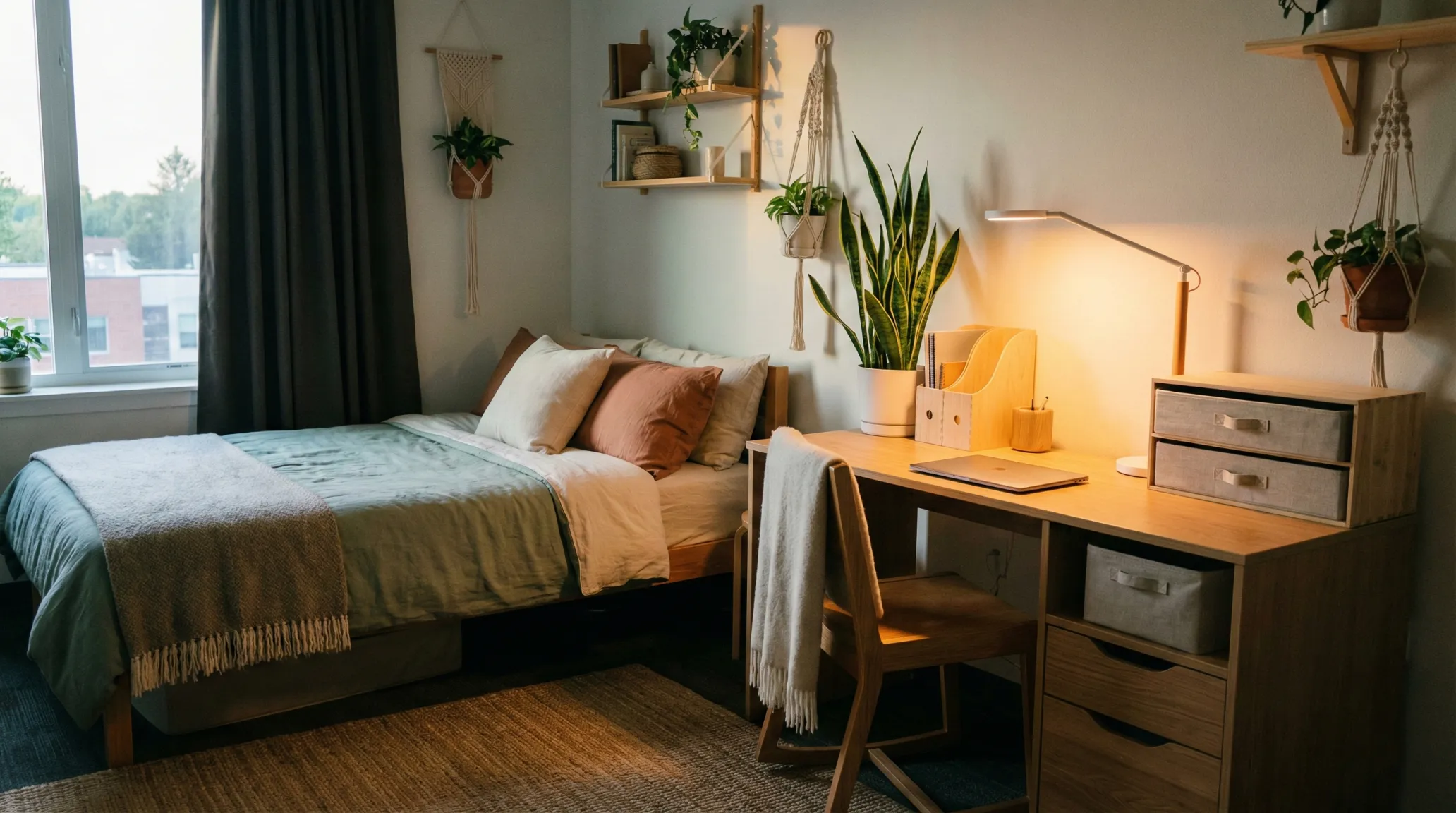
Dark walls + warm wood. The most reliable combination. Wood furniture, wood shelving, even a wood-framed mirror. The grain and warmth of wood against a dark wall is contrast that reads as intentional without any effort.
Dark walls + mustard or amber. A throw pillow, a desk lamp shade, a single piece of art with warm tones. Mustard is the accent color that performs best in dark teen bedrooms because it’s warm without being aggressive.
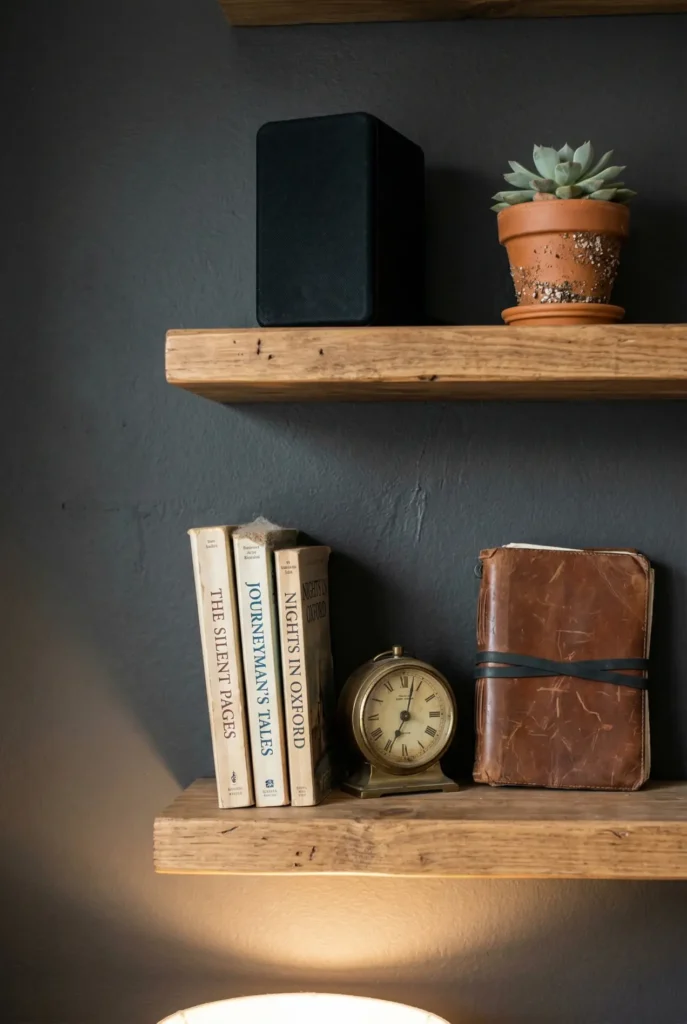
Dark walls + terracotta. Less common in teen boy rooms but genuinely effective. Works especially well with deep green or charcoal. A terracotta ceramic on a shelf, a rug with warm red undertones, one piece of bedding in that tone.
Dark walls + brass or matte gold hardware. This one is underused. Swapping out a desk lamp, drawer pulls, or curtain rod for brass costs almost nothing and adds a layer of visual warmth that reads as elevated without looking like it’s trying too hard.
Dark Bedroom Setups That Actually Function: Study, Gaming, and Sleep
A teenage boy’s bedroom has to do three things well. Study. Game. Sleep. A dark aesthetic doesn’t complicate any of that. It just requires thinking about each zone separately.
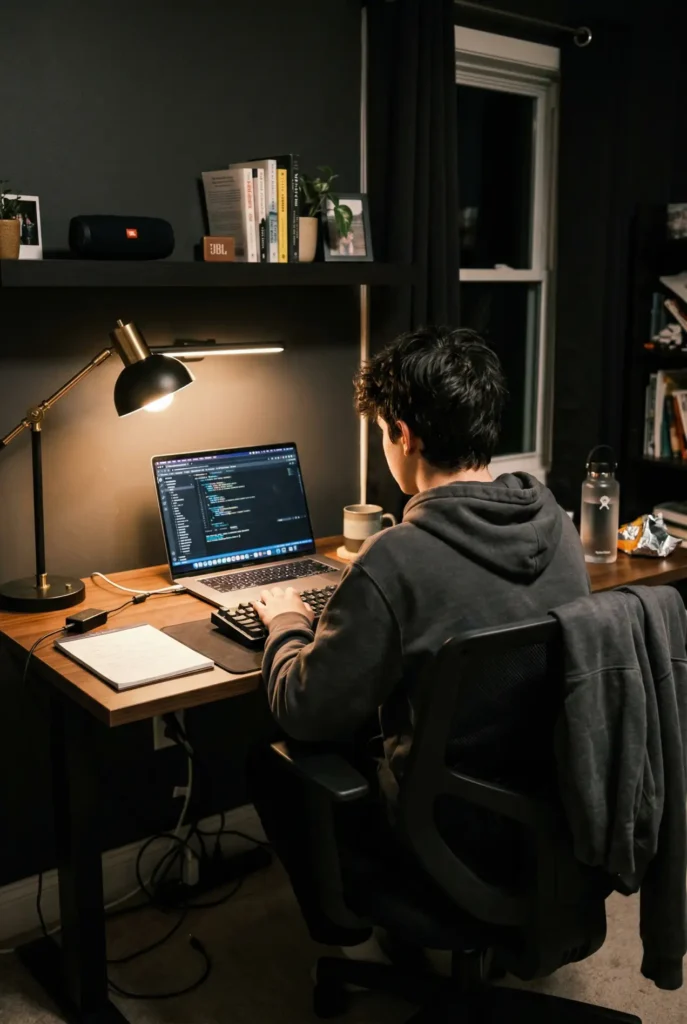
The study zone. Bright, focused task lighting is even more important in a dark room than in a light one. A proper desk lamp positioned to the side (not directly overhead) eliminates screen glare and keeps the work area well-lit without blowing out the mood of the whole room. The desk surface should be a contrast to the walls: light wood or white laminate reads well against dark backgrounds and makes the zone feel distinct.
The gaming setup. Dark bedrooms and gaming setups are a natural pairing. The contrast between screen glow and dark walls actually enhances the visual experience. LED strip lighting behind a monitor or desk adds ambient light that reduces eye strain without competing with the screen. Keep cables managed. In a dark room, cable chaos is immediately visible and immediately ruins the effect.
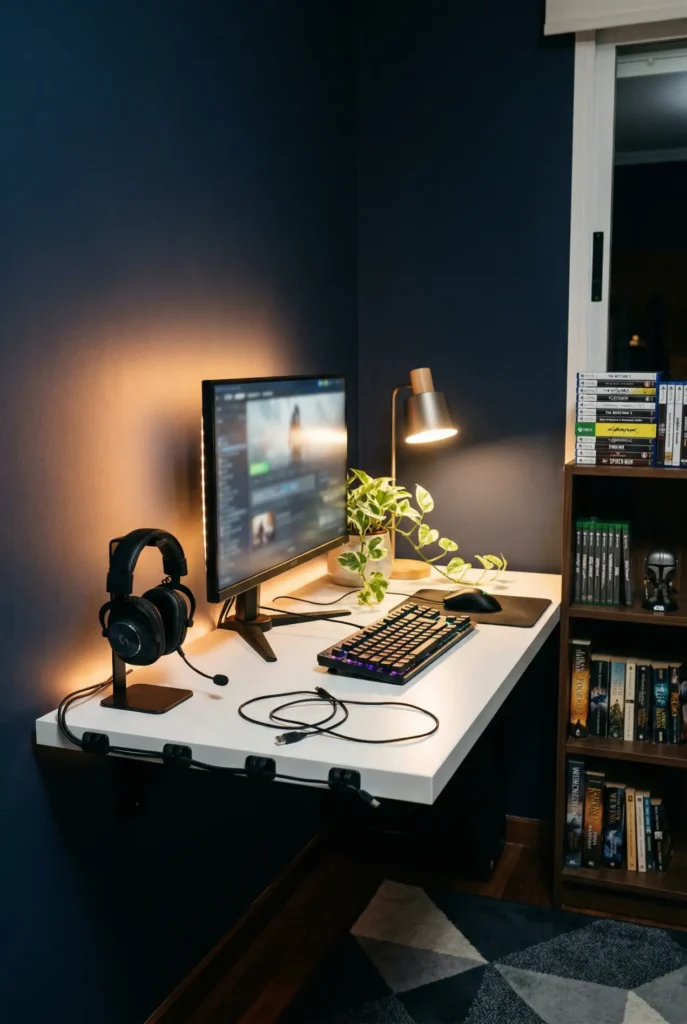
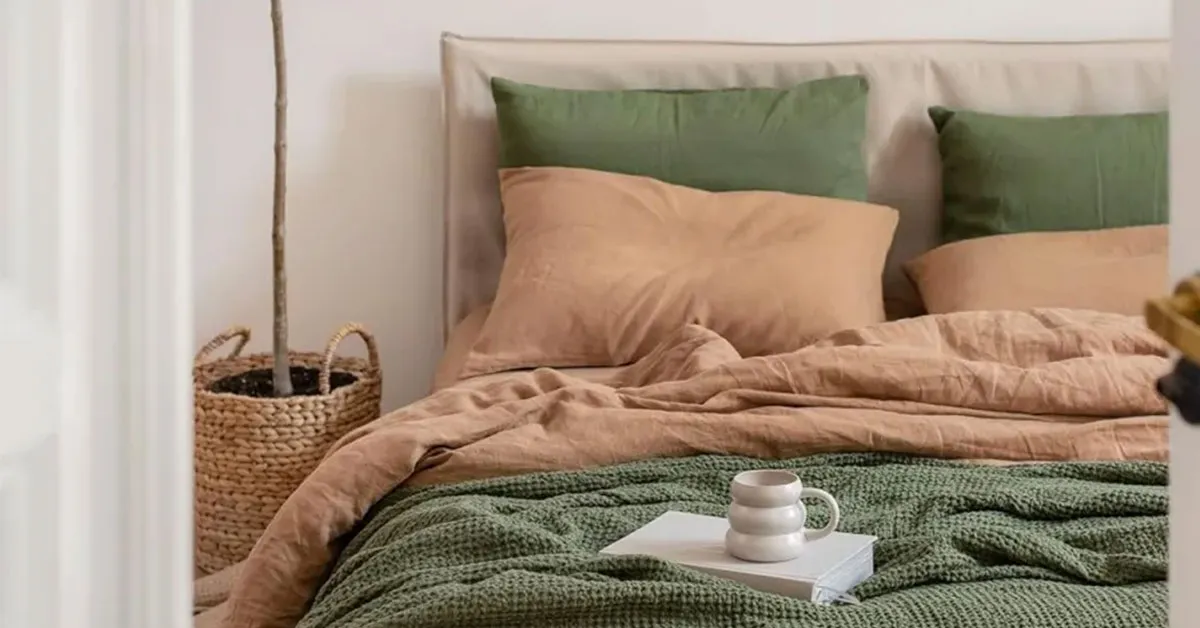
The sleep zone. Layered bedding in dark rooms needs texture. A flat dark duvet on a dark wall disappears. Add a throw in a contrasting tone, a textured pillow, something that breaks the monochrome. Linen bedding works exceptionally well in dark rooms because the natural wrinkles and texture catch light in a way that smooth fabric doesn’t.
Does the Room Size Matter for a Dark Palette?
Yes. But not in the way most people assume.
The common advice is to avoid dark colors in small rooms. I think that advice is wrong for most teen bedrooms. A small room painted dark, with good lighting and the right furniture scale, feels intentional and cozy. The same small room in light beige often just feels unfinished.
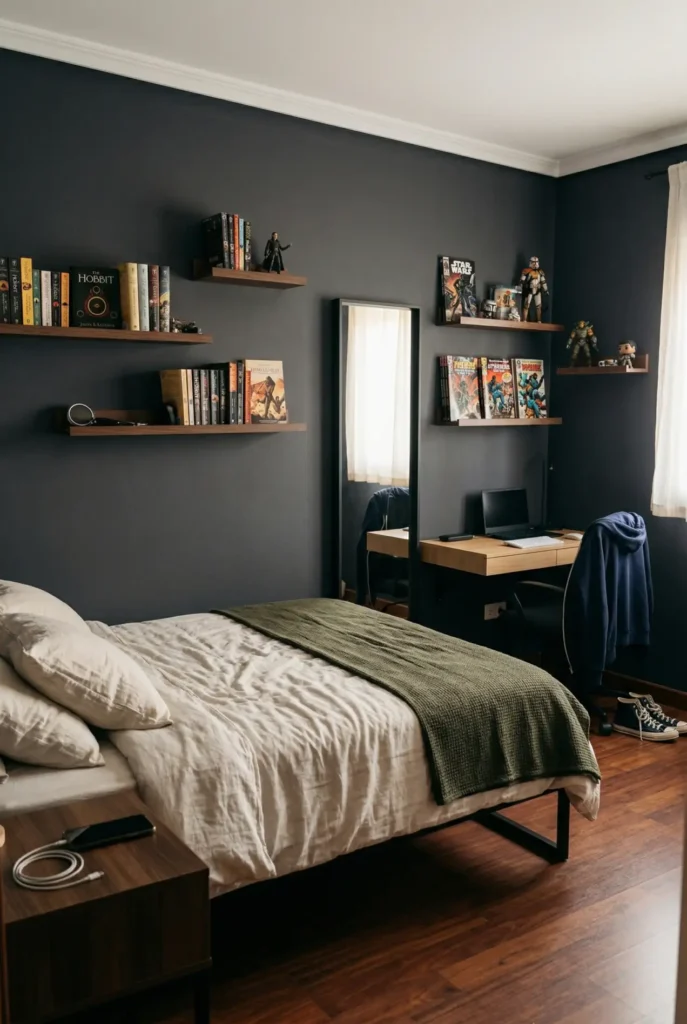
What actually matters in a small dark room is vertical space. Keep the floor as clear as possible. Use wall-mounted shelves instead of freestanding ones. Choose furniture with legs rather than pieces that sit flush to the floor. Visual clearance between the floor and furniture makes a dark room feel taller and more open than it actually is.
One mirror, placed on a wall adjacent to a window, doubles the natural light entering the room without any structural change. In a small dark bedroom that’s the single most impactful thing you can do besides layering the artificial light.
What to Buy vs. What to DIY in a Dark Teen Bedroom
Paint is the biggest visual investment per dollar in any room. In a dark bedroom it’s even more true. One gallon of quality interior paint covers roughly 400 square feet. That covers most teen bedrooms twice. The color matters. The brand matters less, as long as you’re buying quality latex with a satin or eggshell finish. Matte absorbs too much light. Gloss is too reflective. Satin is the finish that works.
Spend on the desk lamp. This is not the place to cut corners. A good adjustable lamp with a warm bulb (2700K to 3000K color temperature) is the single piece of hardware that most affects how the room feels. Buy cheap here and you’ll notice every day.
DIY the accent lighting. LED strip lights behind a headboard, under a shelf, or along a desk edge cost very little and take twenty minutes to install. The visual impact is immediate and the result looks far more considered than the price suggests.
The bedding texture is more important than the brand. Linen or waffle-weave cotton in a contrasting tone. That’s it. It doesn’t need to be expensive. It needs to be textured and it needs to contrast with the walls.
The Dark Academic Angle: When the Aesthetic Goes Deeper
Some boys don’t just want dark walls. They want a room that feels like it belongs to someone who reads, thinks, and takes their interests seriously. That’s the dark academic direction, and it’s one of the most Pinterest-saved aesthetics in the teen bedroom space right now.
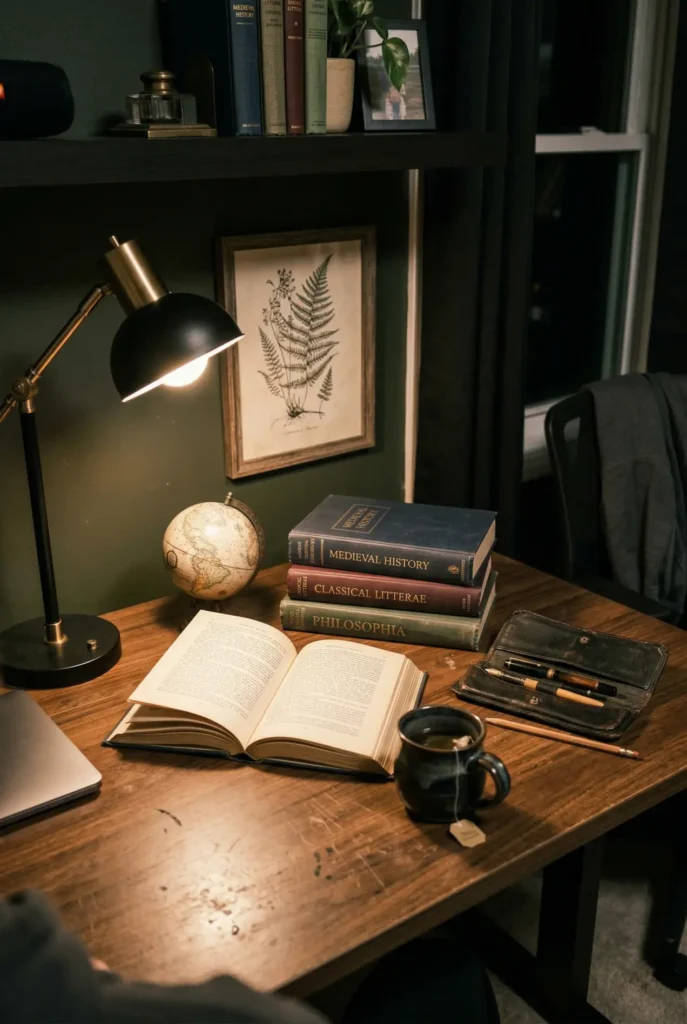
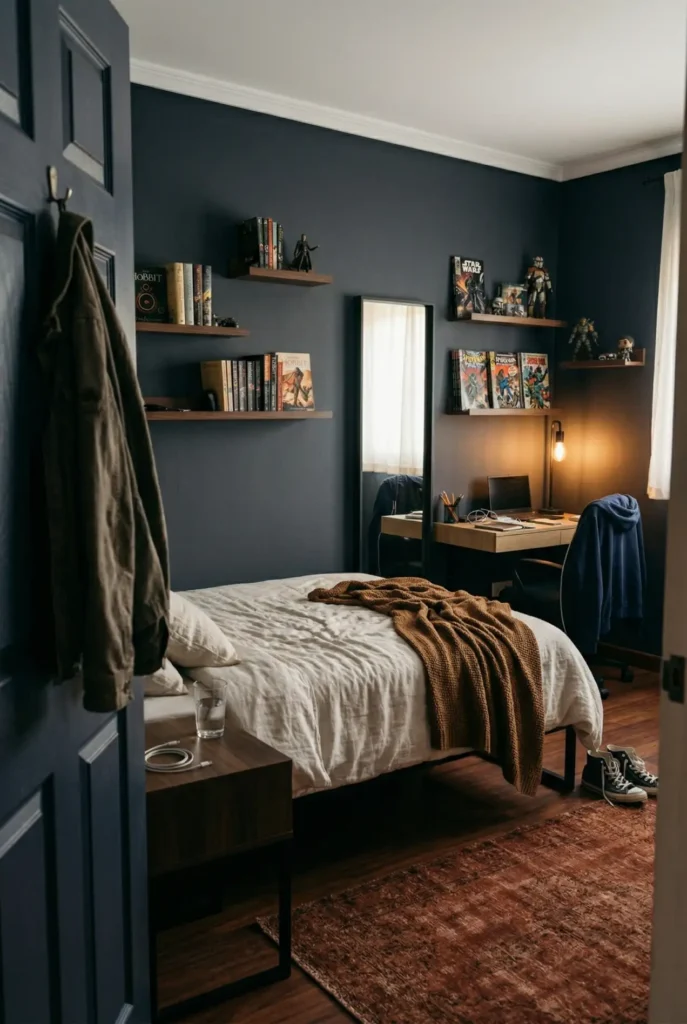
The difference between dark and dark academic is layering. Books with visible spines on open shelves. A proper desk lamp as the main light source, warm and focused. Wood surfaces, ideally darker tones. A map, a framed print, something that signals curiosity. The palette leans toward deep green, forest tones, warm brown, aged wood.
It’s not a themed room. It’s a room that reflects a particular kind of personality. And it works at any budget because most of what makes it feel right costs almost nothing: the books you already own, a lamp from a thrift store, a shelf or two on the wall.
Not if the lighting is handled correctly. The concern is usually about darkness during the day making the room feel depressing. The fix is layered warm light, not lighter walls. A well-lit dark room is actually calmer and less visually stimulating than a bright room, which can support better wind-down before sleep. The color of the walls has far less effect on mood than the quality and warmth of the light sources.
The paint itself is the smallest cost. A quality interior paint in a dark color runs $35 to $55 per gallon. Most teen bedrooms need one to two gallons. The bigger investments are the desk lamp ($40 to $80 for something worth buying), a floor lamp or ambient light source ($30 to $70), and bedding in a contrasting tone ($50 to $100 for linen-feel options at mid-range stores). A full dark bedroom refresh including paint, lighting, and new bedding can be done for under $300 if furniture is already in place.
Yes, with the right prep. Dark colors show imperfections more than light ones, so surface prep matters more here than usual. Fill any holes, sand lightly, and prime with a gray-tinted primer before the dark topcoat. Two coats of the dark color applied with a quality roller will give even coverage. The common mistake is rushing the second coat before the first is fully dry.
With permission, yes. Many landlords allow painting if you return the walls to their original color when you leave. If painting isn’t an option, removable peel-and-stick wallpaper in dark tones has improved significantly and can create a convincing dark feature wall without touching the paint. Dark furniture, dark bedding, and warm lighting achieve most of the effect without touching the walls at all.
Full dark walls if the room has adequate natural light and you’re committed to layering the artificial light properly. One accent wall if the room is small or north-facing, or if you want to test the look before committing. The accent wall approach is safer but often less impactful. The rooms that generate the most Pinterest saves are almost always full dark rooms, not accent wall versions. That said, a badly executed full dark room is worse than a well-executed accent wall. Know your room before you decide.