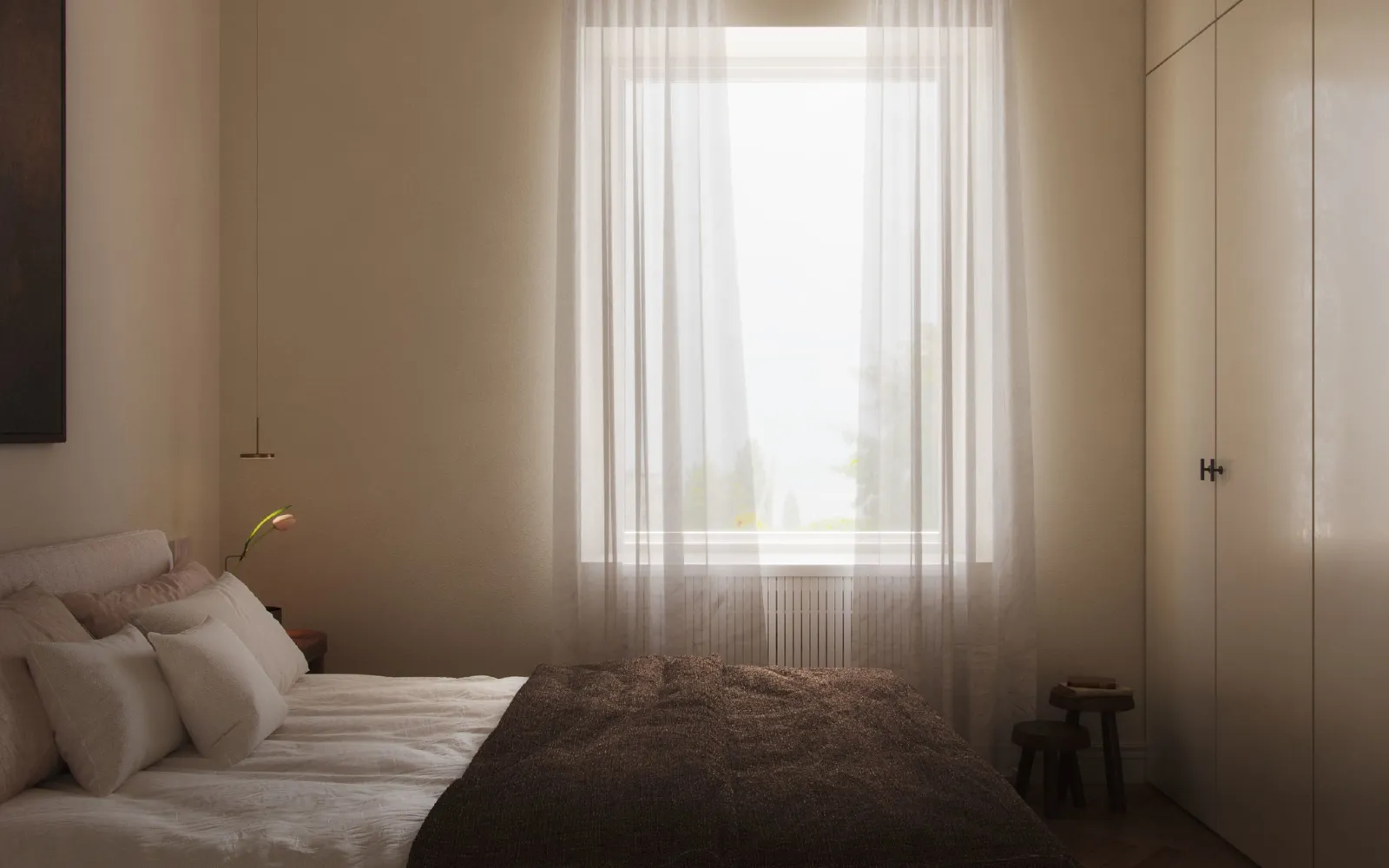
The old rule says you should never use dark paint in a small room because it “shrinks” the space. But honestly? That advice is outdated and, frankly, a bit boring. Using dark paint in a compact area doesn’t make it feel smaller; it makes it feel intentional, cozy, and high-end.
Right now, we are seeing a huge shift toward “moody minimalism.” Whether it’s a tiny powder room or a narrow bedroom, dark colors blur the edges of the room, creating an illusion of depth that white paint just can’t touch. If you’ve been staring at a cramped spare room wondering if you dare go dark, this is your sign. You just need a few specific rules to ensure the space feels like a cocoon, not a cave.
- Choose the Right Finish for Depth
When you’re working with dark paint in a small room, the finish is just as important as the pigment. A flat or matte finish is usually the best shortcut to a sophisticated look. Matte absorbs light rather than bouncing it around haphazardly, which helps those corners “disappear” and makes the walls feel further away.
If you want a bit more “glow” in a bathroom or kitchen, eggshell is a safe bet. Avoid high-gloss on every wall; it highlights every imperfection and can make a small space feel frantic rather than calm. The goal is a velvety, receding effect. - Paint the Trim and Ceiling
This is the mistake most people make: they paint the walls dark but leave the trim and ceiling a stark, bright white. This creates “visual breaks” that actually highlight how small the room is. It’s like drawing a box around the space.
For a seamless, high-end look, try “color drenching.” Paint your baseboards, door frames, and even the ceiling in the same dark hue (or one shade lighter). This removes the boundaries, making the ceiling feel infinitely higher and the walls feel like they never end. It is the ultimate hack for a dark bedroom paint 2026 trend.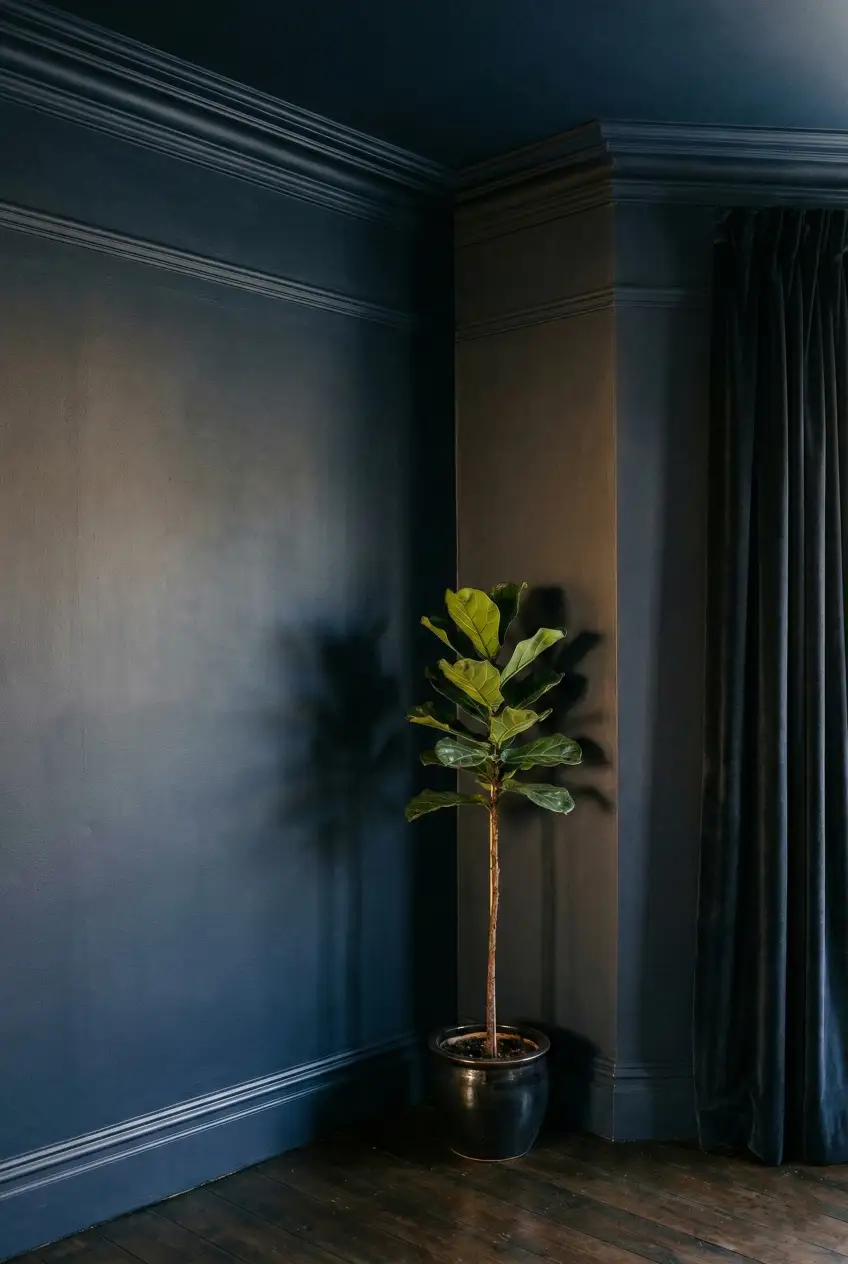 - Advertisement -
 - Prioritize “Layered” Lighting
Dark walls need light to come alive, but not from a single “big light” in the center of the ceiling. Overhead lighting in a dark room creates harsh shadows that feel oppressive. Instead, you want to layer your light sources at different heights.
– Sconces: Perfect for a moody powder room where space is tight.
– Table Lamps: Add warmth to eye-level surfaces.
– Floor Lamps: Direct light into the darkest corners.
When light hits a dark wall from a side angle, it brings out the undertones of the paint—turning a flat black into a rich forest green or a deep burgundy.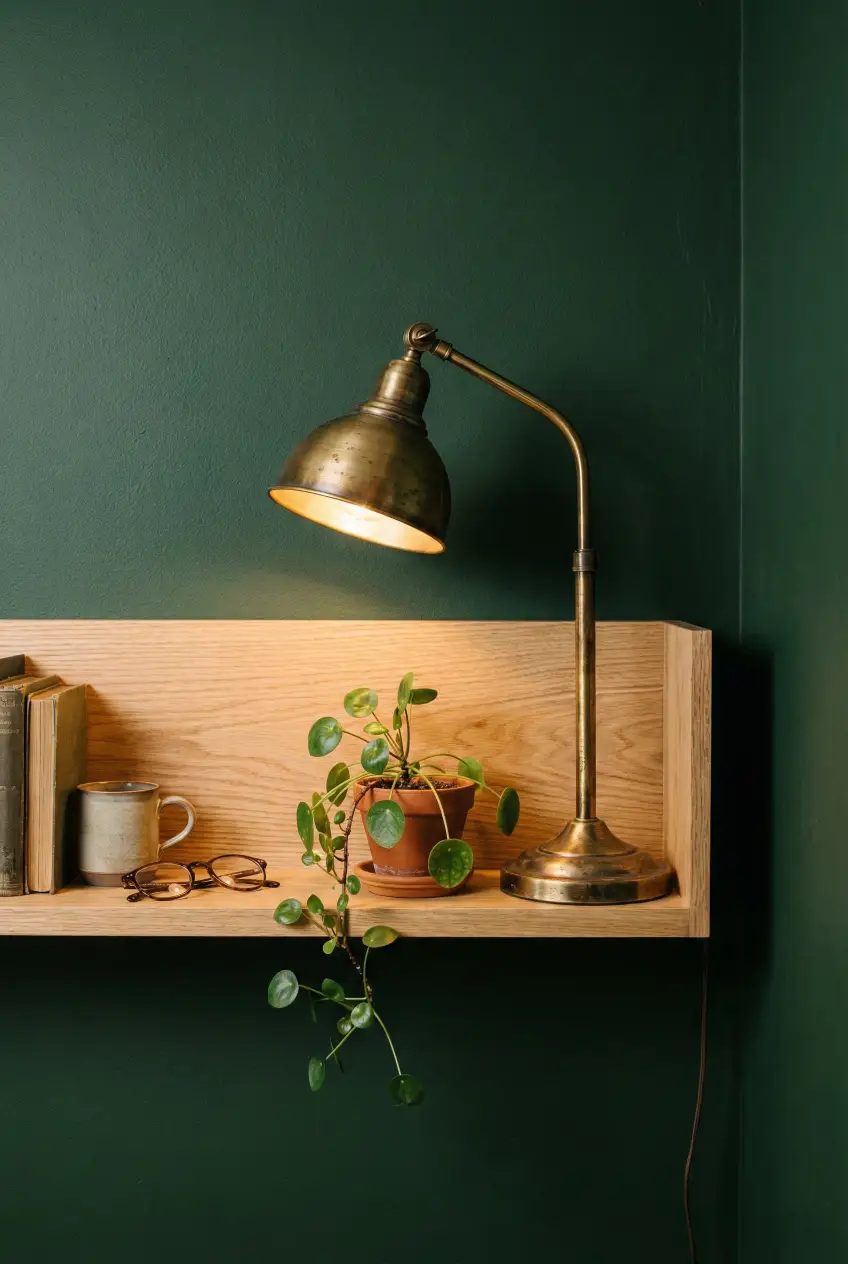
- Use High-Contrast Textures
A dark room can easily feel “flat” if everything is the same texture. To make it feel like a designer space, you need contrast. Think of your dark walls as a backdrop for your furniture and decor.
If you have dark charcoal walls, bring in a light oak dresser, a cream wool rug, or linen curtains. The contrast between the “heavy” color of the walls and the “light” texture of the fabrics creates a sense of airiness. This balance is what makes best dark paint for small rooms actually work without feeling heavy. - Embrace the “Box” in Transitional Spaces
If you’re still nervous, start with a transitional space like a hallway, entry, or powder room. These are rooms you pass through rather than sit in for hours. Going dark here creates a “compression and release” effect—the hallway feels cozy and dark, making the living room you walk into feel ten times brighter and larger by comparison.
It’s a classic styling trick that adds instant character to a standard floor plan. Don’t try to fight the smallness; lean into it and make it the most dramatic spot in the house.
The bottom line: Small rooms are the best place to take a color risk. They require less paint, less time, and offer the biggest emotional payoff. Are you ready to pick up the brush?