If your home feels a little too “in progress,” you’re not alone. You want it to look warm and put-together. But you also want to live in it without constantly resetting every surface.
Here’s the shortcut I use. A lived-in home isn’t messy. It’s edited, layered, and intentional.
What “lived-in” really means (and what it doesn’t)
The internet loves two extremes: showroom-perfect rooms or “cozy chaos.” Most real homes live in the middle.
A lived-in interior looks collected because it has a few repeatable decisions behind it.
This “lived-in, collected” look isn’t just a vibe. It’s showing up as a 2026 interior trend because people want homes that feel personal, calm, and real. Not showroom-perfect. If you want the broader trend context, here’s the overview I reference: Vogue’s 2026 interior design trends.
- It is: warm, personal, relaxed, and functional.
- It is not: cluttered, random, or constantly unfinished.
This is the mistake most people make: they keep adding decor, hoping the room will finally “click.”
But the lived-in look comes from layers and editing, not more stuff.
The 5 rules that make a home feel cozy and collected
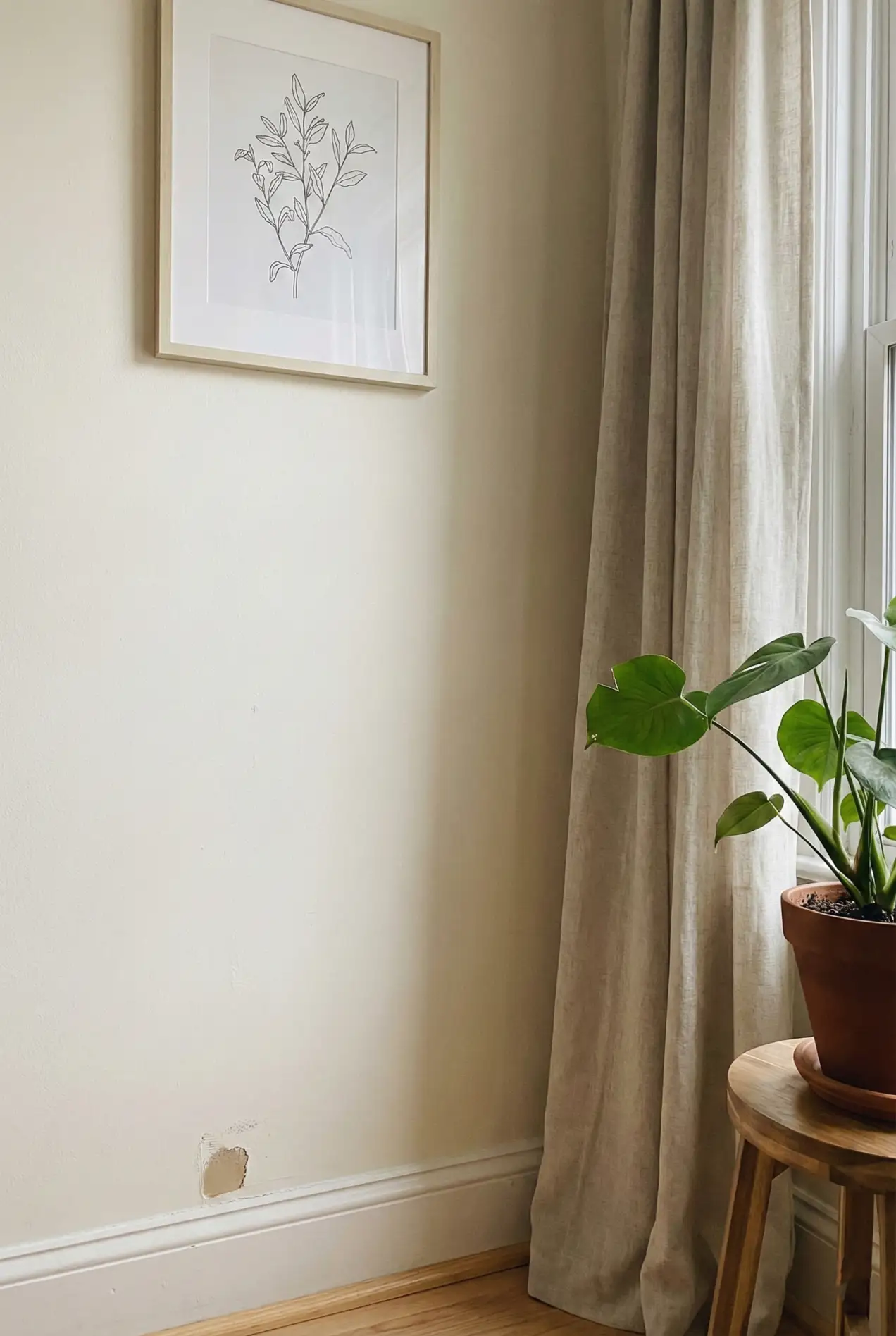
1) Start with one calm “base” color
Pick one neutral that shows up in every room. It doesn’t have to be beige. It just has to repeat. Examples that work in almost any home: warm white, soft greige, light oatmeal, muted taupe.
When the base repeats, everything else looks intentional, even if your furniture is mixed.
2) Choose a “signature texture” and repeat it 3 times
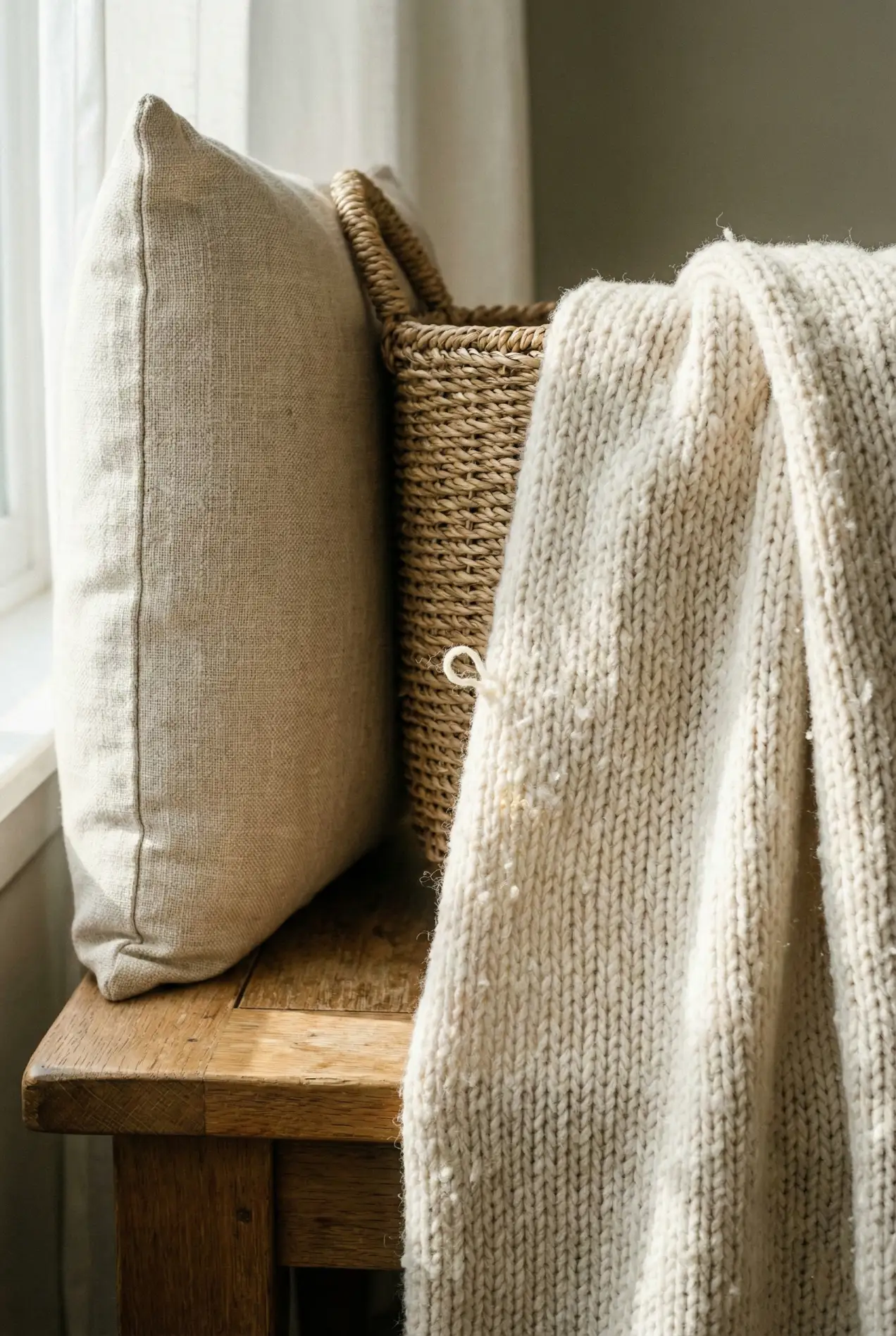
Texture is what makes a room feel lived-in, not staged. Pick one texture you love and repeat it in 3 spots. That’s it.
- linen (curtains, pillow cover, bedding)
- bouclé (chair, cushion, throw)
- wood (frame, side table, tray)
- woven fibers (basket, shade, wall art)
Repeating texture is the easiest way to look collected without buying a matching set.
3) Use the “two surfaces” rule to stop visual clutter
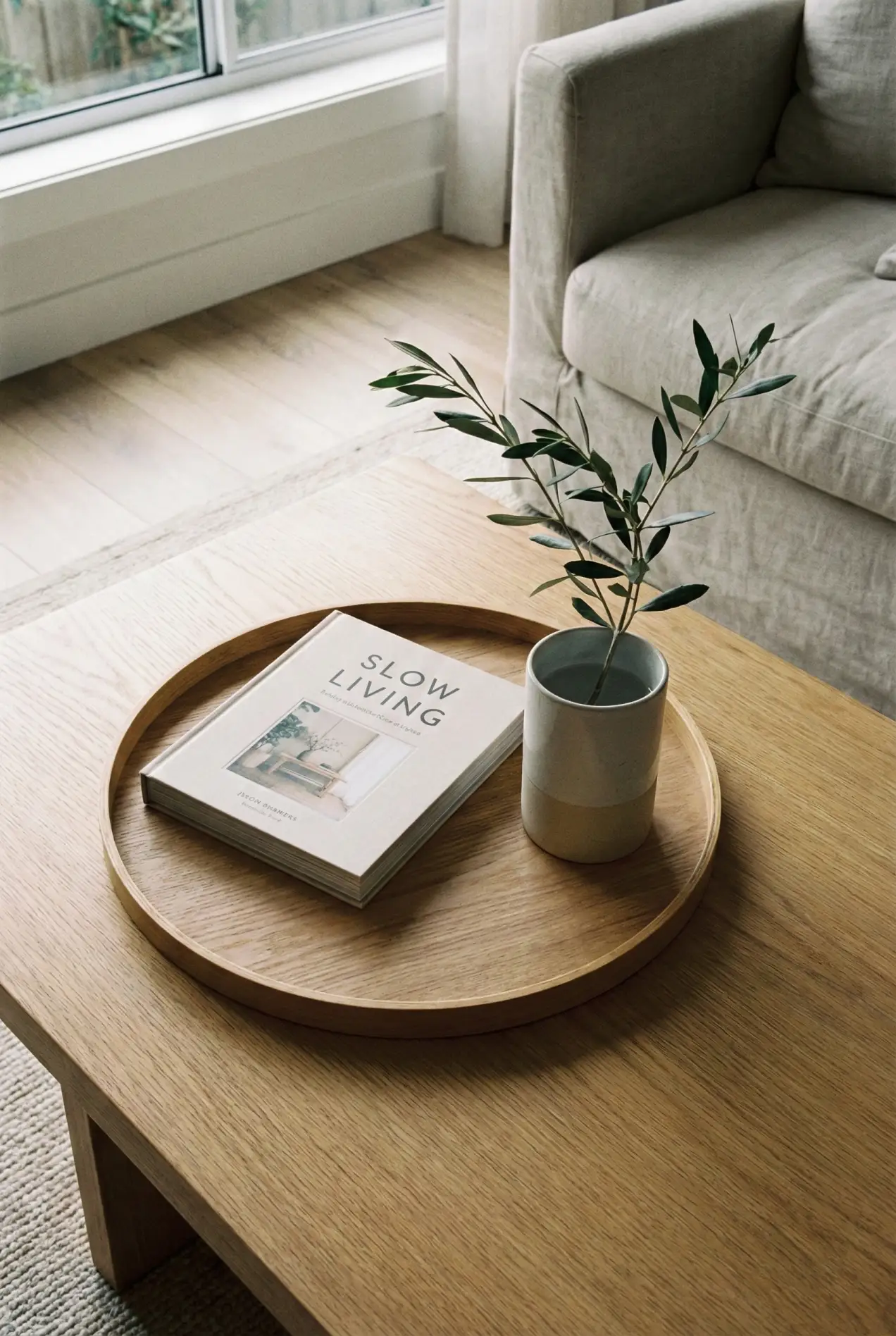
Most rooms feel messy because too many surfaces are competing. Pick two surfaces to style in each room. Leave the rest mostly clear.
- Living room: coffee table + one shelf
- Bedroom: nightstand + dresser
- Kitchen: counter corner + dining table
This is how real homes stay calm. You’re not decorating everything. You’re choosing what gets attention.
4) Layer lighting before you buy more decor
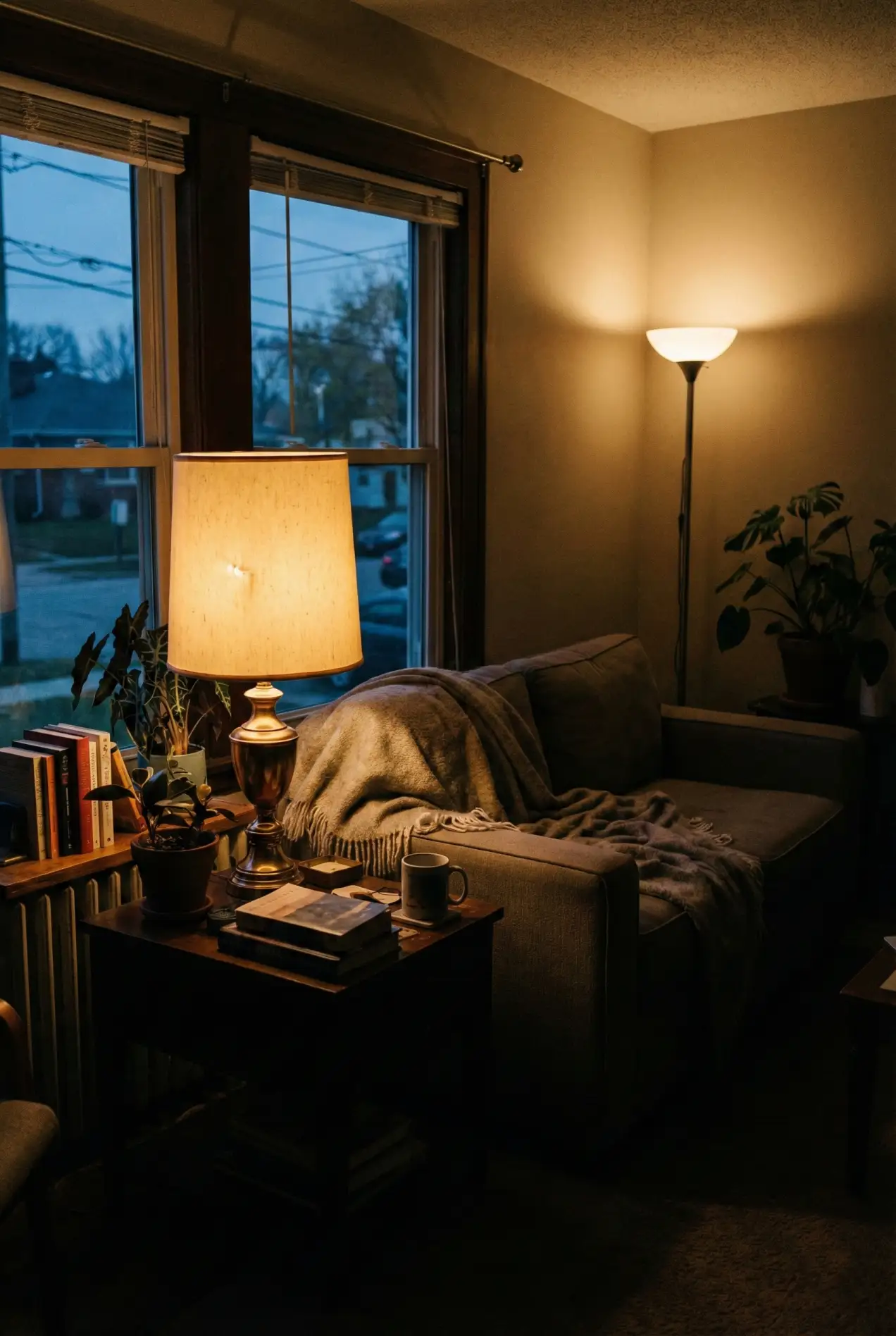
Here’s the truth: the same room can look expensive or flat depending on lighting. If you only have overhead lighting, everything feels harsh and unfinished. A lived-in home has at least two light sources in the main rooms. Three is ideal.
- Ambient: the room’s overall glow (often a ceiling light, but softened)
- Task: light where you read, work, or get ready
- Accent: a warm lamp in a corner, a picture light, or a small glow behind decor
Start small: add one warm lamp first, then one secondary light source.
5) Add one “personal” thing per room (not ten)
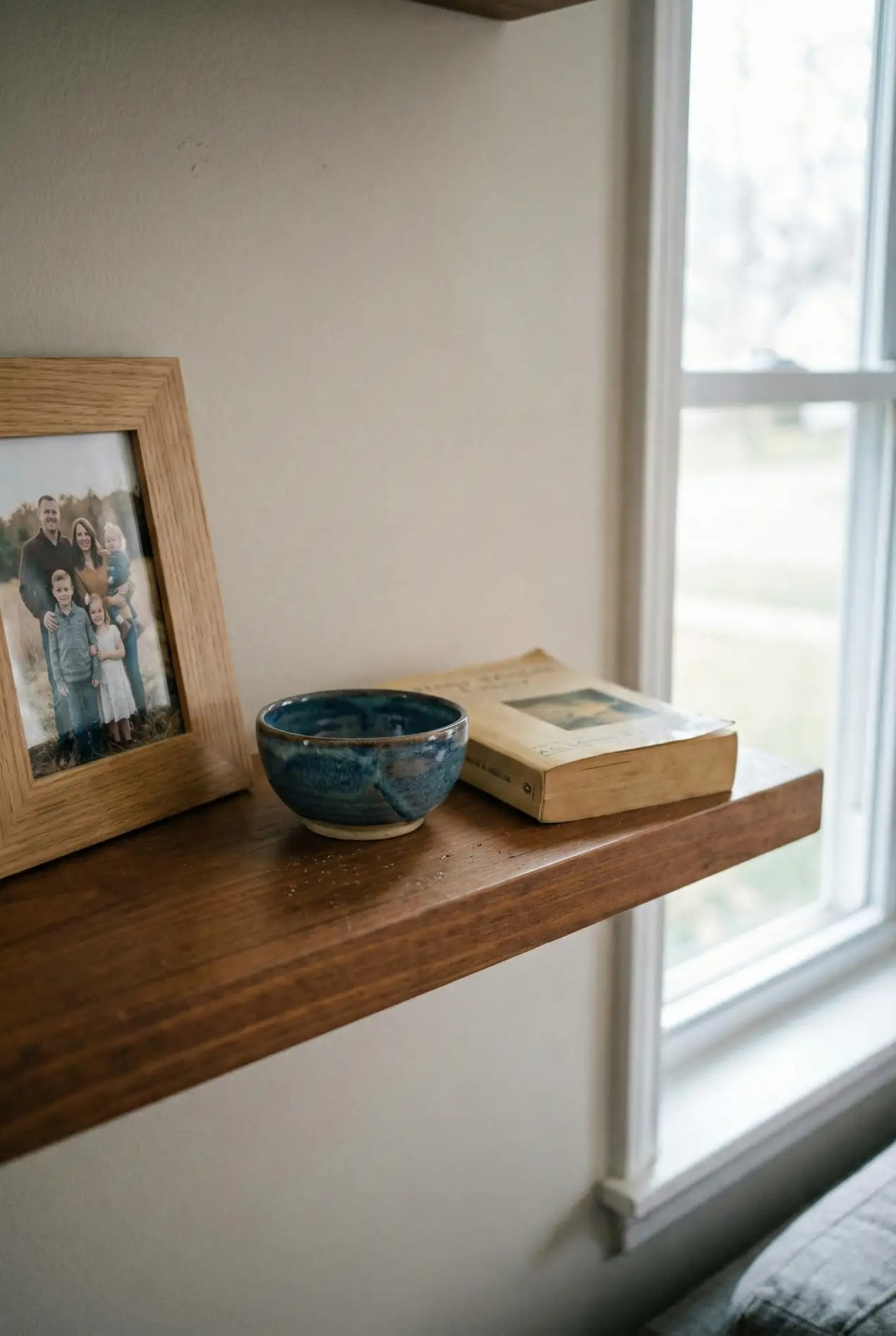
This is where the lived-in feeling becomes emotional. One personal element makes the room yours. Ten makes it feel busy.
- a framed photo in a simple frame
- a piece of art you actually like (not filler)
- a travel object with meaning
- a book you’ve reread, not just styled
Beautiful homes are edited, not expensive.
How to “edit” a room in 15 minutes (my quick method)
If you’re overwhelmed, do this. It works because it removes visual noise fast.
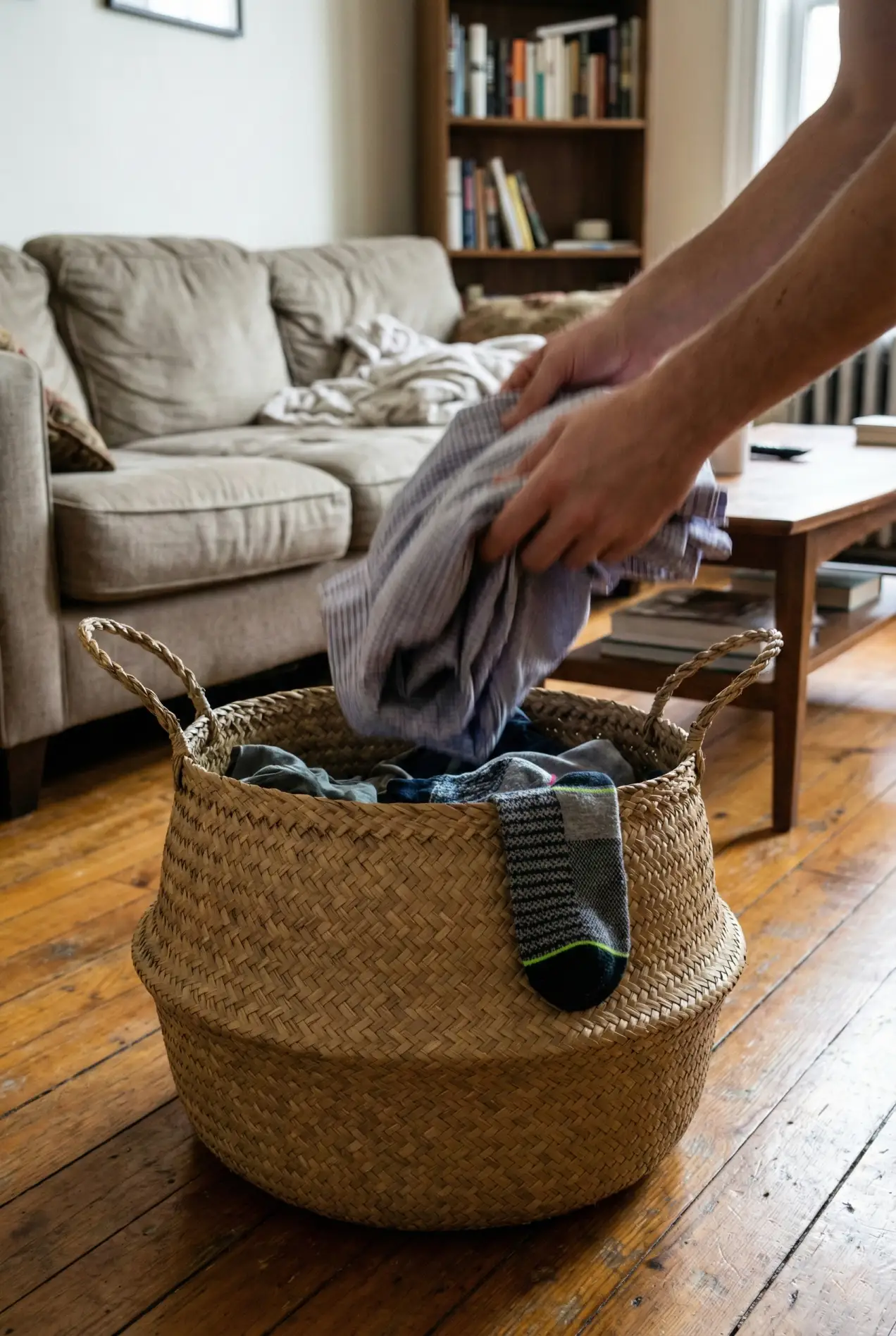
- Grab a basket. Walk the room and collect anything that doesn’t belong.
- Clear one surface completely. Choose the one that bothers you most.
- Put back only 3 items. Something flat (book/tray), something tall (lamp/vase), something personal.
- Add one soft layer. A throw, pillow, or curtain tweak. One move only.
- Turn on a lamp. Your brain reads lamplight as “calm home.”
Room-by-room: what actually works in real homes
Living room
- one large rug (too-small rugs make rooms feel chaotic)
- a tray on the coffee table to contain everyday items
- one textured throw and two pillow covers max
- a lamp plus one second light source (floor lamp or table lamp)
Bedroom
- simple bedding layers (sheet + duvet + one throw)
- nightstand edited to three items (lamp, book, small dish)
- one basket for “not dirty, not clean” clothes
Kitchen
- one styled counter corner (a coffee or tea station works great)
- everything else as clear as possible
- one catch tray near the entry for keys and mail
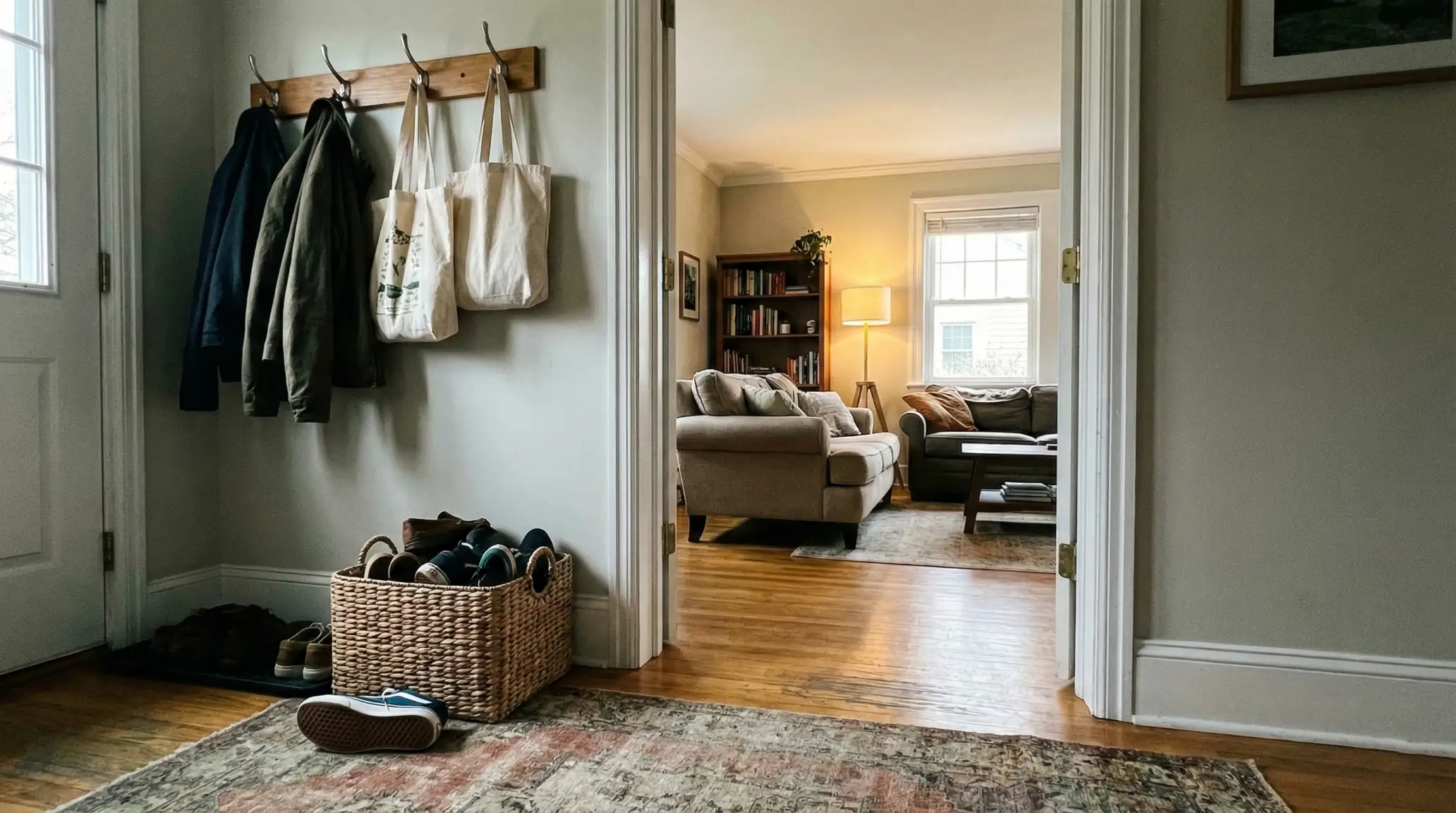
Entryway
- hooks (more than you think you need)
- shoe zone (basket, shelf, or bench)
- one small tray for keys
Common lived-in mistakes (and the fix)
Mistake: Too many small decor pieces
Fix: Swap three small objects for one larger statement piece.
Mistake: Styling every shelf
Fix: Leave negative space. A shelf needs breathing room to look intentional.
Mistake: Buying sets to look cohesive
Fix: Repeat color and texture instead. It looks richer and more personal.
Mistake: Treating clutter like a decor problem
Fix: Add one system: a drop zone, a basket, a tray, a hook. Systems beat motivation.
The lived-in look shopping rule (budget-smart)
If you’re going to spend money, spend it where it changes the whole room.
- Rug: anchors the space and makes it feel finished.
- Lighting: instantly elevates the mood.
- Textiles: pillow covers, curtains, throws. Small cost, big impact.
- Baskets and trays: make everyday items look intentional.
Everything else can be slow. A collected home is built over time.
Quick confidence check
If your home has one calm base color, one repeated texture, and two styled surfaces per room, you’re already there. You don’t need more ideas. You need better decisions.
One question for you
What’s the one room in your home that would feel instantly better with a 15-minute edit today?