Rental living room ideas for apartments and rented houses share one fixable problem: the space looks generic because nothing is visually anchored. This guide covers both situations, whether you just moved in or you are restyling a space you already live in, using a mix of free layout fixes and smart investments that travel with you when you leave.
Intentional doesn’t mean expensive. It doesn’t mean matching. It means the room has a clear visual logic. A place for the eye to land. A sense that someone made real decisions here.
That is achievable in any rental, apartment or house, whether you just moved in or you’ve been living with the same mismatched furniture for two years.
No drilling and no paint.
Why Rental Living Room Ideas Usually Miss the Point
The mistake I see everywhere is this: people add things. New pillow. New plant. Candle on the coffee table. The room still feels off, so they add more.
More doesn’t fix it.
The actual problem in almost every rental living room I’ve seen is the same three things. No anchor point. No layered light. And furniture pushed against the walls like it’s afraid of the room.
That last one is the biggest tell. The moment furniture floats off the walls and faces each other, the whole space shifts. Suddenly it feels like a room someone chose to live in, not a room they’re tolerating.
This is the part no one talks about. Layout does more work than decor. And layout costs nothing.
Anchor Your Rental Living Room with the Right Rug
If there is one investment worth making in a rental living room, it is a rug. Not a small one. The right one.
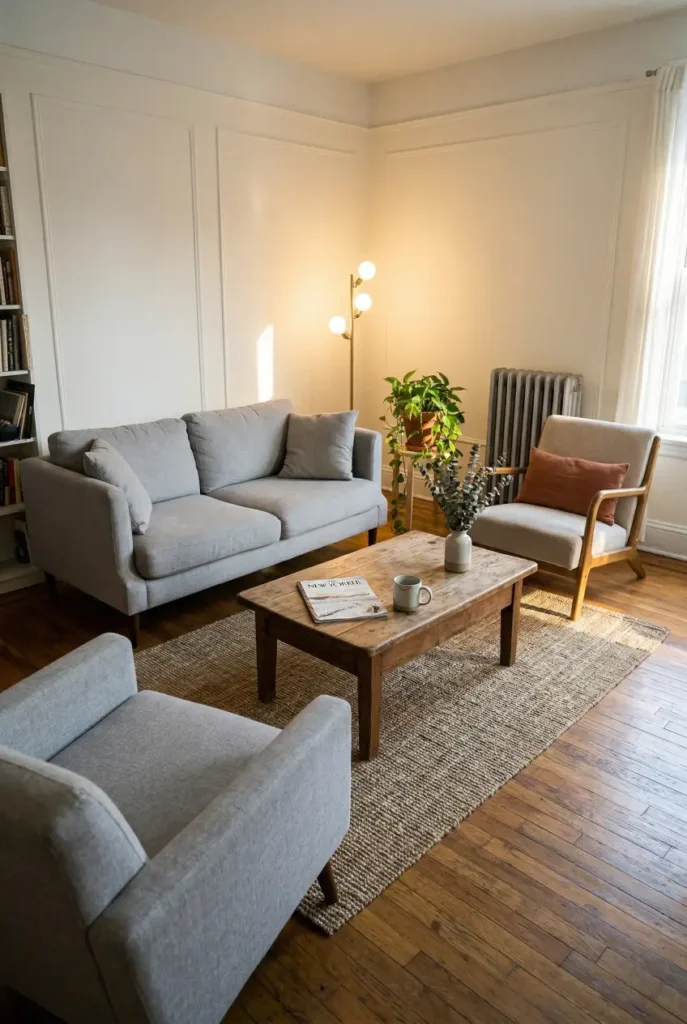
Most renters buy rugs that are too small. A rug that does not reach under the front legs of the sofa makes the furniture look like it is floating. It shrinks the room. It kills cohesion.
What actually works is a rug large enough for all front legs of your main seating to sit on it. In most apartment living rooms, that is an 8×10 or 9×12. It feels like too much rug until it is in the room. Then it feels exactly right.
You do not need to spend a lot. Flatweave and low-pile options hold up well, clean easily, and read as considered rather than budget. Jute and natural fiber rugs work in almost any color scheme. The rug is the room’s foundation. Everything else builds on top of it. Get this right and the rest of the room starts to follow.
Create a Focal Point Before You Add Anything Else
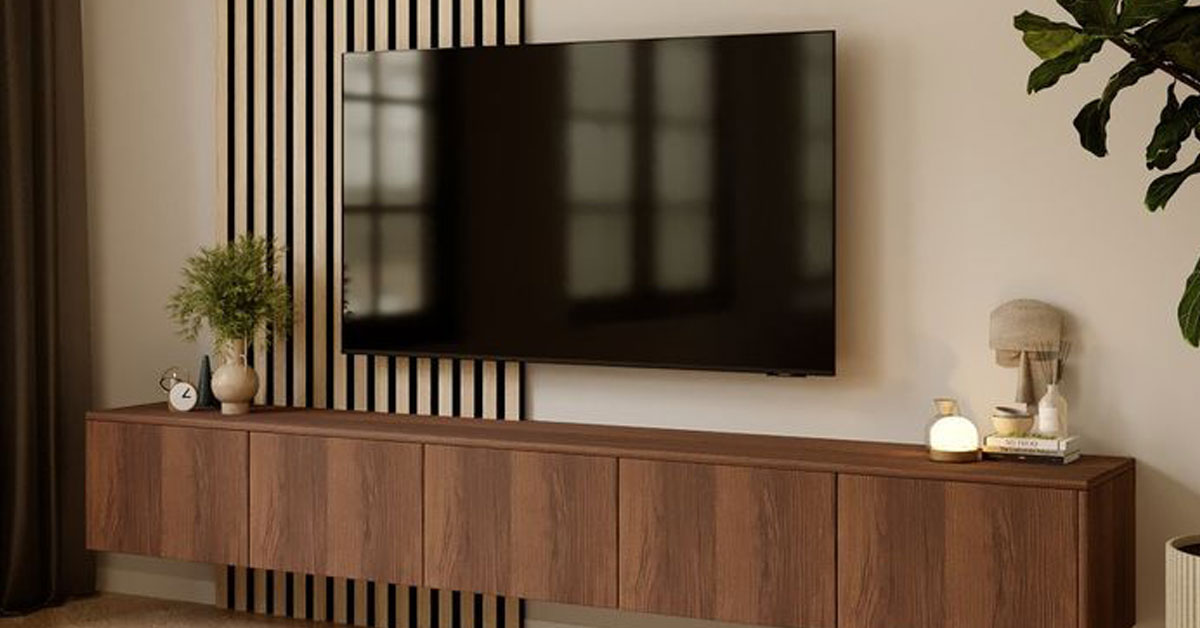
Every room needs one thing the eye goes to first. In most rental living rooms, the TV wins by default. Fine. But if you want the space to feel like a considered rental living room, the TV wall needs context around it.
A console or media unit underneath. Something on either side. A plant, a stack of books, a floor lamp. Not symmetrical. Symmetry reads as showroom, not home. One thing slightly taller on the left, one thing lower on the right. That small asymmetry is what makes a styled corner feel real.
If you want to go further with the TV wall specifically, our guide on TV wall decor mistakes that make your screen look like it’s floating covers exactly how to fix it without touching the wall permanently.
No TV? Even better. Pick the thing in the room that has the most visual weight and build around it. A tall bookshelf. A sofa in a strong color. A leaned mirror. One clear focal point is all it takes.
What Doesn’t Work in a Rental Living Room (and Why)
Matching furniture sets. I know that sounds counterintuitive. Matching should look intentional, right? It almost never does.
A three-piece matched living room set looks like a catalog page, not a home. Real intentional rooms have a mix. A sofa in one material, a chair in another, a coffee table that is a slightly different wood tone. The cohesion comes from color palette and texture, not from matching finishes.
Pick two to three tones and repeat them in different objects across the room. A warm terracotta cushion, a terracotta-adjacent candle, a rust-colored book spine on the shelf. The eye reads that as designed, even when the furniture came from three different stores and two different decades.
Honestly, I think matching furniture sets have done more damage to rental living rooms than beige walls ever have.
The Free Fixes You Can Do Tonight
Pull your sofa away from the wall. Even six inches changes the feeling of the entire room. Do it now, before you read the rest of this.
Then do these three things.
Change the bulbs. Warm white, 2700K, in every lamp in the room. Cold overhead lighting is the single thing making most rental living rooms feel institutional. The bulbs cost about ten dollars total and the difference is immediate.
Edit, don’t add. Walk around the room and remove five objects. Not permanently. Put them in another room for a week. See what the space feels like with less. Most rental living rooms have too much in them, not too little. The rooms that look pulled-together in photos almost always have fewer objects than you would expect.
Raise your curtains. Hang the rod as close to the ceiling as possible. Floor-length curtains at ceiling height make the room feel taller, the windows feel bigger, and the whole space feel more considered. This is probably the most impactful free move in any rental living room and almost no one does it.
Where to Actually Spend Money as a Renter
Not everything should be a free fix. Some things in a rental are worth genuine investment, especially pieces you will take with you when you leave.
The rug, already covered. Size up. It travels with you.
Lighting. A good floor lamp is more useful than almost any other single purchase. It adds warmth, height, and the layered light effect that makes a room look designed. Plug-in sconces are the next level. They look hardwired but they are not. Run the cord along the wall or tuck it behind furniture. The result looks custom and costs a fraction of what installed lighting would.
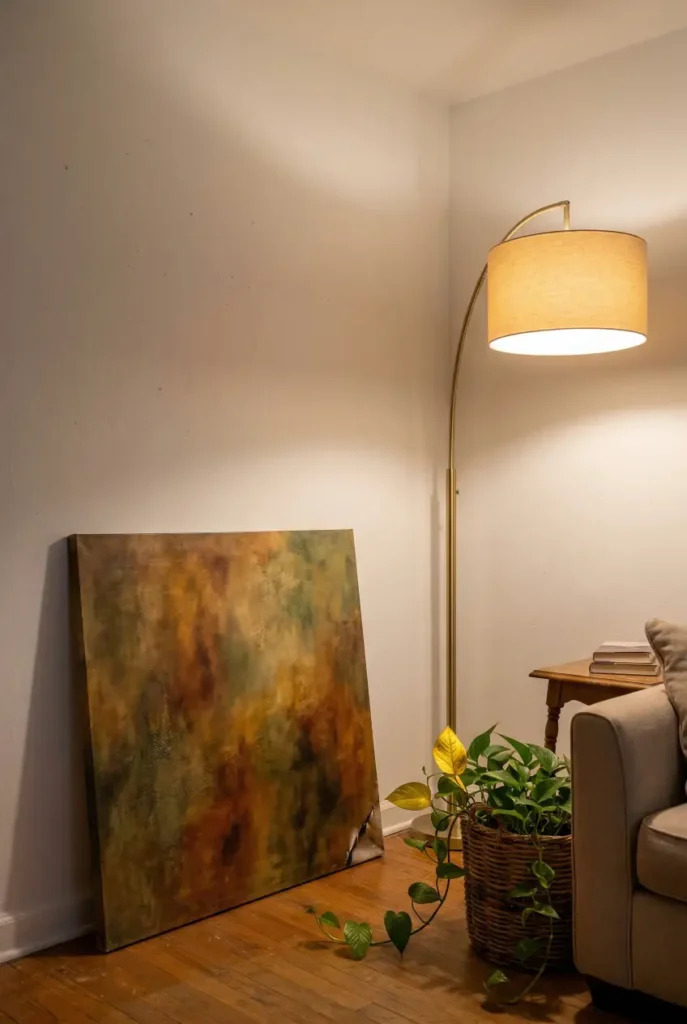
One piece of art that feels slightly too large for the wall. Undersized art is one of the most common reasons rental living rooms feel unfinished. A piece that commands its spot stops the eye. Lean it on the floor against the wall if hanging is not an option. That works in both apartments and rented houses and it looks effortless rather than cautious.
For a deeper look at building warmth and a collected feeling without overbuying, the piece on lived-in interiors and the cozy collected look is worth reading before you shop anything.
Already Living There? The Restyle Approach
If you have been in the space a while and it still does not feel right, the problem is almost never what you have. It is how things are arranged and what has been allowed to accumulate.
Start by treating the room like you just moved in. Push everything to the walls. Stand in the doorway. Where does your eye go? That is where your focal point needs to live. Now build the layout around that point, pulling furniture forward and toward each other.
If your instinct right now is to go back to the original layout because it fits better, ignore it. The original arrangement was built around convenience, not visual logic. Give the new layout three days before you judge it.
After the layout, look at your color story. What three tones are repeating across the room? If there are not three tones repeating, that is why it feels random. Pick up two or three inexpensive throw pillow covers that share a color with something already in the space. That connection is what creates cohesion.
Before buying anything at all, the post on why your home needs less stuff, not more is worth reading. The instinct to shop your way to an intentional rental living room is real. The rooms that feel most considered almost always got there through editing first.
The Structural Detail Most Rental Living Room Guides Skip
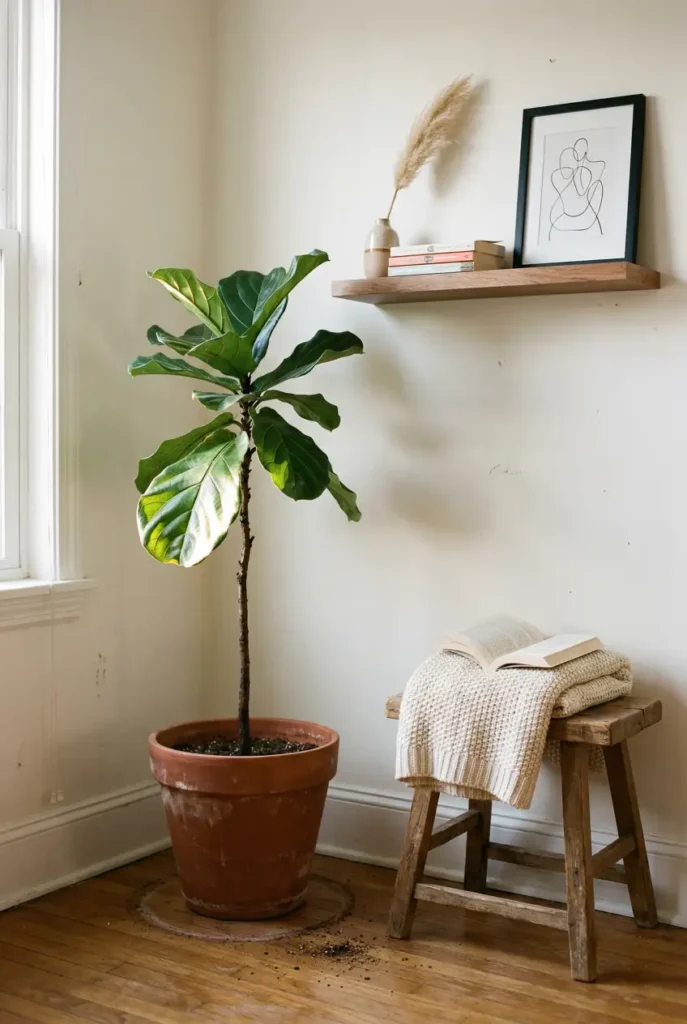
A tall floor plant in the right corner fills vertical space the way no piece of furniture can. It softens the room’s edges. It gives the eye something to rest on that is not a hard surface. And it brings the room to life in a way that throw pillows and candles cannot replicate on their own.
A fiddle leaf fig, a tall snake plant, an olive tree in a simple pot. Any of these in a corner that currently feels empty does more work than most objects that cost ten times as much. The scale matters. Go taller than feels comfortable. A plant that reads as a design element is not a small tabletop plant. It is a floor plant that reaches at least to shoulder height.
And it moves with you when you leave.
Start with layout, not purchases. Pull furniture away from the walls, hang curtains at ceiling height, and swap cold bulbs for warm ones. These three changes cost little to nothing and have more visual impact than most decor buys. After that, a single properly sized area rug is the highest-return investment you can make in a rental living room.
Yes, and the options are better than most renters realize. Command strips hold frames up to 16 lbs cleanly and come off without damage. Leaned art at floor level needs no hardware at all. Peel-and-stick removable wallpaper can change a single wall and peels off clean. Floor lamps and plug-in sconces give you layered lighting without touching a single wall. The no-damage toolkit is genuinely strong.
Invest in pieces that travel well and work across different spaces. A quality area rug, a good sofa, a floor lamp, and one piece of large art are the four things that will improve every home you live in, not just this rental. Avoid buying storage or accent furniture that is sized specifically for your current layout. That is the stuff that never fits anywhere else.
Start with light. Walk through the room in the evening with only your lamps on, no overhead. If it feels significantly better, the overhead lighting is the problem and warm bulbs plus a floor lamp will fix it. If it still feels off with lamps only, the issue is layout. Find the visual anchor of the room and rebuild the arrangement around it.
Every year spent in a space that feels like a waiting room is a year you do not get back. The moves that make a rental living room feel intentional, layout, lighting, a rug, and one or two real investments, all travel with you. This is not money spent on something you leave behind. It is the foundation of how you will style every home you live in from here.