I love vintage garden decor, but I do not love when a yard starts looking like a storage problem. That is the line most people miss.
They find a rusted urn, an old watering can, a chipped chair, a salvaged gate, and suddenly every corner of the yard is full of “character.” But character without editing just looks messy.
The version worth copying feels relaxed, layered, and slightly worn in. It does not feel random. It does not feel theme-y. And it definitely does not feel like you dumped the flea market into the flower beds.
If you want vintage garden decor that actually looks charming, here is the shortcut. Use fewer pieces, choose materials that age well, and let each item earn its place.
The golden rule of vintage garden decor
Every vintage piece needs breathing room. If everything is old, weathered, rusted, chipped, or distressed, nothing stands out. The garden loses shape. The eye gets tired. The whole thing starts reading as neglect instead of style.
What actually works is contrast.
A worn iron bench looks better next to fresh greenery. A chalky terracotta pot feels more intentional against clean gravel or simple stone. A rusted trellis feels beautiful when the planting around it is soft and alive.
That same idea is why I would never treat vintage styling as a replacement for the garden itself. Plants still do most of the work. The decor is there to guide the eye, add texture, and give the space a little history.
If your yard still feels flat overall, start there first. Structure matters more than accessories. A space with better paths, planting, and zones will always outperform a yard full of random objects. That is also why a lot of the smartest backyard landscaping ideas on a budget feel so much more expensive than overdecorated patios.
Choose materials that get better outside, not worse
Not everything old belongs in the garden. This is where people make expensive mistakes. They drag delicate indoor furniture outside, let untreated wood sit on damp ground, or buy lightweight “vintage-style” pieces that look fake within a week.
The safest materials for vintage garden decor are the ones that already make sense outdoors.
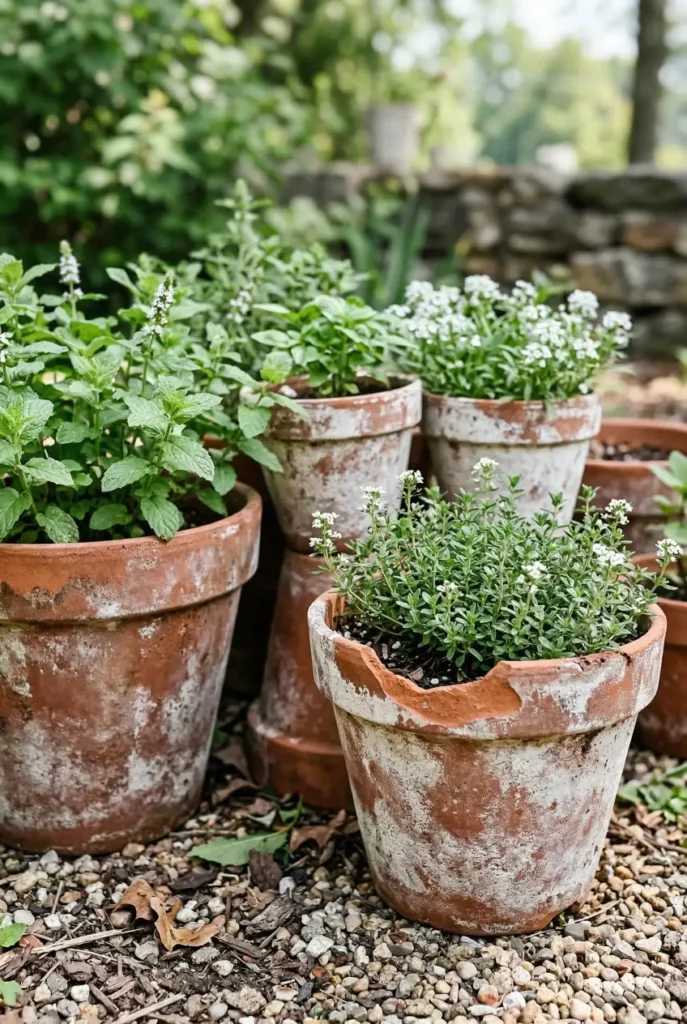
- Weathered terracotta. It softens a garden instantly and looks better with age.
- Wrought iron. Great for benches, bistro chairs, trellises, and plant stands.
- Galvanized metal. Useful, practical, and easy to mix with cottage or rustic styling.
- Stone and concrete. Perfect for birdbaths, urns, troughs, and quiet focal pieces.
- Solid old wood. Best in covered spots or elevated off wet soil.
- Copper and enamel. Beautiful in small doses, especially on potting benches or tables.
The test is simple. If the piece looks believable sitting in sun, rain, dust, and leaves, it is probably a good candidate. If it only looks good when photographed in a spotless showroom, skip it.
Start with one anchor piece, not ten small props
If you only buy one thing, make it something with visual weight.
A bench is ideal. A stone birdbath also works. A large urn. A strong old bistro set. An obelisk with real height. Something that gives the space a center of gravity.
Small decorative items are where vintage gardens usually go wrong. One watering can is lovely. Five mini decorative objects sprinkled around the yard are not styling. They are clutter.
I would much rather see one beautiful, worn bench with three oversized pots beside it than twelve tiny “cute” pieces fighting for attention.
The easiest formula is this:
- one anchor piece
- one secondary texture or material
- one soft layer of planting to blur the hard edges
That is enough to make a corner feel collected.
Create little vignettes, not scattered flea market spillover
The outdoors still needs composition.
You would not throw random decor all over a living room and call it styled. The garden works the same way. Vintage pieces need to be grouped in ways that feel useful or architectural.
A potting bench can be styled like an outdoor console. A cluster of terracotta pots can work like a built-in visual pause at the end of a path. A salvaged gate or old metal frame can act like wall art against a fence.
But once every sightline has its own mini prop moment, the yard gets noisy fast.
That is why I like to build vintage garden decor around zones. A seating corner. A planting corner. A potting area. A quiet focal point near the back border. Group the pieces inside those zones and leave empty space between them.
That breathing room matters even more in small yards. If your outdoor space already feels exposed, clutter will make it feel tighter, not cozier. In those cases, it helps to think about styling and screening at the same time. A slim trellis, taller plants, or a better fence-side layout can do more for the mood than another decorative object. That is exactly why practical small backyard privacy ideas tend to work better than heavy-handed backyard makeovers.
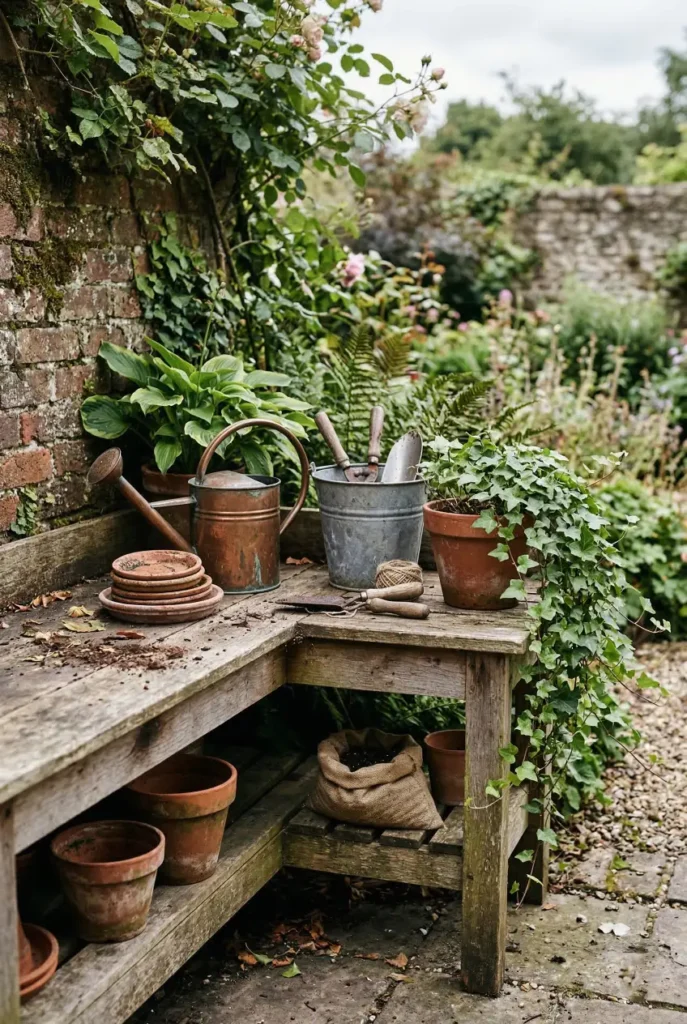
The pieces that usually work best
You do not need a huge collection. You need the right types of pieces.
Old benches and chairs
These give a yard instant age and structure. They are best near planting, gravel, brick, or a pathway, not floating awkwardly in the middle of the lawn.
Terracotta pots with patina
This is one of the easiest wins in the whole style. Mixed shapes look better than matching sets.
Some should be tall. Others squat. Maybe chipped or plain.
Birdbaths and urns
These are excellent quiet focal points. They feel more grounded than novelty ornaments and usually age beautifully.
Trellises, obelisks, and salvaged gates
These add height, which matters in gardens that feel too flat. Once a vine starts climbing, the whole piece feels more integrated.
Watering cans, crates, enamelware, and buckets
These should be supporting actors, not the stars. They work best in potting corners, porch areas, and shelf-like moments.
What to skip if you want the look to stay elevated
Some pieces almost always cheapen the result.
- lightweight fake-antique plastic
- overly ornate resin statues
- tiny novelty signs and word art
- too many small objects with no visual hierarchy
- indoor furniture that cannot survive moisture
- heavily distressed pieces that look manufactured instead of naturally worn
Vintage garden decor is strongest when it feels discovered, not merchandised.
That is also why I would not force every outdoor trend into the same space. If your yard already leans fresh and seasonal, you can still use vintage pieces, but they need to fit the mood. You are after texture and soul, not a costume change. Sometimes the best bridge is to borrow softer ideas from spring outdoor decor and let the vintage elements sit underneath that lighter layer instead of taking over everything.
Plant pairings matter more than people think
The container is only half the story.
Vintage pieces look best when the planting softens or sharpens them in the right way.
For rusted iron and hard stone, I like delicate spillers and looser growth. Creeping thyme, ivy, trailing oregano, and soft grasses all help take the edge off heavy materials.
For classical urns or more formal planters, boxwood, lavender, rosemary, and neatly mounded flowers make more sense. They keep the look intentional instead of wild.
For chipped terracotta, almost everything works, but the prettiest combinations usually stay inside one color family. White flowers, dusty pinks, lavender tones, and layered greens always feel timeless.
If you mix too many loud flower colors with too many old objects, the garden gets visually busy very fast. Vintage styling usually needs one area of calm. Let the patina be the interesting part.
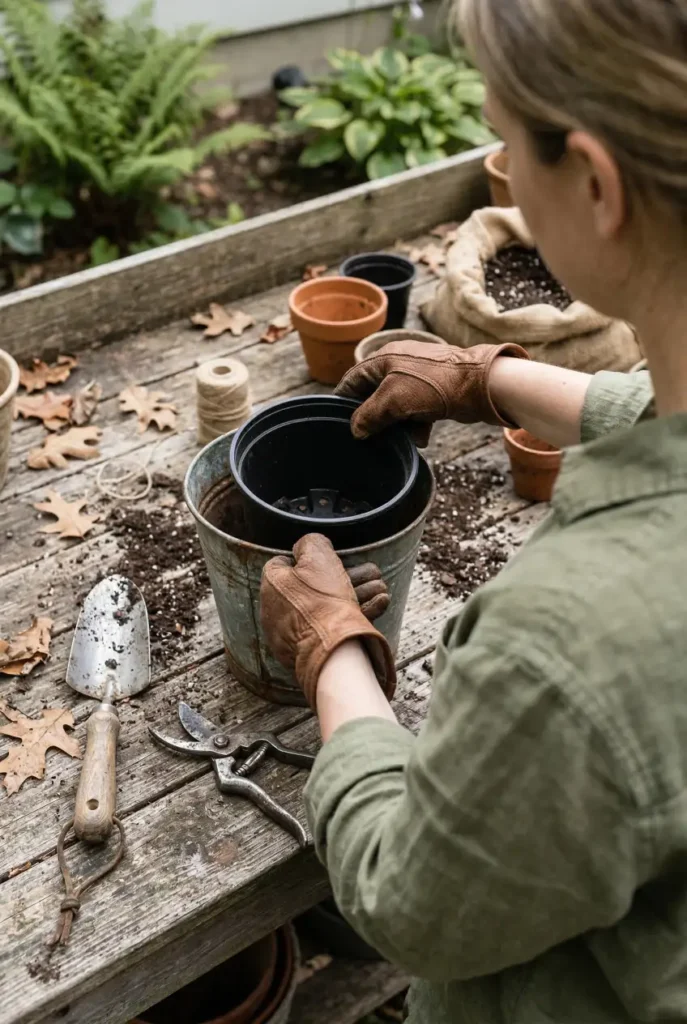
How to protect your vintage garden decor so it actually lasts
There is a big difference between good patina and active damage.
You want age. You do not want preventable rot, soggy bases, or metal that falls apart because it was planted directly into wet soil.
These are the rules I would actually follow:
- Always think about drainage. If you are using an old container as a planter, add a liner or nursery pot inside whenever possible.
- Keep wood off damp soil. Use bricks, stones, feet, or pavers under the base.
- Seal selectively. Not every surface needs a shiny protective finish. Use matte exterior protection only when it helps preserve the piece without making it look fake.
- Use covered zones for the more delicate items. Porches, pergolas, and sheltered patios are much safer for wood, wicker, and enamel.
- Edit every season. A vignette that felt charming in spring can feel heavy by late summer if the plants around it change.
The point is not to freeze everything in time. It is to let the pieces age in a way that still feels intentional.
Budget shortcuts that still look convincing
You do not need real antiques everywhere.
In fact, mixing a few authentic-looking character pieces with ordinary basics is usually smarter than chasing a fully antique garden. It is cheaper, easier to control, and less likely to tip into visual chaos.
The highest-leverage budget moves are boring, which is why they work.
- Buy simple new terracotta and let weather do the aging.
- Use one old bench or chair set as the statement piece.
- Search for heavy-looking shapes, not famous brands or collectible labels.
- Spend more on plants and layout than on decorative accessories.
- Repeat materials so the space feels connected.
If privacy is part of the problem, put your money there first. A yard that feels exposed rarely feels cozy, no matter how beautiful the decor is. One well-placed trellis, screen, or planting line can do more for the atmosphere than another antique object. That is why broad backyard privacy from neighbors fixes often give you a bigger visual upgrade than buying more decor.
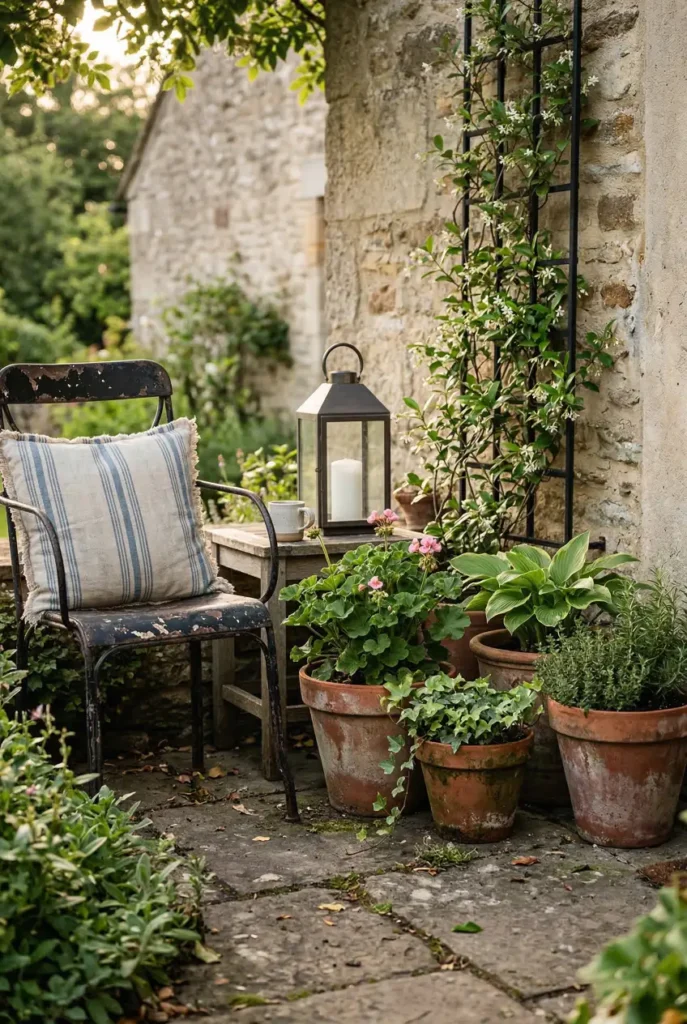
The formula I would use in a real yard
If I were styling a small or medium backyard from scratch, I would keep it this simple.
- one anchor piece with weight
- a group of mismatched terracotta pots
- one vertical element like a trellis or obelisk
- one quieter material like stone, gravel, or brick to ground everything
- soft planting to blur the edges
- no more than one or two tiny decorative accents in each zone
That is enough. The goal is not to prove how many vintage things you found. The goal is to make the garden feel like it has been loved for years.
That is why the best vintage garden decor never looks overstyled. It looks settled. Slightly imperfect. A little storied. And still calm enough that you actually want to sit there.
Use fewer pieces, not more. Start with one anchor item like a bench, urn, or birdbath, then add soft planting and one secondary material such as terracotta or iron. Leave empty space between zones.
Wrought iron benches, weathered terracotta pots, stone urns, birdbaths, old trellises, galvanized buckets, and simple potting benches are the safest choices because they add texture and hold up outdoors.
Yes, but restraint matters more. A small yard usually needs one anchor piece, one vertical element, and a tightly edited group of planters rather than lots of little accessories.
Keep wood off wet soil, use liners inside antique containers, place delicate items in covered areas, and use matte exterior protection only where it helps preserve the finish without making it look artificial.
Rustic usually feels rougher and simpler. Vintage feels more collected and curated. They can overlap, but vintage garden decor usually includes more patina, older shapes, and styled focal pieces.