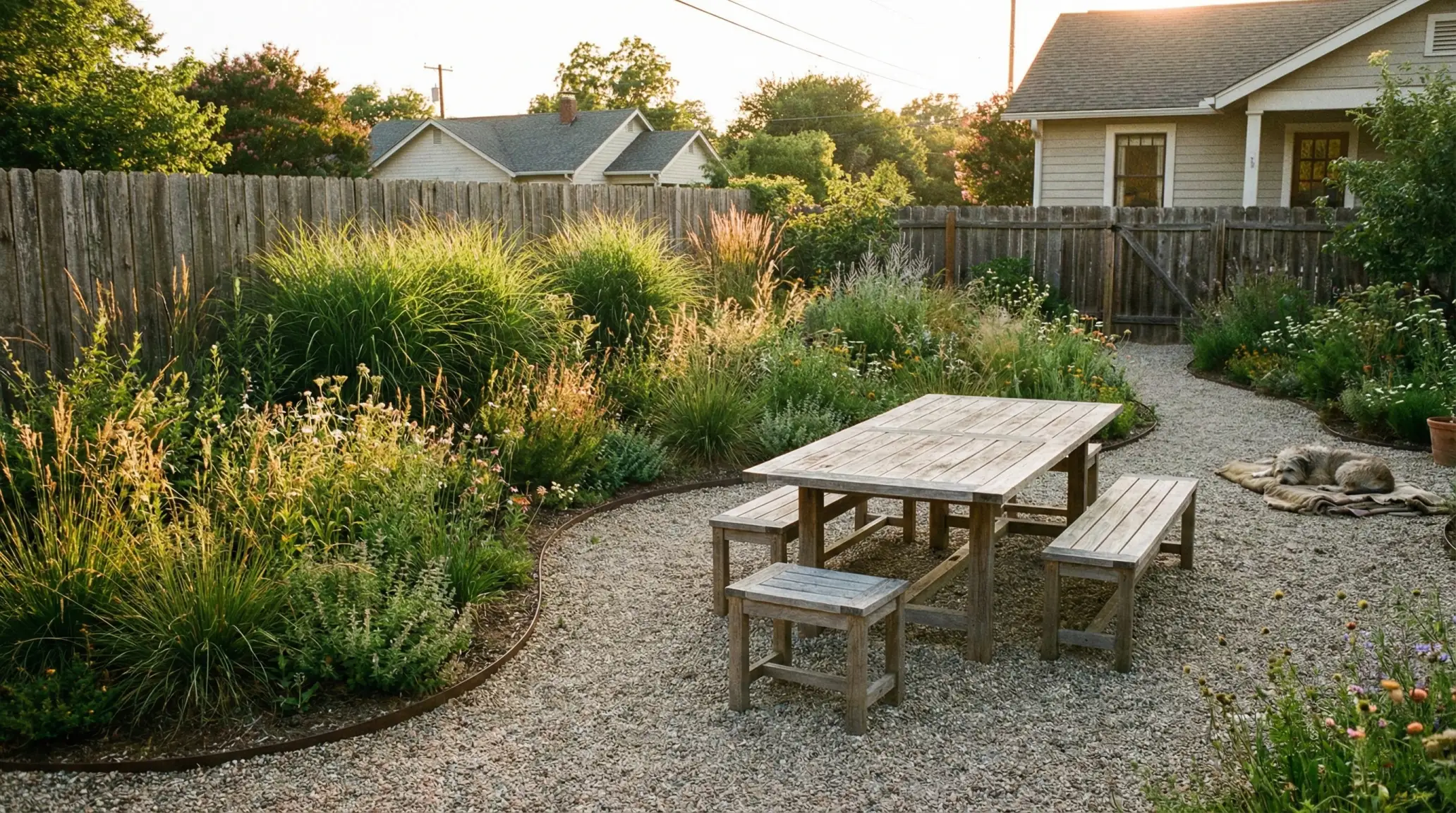
Most “mexican backyard” inspiration online shows you a 5,000-square-foot hacienda in San Miguel de Allende with hand-laid stone archways and a built-in fountain. Beautiful. Also completely useless if your backyard is a normal 30-by-40-foot American yard with a concrete patio and a gas grill.
That gap between what you see and what you can actually do is the problem this article solves.
The mexican garden hacienda style is one of the most achievable outdoor aesthetics out there. You do not need a courtyard nor terracotta roof tiles. You need about $150 worth of the right things, placed in the right way, and you need to stop buying the wrong things first.
Why Most Mexican Backyard Makeovers Fall Apart
The mistake I see everywhere is people buying one or two brightly colored accessories and calling it done. A single Talavera pot on an otherwise beige patio does not create atmosphere. It creates confusion.
The hacienda style works because it layers warm materials together. Terracotta with textiles. Wrought iron with plants. Earthy tones with one or two punches of deep color. Pull any one element out of that system and it reads as random.
The second mistake is going too colorful, too fast. Real hacienda gardens in Mexico are not explosion-of-color spaces. The base is always earthy and warm. Terracotta, sand, cream, aged wood. Color comes in carefully, through patterned tiles, woven textiles, and flowers. Not through painting every wall turquoise.
Start with the base. Build from there.
The Four Elements That Do All the Work
I am not going to walk you through a full landscaping overhaul here. Most readers of this site have a standard backyard, not a building budget. So let’s focus on the four things that actually create the hacienda feeling on any scale.
1. Terracotta Pots (in groups, not alone)
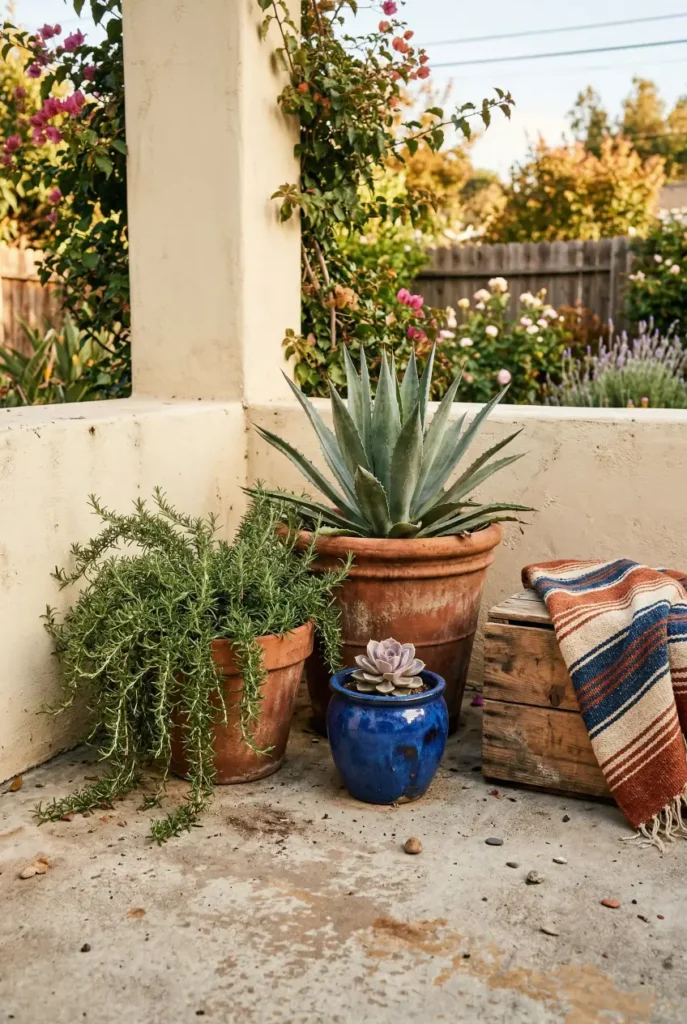
A single terracotta pot reads as gardening. Three terracotta pots of different heights, clustered together, read as intentional design.
The rule is simple: odd numbers and varying sizes. One large, one medium, one small. You can find this grouping at any Home Depot or Walmart for well under $40 total. The key is not the brand or even the quality of the pot. The key is the clustering and the plants inside.
For the hacienda feel, plant agave, rosemary in a standard terracotta pot, or a simple trailing plant like sweet potato vine. Succulents work too, especially if you are in a dry climate. I am not going to recommend specific brands for any of this. The category is what matters.
2. One Piece of Wrought Iron or Dark Metal
This is the element most people skip. And it is the one that ties everything together.
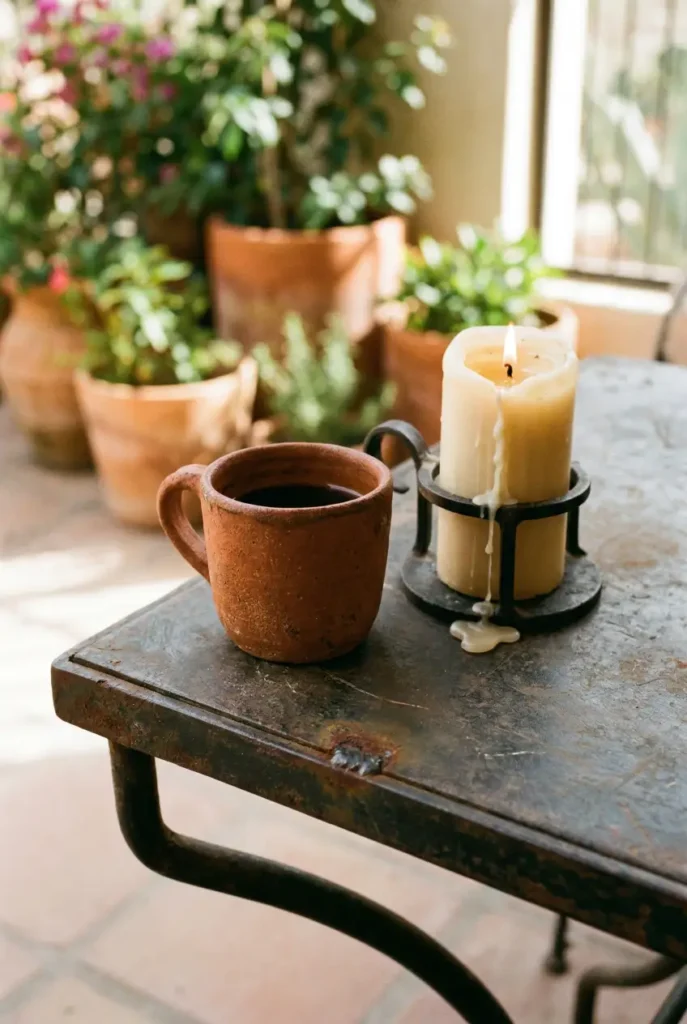
A small wrought iron bistro set. A metal lantern. A dark iron plant stand. Even a single forged candle holder. Dark metal is what gives the hacienda style its weight and age. Without it, the space reads as generic patio, not as something with a specific sensibility.
You do not need to spend a lot here. A basic wrought iron bistro set runs $60 to $90 at most discount home stores. One is enough to anchor the whole look.
3. Woven Textiles
Warm weather, outdoor furniture, and a Mexican-style woven blanket or cushion cover. That combination costs about $20 and does more for the atmosphere than almost anything else on this list.
Look for textiles with warm stripes: terra cotta, rust, cream, deep indigo. Mexican serape-style blankets are easy to find online and in stores like HomeGoods or TJ Maxx. Drape one over a chair back. Fold another over a bench. They do not need to match perfectly. Honest disagreement between two patterns reads as collected, not mismatched.
If you are outdoors in a climate with rain or humidity, keep a simple basket nearby to store them when not in use. Weathered textile adds character. Mildewed textile adds nothing useful.
4. A Focal Point at Low Height
This is the part no one talks about.
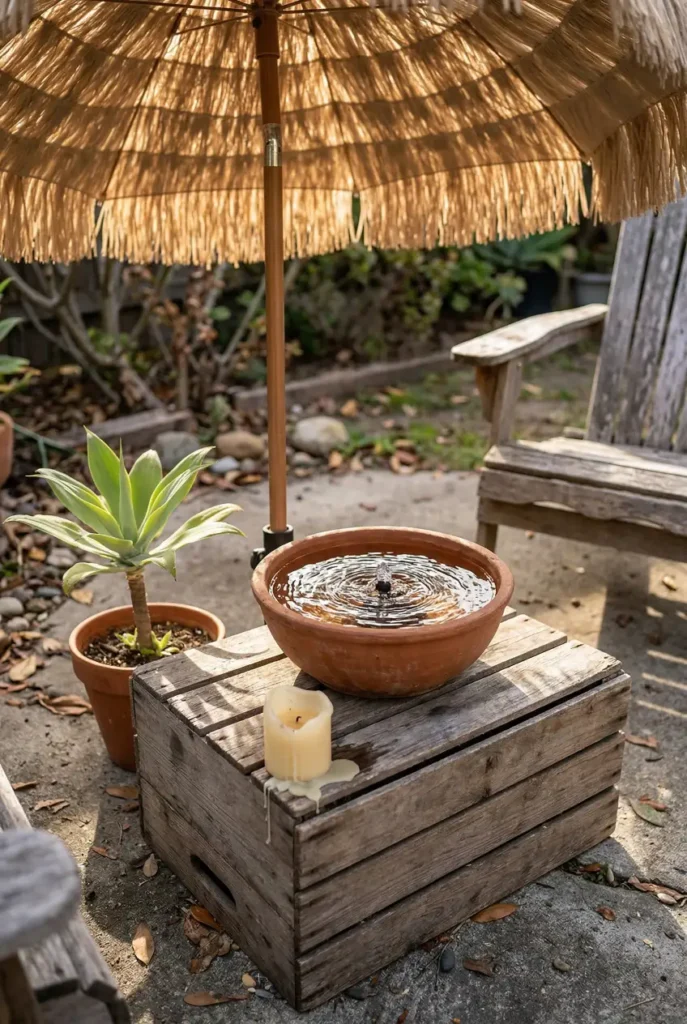
Hacienda gardens feel grounded, not tall and vertical like most American backyards with their tall fences and upward-reaching deck furniture. The secret is a strong low focal point. A large terracotta pot on the ground. A small stone or clay fountain. A cluster of succulents arranged on a low wooden crate. Something that pulls your eye downward and creates intimacy.
If your backyard feels exposed or flat, this is almost certainly the fix. Not more plants. Not more string lights. A defined, low focal point that the eye can rest on.
What to Do About Color (Without Ruining It)
Here is where most people overcorrect.
The color palette of a well-done mexican garden hacienda style is not bright. It is warm. There is a difference.
The base colors are terracotta, sand, cream, and aged wood brown. From there, you bring in one or two accent colors. The traditional options are deep cobalt blue, muted sage green, and warm ochre yellow. These work because they echo the Mexican landscape: desert sky, dried herbs, sun-baked earth.
Pick one accent color. One. A cobalt blue pot among the terracotta grouping. An ochre-yellow cushion on the iron chair. That single contrast is what gives the space its character. Two accent colors can work if they are separated spatially. Three accent colors is a festival, not a garden.
If you already have an outdoor space that is heavily neutral or gray, adding terracotta and one blue piece will do more in an afternoon than a full day of moving furniture around.
The Plants That Make This Work in Any US Climate
A lot of people assume hacienda style is only for dry states. Texas, Arizona, New Mexico. That is not true.
The plants most associated with this look, agave, succulents, and ornamental grasses, do thrive in dry climates. But the aesthetic itself travels. If you are in a humid Southern state or the Pacific Northwest, you adapt the plant palette while keeping all the other design elements. The terracotta still works. The wrought iron still works. The textiles still work.
For dry climates (zones 7-11): agave, blue fescue grass, rosemary, bougainvillea, lavender. These are low-maintenance and visually strong.
For humid climates (zones 5-8): swap the agave for ornamental grasses like muhly grass or zebra grass. Keep rosemary if your winters allow. Add Mexican sage (Salvia leucantha) if you can find it locally. It has that signature purple-and-white spike that photographs like nothing else in an outdoor space.
The one plant I would skip regardless of climate: generic green hostas. They are lovely plants. They have nothing to do with this aesthetic. It is not about being unkind to hostas. It is about staying coherent.
Is a Water Feature Worth It Under $200?
Honestly? Yes, if you choose carefully. No, if you buy the wrong thing.
A small recirculating tabletop fountain in a stone or terracotta finish costs between $40 and $80 online. It does not need plumbing. It plugs in. And the sound of moving water changes the entire experience of a backyard space in a way that no decoration can replicate.
The version to avoid: plastic fountains with fake stone finish and LED lights. They read cheap immediately and fight against everything else you are building. The version worth copying: a simple bowl fountain, or a tiered clay or concrete piece with a matte finish. It does not need to be large. Even a 12-inch bowl fountain on the low focal point crate mentioned earlier does real work.
This is the shortcut most people miss. Not more plants, not more color. Sound. Moving water turns a decorated patio into a place where you actually want to sit.
For displaying plants and small water features together, a simple tiered wooden plant stand can anchor the whole grouping. If you want ideas for indoor-outdoor plant display, this guide to plant shelf ideas has approaches that translate well to a covered patio setup.
The Lighting That Sells the Whole Thing at Night
I know string lights are the default answer for every outdoor space. They work. I am not saying they do not work. But for this specific aesthetic, they are not the strongest choice.
Hacienda lighting is warm and low. Think lanterns, not overhead glow.
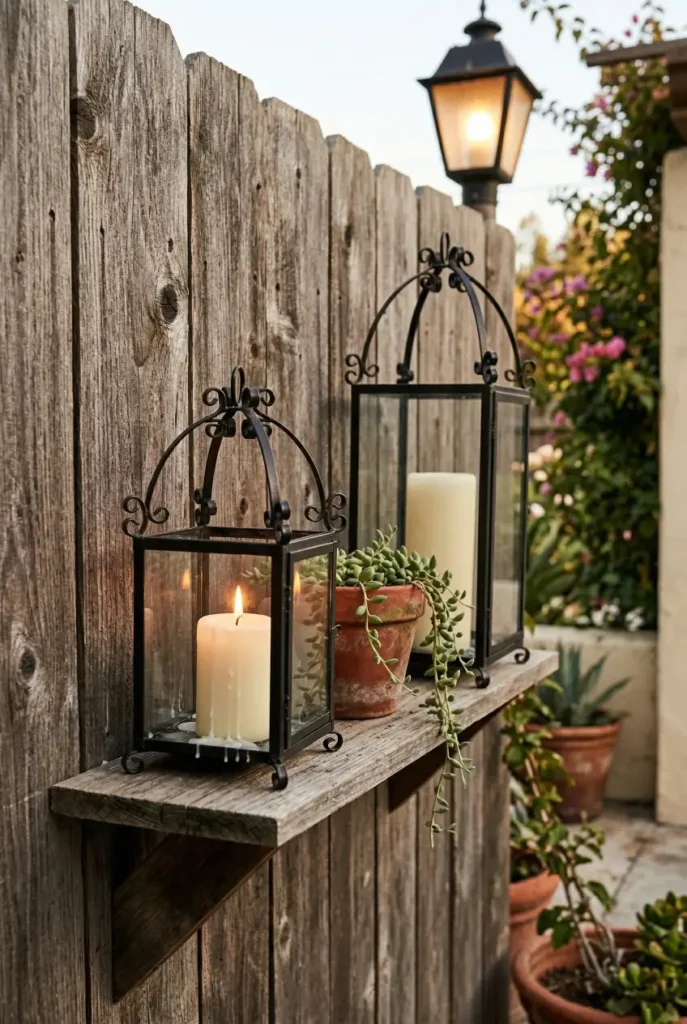
A pair of iron lanterns with real pillar candles, set at ground level near the pot grouping, will do more for the atmosphere than a full string of Edison bulbs overhead. The light source being at eye level or below changes how the space reads entirely. It becomes intimate. Enclosed. Like the inside of a courtyard rather than a backyard with a party vibe.
If you want to add something overhead, look for a simple hanging metal lantern with a punched tin or cage design. These run $25 to $45 online and hang easily from a shepherd’s hook stake. No drilling, no permits, no problems in a rental.
Two lanterns and a water feature. That is the under-$100 evening upgrade that closes the deal.
What You Can Skip (and Save the Money For)
Talavera tiles are beautiful. They are also a commitment. If you are not doing a full patio renovation, decorative Talavera tiles pressed against a fence as wall art can look intentional or they can look like you could not commit. Skip them unless you are ready to do a proper surface application.
Colorful hammocks are everywhere in “Mexican patio” listicles. They are fun. They are also the first thing that makes a space read as temporary or kitschy if not supported by the right furniture and palette around them. Not for every yard.
Calavera decorations, papel picado banners, painted skulls. These are festive and culturally specific. Unless it is genuinely your aesthetic and you understand what you are doing with it, they tend to flatten a nuanced hacienda-inspired space into a theme party. The look you are going for is lived-in and warm, not decorated for an occasion.
The money you save skipping those items goes toward better quality on the things that matter. A genuine terracotta pot over a plastic imitation. A real iron lantern over a wire-and-glass import. One good textile over three cheap ones.
Putting It All Together: A $200 Starting Point
This is not a complete guide to every version of a Mexican-inspired outdoor space. I am not covering full courtyard builds, Saltillo tile installation, or fountain plumbing. Those are different articles for different budgets.
What this is: a realistic, achievable starting point for a regular American backyard.
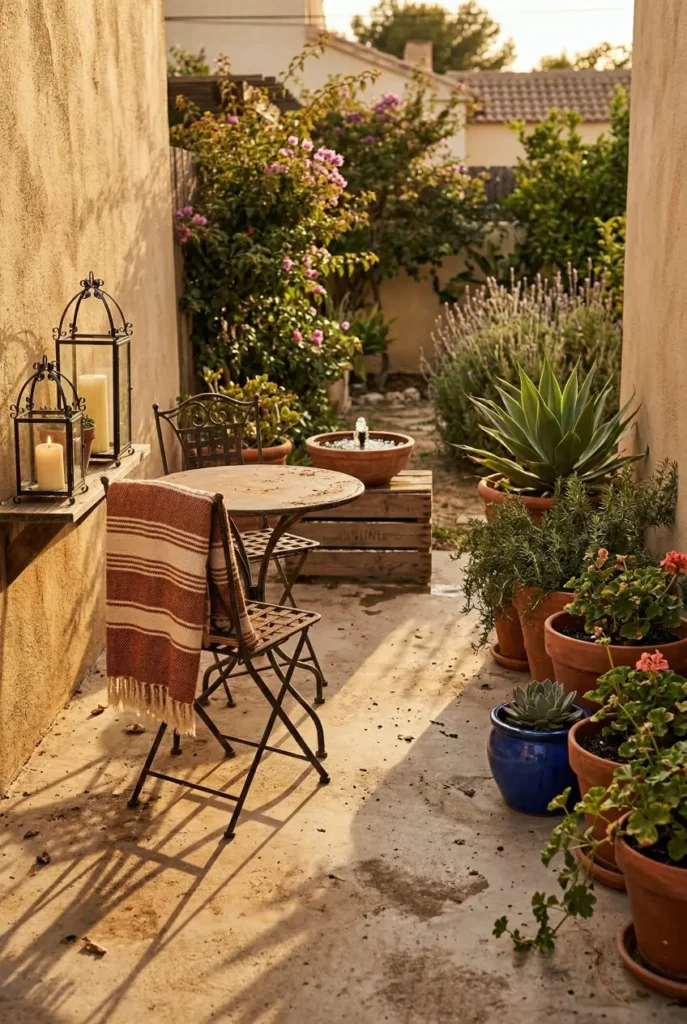
Here is what $200 buys you in this framework:
- Three terracotta pots in varying sizes: $35 to $45
- Two or three drought-tolerant plants (agave, rosemary, ornamental grass): $25 to $40
- One small wrought iron bistro set or plant stand: $60 to $90
- One woven textile blanket or two cushion covers: $20 to $30
- Two iron lanterns with pillar candles: $25 to $40
- One small tabletop fountain (optional, replaces one other element): $40 to $60
You do not need all of it at once. Start with the pots and one lantern. Live with it for two weeks. Add the textile. Add the bistro table when you see it on sale. This is how real spaces actually come together, and why they look real when they are done.
If your long-term goal is extending the hacienda aesthetic from the backyard into your outdoor dining area, this piece on corner dining nook ideas covers compact outdoor-adjacent seating setups that use the same warm-material approach.
A solid starting point runs between $150 and $200 if you prioritize terracotta pots, one piece of dark metal furniture, woven textiles, and lantern lighting. You do not need tiles, fountains, or a full furniture set on day one. The look builds over time and gets better as the pieces age.
Yes. The hacienda aesthetic is forgiving because it is built on imperfection. Worn surfaces, mismatched pots, slightly uneven layering: all of that reads as authentic. The only real rule is to stick to warm materials and resist the urge to add too much color too fast.
Completely. Everything in this guide is freestanding, portable, and leaves no damage. Pots, textiles, freestanding furniture, shepherd’s hook lanterns, and tabletop fountains need no drilling, no adhesive, no approval from a landlord. This is one of the most rental-friendly outdoor aesthetics available.
Spanish colonial refers more to architectural elements: arches, thick stucco walls, clay tile roofs. Hacienda style is the interior and garden expression of that same tradition. In a backyard context, you are working with hacienda elements because they do not require architecture. Terracotta, dark metal, handmade textiles, and drought-tolerant plants are all hacienda. The arch over your back door is Spanish colonial.
The aesthetic travels well to any climate. Swap the desert plants for ornamental grasses and hardy herbs. Move the terracotta pots inside during hard freezes (they crack when wet soil freezes inside them). Use weather-treated iron or powder-coated metal furniture if you have significant rainfall. The design language stays intact even when the plant palette changes.