Last week, another client sent me photos of their living room. The wall was maybe 8 feet wide, and they wanted to fit a 65-inch TV there. “It’s going to look like a black hole,” she said. Honestly? I hear some version of this constantly. People panic about small spaces. But here’s what I’ve learned after doing this for years: you don’t need to hide the TV. You need to make it work. A floating shelf. A plant. Maybe a Samsung Frame TV that looks like art when it’s off. I’ve seen tiny apartments where the TV wall became the best part of the room. It’s about less, not more. And there’s always a solution that doesn’t involve knocking down walls – though I’ve had clients ask about that too.
TV walls aren’t just mounting solutions anymore. They’re becoming the design element that ties everything together. In 2026, we’re seeing homeowners treat the entire wall as a project – not just where the TV goes, but how the whole space flows. For more inspiration, check out these 14 TV wall ideas that showcase different approaches to transforming your living room.
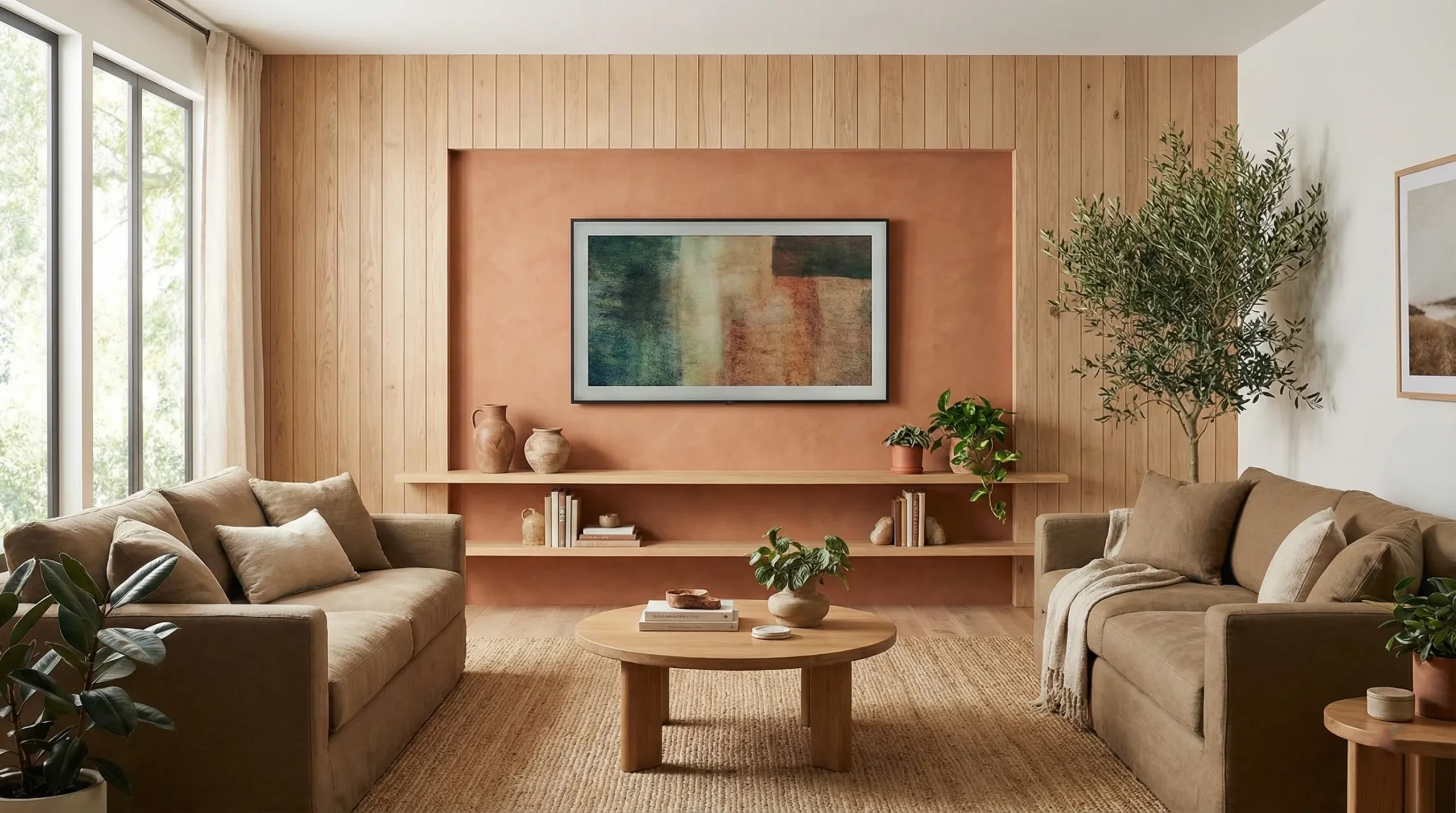
Why TV Walls Are Becoming the Heart of Living Room Design
Accent walls around TVs do more than create a backdrop. They anchor the room. Guide your eye. Connect furniture, lighting, and decor into something cohesive. People are treating TV walls like complete design projects now, not just functional necessities.
Why the shift? Because living rooms should feel intentional. A well-designed TV wall anchors the space. Creates depth. Reflects who you are. Whether you’re working with natural materials, bold colors, or architectural details, that wall becomes your foundation.
Natural Materials and Textural Finishes
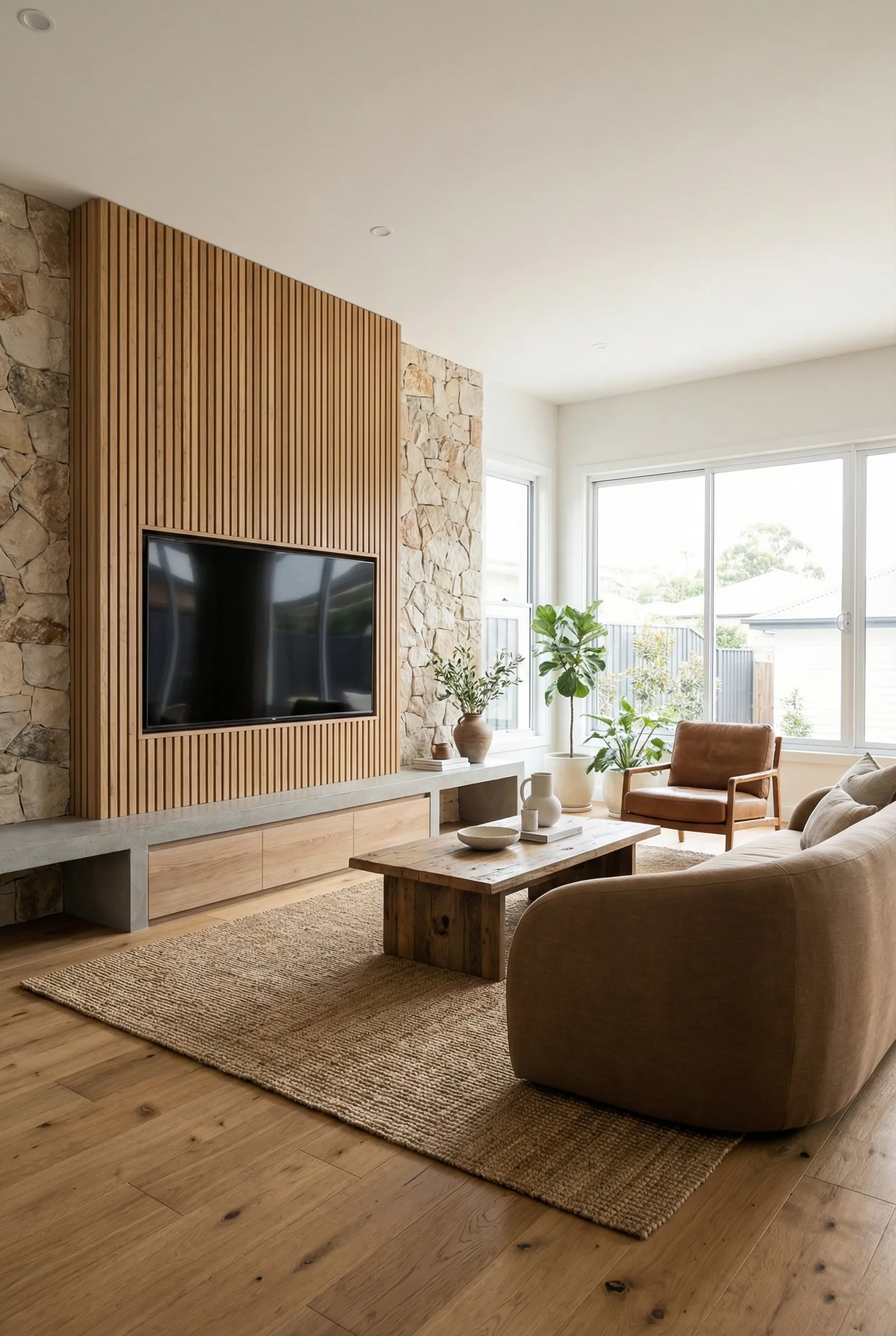
Raw wood and stone can transform a TV wall from functional to stunning. But here’s the catch: you need balance. Too much rustic overwhelms a modern space. Find that sweet spot where natural warmth meets contemporary design. This works when you’re willing to invest in quality materials and maintain them. Otherwise? Faux finishes can achieve similar visual impact at a fraction of the cost.
Raw wood paneling brings immediate warmth – those grain patterns and natural variations create a tactile quality that flat paint can’t match. Light wood tones like ash or white oak work beautifully in bright, airy rooms, while darker woods like walnut add depth and sophistication to spaces with more controlled lighting.
Stone accents add another layer of natural texture. Natural stone veneers – slate, limestone, travertine – provide authentic depth and variation when used as a focal element behind or around the TV, creating contrast with smoother wall surfaces. Faux stone panels have improved significantly in recent years, offering realistic texture at a lower cost with easier installation.
Textural paint finishes are having a moment in 2026 – sand effect paint, lime wash, Venetian plaster. They create subtle depth and movement that flat paint lacks, catching light differently throughout the day and adding visual interest without overwhelming the space. Perfect for rooms where you want texture but need to stay within a specific color palette.
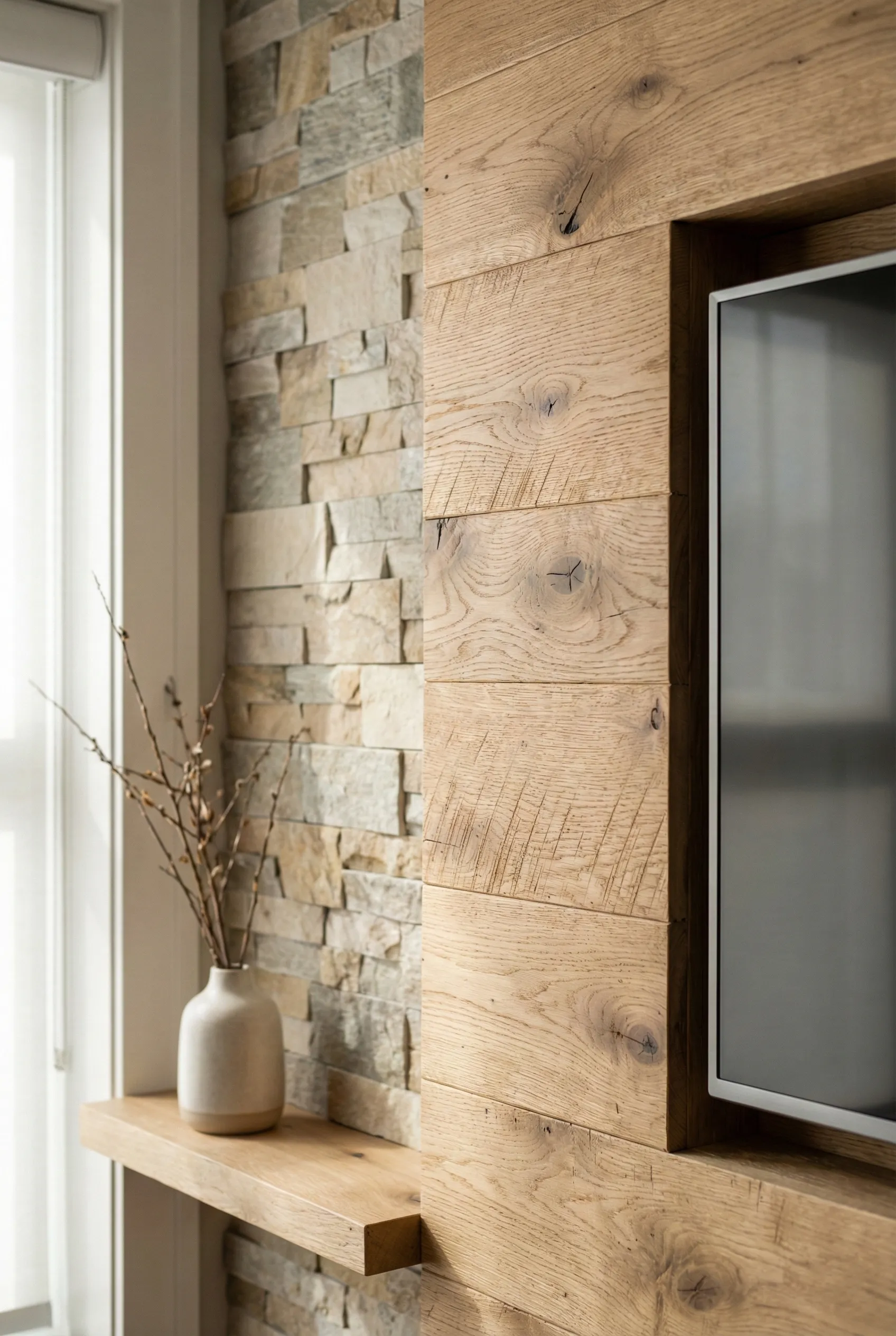
Wood Paneling Options for TV Walls
Shiplap remains popular, but 2026 brings more variety. Board and batten creates vertical interest and works well in both traditional and modern settings, while modern slat walls use thin, evenly spaced boards to create rhythm and texture without heavy visual weight.
Vertical installation draws the eye upward, making ceilings feel higher – perfect for rooms with standard 8-foot ceilings. Horizontal installation creates width and works well in narrow spaces. The direction you choose should complement your room’s proportions and the TV’s placement. For more small space design ideas, consider how paneling direction affects the perception of room size.
Budget matters here. Real wood offers unmatched authenticity and can be refinished over time, but it requires more maintenance and comes with a higher price tag. Engineered wood panels provide consistent appearance and easier installation, while high-quality faux wood panels can achieve similar visual results for significantly less cost.
Stone and Textural Accent Options
Natural stone veneers bring authentic texture and variation. Slate offers a modern, sophisticated look with dark tones and subtle sheen. Limestone provides a softer, more organic feel with creamy tones and natural variations. Travertine bridges the gap – warm, earthy, with that distinctive pitted texture.
Faux stone panels work when you need the look without the weight or cost. Modern faux panels have realistic texture and color variation, and they’re much easier to install than natural stone – useful for renters or when you want to test a look before committing to a permanent installation.
Textural paint finishes add depth without the commitment of paneling or stone. Sand texture paint creates a subtle, tactile surface that catches light beautifully. Lime wash provides a soft, mottled appearance that feels organic and relaxed, while Venetian plaster offers a more refined, polished look with depth and movement.
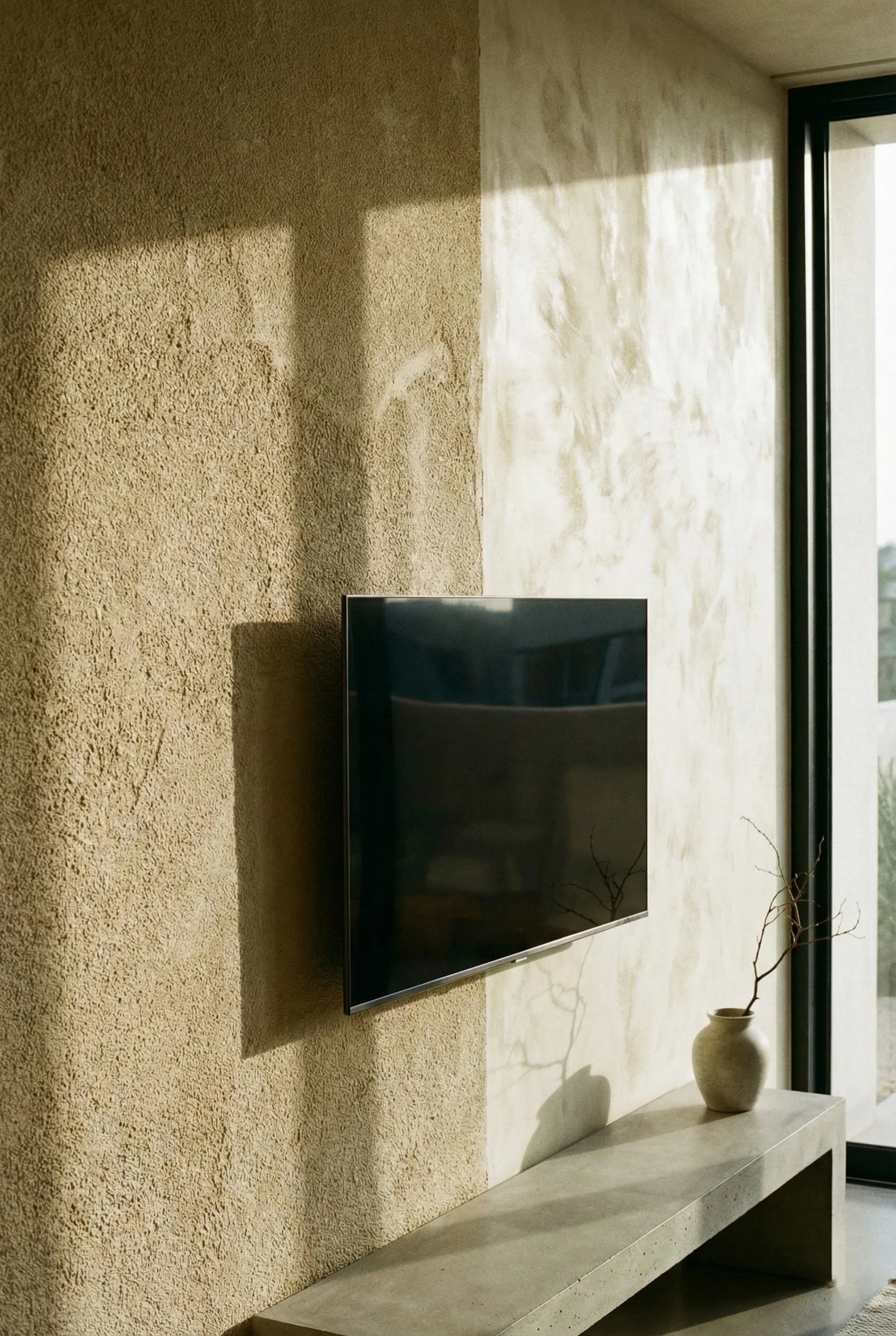
Earth Tone Color Palettes: The 2026 Palette
Earth tone color palettes create the most inviting TV wall spaces in 2026, but consider your room’s natural light first. Deep terracotta works beautifully in bright rooms where it can absorb and reflect light, though it can feel heavy in low-light spaces. Only commit to bold earth tones if you can test samples in your actual lighting conditions – otherwise, start with lighter neutrals and add depth through accessories.
Terracotta brings warmth and energy – it’s modern and timeless, working well with natural materials like wood and stone. In bright rooms with plenty of natural light, terracotta creates a cozy, inviting atmosphere. For darker rooms, consider lighter terracotta tones or use it as an accent rather than the dominant color.
Olive green offers calm and sophistication. Versatile enough to work in various lighting conditions – bright and airy to cozy and dim. Pairs beautifully with natural wood tones. Creates a sense of connection to nature. Combine it with white or cream trim for contrast.
Deep browns and charcoals provide grounding and modern sophistication. These darker earth tones work well as accent colors. Or when you want to create a dramatic, intimate feeling. They’re effective in rooms with good natural light – where they won’t make the space feel too dark or closed in.
Test earth tones in your actual space – paint large samples on the wall and observe them at different times of day. What looks warm and inviting in the morning might feel heavy in the evening, so consider how the color interacts with your furniture, flooring, and natural light sources.
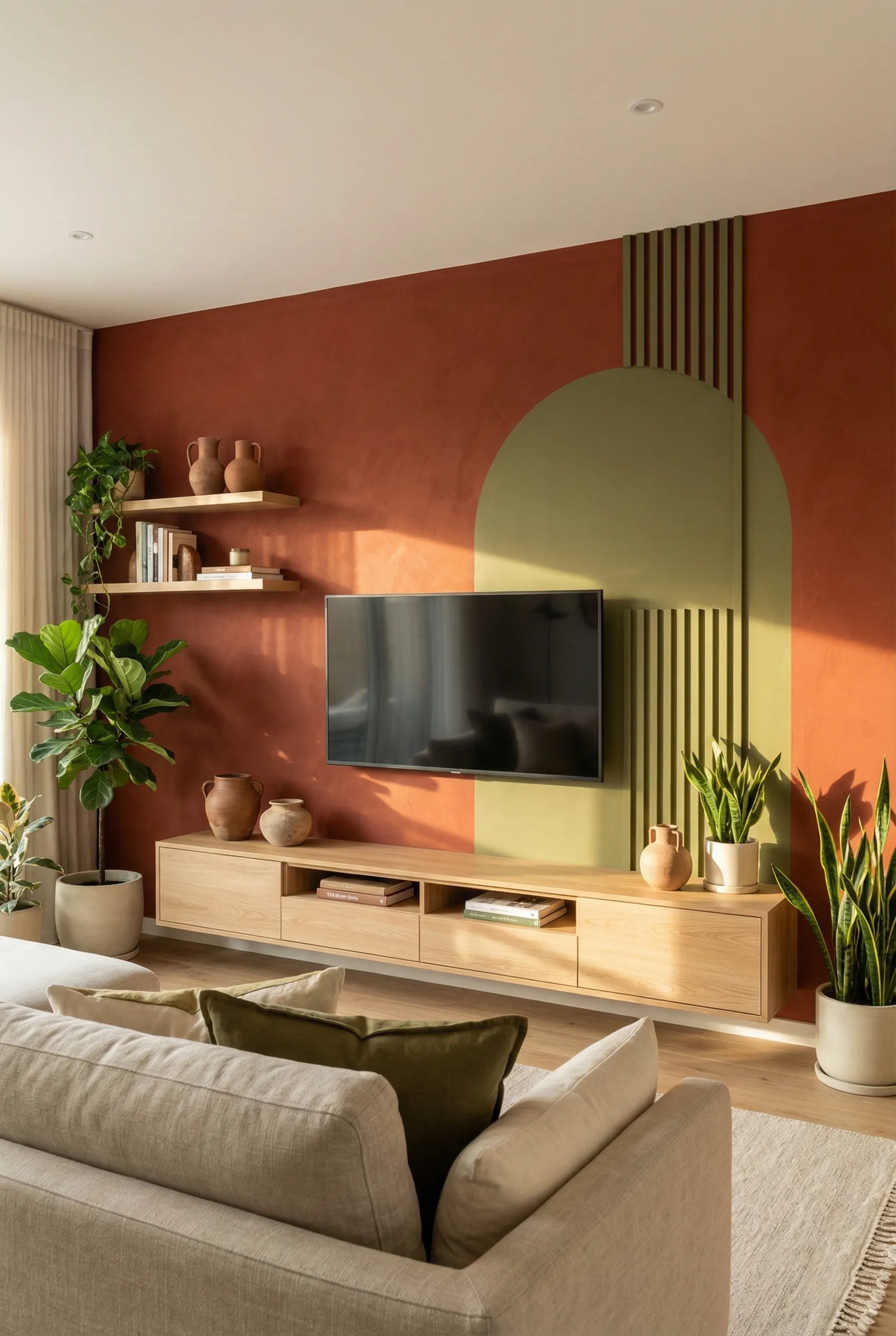
Modern Molding and Paneling: Architectural Interest
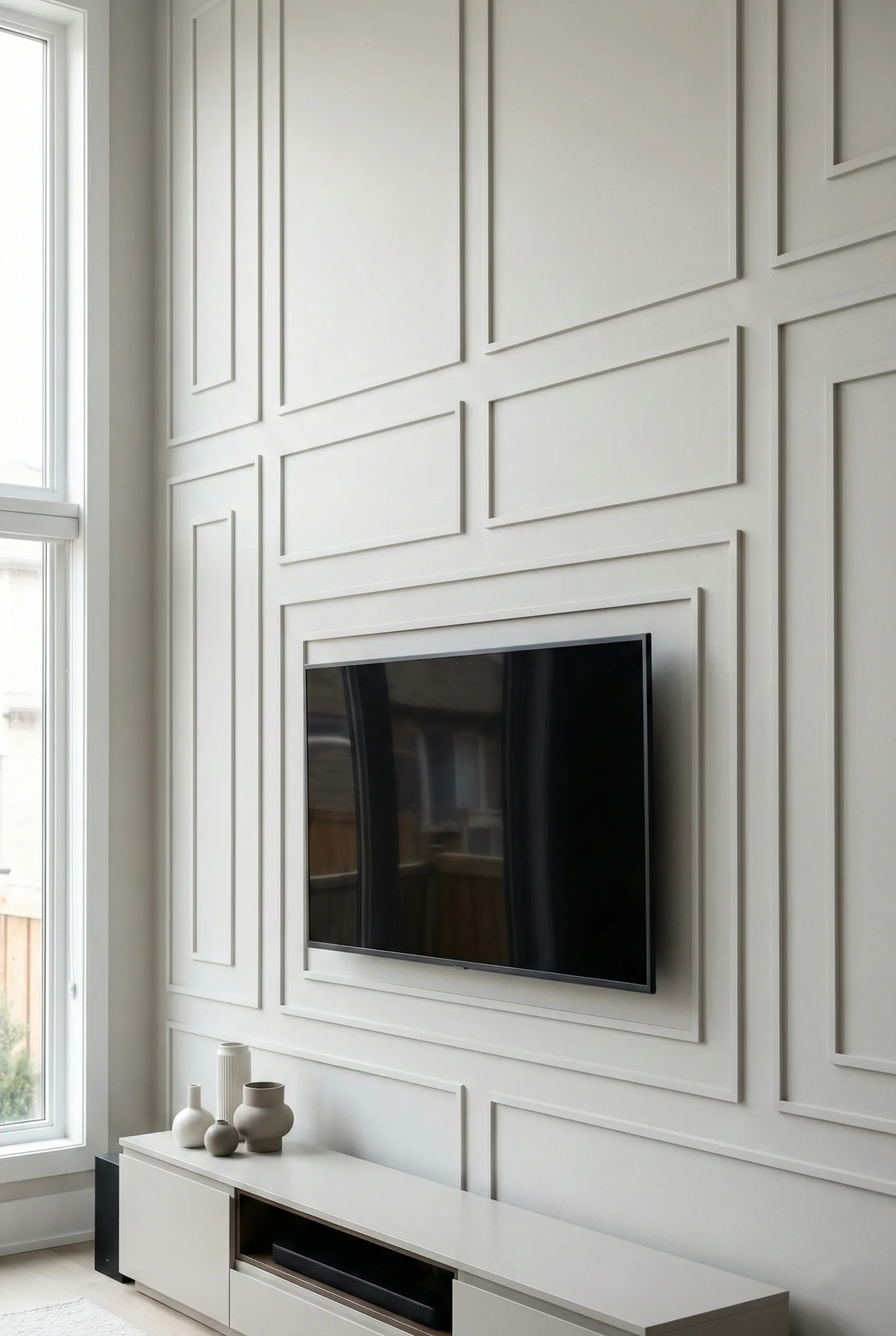
Molding and paneling are making a comeback in 2026, but with a modern twist. Lightweight materials and clean lines with geometric patterns replace the heavy, ornate styles of the past. Modern molding frames the TV and creates visual hierarchy without overwhelming the space.
Panel systems create depth and architectural interest when installed in geometric patterns, creating a contemporary look that feels both structured and organic. Balance matters – enough detail to add interest, but not so much that it competes with the TV or other room elements.
Same-color molding creates subtle definition and texture without contrast. This approach works well when you want architectural interest but need to maintain a cohesive color scheme. Contrasting molding makes a bolder statement. Works when you want the TV wall to be a clear focal point.
Installation considerations vary for renters and homeowners. Removable panel systems and lightweight molding options allow renters to add architectural interest without permanent changes, while homeowners can invest in more permanent installations that become part of the home’s character.
Integrated Technology: The “Shy Tech” Approach
The “Shy Tech” movement prioritizes clean, uncluttered aesthetics by hiding technology seamlessly. Cable management is the foundation – in-wall solutions provide the cleanest look but require more planning and installation work, while surface-mounted cable management systems offer easier installation and can be painted to match your wall.
Hidden storage for media devices and gaming consoles keeps the focus on design rather than electronics – built-in cabinets, floating shelves with concealed compartments, media units with integrated storage. The goal is to make technology functional without making it visible. For those who want the ultimate seamless look, the Samsung Frame TV is a game-changer, displaying artwork when not in use and blending perfectly into your wall design like a framed piece of art.
Integrated lighting enhances the viewing experience while maintaining the wall’s aesthetic. Ambient lighting behind the TV reduces eye strain, while accent lighting can highlight architectural details or artwork. LED lighting offers both energy efficiency and design flexibility, and smart home integration allows you to control lighting, climate, and entertainment systems from a single interface.
Multifunctional Wall Solutions
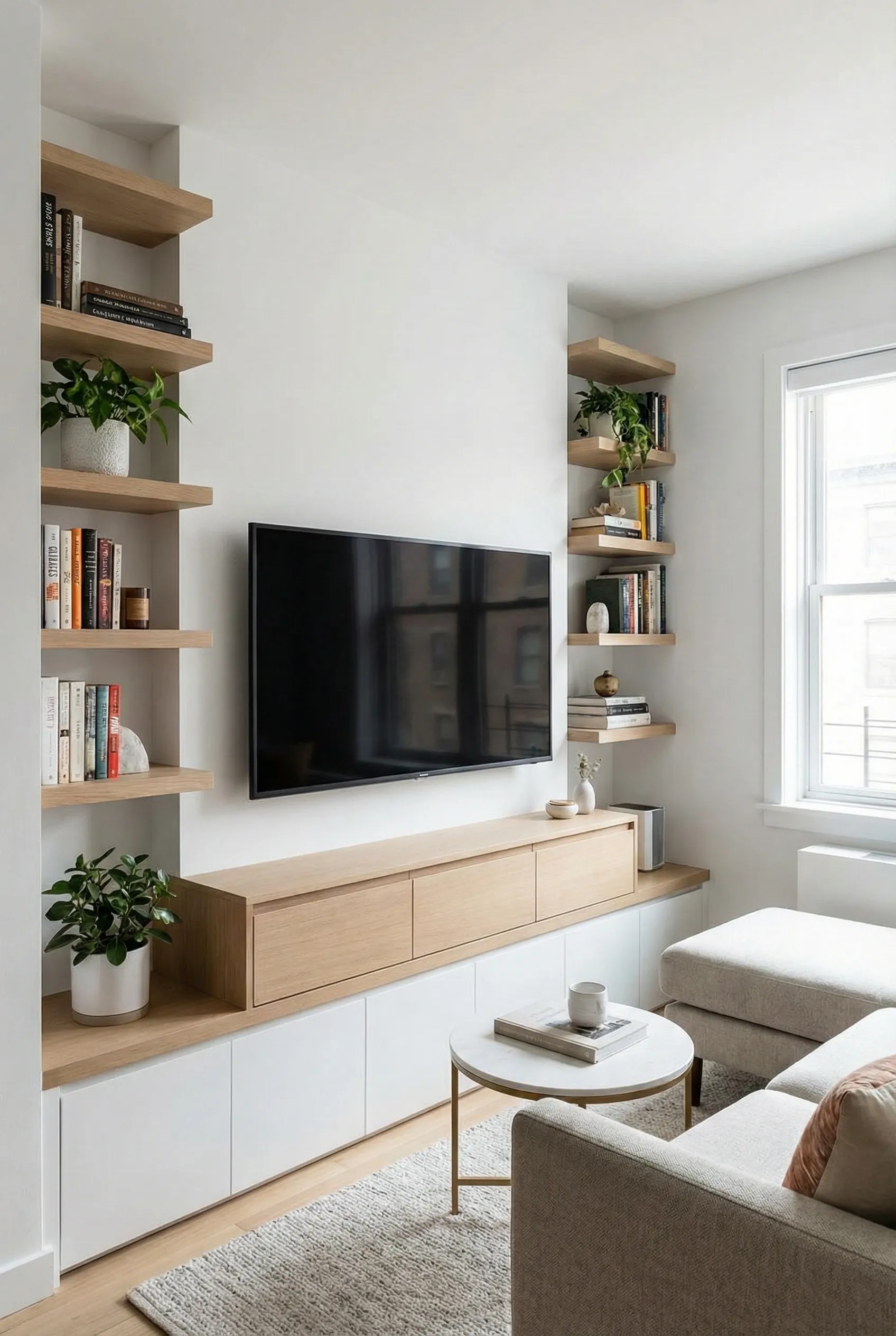
TV walls in 2026 are increasingly multifunctional. Storage integration through floating shelves, built-in cabinets, and media units maximizes space while maintaining clean lines. These solutions work well in smaller living rooms where every square foot matters. For inspiration on modern minimalist design that incorporates functional storage, look to contemporary interior design projects that balance aesthetics with practicality.
Flexible, modular systems adapt to changing needs. Your entertainment setup evolves – new devices, different furniture arrangements, changing storage needs. Modular systems can be reconfigured without major renovations. This approach is valuable for renters or homeowners who want design flexibility.
Combining TV walls with fireplaces or other focal points creates dynamic, layered spaces. Create visual balance so neither element overwhelms the other. This often involves using similar materials, colors, or design language to create cohesion.
Space-saving solutions for small living rooms focus on vertical storage and integrated furniture – wall-mounted media units, floating shelves, built-in storage. They all maximize floor space while keeping the TV wall functional and attractive.
Putting It All Together: Design Principles for 2026 TV Walls
Balancing natural materials with clean lines creates spaces that feel both warm and modern. Too much texture feels busy, while too little feels cold. The sweet spot is using natural materials as focal points while maintaining clean, uncluttered areas that let the materials shine.
Creating visual hierarchy means making the TV part of the design, not the only element. The wall should have enough interest to stand on its own. The TV integrated rather than isolated. This might mean using materials or colors that extend beyond the TV area. Or creating architectural details that frame and complement the screen.
Cohesion with the rest of the living room ensures the TV wall doesn’t feel like an afterthought. Consider how materials, colors, and styles connect to your furniture, flooring, and overall room design. The TV wall should feel like a natural extension of the space, not a separate design element.
Budget considerations help you prioritize where to invest and where to save. Natural materials and custom installations represent the biggest investments, while paint, removable paneling, and accessories offer more budget-friendly options. Consider which elements will have the biggest impact in your specific space and invest there first.