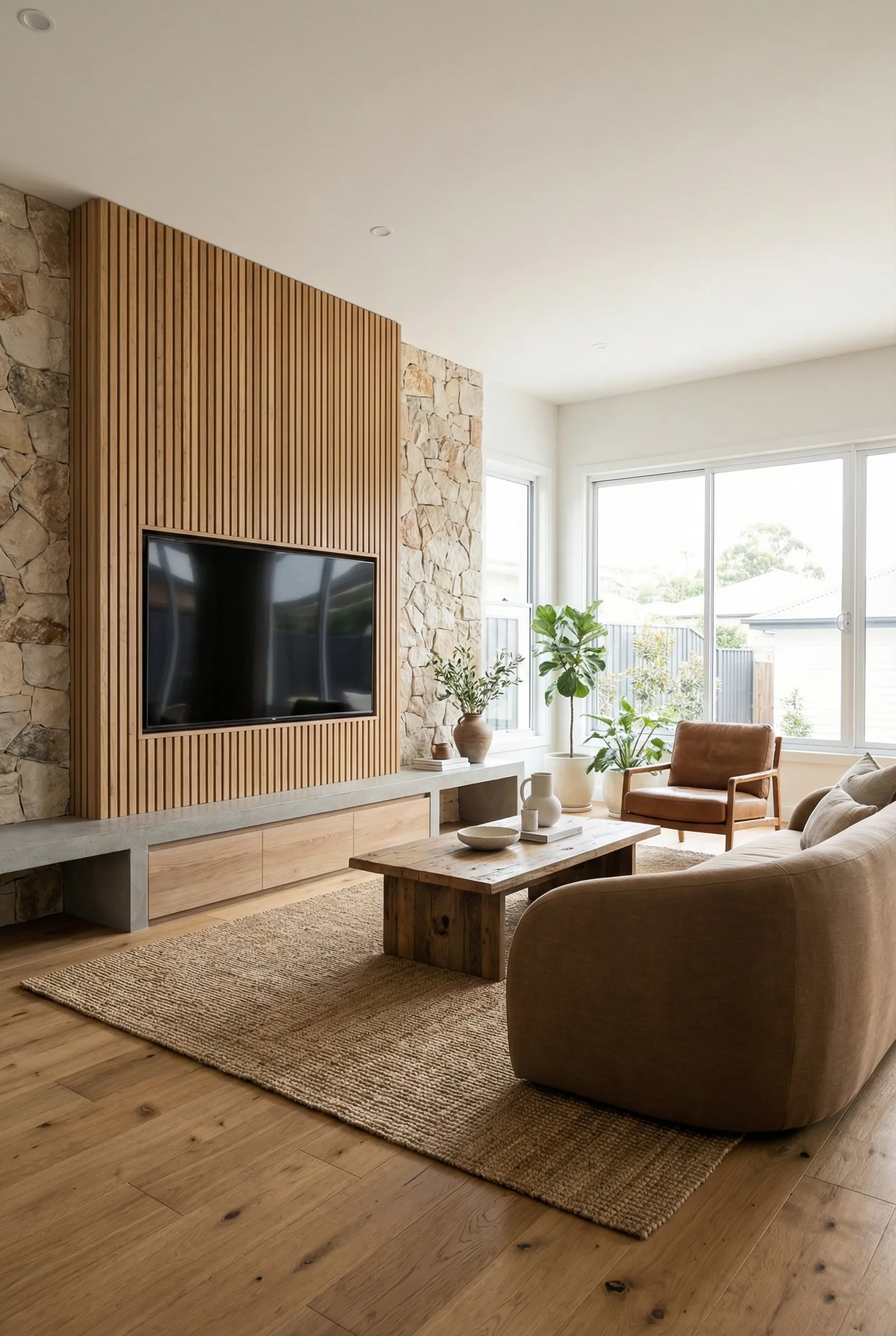
Last week, a client sent me photos of their living room. The wall was maybe 8 feet wide, and they wanted to fit a 65-inch TV there. “It’s going to look like a black hole,” she said.
I hear some version of this constantly. People panic about the screen. But here’s what I’ve learned: you don’t need to hide the TV. You need to make the wall work around it. A floating shelf. A plant on one side. Maybe a Samsung Frame TV that looks like art when it’s off. I’ve seen tiny apartments where the TV wall became the best part of the room. It’s always about less, not more.
Below are five fixes I come back to again and again when clients ask me how to style a TV wall that doesn’t take over the room. Each one addresses a specific reason why TV walls end up feeling wrong, and each costs less than most people expect.
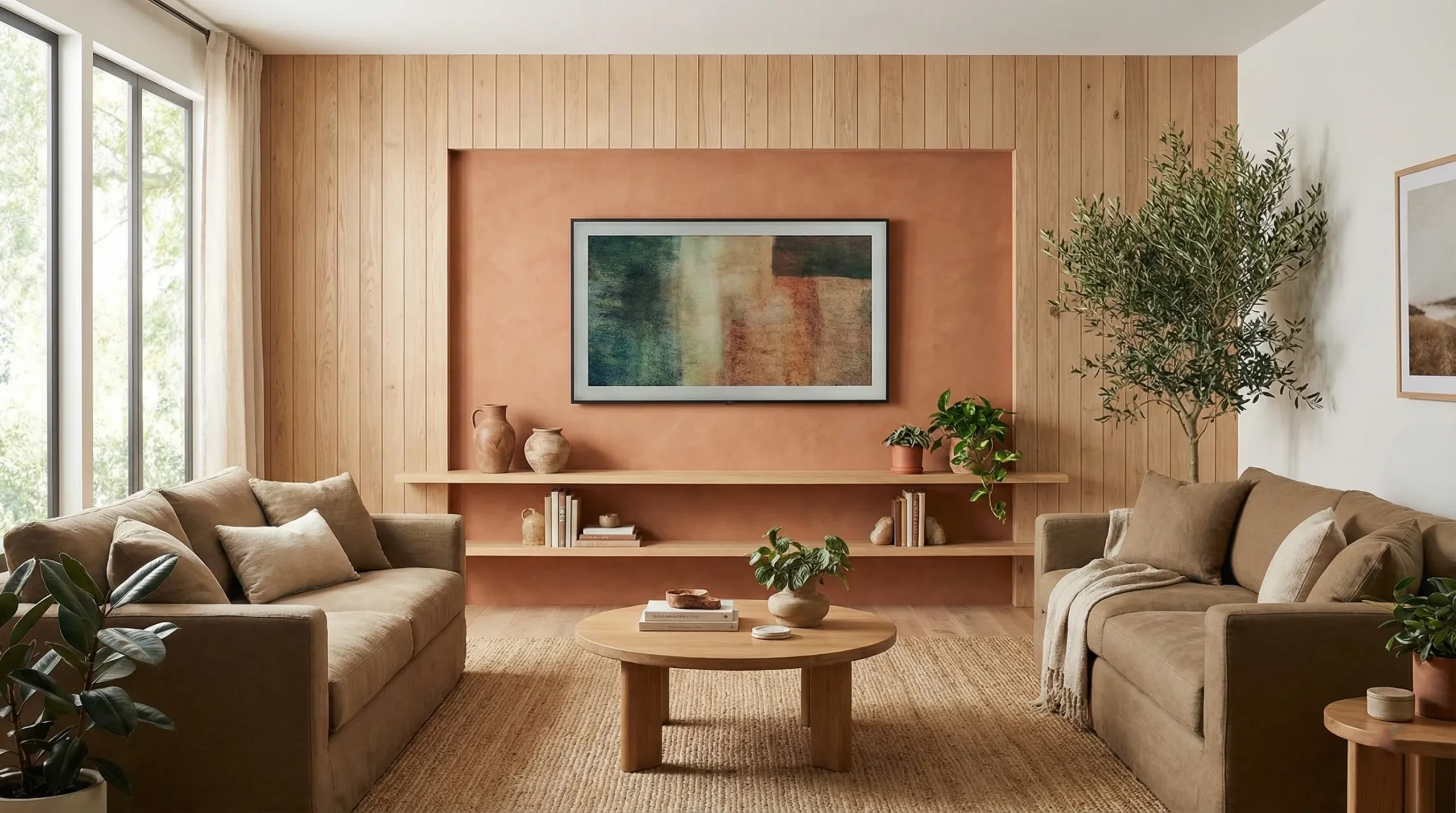
To style a TV wall that doesn’t dominate the room: close the contrast gap with wall paint, anchor the screen with one shelf below it, add one large element (plant or art) to share visual weight, hide the cables, and choose a console that stays low and light. You don’t need all five. Most rooms need two or three.
Why the Screen Dominates (and It’s Not Just the Size)
A 65-inch TV on a white wall reads as a black rectangle in a white frame. The contrast is the problem, not the TV itself. The screen is dark. The wall is light. Nothing else on the wall pulls the eye away. So the TV wins by default.
The fix isn’t always paint or shelves or a console. Sometimes it’s just understanding which part of the wall the TV is competing with — and giving it something to compete against instead of an empty field.
Fix 1: Close the Contrast Gap with Paint
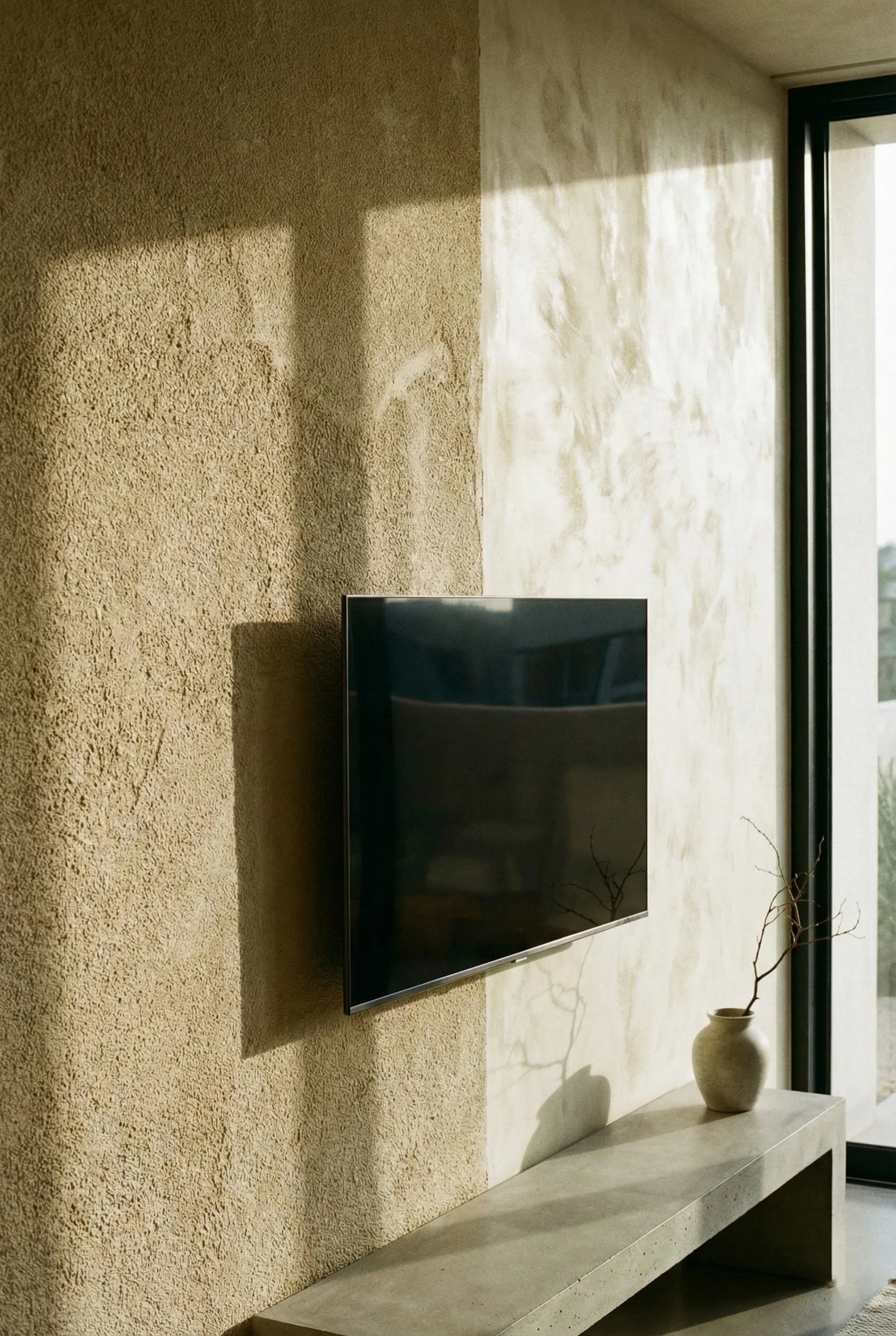
The fastest and cheapest way to reduce the black hole effect is to change the wall color behind the TV. A warm, mid-tone color — soft olive, deep warm white, muted terracotta — closes the contrast gap between the dark screen and the wall. The TV stops reading as a black rectangle because the background isn’t stark white anymore.
You don’t have to paint the whole room. One accent wall behind the TV is enough. The color doesn’t need to be bold. It just needs to not be white.
The full breakdown of which colors work best for this, and which ones backfire depending on your room’s light, is in the dedicated guide on what color to paint behind your TV.
Fix 2: Anchor the TV Below It
A TV mounted on a wall with nothing below it looks like it’s floating — and not in the good way. The screen has no visual anchor, so it reads as an afterthought rather than a design decision.
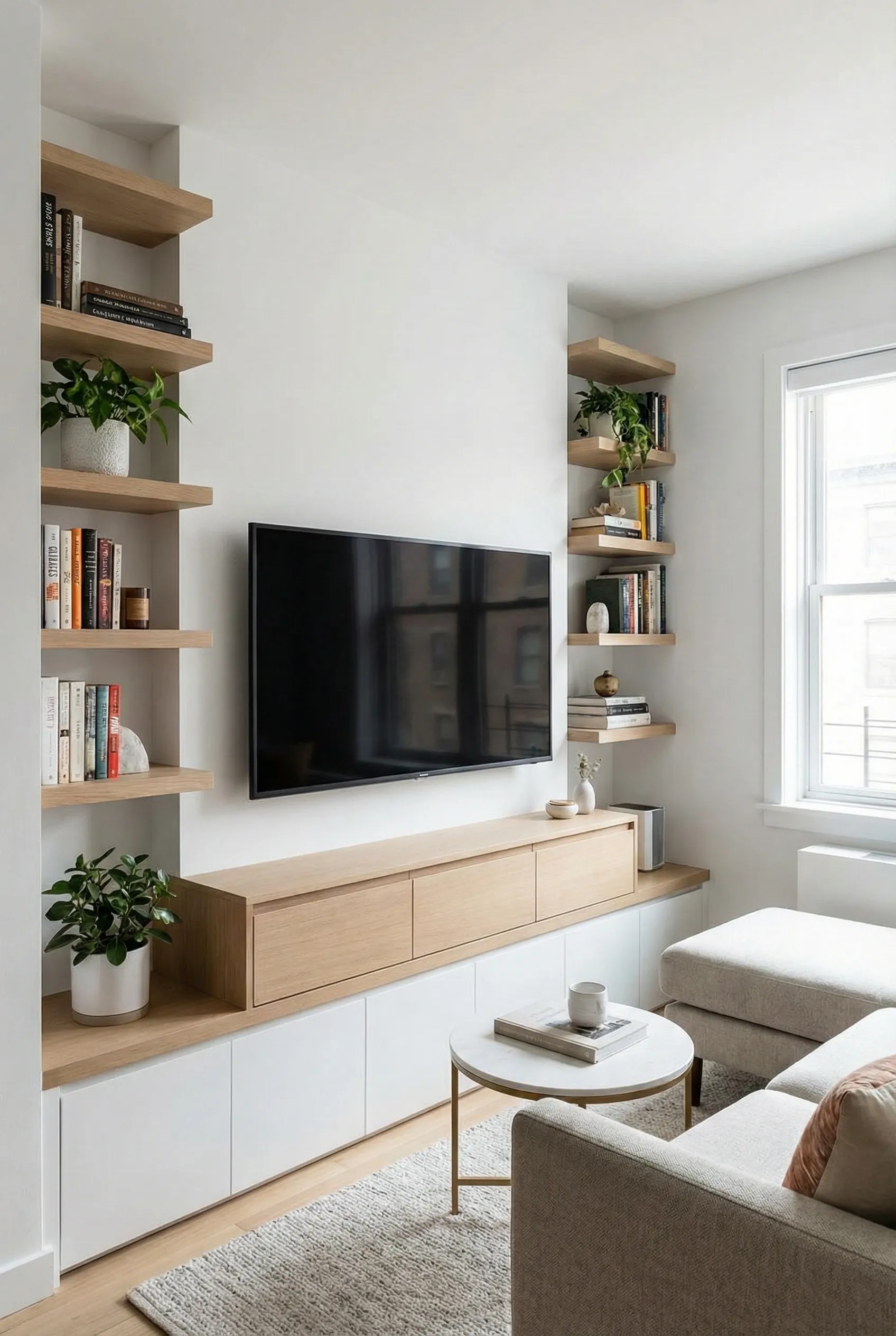
One floating shelf below the TV fixes this. Not a full console unit, not a media center. Just one shelf, at the right height, with two or three things on it. The shelf gives the TV a base. The eye reads “this was placed here on purpose” instead of “this was mounted wherever the cable was.”
Budget for this: $40–80 for a shelf, $15–30 for LED strips underneath if you want the warm ambient glow. That’s the entire investment.
Fix 3: Give the TV One Thing to Fight Against
The eye dominates the TV because there’s nothing else in its weight class. You don’t need a gallery wall or a shelving unit. You need one element — a large plant, a sculptural object, a single framed print — that has enough visual mass to share the wall.
One plant to the left of the TV. One tall lamp. One piece of art in a substantial frame. The TV stops being the only thing because it now has a conversation partner.
The trap is adding too much. Two plants and three frames and a shelf and a console and a rug all at once — the room gets loud instead of balanced. Pick one element and let it do the work.
Fix 4: Go Shy Tech
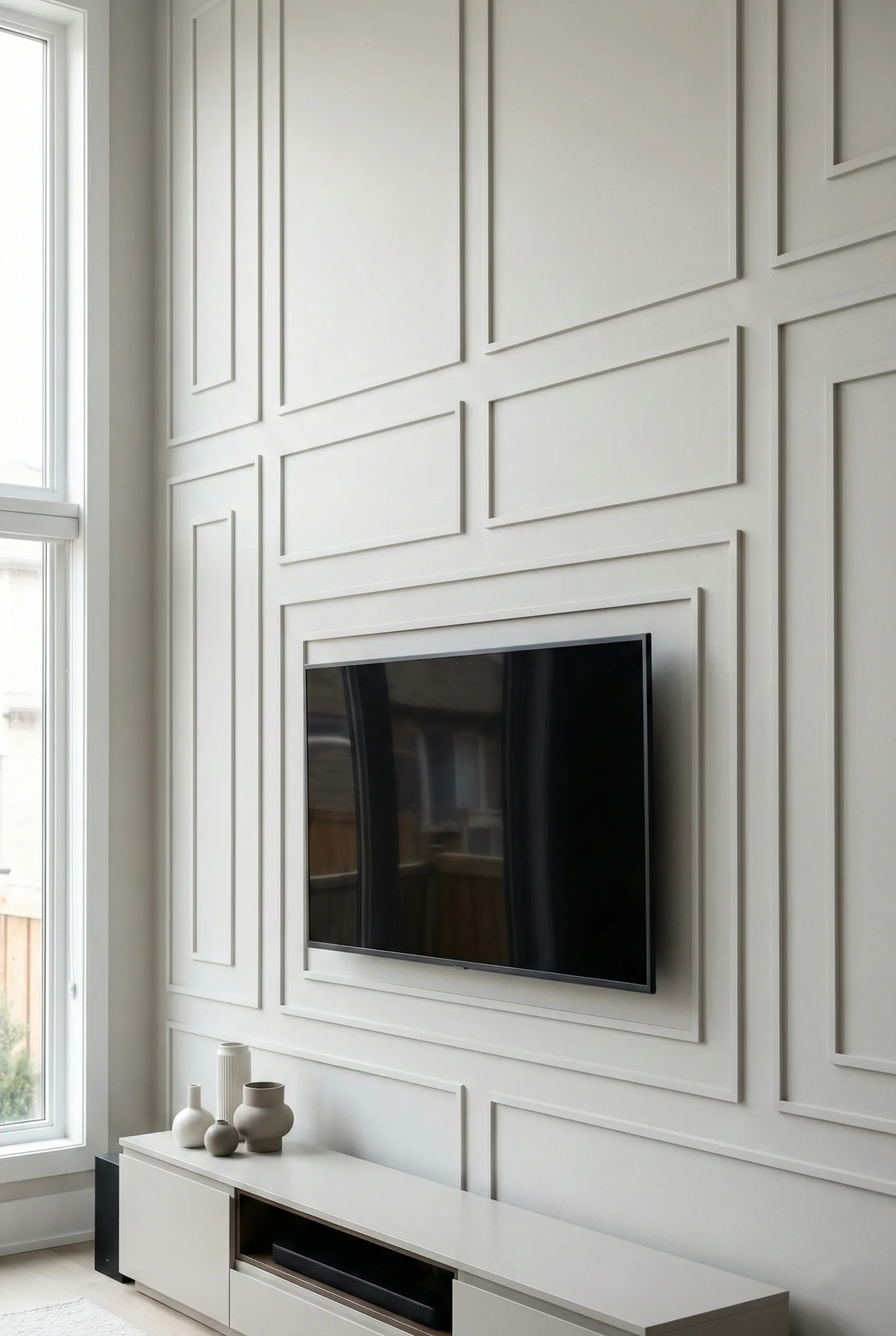
The cables are doing half the damage. A TV that’s cleanly mounted with no visible wires reads completely differently than the same TV with a cluster of HDMI cables dangling down the wall. Cable management is not a minor detail. It’s the difference between “designed” and “installed.”
Surface cable management kits run $15–30 and can be painted to match the wall. In-wall solutions are cleaner but require a bit more work. Either one is worth doing before anything else.
If you want to go further: the Samsung Frame TV is the one product that changes the equation. When it’s off, it displays artwork. It has a matte screen finish that doesn’t reflect light the way regular TVs do. The black hole effect disappears because the screen is never black — it’s always showing something. It’s not cheap, but it’s the single best solution for people who find TV walls visually frustrating.
Fix 5: Choose a Console That Disappears
A bulky media console under a wall-mounted TV undermines the whole point of mounting it. The TV is on the wall to free up visual space. Then a big dark unit sits below it and pulls the eye down.
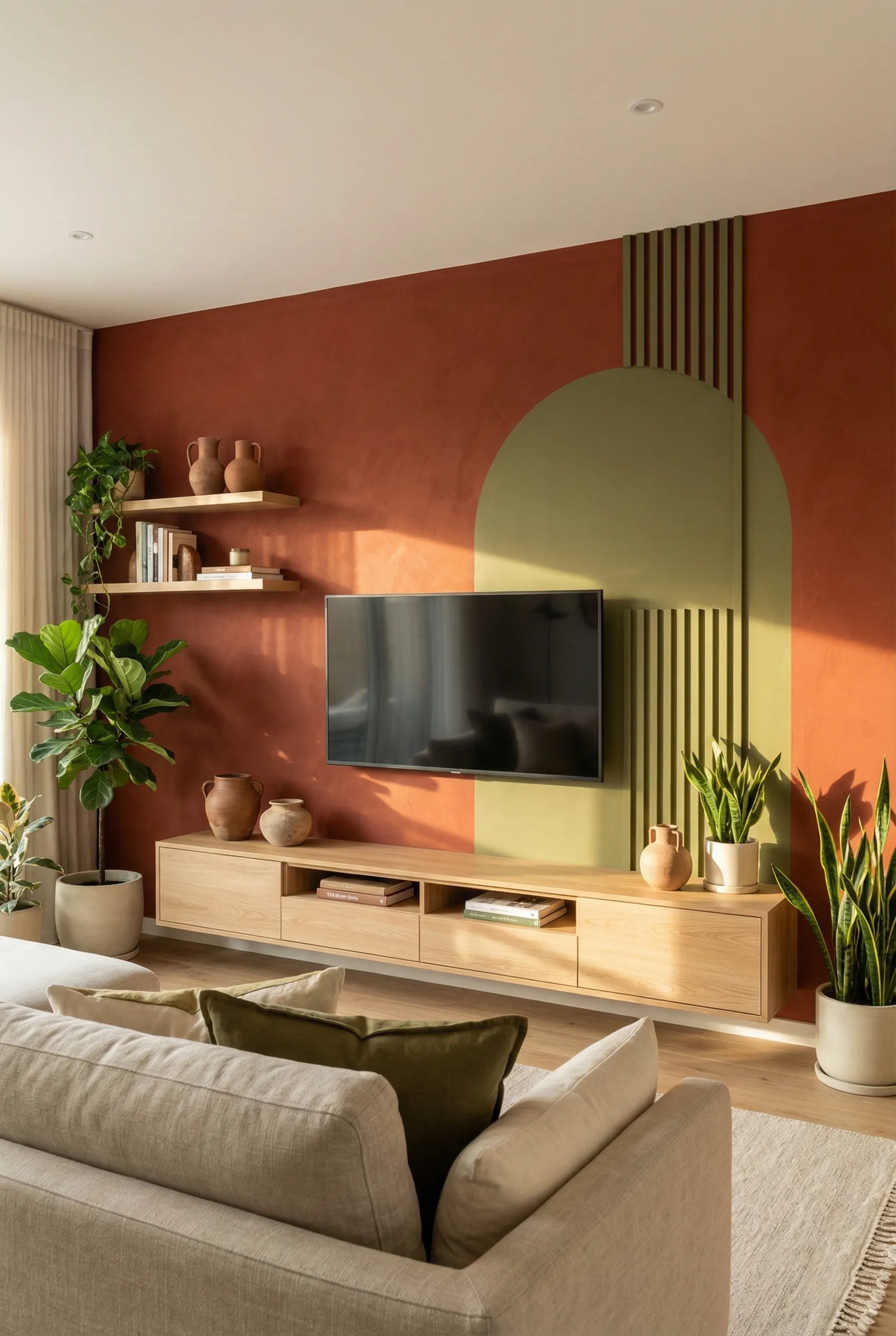
The console that works: low, narrow, in a light or natural material. A floating media unit mounted at the same height as the shelf in Fix 2 is the cleanest option. Or no console at all — just the shelf, just the TV, just the wall.
If a console is needed for storage, keep it lower than 18 inches off the ground and lighter in tone than the wall. It reads as furniture, not as a second focal point competing with the screen.
Which Fix for Which Room
Not every fix applies to every room. Here’s the fast version:
| Room situation | Start here |
|---|---|
| White walls, TV looks like a black rectangle | Fix 1 (paint) + Fix 4 (cable management) |
| TV is mounted but nothing around it | Fix 2 (shelf below) + Fix 3 (one element) |
| Room is rented, can’t paint | Fix 3 (one element) + Fix 5 (console swap) |
| Budget is the main constraint | Fix 2 ($40–80 shelf) or Fix 4 cable kit ($15–30) |
| Want the cleanest possible result | Fix 4 (Frame TV + cable management) + Fix 1 (paint) |
For a full style reference — 14 different TV wall treatments with a breakdown of who each one is for — the TV wall ideas guide covers the range from rental-friendly to full renovation.
And if you’re not sure what to do above the TV once everything else is sorted, the guide on what to put above your TV covers that question directly.