Small living rooms don’t forgive bad TV wall decisions. In a larger room, you can get away with a console that’s slightly too big or a TV mounted a few inches too high. The room absorbs the mistake. In a small space, every proportion is visible from everywhere, and one wrong call makes the whole room feel off in a way you can’t quite name but feel every time you sit down.
Because every choice matters in a small room, the decisions that count are easier to spot. What helps is a framework for making fewer, better ones.
The First Decision: Wall Mount, Always
In a small living room, the TV goes on the wall.
A TV on a floor-standing console adds visual weight at the bottom of the room. It shortens the apparent ceiling height. It takes up floor space that, in a small room, is genuinely precious. And it makes the TV look like furniture rather than a considered design decision.
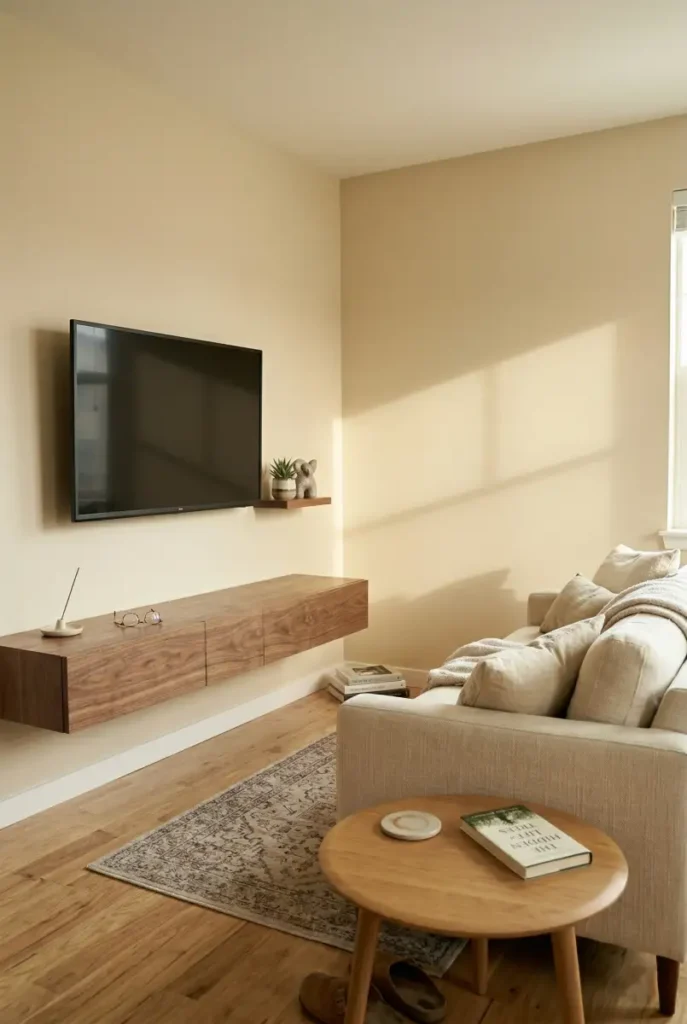
Wall mounting does three things at once. It frees the floor. It raises the visual horizon line, which makes the room feel taller. And it gives you full control over the composition below the screen, which is where the real design work happens in a small space.
The one thing most people get wrong with wall mounting in small rooms: they mount too high. The instinct is to go higher to create the illusion of space. It does the opposite. A TV mounted too high makes the ceiling feel lower and the wall feel more crowded. The center of the screen should sit at eye level when seated, which is typically 42 to 48 inches from the floor to the screen’s center. In a small room, that’s even more important than in a larger one.
What Goes Below the TV: The Console Decision
Most small living rooms go wrong under the TV, not with the TV itself.
The default choice, a large entertainment center or a wide console with closed doors on both sides, is almost always the wrong call in a small space. It adds visual mass at the bottom of the wall, competes with the TV for attention, and makes the room feel like the furniture is winning.
Two options work reliably well in small living rooms.
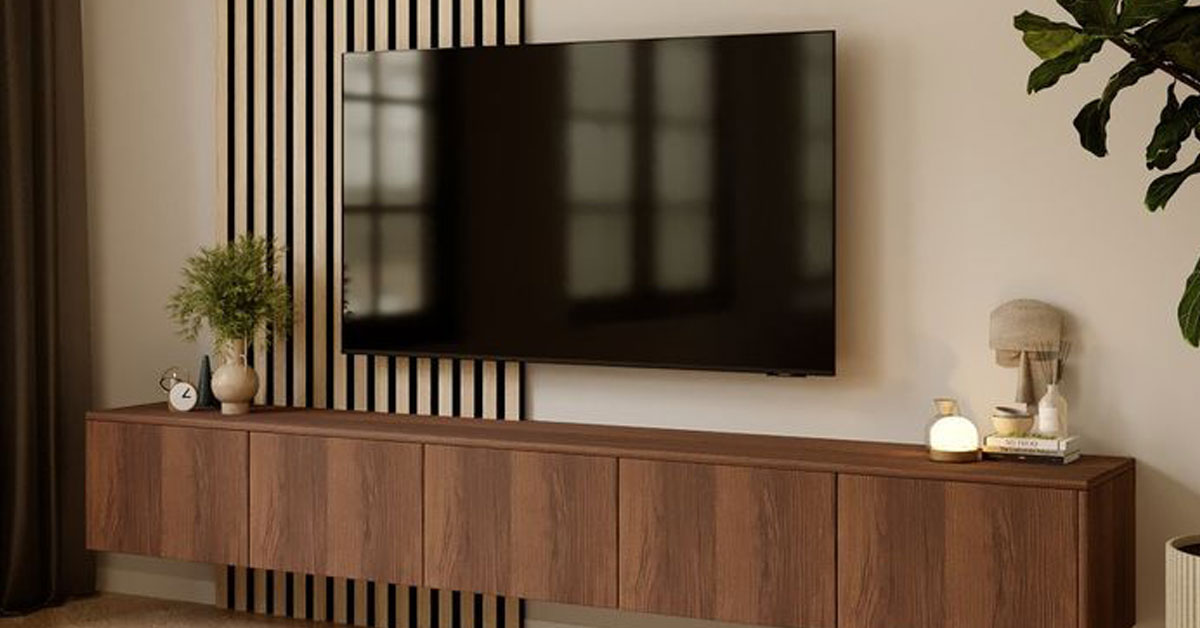
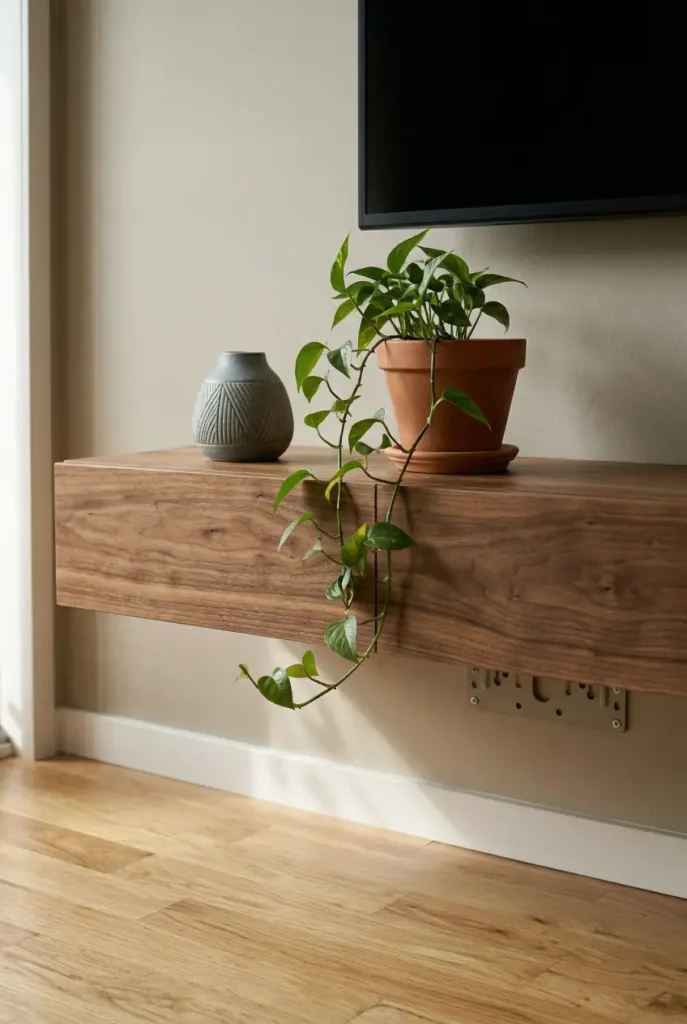
A floating media console. Wall-mounted, no legs, narrow depth. It keeps the floor visible beneath it, which is one of the most effective tricks for making a small room feel larger. The visible floor creates a continuous horizontal line that draws the eye across the room rather than stopping it. Look for a floating console with a depth of 12 to 14 inches maximum. Anything deeper starts to intrude on the walking space in front of it. Width should be slightly narrower than the TV, roughly 80 to 90 percent of the screen width, so the TV anchors the composition visually rather than sitting on top of something wider than itself.
A slim low-profile console on legs. If you prefer something freestanding, legs are essential. High, slender legs that let you see the floor beneath create the same open-floor effect as a floating console. A console that sits flat on the floor with no clearance underneath closes off that visual space and makes the wall feel heavier. The leg height matters: at least 6 inches of clearance, ideally more.
TV Size in a Small Room: Go Bigger Than You Think
Most people buy a TV that is too small.
The instinct in a small room is to downsize everything, including the TV. So people buy a 43-inch or 50-inch screen for a room that could comfortably take a 55-inch or even 65-inch. The result is a TV that looks hesitant. A screen that seems chosen out of anxiety rather than intention.
Here’s the actual rule: the minimum recommended viewing distance for a 55-inch TV is about 5 feet. For a 65-inch TV, it’s about 6.5 feet. Most small living rooms have 8 to 12 feet between the sofa and the TV wall. That means a 65-inch screen is appropriate for most small living rooms. The room doesn’t feel smaller with a larger TV. It feels more considered.
A TV looks too big because of what surrounds it. An oversized console, a cluttered wall, or a mount height that’s too high will make any TV look overwhelming. The screen itself, wall-mounted at the right height with a proportional console below, integrates naturally even in compact rooms.
The Wall Treatment Question in Small Spaces
Small rooms create a specific challenge for TV wall treatments. The techniques that work brilliantly in larger rooms, full built-in shelving flanking the TV, floor-to-ceiling wood slat walls, elaborate picture frame molding across an entire wall, can feel heavy and space-consuming in a compact room.
The wall doesn’t have to be bare, but the treatment should be selective.
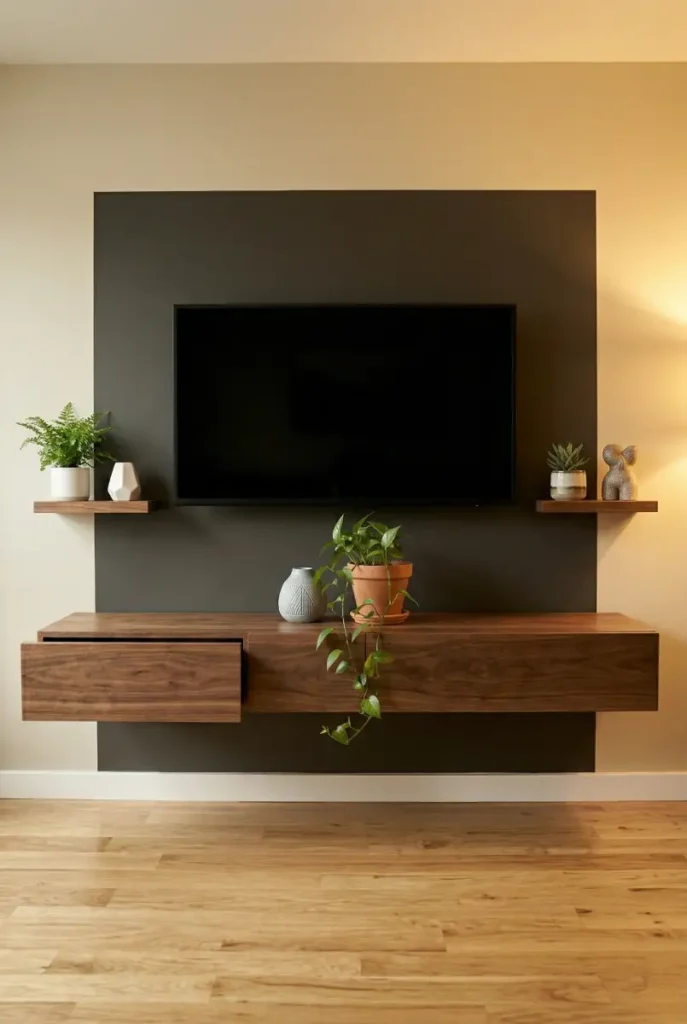
Paint is the most space-friendly treatment. A dark, warm, matte color behind the TV area only, without extending to the full wall, creates a defined zone that makes the TV intentional without adding any physical depth to the room. In a small space, this is often the highest-impact, lowest-cost change you can make. The guide on what color to paint behind your TV covers the specific tones that work in compact rooms where light management is critical.
A partial wood slat treatment. Rather than floor-to-ceiling slats across the entire wall, a panel of slats behind the TV only, matching the width of the console or slightly wider, adds warmth and texture without visually compressing the room. The full wood slat wall guide covers the proportions that work in different room sizes.
Picture frame molding, used selectively. One or three panels on the TV wall only, not extending to adjacent walls, adds architectural detail without overwhelming a small space. The key in small rooms is to keep the molding tone-on-tone with the wall. Contrasting trim in a small room creates too much visual noise. The picture frame molding guide covers the layout decisions that apply specifically to smaller walls.
Storage: The Small Room’s Real Challenge
In a large living room, storage is optional. Decorative objects can live on surfaces, remotes disappear into cushions, and cables are someone else’s problem.
In a small room, visible clutter around the TV is the single thing that most reliably makes the space feel chaotic. And so storage isn’t an afterthought. It’s a design decision that belongs in the TV wall plan from the start.
The approaches that work best:
Floating shelves flanking the TV. Two shelves, one on each side of the screen at console height, extend the horizontal composition and add storage without adding floor footprint. They work best when kept lightly styled: two or three objects per shelf, not loaded with books and accessories. The visual lightness matters as much as the storage function.
A console with closed storage. One or two drawers or a cabinet door below the floating surface handles the cables, remotes, and streaming devices that inevitably accumulate. Closed storage in a small room is significantly more effective than open shelving at keeping the wall looking calm. Open shelving requires consistent styling discipline that most real living rooms can’t sustain.
Vertical storage beside, not above. If you need significant storage capacity, one tall narrow cabinet or bookcase to one side of the TV wall integrates the function without cluttering the TV composition itself. It extends the wall visually, which can actually make a small room feel wider rather than more cramped.
The Corner TV Option (When It Actually Makes Sense)
Corner placement for a TV in a small room is one of those ideas that comes up constantly and gets dismissed just as fast. The dismissal is usually wrong.
In specific room configurations, a corner-mounted TV is the best possible solution. Specifically: when the room is wider than it is deep, when the main seating faces a corner naturally, or when two walls of the room have doors or windows that eliminate both primary wall options.
The corner TV wall works when the mount allows for horizontal swiveling, so the screen can angle toward the seating area rather than pointing straight into the corner. A fixed mount in a corner is almost always uncomfortable to watch. A swivel mount in a corner can be the most ergonomically sound option in the room.
What doesn’t work in a corner: large consoles, flanking shelves, or any treatment that requires the wall composition to be symmetrical. Corner TV setups need to be minimal by definition. A small floating shelf below, a clean wall, and a good swivel mount. That’s the version worth doing.
Cable Management: Hide the Loose Ends
In a large room, a cable or two hanging from a wall-mounted TV is an eyesore but not a disaster. In a small room, where every surface is close and visible, loose cables make the entire TV wall look unfinished regardless of how well everything else is done.
Three approaches work reliably, in order of effort and result.
A cable management raceway, a plastic channel that attaches to the wall surface and covers the cables, is the fastest and cheapest solution. It takes about thirty minutes to install and costs under $20. It’s not invisible, but it’s significantly better than bare cables.
An in-wall cable kit routes cables through the wall itself, emerging behind the TV and behind the console. The result is completely clean. No visible cables at all. The installation requires cutting two small holes in the wall and threading cables through a tube inside the wall cavity. It takes about an hour and costs $30 to $60. This is the version worth doing in a small room where the TV wall is the primary focal point. Buy a kit rated for in-wall use and follow your local electrical code. These kits are for low-voltage cables like HDMI. The TV’s power cord should never run inside the wall, so for power an electrician needs to install a recessed outlet behind the TV.
If neither is feasible, positioning the console directly below the TV mount point and keeping all devices on that console minimizes cable length to the point where they’re barely visible.
What Not to Do in a Small Living Room TV Wall
Most of the advice on small living room TV walls focuses on what to add.
Don’t flank the TV with large decorative objects at console height on both sides. In a large room, two tall vases or large lamps bracketing a TV create symmetry and presence. In a small room, they make the TV zone feel like a barricade across the wall.
Don’t put a gallery wall around the TV. A gallery wall in a small room is usually too much visual information competing with the screen. The TV is already a focal point. A gallery wall tries to be one too. The result is a wall that feels busy rather than designed.
Don’t hide the TV at the expense of functionality. Some small room guides suggest tucking the TV into a corner or behind cabinet doors to minimize its presence. In practice, a TV you have to work to access or watch at an uncomfortable angle will make you subtly resentful of your own living room. The TV belongs in the room. The goal is to make it look like it belongs there, not to pretend it doesn’t exist.
For more on the specific styling decisions above and below the screen, the guide on what to put above your TV covers the sizing and proportion rules that apply even more strictly in compact rooms.
Larger than most people assume. For a room with 8 to 10 feet of viewing distance, a 55-inch TV is appropriate. For 10 to 12 feet, a 65-inch TV works well. The common mistake is going too small out of caution, which makes the TV look hesitant rather than intentional. The wall treatment and console proportions matter far more than the screen size in terms of whether the TV feels overwhelming.
Yes. Wall mounting is almost always the right call in a small space. It frees up floor area, raises the visual horizon, and gives you full control over the composition below the screen. The one condition: mount it at the correct height. Center of screen at seated eye level, typically 42 to 48 inches from the floor. Mounting too high in a small room amplifies the problem rather than solving it.
A floating wall-mounted console or a slim legged console with significant floor clearance. Both keep the floor visible beneath them, which is one of the most effective visual tricks for making a small room feel larger. Maximum depth of 12 to 14 inches. Width slightly narrower than the TV. Closed storage over open shelving for daily livability.
Yes, with restraint. A partial treatment, slats or molding behind the TV area only rather than across the full wall, adds texture and warmth without compressing the room visually. Keep the treatment tone-on-tone with the wall color rather than contrasting. In a small room, contrast amplifies visual noise and makes the wall feel busier than it is.
An in-wall cable management kit is the cleanest solution and takes about an hour to install. It routes cables through the wall with no visible hardware. For a faster option, a surface-mounted cable raceway covers the cables against the wall for under $20. In a small room where the TV wall is always visible, clean cable management makes a more noticeable difference than it would in a larger space.