I have stood in my own entryway, coat still on, completely unable to find my keys. They were under a canvas tote, which was on top of a shoe I’d kicked off, which was next to the mail I hadn’t opened in four days. The bench I’d bought six months earlier was technically there. It just wasn’t doing anything useful.
That’s the problem with most entryway bench advice. It shows you beautiful rooms and tells you to buy a bench. It doesn’t tell you which type of bench, or why one will work in your space and three others won’t. And it definitely doesn’t tell you that the wrong bench makes the chaos worse, not better, because now you have a surface to pile things on top of.
The Real Problem With Most Entryway Benches
The entry is the only room in your house where you’re always either arriving or leaving. You’re never just sitting in it. That sounds obvious, but it changes everything about how the furniture needs to work.
Most people buy a bench based on how it looks in a product photo. Clean background, perfect lighting, nothing on it. Then they bring it home, and within two weeks it’s buried under backpacks, wet umbrellas, and a dog leash.
Not because they’re disorganized. Because the bench wasn’t designed around how an entry actually gets used.
Here’s the thing most guides skip: there are four fundamentally different types of entryway bench with storage, and they solve four different problems. Get the type right for your situation, and the space basically organizes itself. Get it wrong, and you’ll be fighting it every single day.
Type 1: The Shoe Bench (Open Shelf Below)
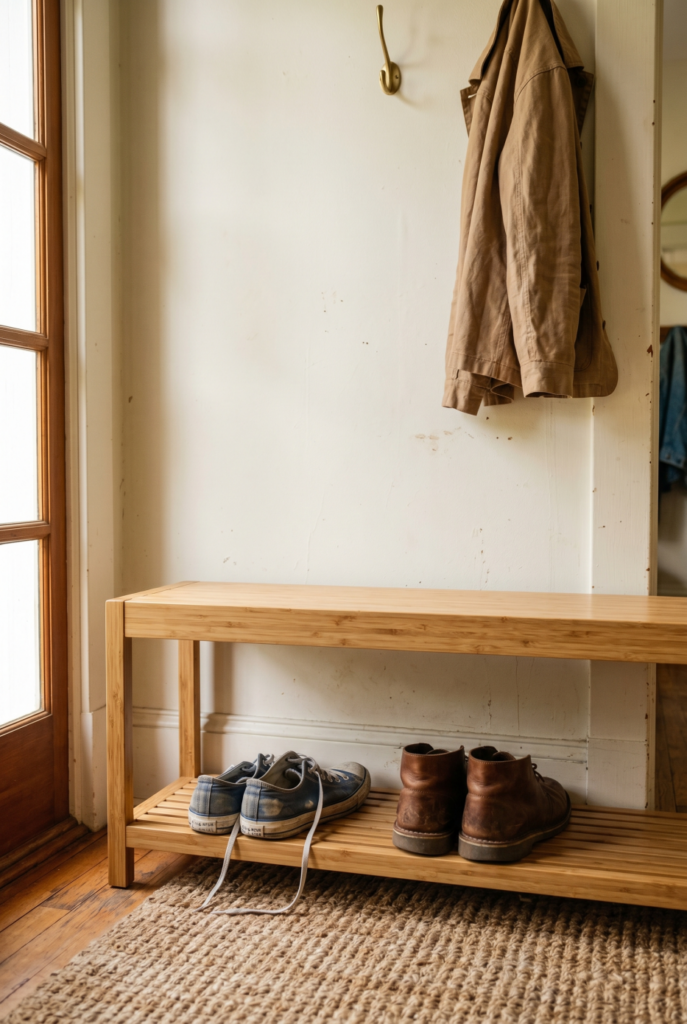
This is the most common type. A flat seat on top, open shelving underneath for shoes. Bamboo or wood construction, usually two to three tiers.
It works beautifully when your main issue is shoes. Families with kids. Households where everyone swaps footwear at the door. Spaces where you want the entry to feel lighter and more open because the storage is visible.
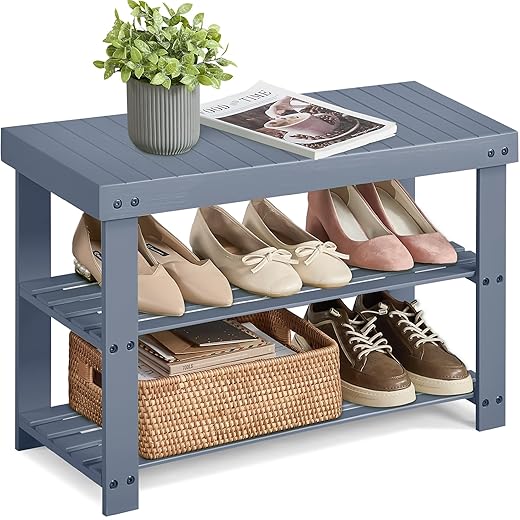


It does not work well if anyone in your house is going to ignore the system. Open shelving requires consistent use. One pair of shoes left on top of the shelf instead of in it and the whole thing starts to look cluttered. If you’re the only person who will actually maintain it, it’s fine. If you’re relying on a teenager or a partner who has different ideas about where shoes belong, go with Type 3 instead.
The brand I keep coming back to in this category is SONGMICS. Their bamboo bench models have a 300-pound weight capacity, which matters more than people think. Benches flex and creak when they’re not built for real use. The SONGMICS holds up, the finish stays clean, and the proportions are right for narrow entries. It’s not a statement piece. It’s a workhorse. That’s exactly what this spot needs.
Type 2: The Upholstered Storage Bench (Flip-Top Lid)
Padded seat on top, enclosed storage compartment underneath that opens with a hinged lid. The storage is hidden. The surface is soft enough to actually sit on comfortably.
This one is underrated for small entryways because it doesn’t read as furniture-with-a-job. It just looks like a nice bench. The closed storage keeps visual clutter completely out of sight, which is the fastest way to make a small entry feel calm.
What goes inside? Seasonal items. Extra leashes. The random things that live near the door but don’t have a natural home. This isn’t for shoes you rotate daily. It’s for stuff that needs to exist near the entry without being visible.
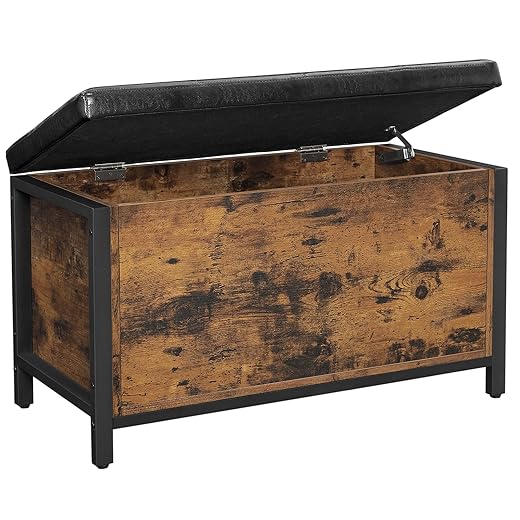
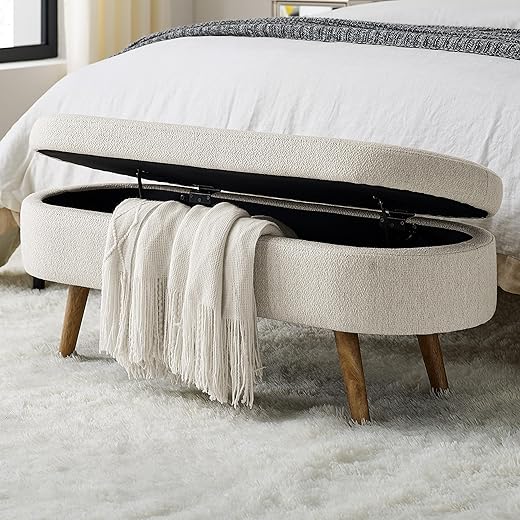
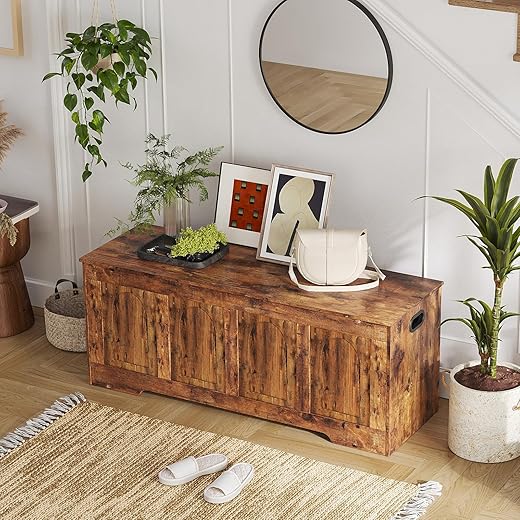
The limit here is access. If you’re reaching into it every day, the flip-top gets annoying fast. If you’re opening it once a week to swap out seasonal gear, it’s perfect.
VASAGLE makes several versions of this and their CUSTOS Collection is the one worth looking at. The proportions are right for smaller spaces, the hinges don’t sag over time, and the cushioned seat holds up with real daily use. The greige and dove gray colorway photographs well and sits quietly in the space without demanding attention.
Type 3: The Hall Tree (Bench Plus Everything Else)
This is the all-in-one: bench with seat, shoe storage underneath or beside it, coat hooks above, sometimes a top shelf and a mirror. One piece of furniture doing five jobs.
It sounds like the obvious choice. And for the right space, it is. For the wrong space, it’s a disaster.
Hall trees work when you have at least 14 to 16 inches of depth available and some wall height to use. They need room to breathe. Squeezed into a genuinely narrow entryway, they make the space feel like a very organized closet, which is not the goal.
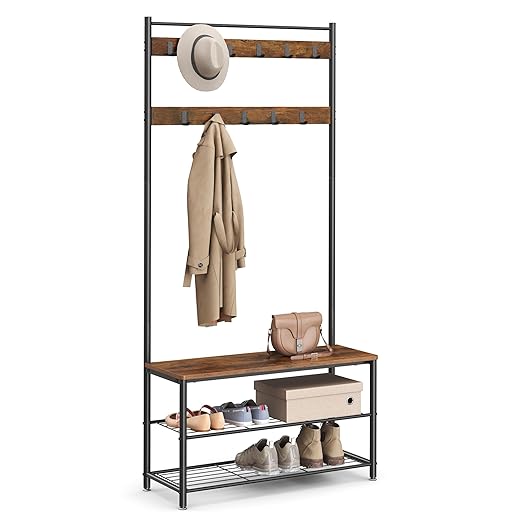
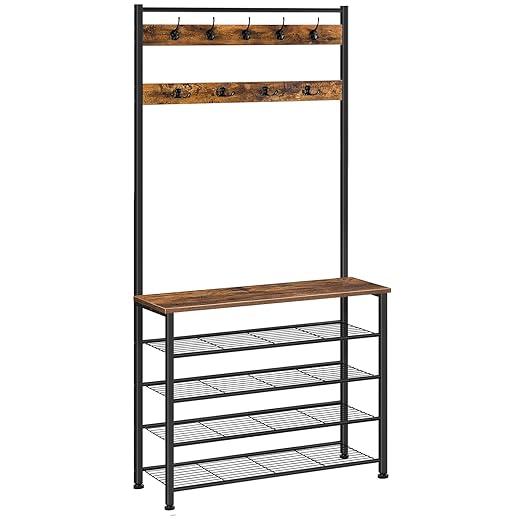
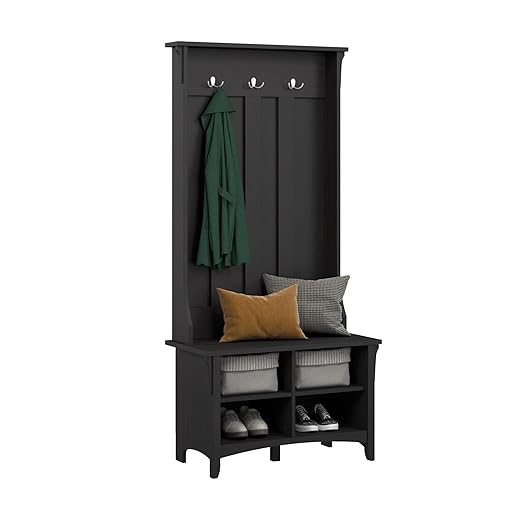
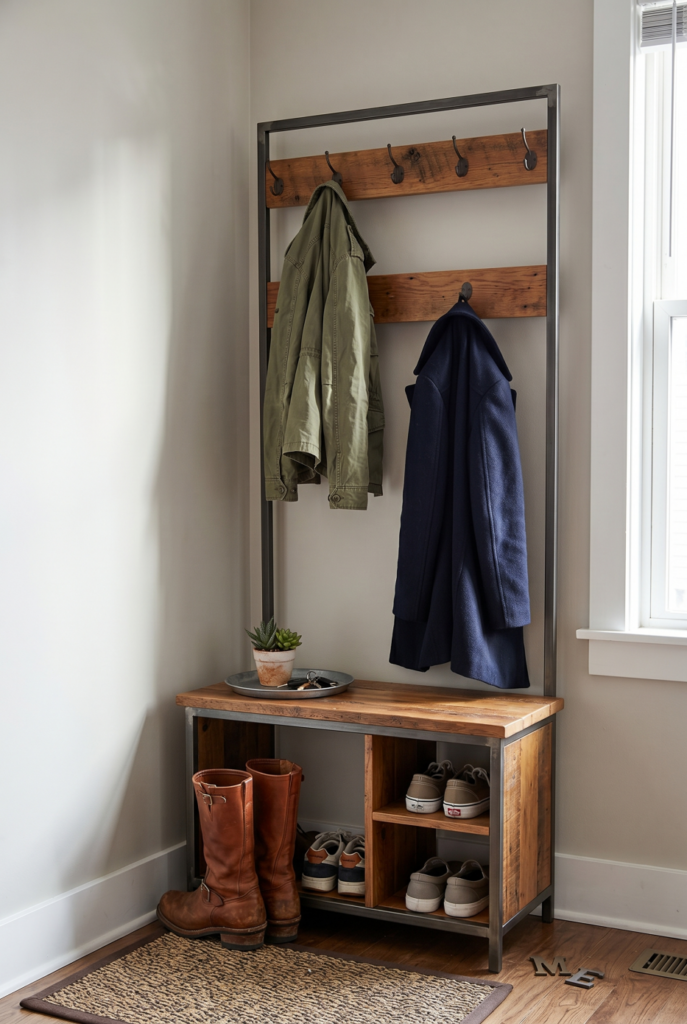
If your entry has the space, this is where I’d put the budget. Because when a hall tree works, it actually solves the problem. Everything has a designated spot. Coats on the hooks. Shoes in the cubbies. Seat for putting them on. Surface for keys and the stuff you carry out the door every morning.
VASAGLE dominates this category on Amazon for good reason. Their 3-in-1 industrial hall tree (steel frame, rustic brown and black finish) has the structural integrity to handle a family’s worth of daily use. The hooks don’t pull away from the frame. The shoe shelves don’t bow under weight. And the footprint is genuinely manageable for most entries.
HOOBRO is worth looking at for the same use case if you want something with adjustable mesh shelves. The extra flexibility in the shoe storage section is useful if you have boots alongside everyday sneakers, because boot height varies wildly and fixed shelves can’t accommodate that.
Type 4: The Narrow Cabinet Bench (Closed Storage, Small Footprint)
A bench seat with closed cabinet doors or cubbies below rather than open shelving or a flip top. The storage is accessible through doors or open compartments that face forward, not upward.
This is the right call for entries where you need storage capacity without the visual weight of a hall tree and without the maintenance discipline required by open shelving.
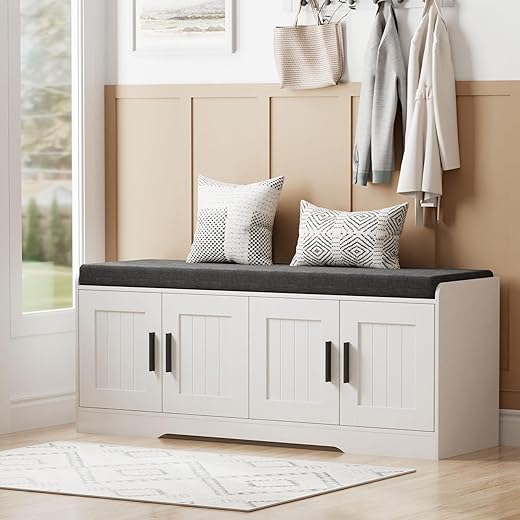
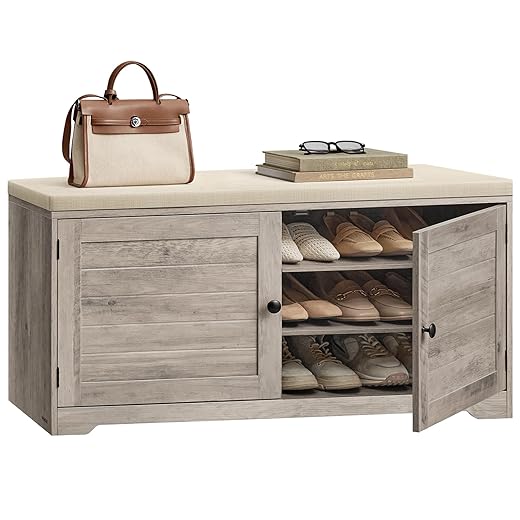

The Homleke version with four closed doors and adjustable interior shelves is the one that keeps showing up in searches for small entryway storage, and it earns it. The doors keep everything hidden, the interior shelf adjusts for taller items, and the footprint stays manageable. The white finish makes small entries feel larger. Worth noting: at 45 inches wide, measure your wall first.
If your entry gets a lot of foot traffic and the storage inside is going to get chaotic, closed doors are your best friend. What you can’t see doesn’t visually stress you out.
The Decision You Actually Need to Make Before Buying
Stop looking at bench photos for a minute.
Answer these three questions honestly. They’ll narrow the field faster than any product comparison.
What is the main thing creating chaos in your entry right now? If it’s shoes, go with Type 1 or Type 3. If it’s coats and bags, Type 3. If it’s general overflow and visual clutter, Type 2 or Type 4.
How much wall depth do you have? Measure the space from the wall to the natural traffic path through your entry. You want at least 12 inches of bench depth, and you need clearance beyond that for someone to walk past comfortably. If you have less than 20 inches of total clearance, a hall tree is probably too much. Go with Type 1 or a narrow Type 4.
Who else is using this system? If you’re the only one who’ll maintain it, open storage is fine. If you’re hoping to get kids or a partner to use it consistently, closed storage wins every time. People put things away when “away” means behind a door. They pile things when “away” means onto an open shelf.
What Size Bench Do You Actually Need?
Most people either go too small and end up with something that looks like an afterthought, or too large and block the natural flow through the space.
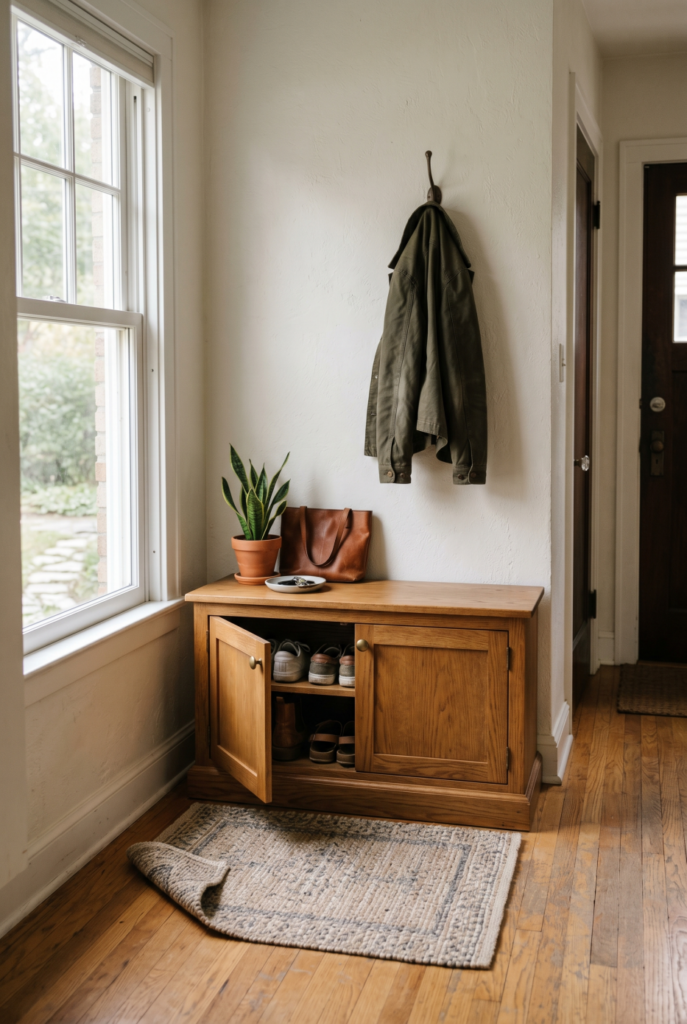
For a single person or a couple, 24 to 30 inches wide is usually right. For a family, 36 to 48 inches gives you the capacity you’ll actually use. The seat height should sit between 17 and 19 inches from the floor. That’s the range where sitting down to put on shoes is comfortable without the bench feeling like you’re climbing onto something.
Depth is where people get surprised. Most entryway benches run 12 to 15 inches deep. That’s enough to sit on, enough to store shoes underneath without them sticking out, and shallow enough to leave real walking clearance. Anything deeper than 15 inches in a small entry starts to feel like it’s eating the space.
The Mistake That Makes Every Bench Fail Eventually
Buying the bench without solving the surface problem.
Every entryway bench, regardless of type, will accumulate things on top of the seat. Mail. Sunglasses. Random items that made it through the door. If the bench is the only flat surface near the entry, the seat becomes a dumping ground and the whole system breaks down.
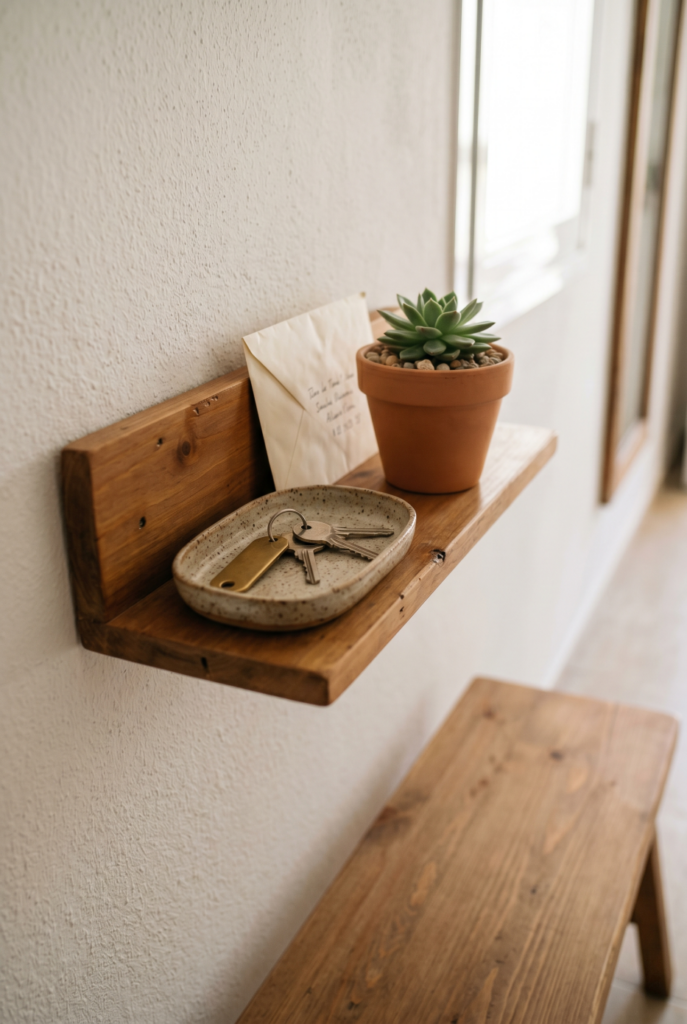
Add one more surface near the bench. A small shelf above it. A narrow console table beside it if the space allows. A wall-mounted key tray at eye level. Give the random items that arrive daily a specific destination, and the bench seat stays clear.
This is not about buying more furniture. It’s about acknowledging that an entry handles a daily flow of objects, and one piece of furniture is not going to absorb all of it. Design around the reality, not the ideal.
The Rental Question
Every type of bench I’ve mentioned is freestanding. None of them require drilling, anchoring to a wall, or asking a landlord for permission. That’s one of the genuine advantages of this category over built-in mudroom solutions, which look incredible and are not realistic for most renters.
If you’re renting and want the coat hook component without a hall tree, Command hooks on the wall above a freestanding bench is a real solution. Not a compromise. The hooks hold real weight, they come off cleanly, and they do the same job as a mounted hook rail at a fraction of the cost and zero wall damage.
I’m not naming a specific brand here because the format matters more than the manufacturer. Look for hooks rated for at least 5 pounds each. The rest is just aesthetics.
A hall tree combines a bench, coat hooks, and usually a top shelf or mirror into one freestanding unit. An entryway bench with storage focuses on the seating and storage function without the hooks and vertical elements. Hall trees solve more problems in one piece but require more wall space and clearance. A standalone bench is the better call for very narrow entries or spaces where a hall tree would feel like too much.
For real daily use, look for a minimum of 250 pounds. Benches rated lower than that tend to flex and weaken over time, especially if multiple people are sitting on them regularly. Most of the SONGMICS bamboo benches and VASAGLE steel-frame options are rated at 250 to 330 pounds, which covers standard household use comfortably.
Yes, with the right type. Look for benches 24 inches wide or under with a depth no greater than 12 inches. Open-shelf designs feel lighter in tight spaces than closed-door options. Avoid hall trees in entries under 4 feet wide. The vertical height and hook elements read as too much in a genuinely narrow space and make it feel more crowded rather than organized.
Closed storage keeps the entry looking calmer with less maintenance discipline required. Open storage is more accessible and works better for daily-use shoes where you’re reaching for them constantly. If you have kids or other household members who won’t maintain a system consistently, closed storage covers a lot of sins. If you’re organized and prefer easy access, open shelving is fine.
For a standard open-shelf bench: 20 to 30 minutes. For a hall tree: 45 minutes to an hour, depending on how many components are involved. Most of these pieces come with all hardware included and only require a screwdriver. The VASAGLE and HOOBRO units have clear instructions and pre-drilled holes that align reliably. The one thing worth doing before assembly: lay out all pieces and count the hardware against the parts list before you start.