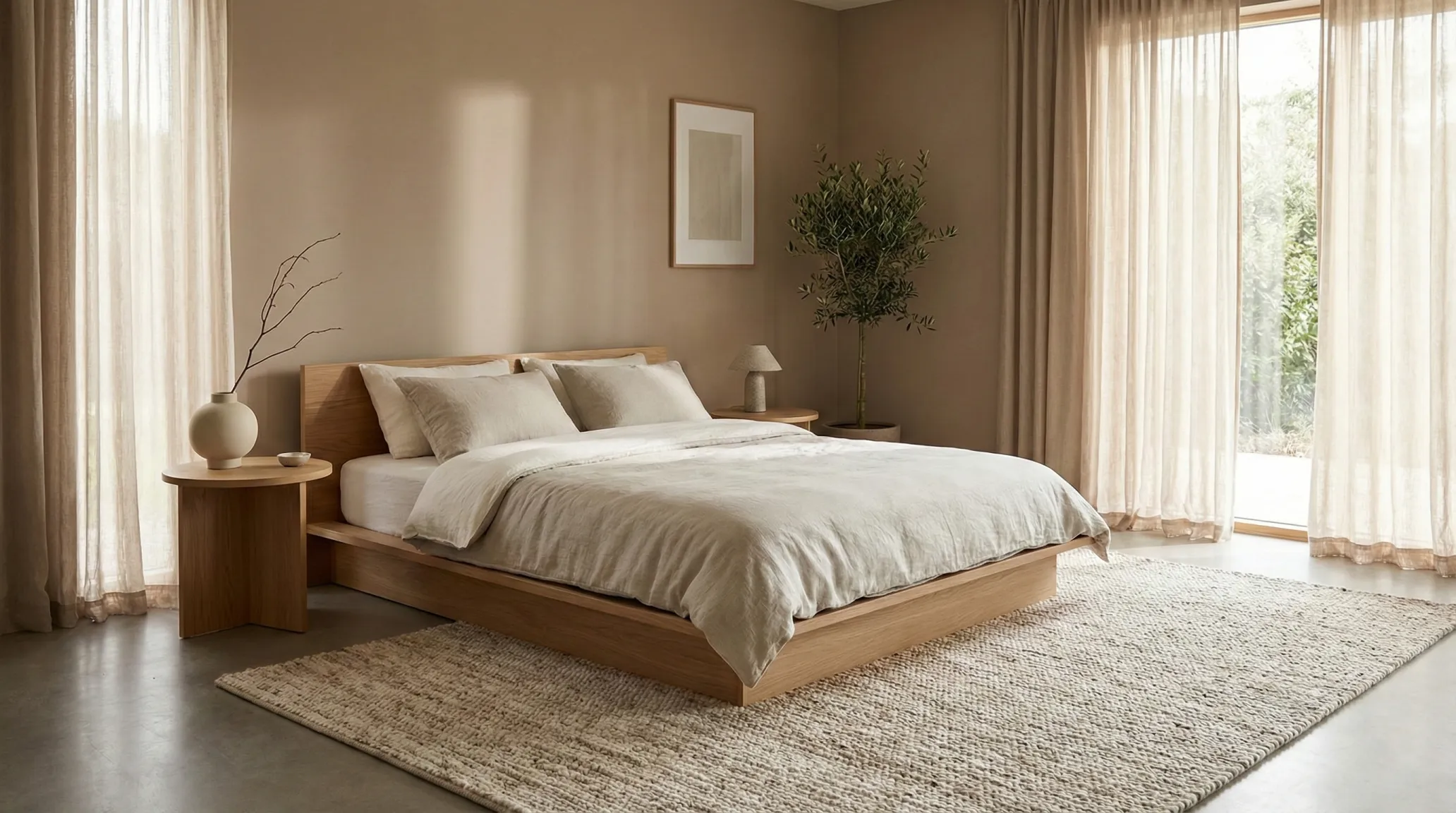
It’s your entryway.
You see it when you leave in the morning. You see it when you come home at night. Every single day, twice a day, minimum. That’s more than you look at your sofa, your kitchen backsplash, or the bedroom wall you repainted twice.
And most people have put zero thought into it.
Your Entry Is Setting a Mood. You Just Haven’t Noticed.
The moment you walk through your front door, your brain takes a reading.
It happens before you put your bag down. Before you check your phone. Before you do anything. Three seconds, maybe less. And in those three seconds, your nervous system decides: calm or chaotic. Settled or unsettled.
If your entry is a pile of shoes, a hook doing the job of six, and a surface covered in things that have nowhere else to go, that reading comes back chaotic. Every time.
You carry it into the rest of the house. You walk into the living room you spent a weekend getting right and something still feels off. The entry set the tone. The room you ignored is undoing every room you didn’t.
I lived with this for two years before I figured out what was happening.
The Reason Nobody Fixes It
It’s small.
Four feet of wall space, maybe less. Easy to walk past. Easy to tell yourself it doesn’t matter because the “real” rooms are further in.
But here’s what that logic misses: you don’t live in your entry. You transition through it. And transitions are where your brain is most sensitive. The moment between outside and inside is not neutral. It lands somewhere. Right now, for most people, it lands in a low-grade version of stress that they’ve just learned to ignore.
The entry isn’t competing with your living room for attention. It’s doing something your living room can’t do. It’s the first thing your home says to you. Every single day.
What’s Missing Isn’t Furniture. It’s a Function.
Most entry advice jumps straight to products. A bench. A hall tree. A rug.
Those things can help. But buying them before you understand why the entry feels wrong is how you end up with a bench that becomes another pile surface. Just a more expensive one. If that pattern sounds familiar in more rooms than just the entry, this is worth reading first.
An entry has three jobs.
Absorb the arrival. The second you walk in, you have things in your hands. Keys. A bag. Maybe shoes coming off. The entry needs to take all of that without chaos. No designated spot means everything goes everywhere.
Hold the daily items. Dog leash. Umbrella. The mail you haven’t opened. These things live near the door because that’s where they’re used. They need a place that isn’t the floor.
Signal something. This is the one nobody talks about. Your entry should say: someone thought about this space. Not in a magazine way. Just: this is intentional. That signal changes how you feel in the rest of the house. It changes how guests feel in the first three seconds. It matters more than the square footage. It’s the same principle behind what makes a home feel genuinely lived-in rather than just decorated.
Most entries do none of these three. They exist as a gap between outside and inside. That gap is where the feeling of home either starts or doesn’t.
What I’d Do First. Before Buying Anything.
Clear the floor completely.
Every shoe, every bag, every thing that ended up there without a plan. Move it all. Then stand in the space for thirty seconds and look at what you actually have.
Now answer these three questions honestly.
Where do coats go when you walk in? If the answer is “a chair somewhere inside the house” or “wherever,” that’s the first thing to fix. One hook per person, at 60 to 66 inches from the floor. Command hooks if you’re renting. That’s it. Not a hall tree, not a full coat rack system. One hook each.
Where do your keys go? If you have to think about it, they’ll never land in the same place twice. Put a small tray or a single hook at eye level, right where you first look when you walk in. The location matters more than the object. Two weeks of putting keys there and it becomes automatic.
Is there anything defining the space as a room? A rug is the fastest answer. Not a doormat. An actual small rug inside the entry, even 2×3 feet. Flooring defines zones the way walls do. Put a rug down and the entry exists. Without it, it’s just the floor between the door and the rest of the house.
That’s the starting point. Three things. No furniture required yet.
The Part That Costs Nothing
The single most effective thing I did in my own entry had nothing to do with buying anything.
I moved a small mirror to the wall beside the door.
It was already in the house. I just moved it. Suddenly the entry felt like a room. It had a focal point. It reflected light. It gave me somewhere to look when I walked in other than the floor. The whole transition felt different.
The mistake I see constantly: people wait until they have the budget for the “real” solution before they do anything. So the entry stays as a gap for another year. Another two years. Meanwhile they walk through it twice a day and wonder why coming home doesn’t feel the way they want it to.
Start with what you have. Move something from another room. Put it near the door. The function matters more than the object.
The bench, the hall tree, the storage cabinet: those come later, once you’ve lived with a working system for a bit. You’ll know what’s missing then. You can’t see the gap clearly until the chaos is gone. When you’re ready to choose one, this breakdown of the 4 types of entryway bench is where I’d start.