Most people pick a TV wall style for their living room because it looks good on Pinterest.
Then they spend $800 trying to recreate it and end up with something that feels wrong in their actual space. Wrong proportions, the wrong tone, wrong for the light they have.
The problem isn’t taste. It’s that nobody tells you why a style works as a living room TV wall idea, just that it does.
This list does things differently. Each of these 14 TV wall ideas for living rooms comes with a clear filter: who it’s actually for, what it costs to get close, and what to avoid. Not every style will be right for you. That’s the point. Find the one that fits your room, and you’re done.
One thing this list won’t cover: the specific mistakes that make any TV wall look cheap regardless of the style you choose. There’s a separate post on that, and it’s worth reading before you spend a penny.
The best TV wall idea for a living room matches three things: the wall’s natural light, the wall width, and the ceiling height. Dark styles (slats, wood cladding) need bright rooms. Light styles (gallery wall, floating shelf) work anywhere. Get those three right and the specific look — rustic, minimalist, maximalist — becomes a detail.
Quick Style Finder: 14 Living Room TV Wall Ideas at a Glance
Before the full breakdowns: here’s the fast-filter version. Scan the table, find your room type, then jump to the style that fits.
| Style | Best living room type | Budget range | Renter-friendly? |
|---|---|---|---|
| 1. Modern Wooden Accent Wall | Neutral furniture, strong natural light | $300–800 | No |
| 2. Industrial with Greenery | Urban apartment, existing concrete texture | $70–130 | Yes (wallpaper version) |
| 3. Bohemian Layered | Maximalist rooms already rich in pattern | $200–500 | Yes |
| 4. Classic Shelving Symmetry | Family rooms, lots of objects to display | $400–1,200 | No (built-in version) |
| 5. Dark Slatted Drama | Bright rooms, contemporary furniture | $200–600 | Yes (partial panel) |
| 6. White Brick Lightness | Scandinavian/coastal, small living rooms | $30–80 | Yes |
| 7. Textured Concrete + Wood | Lofts, open-plan, strong architectural bones | $150–400 | Yes (paint version) |
| 8. Rustic Wood-Clad + Lighting | Farmhouse, cabin, warm-toned rooms | $500–1,500 | No |
| 9. Vertical Slats + Greenery | Low-ceiling apartments | $200–500 | Yes (freestanding panels) |
| 10. Balanced Light Wood | Beginners, busy rooms that need calm | $150–400 | Partial |
| 11. Floating Shelf + LED | Minimalists, compact living rooms, under $150 | $80–150 | Yes |
| 12. Built-In Bookshelf Surround | Book lovers, rooms needing storage | $600–2,000 | No |
| 13. Art Gallery Wall | Renters, art collectors, busy rooms | $50–300 | Yes |
| 14. Vertical Slats + Ambient Light | Contemporary rooms, grey/white furniture | $300–700 | Yes |
The Style That Works vs. The Style That Looks Good on Instagram
Before the list: one clarifying point.
TV wall trends move fast. What’s everywhere on Instagram right now may look dated in your living room in 18 months. The 14 styles below aren’t trends. They’re approaches. Some have been around for decades. Some are newer. All of them work in real homes when matched correctly.
The filter is always the same: your room’s natural light, your wall dimensions, and your ceiling height. Get those three right and the rest of the decisions become straightforward.
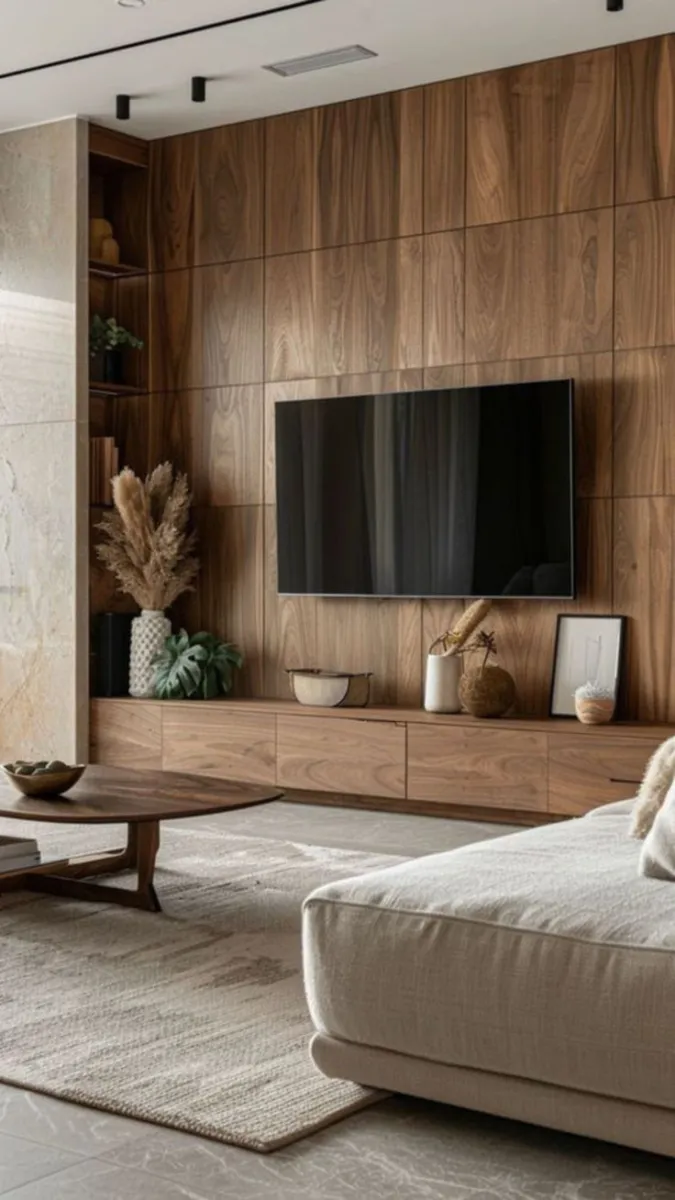
1. Modern Wooden Accent Wall
Best for: Rooms with neutral furniture, good natural light, and at least one wall that runs 8+ feet without interruption.
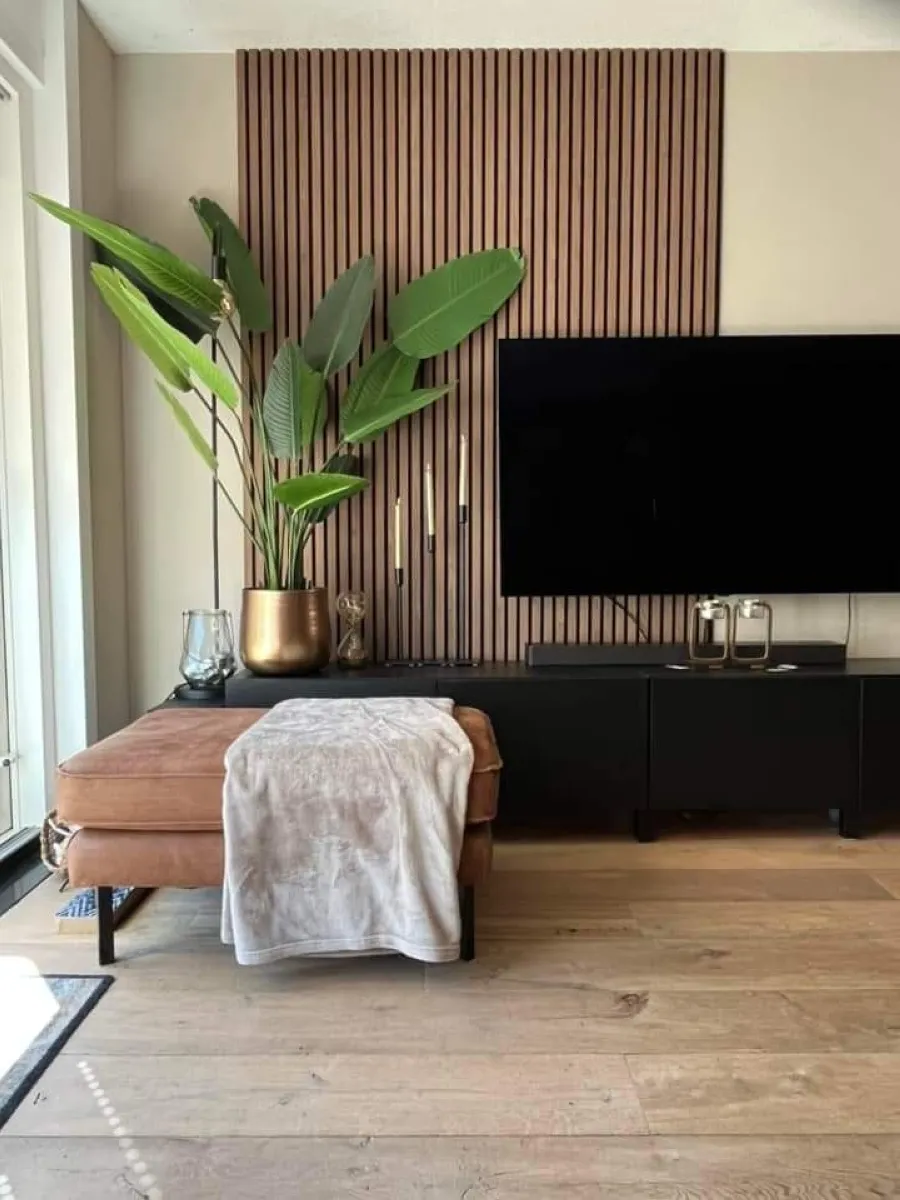
Floor-to-ceiling wood panels are the style that photographs best and delivers in real life when you have the right room for it. The warmth of the grain does a lot of work. You don’t need much else on the wall.
The mistake I see here: going too dark with the wood tone in a room that doesn’t get afternoon light. Light ash or white oak finishes are far more forgiving than walnut in low-light spaces.
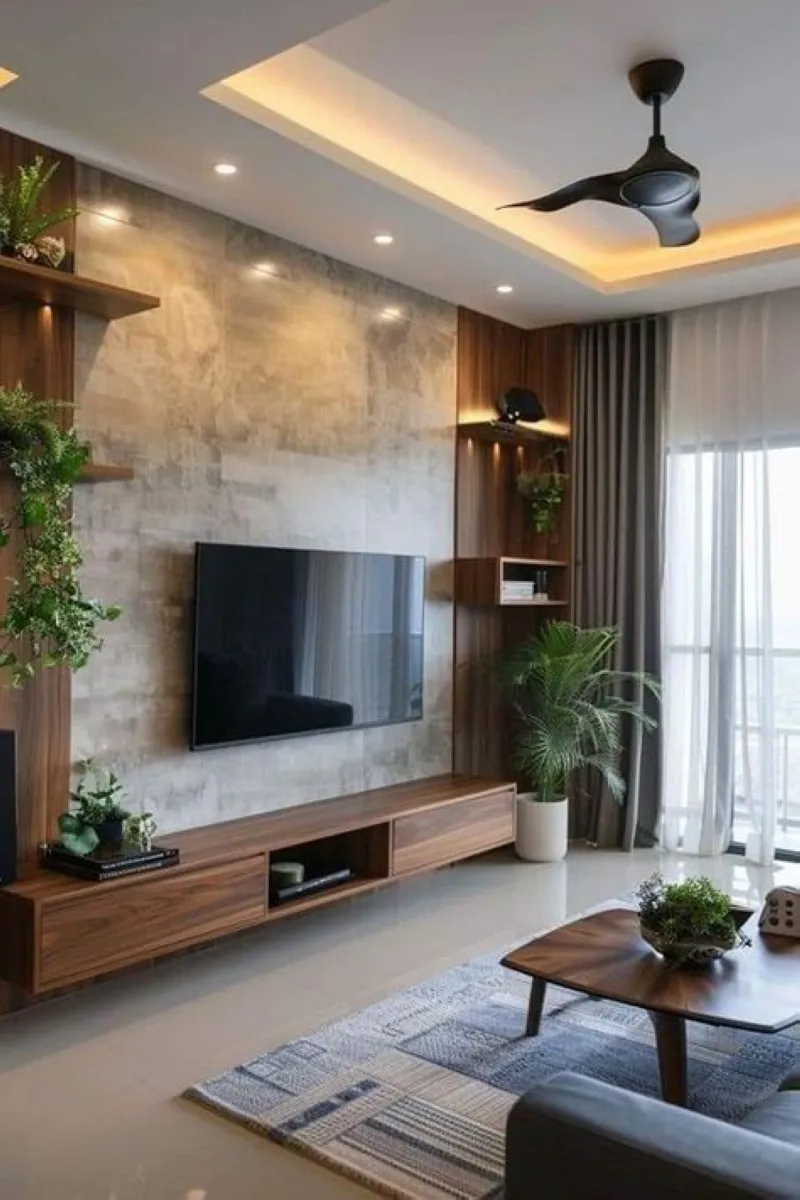
2. Industrial Charm with Greenery
Best for: Rentals or homes with existing concrete or exposed textures. Works especially well in urban apartments.
Concrete texture paired with wooden floating shelves is a combination that looks harder to achieve than it is. The plants do the heavy lifting here. They soften the rawness. Without them, this style can feel cold and unfinished.
Budget reality: concrete-effect paint runs about $30–50 a wall. Floating shelves from IKEA or similar will do the job at around $40–80. The plants are free if you take cuttings.
3. Bohemian Layered Warmth
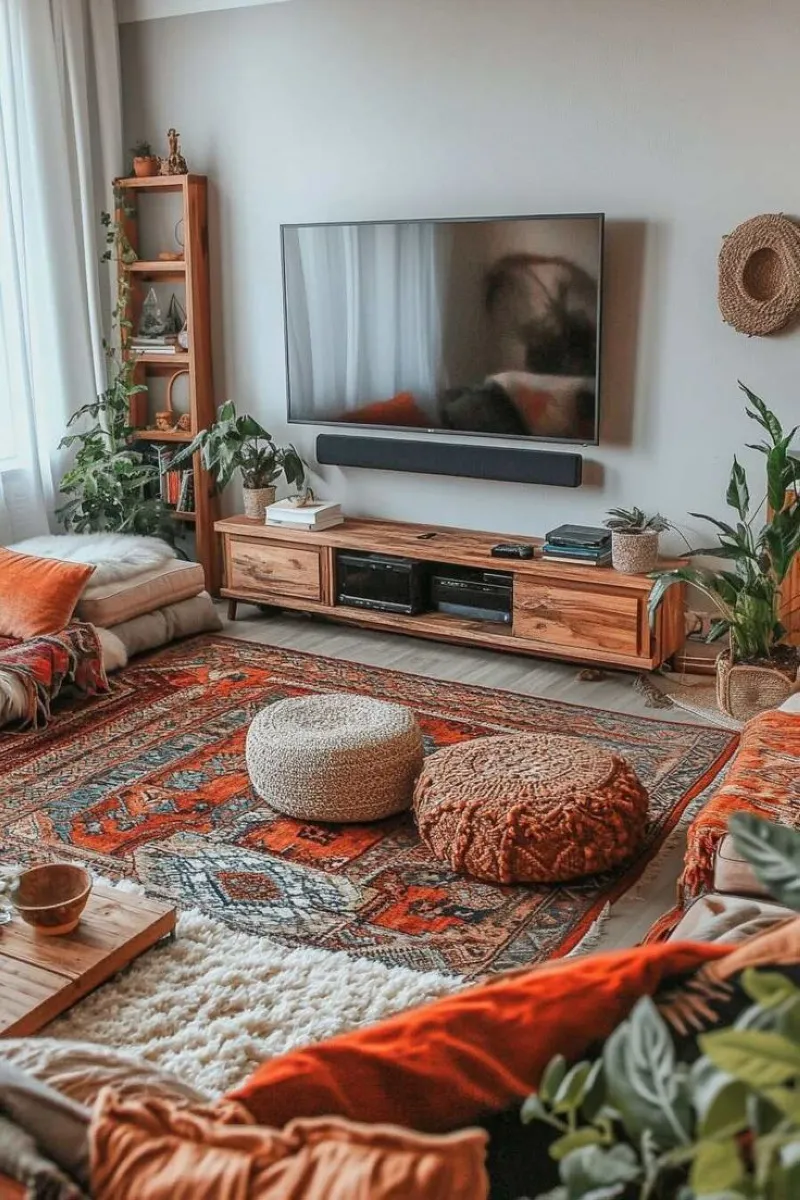
Best for: Maximalists. Rooms that already have pattern, texture, and color. Not for minimalists. Not even close.
The boho approach works when the whole room commits. Colorful rugs, warm wood furniture, poufs, and trailing greenery all have to read together. One boho element in an otherwise neutral room just looks like a mistake.
Honest opinion: this is the hardest style to pull off well because it requires restraint within abundance. The rooms that look great are curated. The rooms that look chaotic just added more stuff.
4. Classic Shelving Symmetry
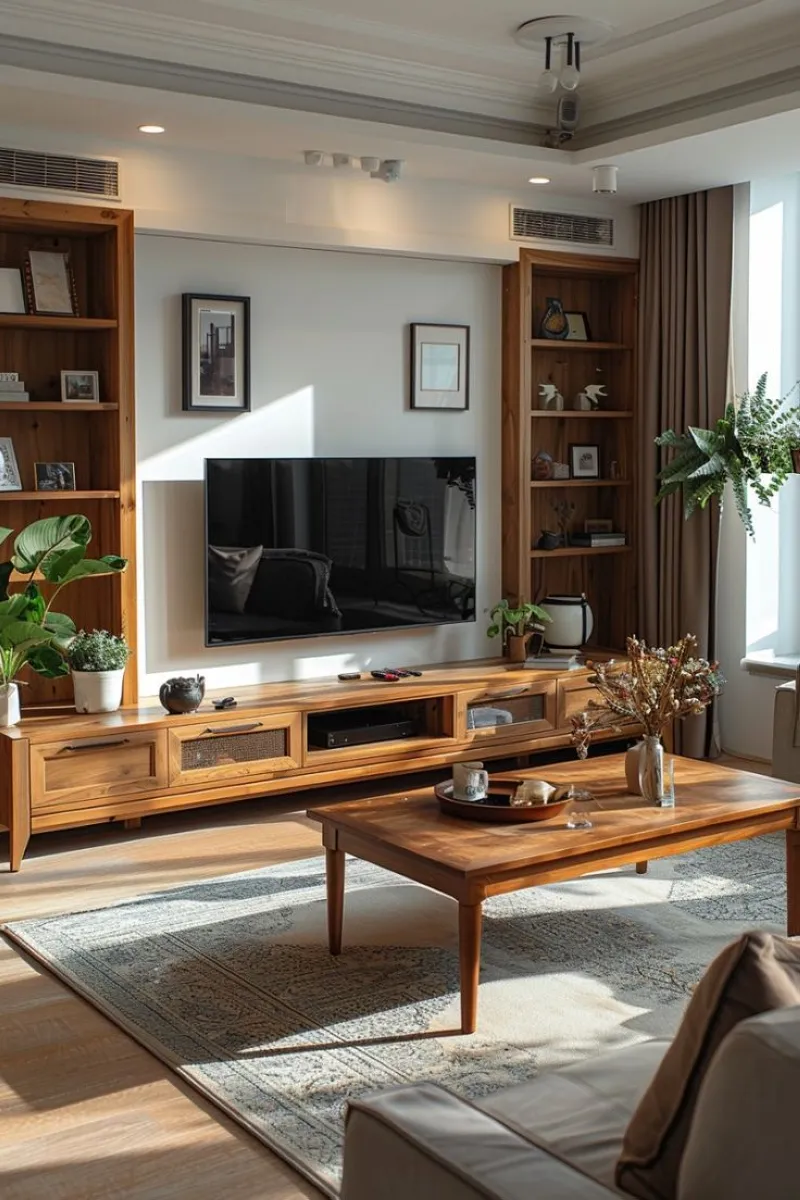
Best for: People who want the TV to disappear into the room. Family rooms. Rooms with a lot of objects to display.
Integrating the TV into a symmetrical shelving unit is the oldest trick for making screens feel less dominant. It works because the eye has other places to land. Books, photos, small objects. The TV becomes one element among many.
The rule here is strict: the shelving must be exactly symmetrical. Even slightly off-balance, and the whole thing looks wrong. Measure twice.
5. Dark Slatted Drama
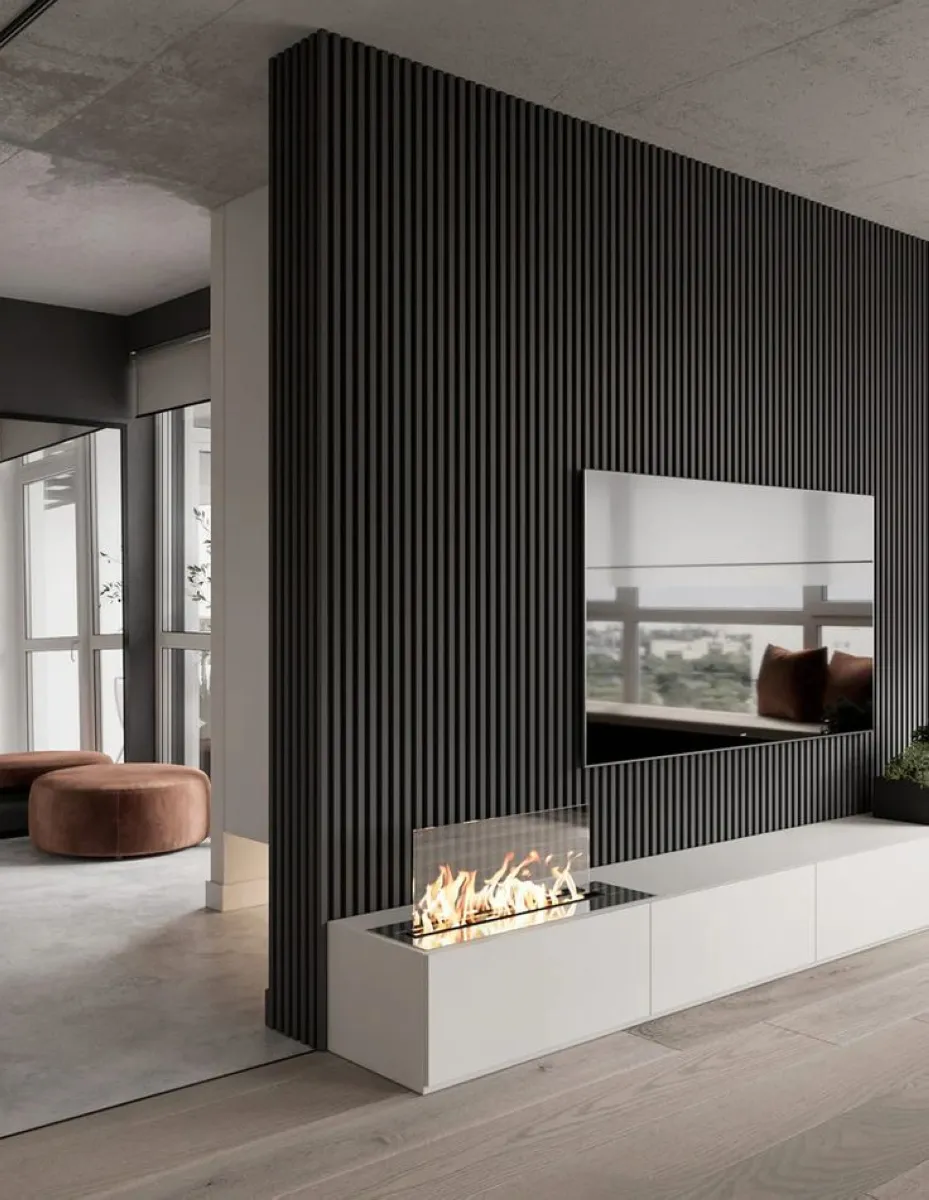
Best for: Rooms with enough natural light to handle a dark feature wall. Modern or contemporary furniture. People who want impact without renovation.
A black slatted wall creates depth in a way that flat dark paint doesn’t. The texture matters. But this only works if the rest of the room is light enough to balance it. Dark slats in a dark room feel like a cave.
The shortcut: you don’t need to do the whole wall. Even a partial panel of slats behind the TV achieves most of the visual effect at a fraction of the cost.
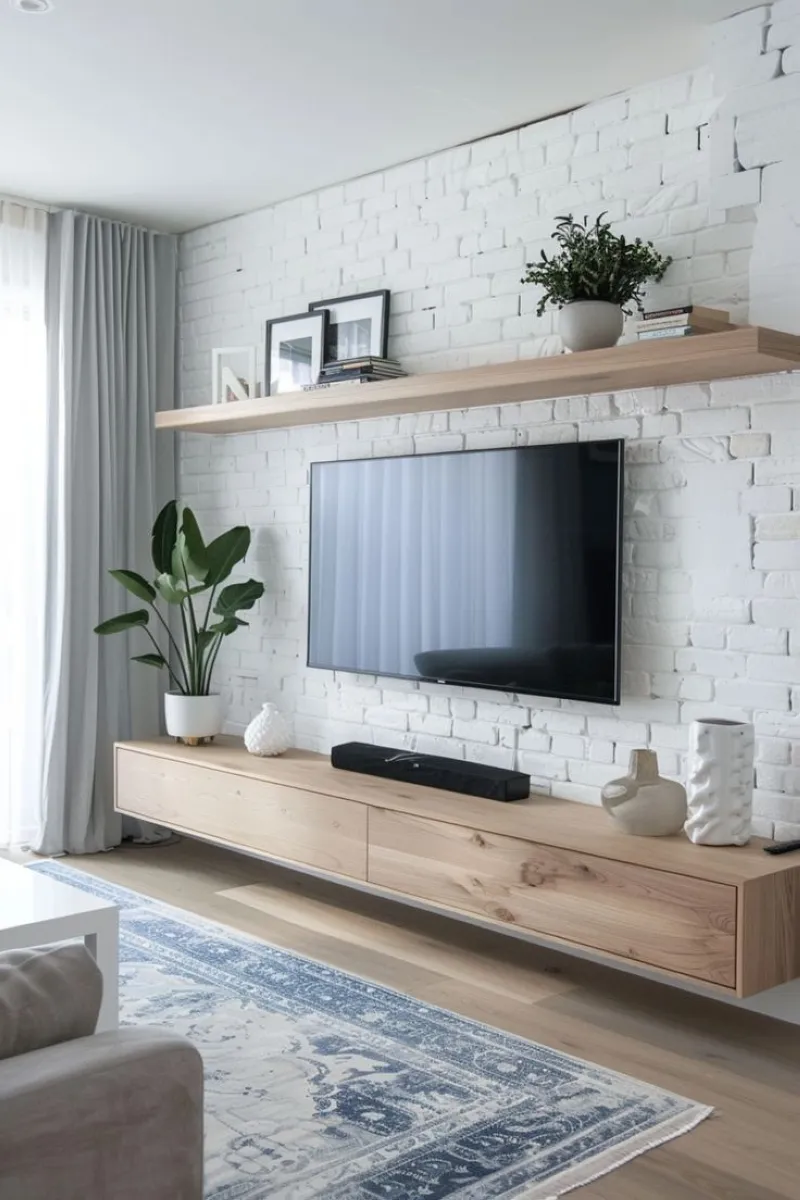
6. White Brick Lightness
Best for: Scandinavian or coastal-inspired rooms. Small living rooms that need to feel bigger. Rental-friendly. Low maintenance.
Whitewashed brick is light, simple, and works in almost any size room. It’s not trying to make a statement. That’s exactly why it works so well for rooms that are already doing a lot with furniture and textiles.
The version worth copying: pair it with a warm wooden console, not a glossy white one. The warmth in the wood prevents the whole wall from reading as cold.
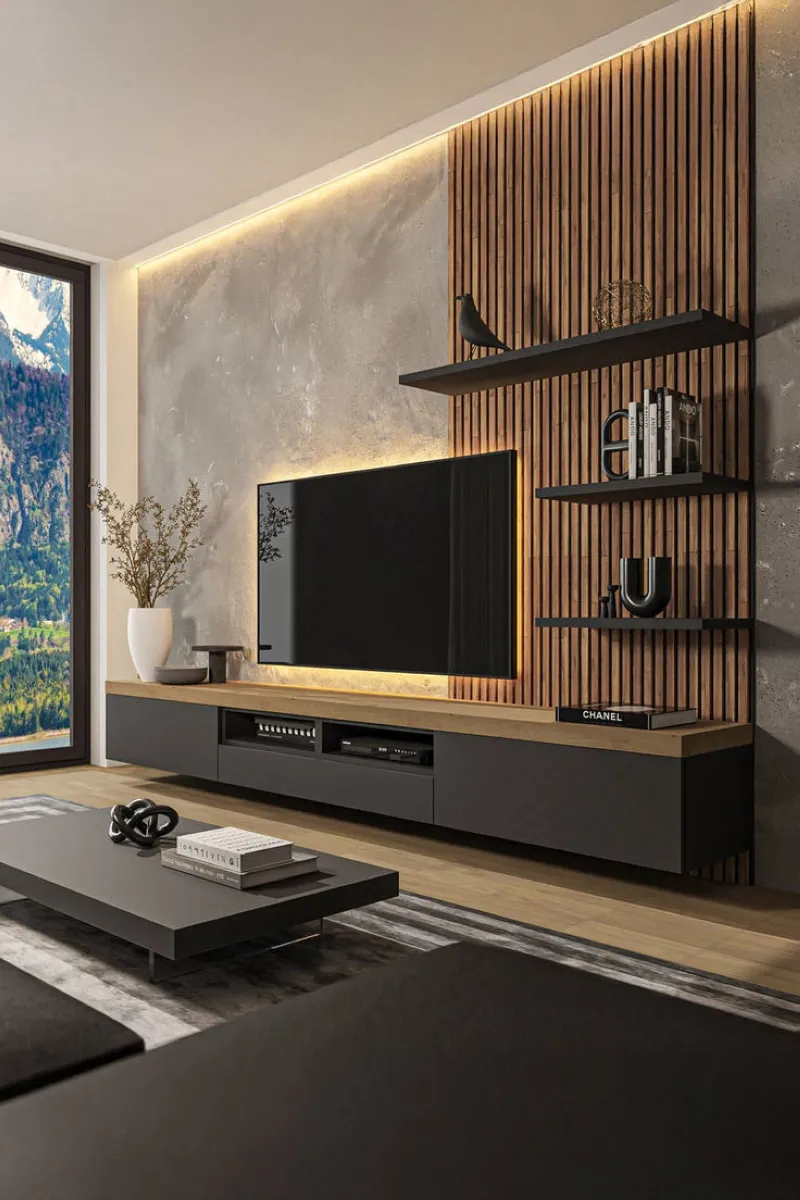
7. Textured Concrete and Wood Contrast
Best for: Rooms with strong architectural bones. Works well in lofts and open-plan spaces. Not ideal for small, cozy rooms that need warmth.
Raw concrete wall texture paired with wooden accents and backlit shelving creates visual tension in a good way. The contrast between rough and smooth, cold and warm, makes this style work harder than almost anything else on this list.
The lighting does 60% of this style’s work. Get the shelving backlighting wrong and the whole thing flattens out. Use warm LED strips, not cool white.
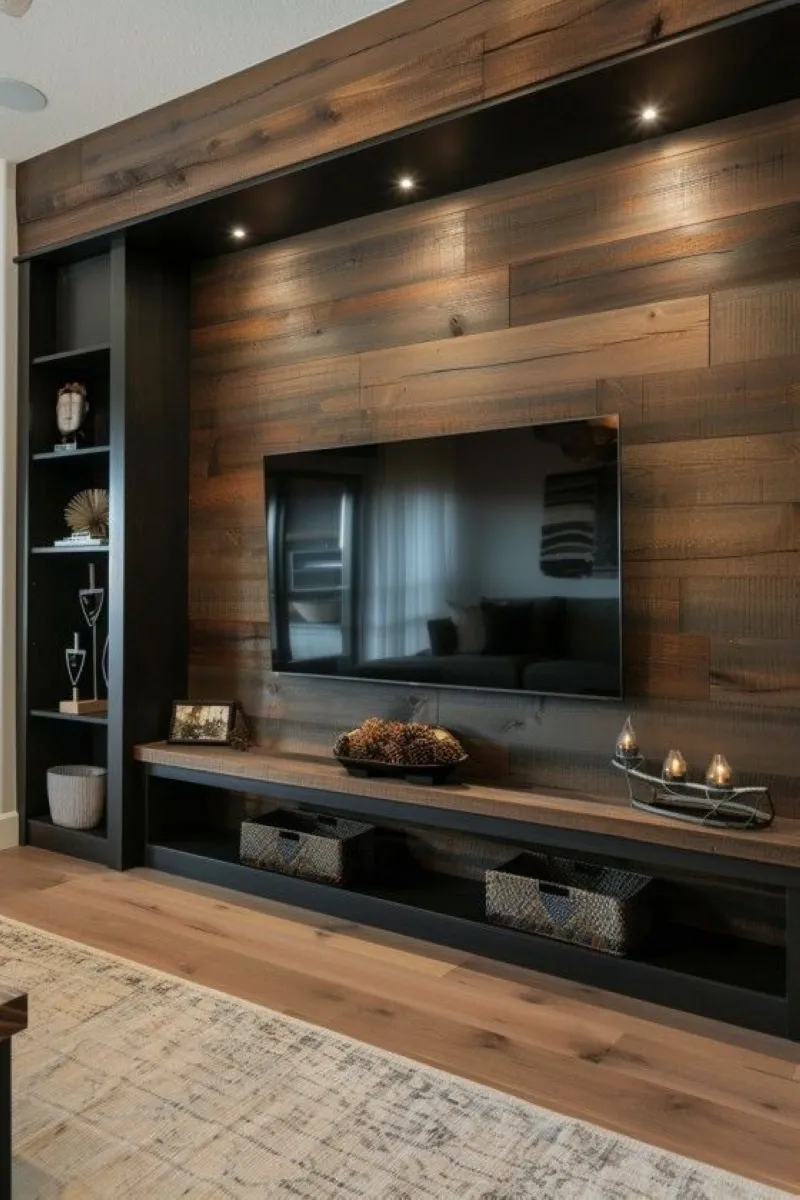
8. Rustic Wood-Clad with Integrated Lighting
Best for: Farmhouse, cabin, or industrial-style homes. Rooms that already have warm tones in the flooring or furniture.
This is the style that looks effortless but takes the most planning. The wood cladding needs to feel intentional, and the integrated lighting has to be built in from the start. Retrofitting lights into cladding looks exactly like what it is.
If you’re renting or want a lower-commitment version: reclaimed wood floating shelves flanking a dark-painted wall get you 80% of the way there without the installation complexity.
9. Vertical Wood Slats with Greenery
Best for: Rooms with low ceilings that need to feel taller. Works especially well in apartments.
Vertical slat installations elongate the wall visually. The eye follows the lines up. It’s one of the few TV wall approaches that changes how a room feels spatially, not just visually.
The greenery here isn’t decorative. It’s structural to the design. The organic shape of a trailing or large-leaf plant breaks the rigidity of the vertical lines. Without it, the slats feel like an office partition.
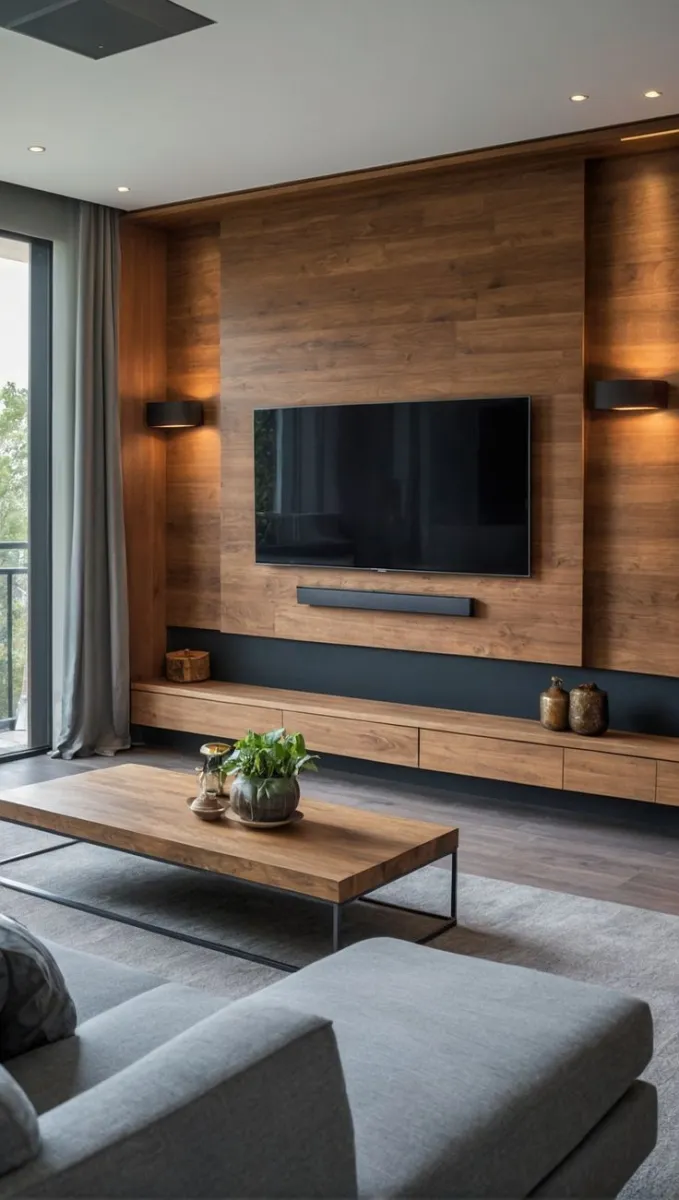
10. Balanced Light Wood and Symmetry
Best for: Beginners. Rooms that feel busy and need calm. Anyone who wants a pulled-together result without risk.
Light wood tones with a strong symmetrical focus are the safest TV wall approach on this list. Safe isn’t a criticism. It’s the right choice when the goal is calm and cohesion, not statement.
The one element that makes it: a single large plant on one side of the TV. Not two. One. Symmetry with one intentional break reads as confident. Full symmetry reads as staged.
If this calm, pared-back approach is the direction you want to push further — fewer objects, cleaner lines, nothing on the wall that doesn’t earn its place — the dedicated guide to minimalist TV wall design goes deeper on materials, spacing, and the exact products that get this look right without overspending.
11. Floating Shelf with LED Ambiance
Best for: Minimalists. People who don’t want to touch the wall beyond one shelf. Budget under $150.
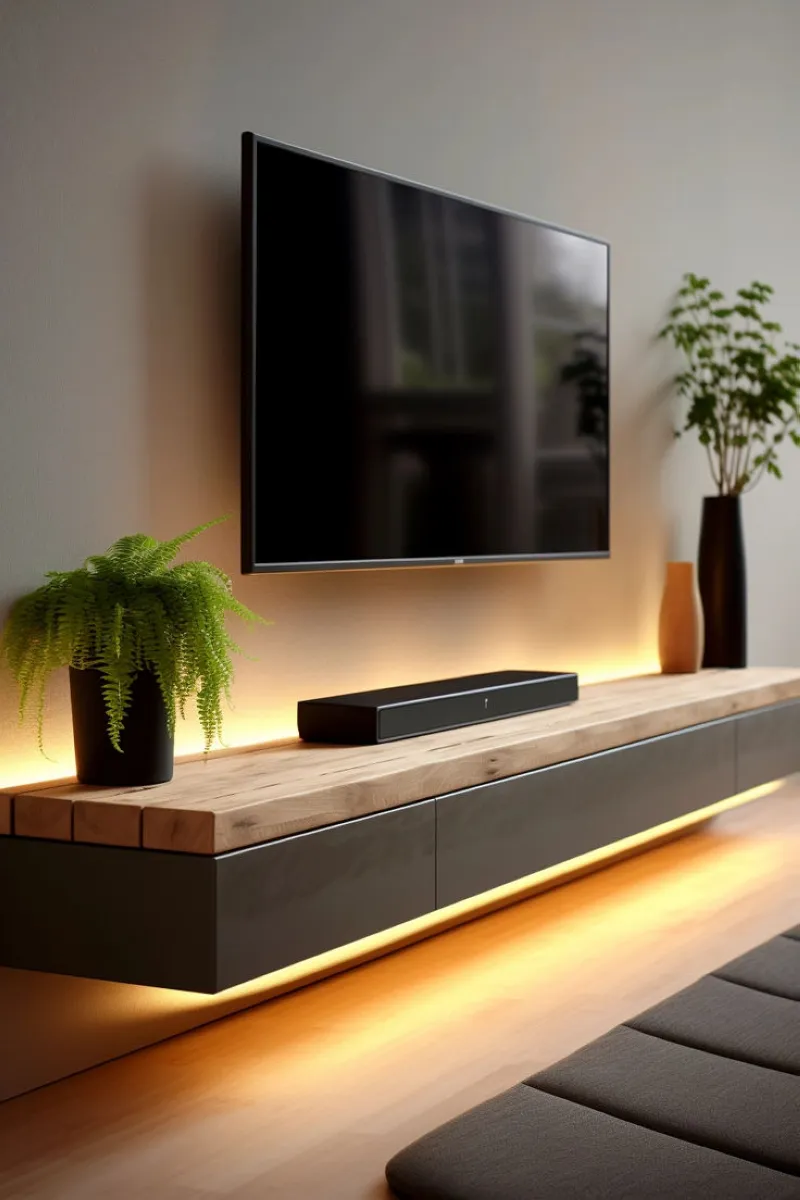
A single floating wooden shelf below the TV with warm LED lighting underneath is the lowest-investment option on this list that still looks intentional. The shelf grounds the TV. The LED light creates atmosphere. That’s all you need.
This approach works better in a smaller living room than a large one. In a big room, one shelf feels sparse. In a compact space, it reads as edited and deliberate.
This is the entry point to the minimalist approach — if you want to see how it scales up into a full wall treatment, the minimalist TV wall design guide covers the full range from one-shelf-and-done to complete wall transformations.
12. Built-In Bookshelf Surround
Best for: Book lovers. Rooms where the TV needs to compete less with other focal points. Anyone who wants storage built into the design.
White built-in shelving flanking the TV with books and greenery solves two problems at once: the TV looks intentional and the room gains serious storage.
The styling rule: don’t fill every shelf. Leave some empty. Packed shelves make the whole unit read as storage. Edited shelves make it read as design.

13. Art Gallery Wall Integration
Best for: Renters. People with art, photos, or prints they want to display. Rooms where the TV can’t be the main event.
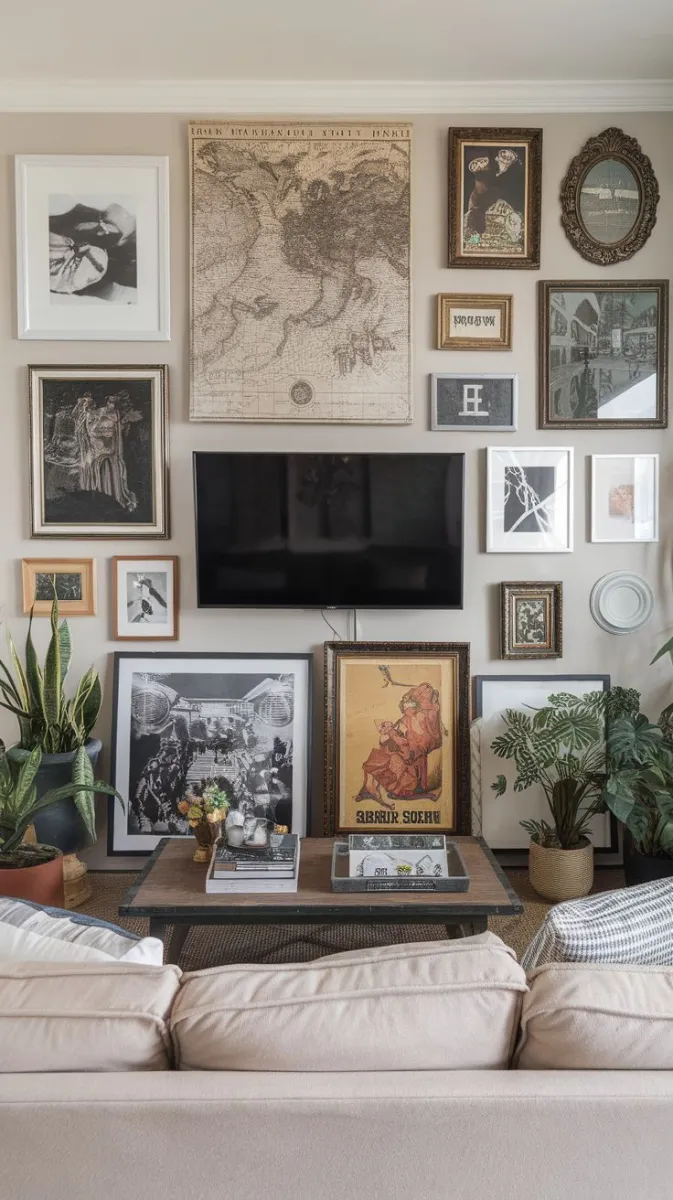
Surrounding the TV with a gallery of framed art and photographs is the best rental approach because it requires zero wall modification beyond picture hooks. The TV becomes one item in a collection. The eye doesn’t treat it as dominant because there are other things to look at.
The mistake that kills this approach: matching everything. Gallery walls that use identical frames in the same tone look like a store display. Mix frame depths, sizes, and finishes. Let the asymmetry work.
14. Vertical Slatted Panel with Ambient Lighting
Best for: Contemporary rooms. People who want texture without color. Works especially well with grey or white furniture.
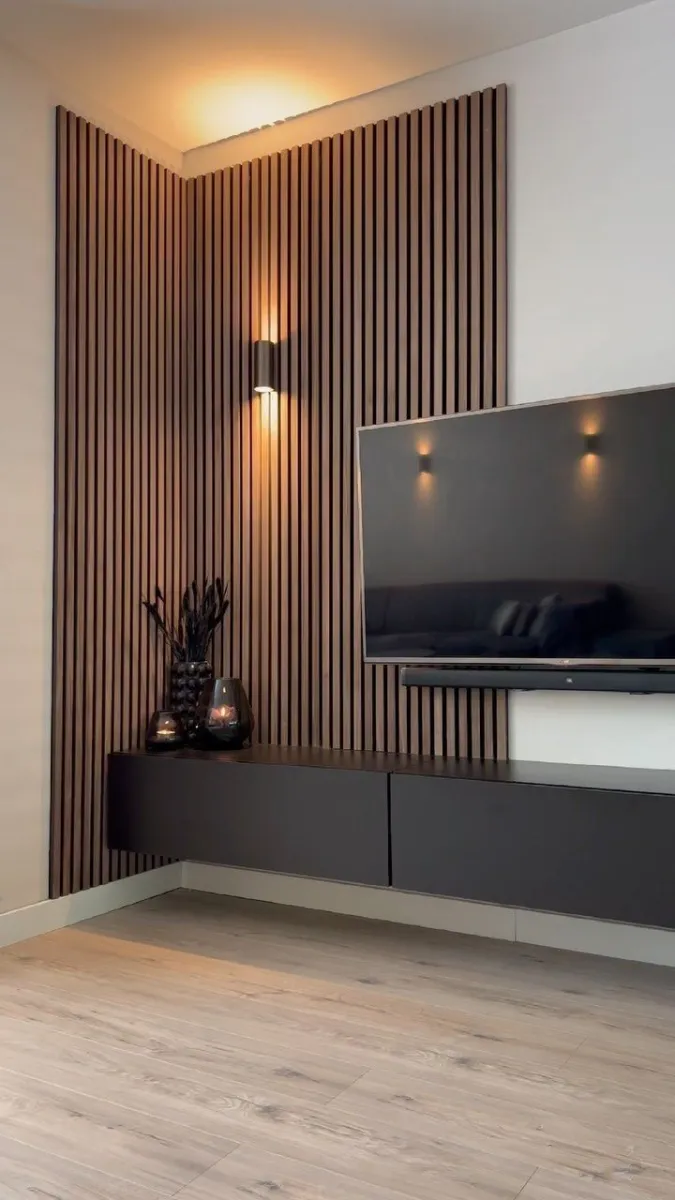
Thin vertical wooden slats with soft ambient lighting is the most current approach on this list. In 2026, this is the style appearing in new builds and apartment renovations more than any other, and there’s a reason: it adds texture, warmth, and dimension without committing to a color or a material that can date quickly.
For the best version: keep the spacing between slats consistent and use the ambient lighting to cast soft shadows. The shadow play is what gives this design its depth.
If you want to go deeper on how wood slat walls work across different room layouts, this guide covers the spacing, tone, and installation details that make the difference between right and almost-right.
Which TV Wall Idea Is Actually Right for Your Living Room?
Here’s the shortcut. Answer three questions.
How much natural light does the room get? Low-light rooms need light materials: white brick, light wood, gallery walls. Rooms with good light can handle dark slats, concrete, or deep wood tones.
How big is the wall? Under 10 feet wide: floating shelf, gallery wall, or light wood symmetry. Over 10 feet: floor-to-ceiling panels, full slatted walls, or built-in shelving.
What’s your ceiling height? Under 8 feet: vertical slats or gallery integration. Standard or above: anything on this list works.
Three answers. One style.
And if your answers keep pointing toward less — fewer objects, cleaner surfaces, nothing that doesn’t need to be there — that’s the minimalist direction:
For the approach that most people need before picking a style, the TV wall mounting height and console sizing guide is worth reading first. Getting the basics right makes every style on this list look better.
Can You Do a TV Wall Makeover Yourself?
Most of the styles on this list can be done without professional help. The exceptions are built-in shelving (if you want it structurally mounted rather than freestanding) and integrated lighting in wood cladding. Gallery walls, floating shelves, slatted panels, and paint-based approaches are all weekend DIY territory.
I’m Renting. Which TV Wall Ideas Can I Actually Do?
Gallery wall integration (#13) is the most rental-friendly because it needs no wall modification beyond picture hooks. The floating shelf with LED (#11) works in rentals too — use command strips rated for the shelf weight. Industrial charm with greenery (#2) is the third option: use concrete-effect wallpaper instead of paint to keep it fully reversible.
How Much Does a TV Wall Cost to Do Properly?
It depends entirely on the approach. A floating shelf with LED lighting runs $80–150. A wood slat panel (DIY) runs $200–400 for materials. Full floor-to-ceiling cladding with integrated lighting can reach $800–1,500 installed. The gallery wall approach costs as little as you want, depending on what you already have.
My Living Room Is Small — Which TV Wall Style Won’t Make It Worse?
The styles that work best in small living rooms are the floating shelf (#11), the gallery wall (#13), and the vertical slat approach (#9) when ceiling height is low. The styles to avoid in small rooms: floor-to-ceiling dark panels and the bohemian layered approach, both of which need space and light to read correctly.
If space is genuinely tight, the small living room TV wall ideas guide goes deeper on the layouts and proportions that make compact spaces work.
Why Does My TV Wall Look Wrong Even When I Follow Ideas Online?
Choosing based on the Pinterest image rather than the room’s actual light conditions. Dark and dramatic TV walls look incredible in photos taken in bright studios. In a north-facing living room with limited natural light, they feel oppressive. Match the style to your light first, your taste second.