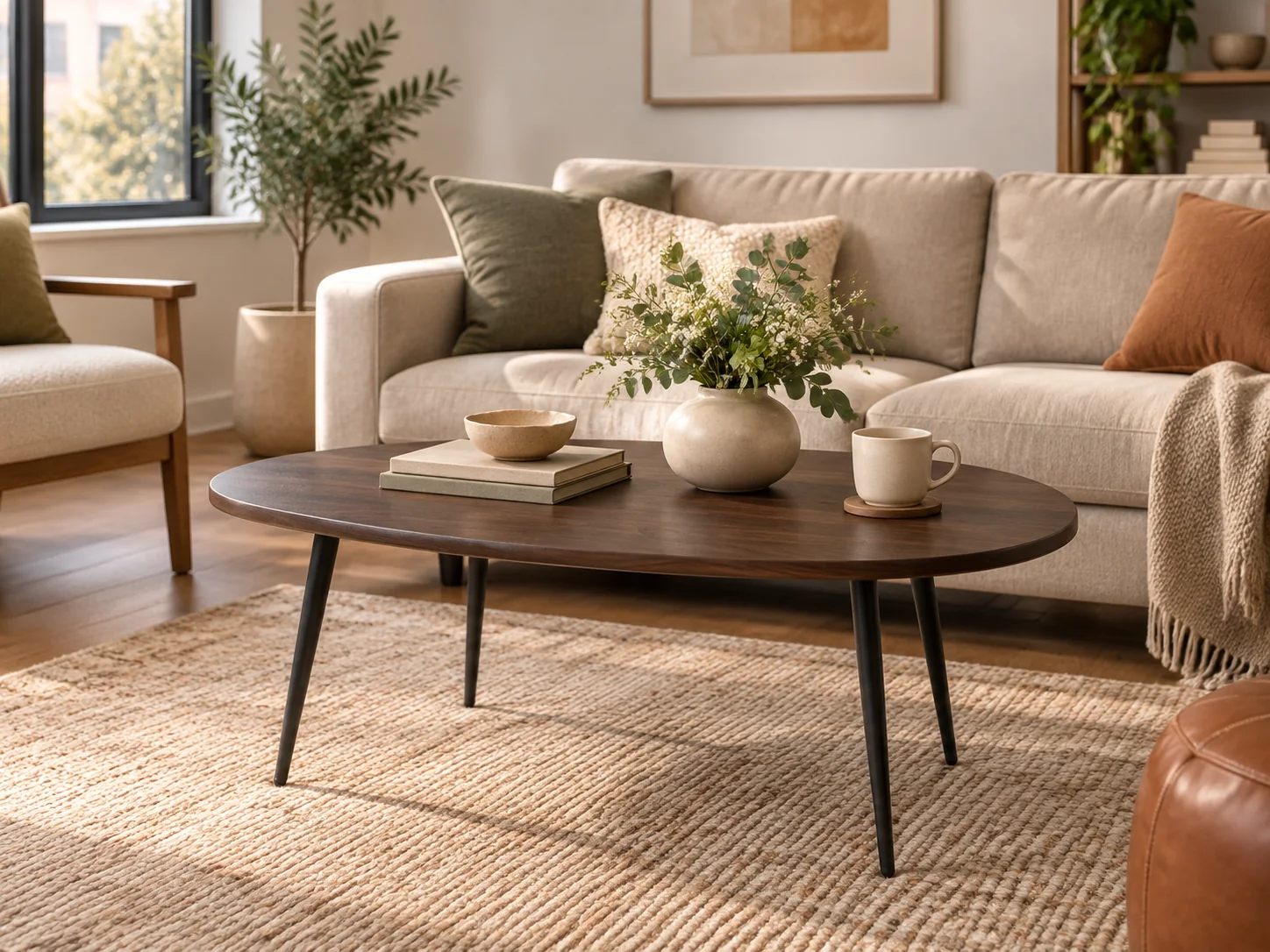
A small living room coffee table has two jobs: it needs to look like it belongs in the room, and it needs to hold a real-life mug, book or remote without a scavenger hunt. I would start with the space people actually use, then add a short stack of books, a low tray and one small piece of greenery. Aim for a surface you can reset in a minute.
Measure your own sofa, walking path and table before buying anything. The numbers in this guide are suggested starting points, not a code requirement.
Three table shapes worth measuring before you buy
For a narrow living room, compare shapes before finishes. The COSTWAY 42.5-inch oval has a walnut-look top, rounded corners and thin black angled legs. It is the design referenced in the opening illustration. The Shrine 47-inch two-tier oval adds an open lower shelf and a wider 47-by-23.6-inch listed footprint, so it may be too large for a short sofa. Check both footprints against your taped floor outline.


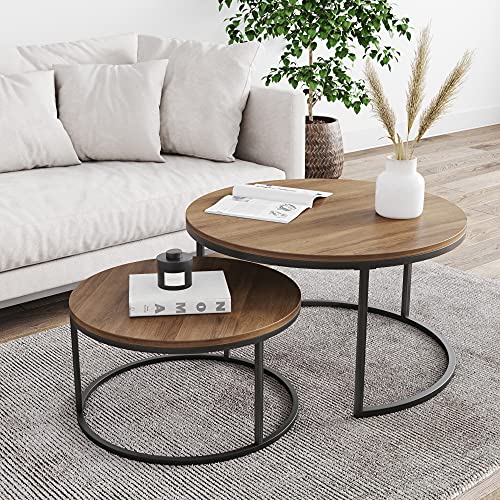
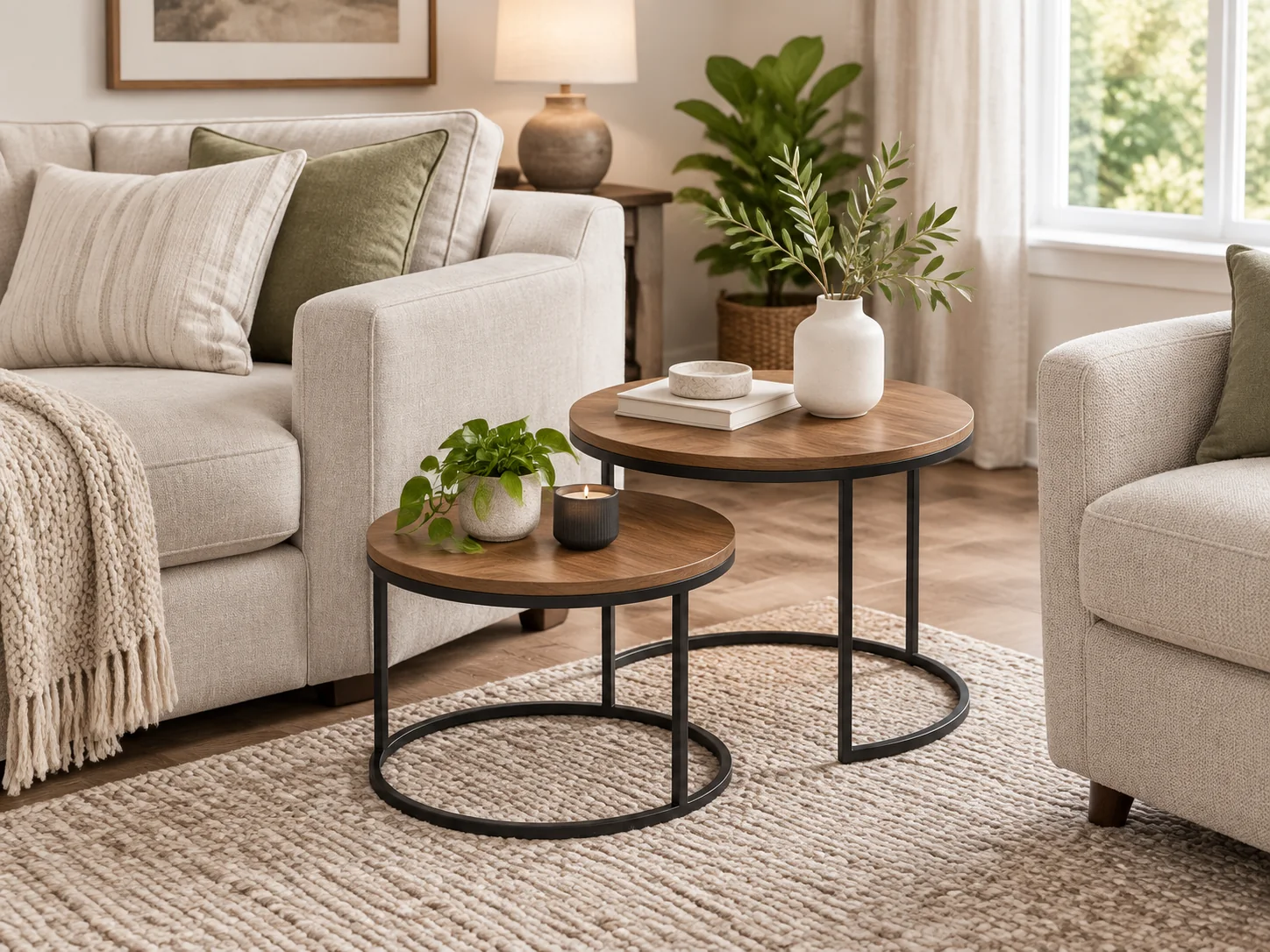
When a center table blocks the path, the Nathan James Stella round nesting pair can split the landing spots beside seats.
Start with the walk around the table
Put the table where someone can sit down, stand up and pass around it without twisting sideways. For many layouts, a rough first test is 14 to 18 inches between the sofa and the table, then a wider open route where people walk through. Tape the table footprint onto the floor before ordering; chairs and cabinet doors change the usable space. If the clear route disappears, a smaller table, an oval shape or no center table may be better.
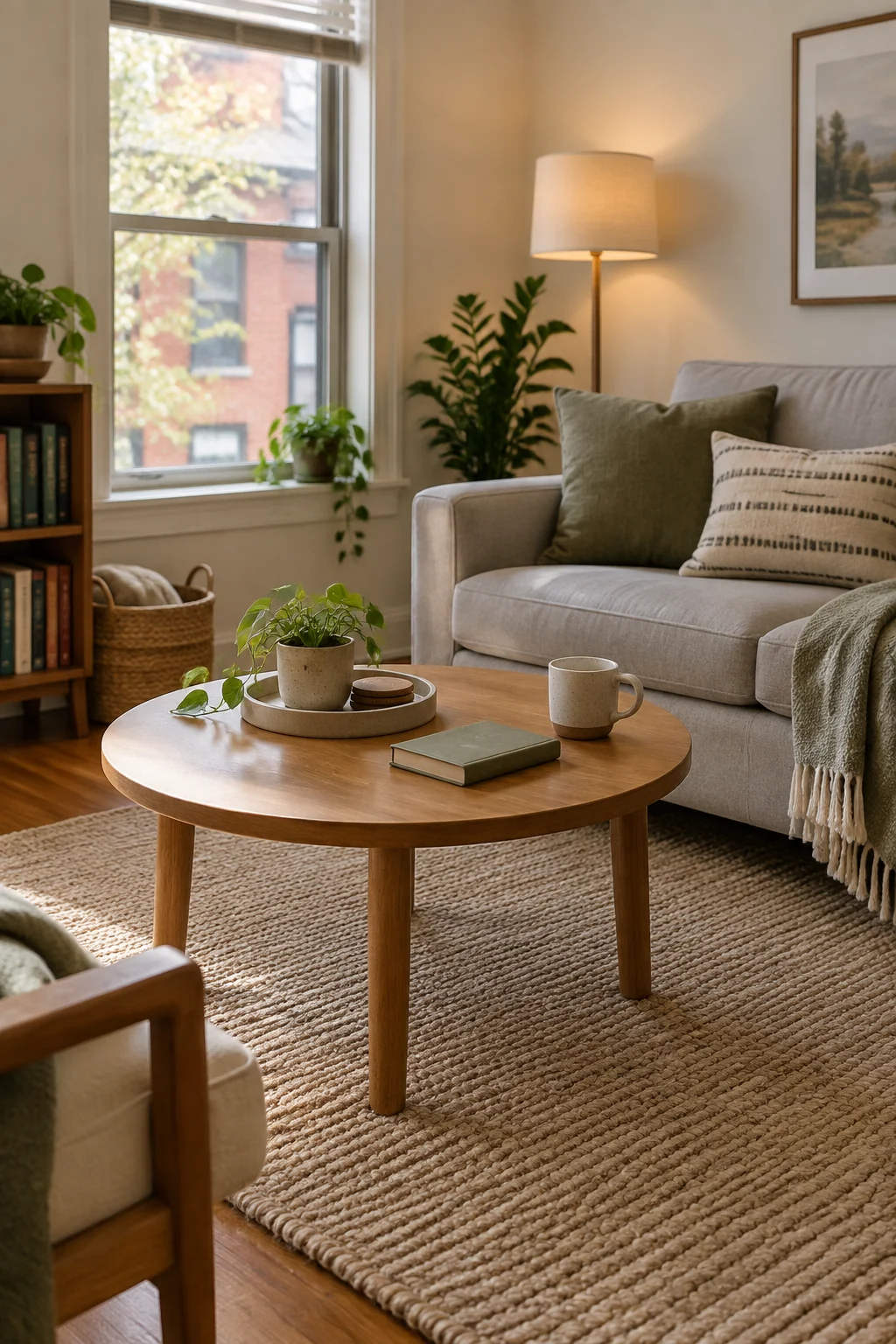
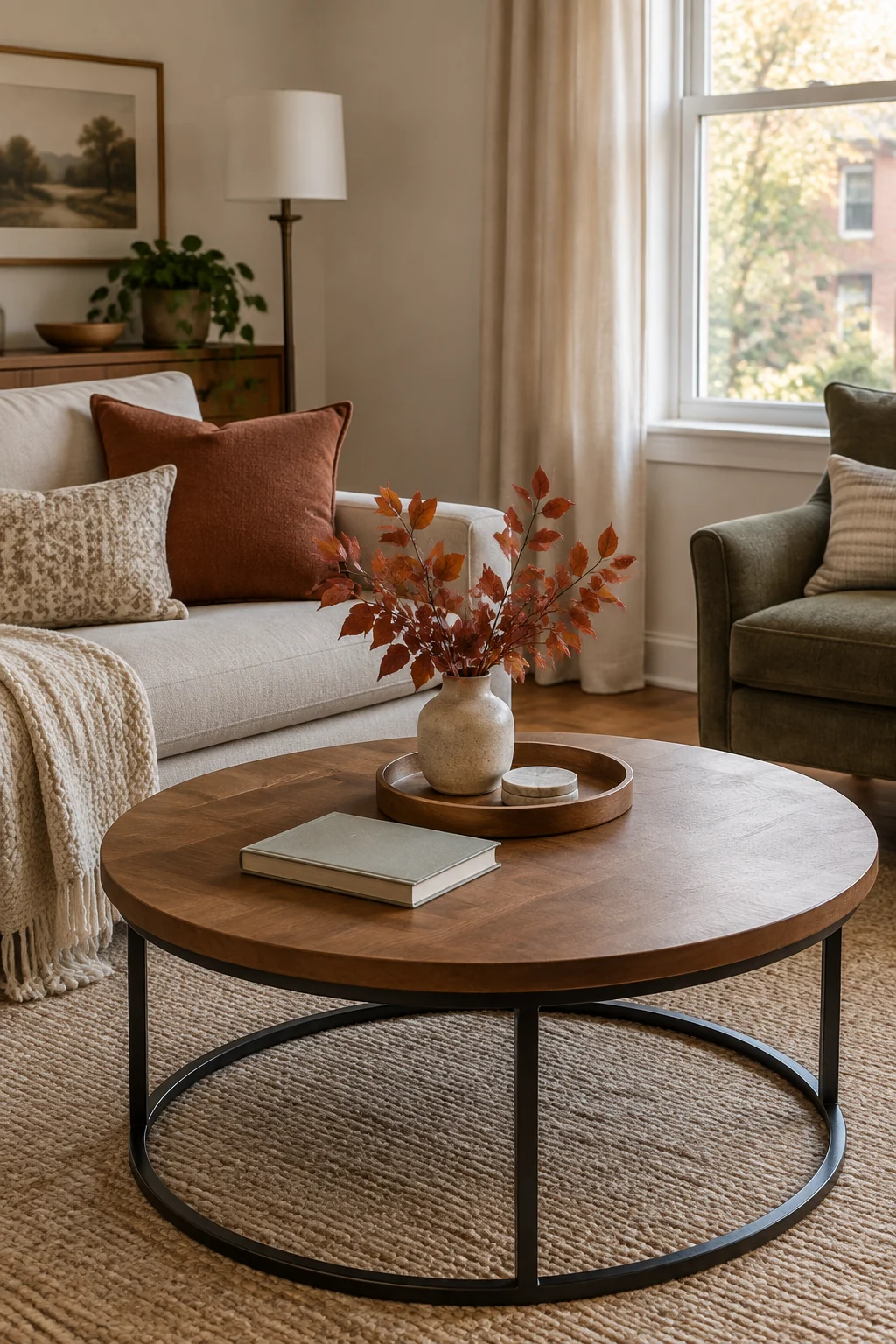
In the second illustration, the round table leaves the sofa in reach while giving a chair a clear way in.
Give everyday items one low home
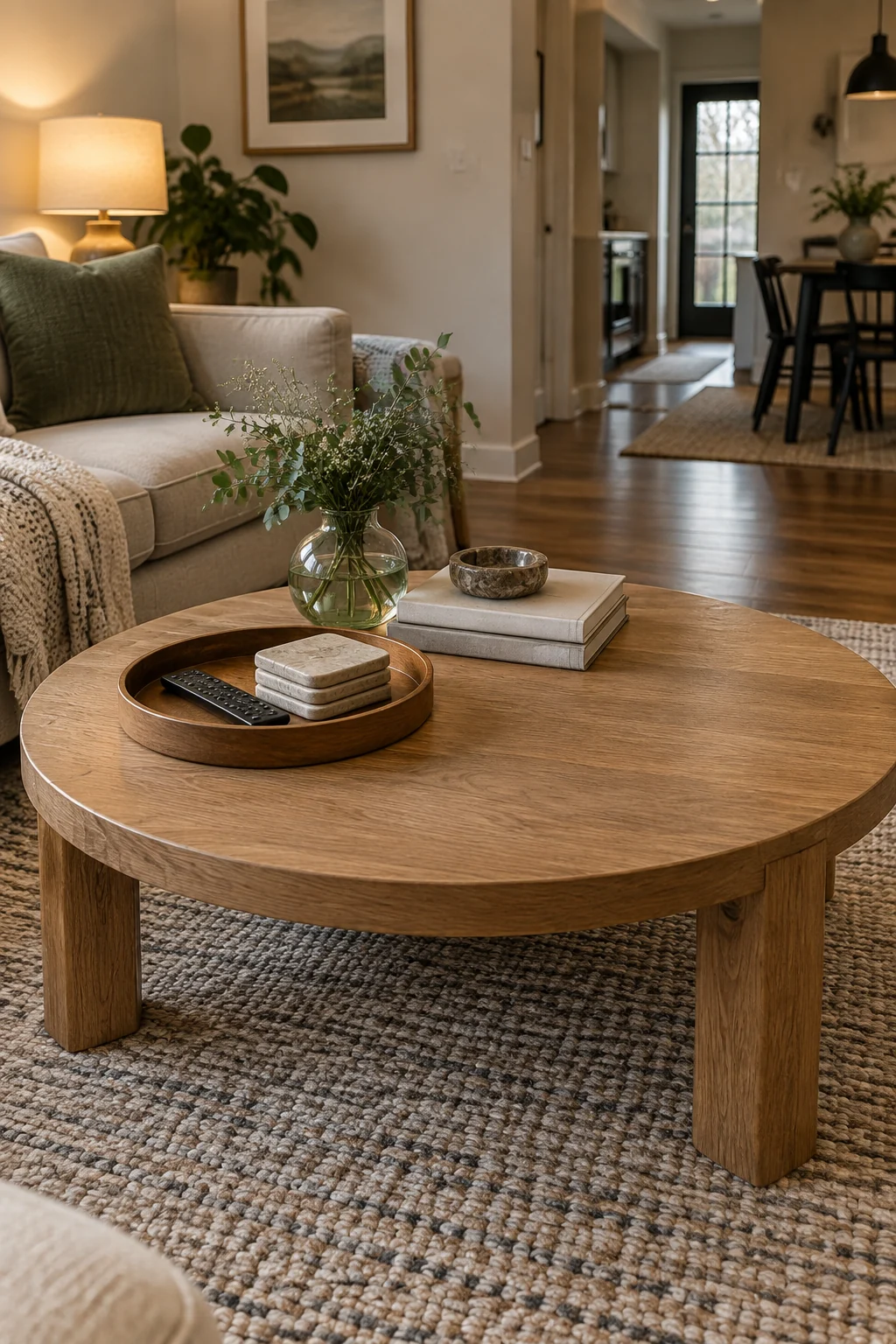
A tray works when it collects the remote and coasters instead of becoming another layer of clutter. Keep it low enough that people across the sofa can still see each other. Add one or two books you would actually open, then leave roughly half the tabletop free. Architectural Digest also treats a coffee table as a working surface for guests and suggests books, small objects and a short arrangement rather than height everywhere (its coffee-table styling examples). That is a starting idea, not a shopping list.
I would skip an open-flame candle in a tight table arrangement. If you do use a real candle, NFPA says to keep it at least one foot from anything flammable, on a sturdy surface, and never leave it burning unattended (candle safety guidance). A battery candle avoids the flame but still needs sensible placement.
Change one thing for fall, not the whole table
A short branch in a stable vase can bring in autumn color while the tray, coaster and books stay in place. I would swap that one stem rather than pile on loose pumpkins, tall vases and decorative signs. Keep the vase away from the edge, and check that leaves do not snag someone reaching for a mug. The table should still work on an ordinary Tuesday.
If you want a more collected room beyond this table, the lived-in interiors guide shows how to repeat materials without filling every surface.
When a coffee table is the wrong answer
Some rooms do not have enough floor to keep a center table and a useful walkway. Two nesting side tables can give the sofa a landing spot while leaving the middle open; one can move beside a chair when company comes. Check table height against the arm of the seat you actually use. A side table that is beautiful but too low to reach is not useful.
This is also a renter-friendly choice when you do not want to change the room layout. The rental living-room guide covers the larger furniture plan; this one stays on the surface and circulation.
The ten-minute reset
Clear the table. Put back what someone uses every day, then group the smallest pieces on one tray. Keep a spot for a drink. Stand up, walk through the room, and sit in each seat. If you have to move the decor to use the table, take one object away. If the path is tight, try the side-table layout before you buy a different coffee table.