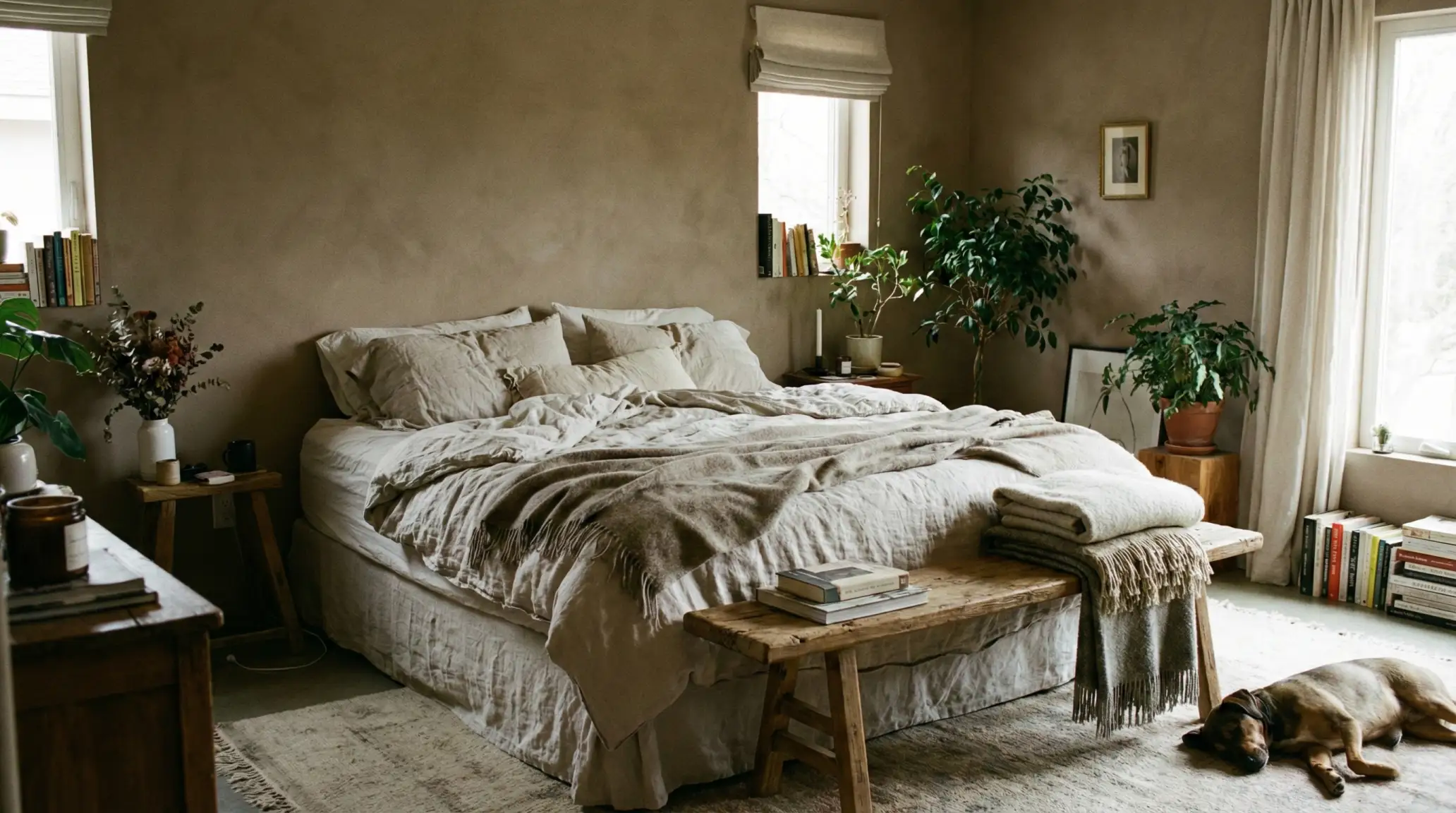
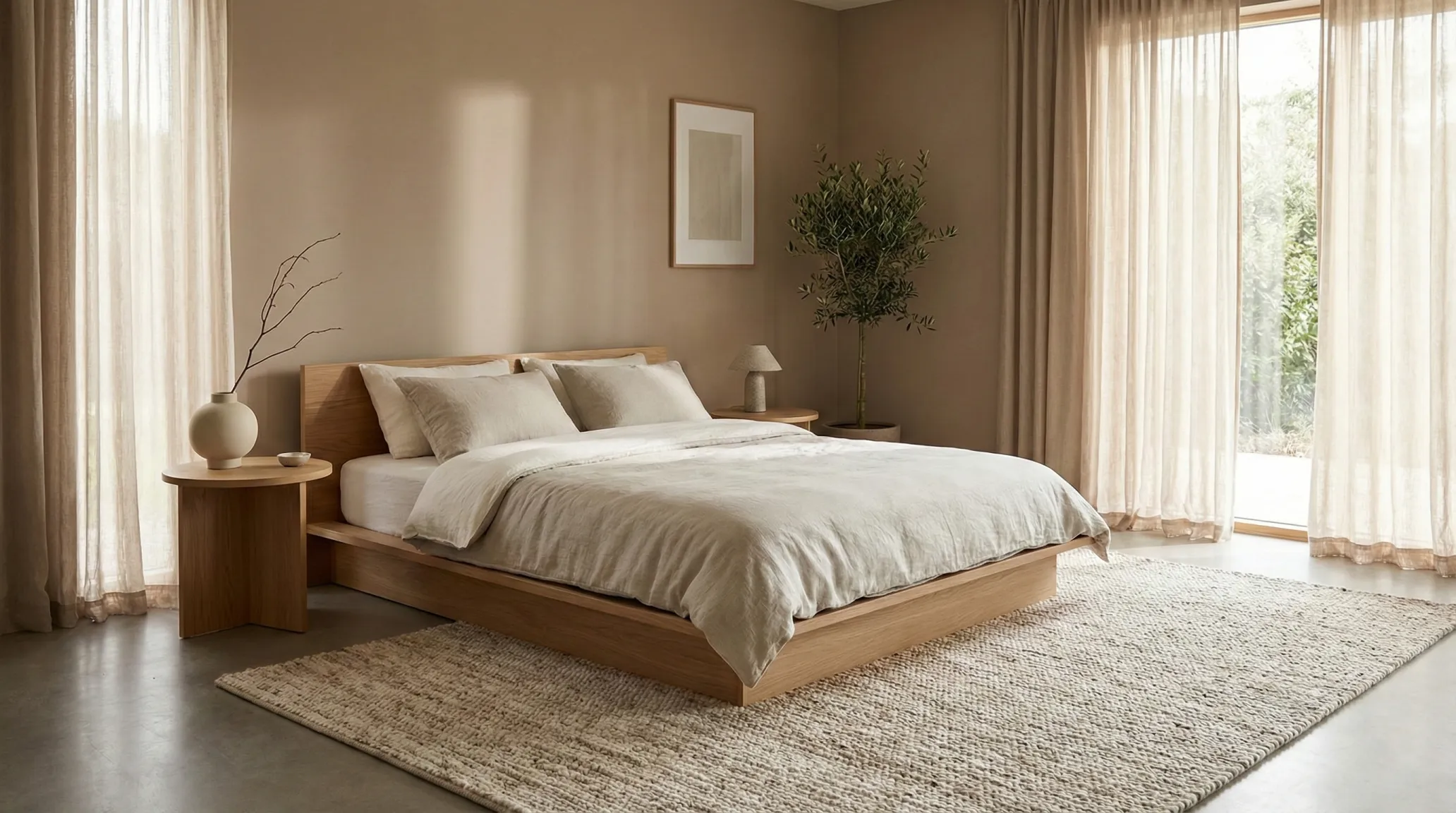
A tiny bedroom can skip matching nightstands if it has a reachable place for water, a book and a light and a clear route to the bed. I would solve the walking space first and choose the bedside surface second.
Decide what has to live by the bed
Empty the bedside area and put back only what you reach for in the dark: perhaps water, glasses, a phone and a book. If a whole collection of skin care, cables and spare linens has accumulated there, give those things a different home. This tells you whether you need an open shelf, one drawer or a larger cabinet. It also keeps the measurements honest: a tiny shelf will not secretly become a dresser.
Measure the actual gap between the mattress edge and the nearest door swing, closet or walking line. Mark the proposed depth with tape and walk past it. The dimensions in product photos can hide baseboards, lamp cords and the space your feet need. Leave the outlet accessible and do not block a door or escape route.
One shallow drawer when clutter is the problem
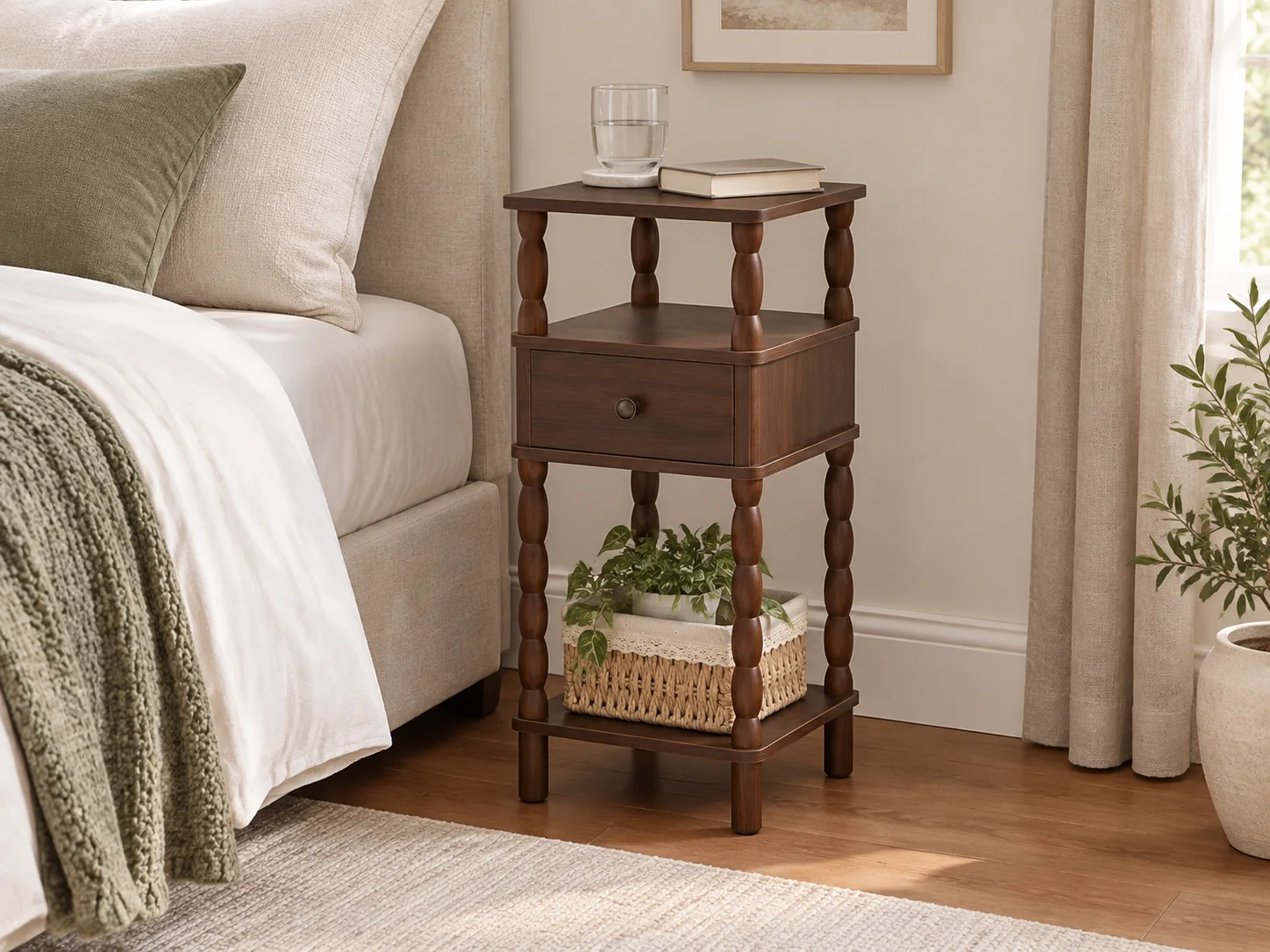
A narrow cabinet with a drawer is my first choice when cords, medicine or loose items would otherwise sit out. The top should still have room for a glass and a lamp, but the drawer keeps small things from multiplying on display. Check that the drawer opens fully without hitting the bed or wall; check the bedside height against the mattress, not against a styled catalog photo.
If the cabinet eats the walking path, it is the wrong piece even if the finish is lovely. Move storage to another wall and keep only the nighttime essentials beside the bed. Wirecutter’s tiny-bedroom guide makes the same larger point: a small room does not have to fit two conventional nightstands, and wall lighting and double-duty pieces can give floor space back.
A concrete narrow example is the MaxSmeo side table with a drawer, whose listing gives a 7.87-inch depth, a small drawer and an open lower shelf. The scene above borrows its silhouette but is not a product photo. Its top still needs to hold what you reach for at night. If the side gap is wider and you need power, compare the VASAGLE narrow side table with a charging station; its listing gives a 9.5-inch width, and the outlet and cord route must still be safe in your room. I would not buy either without taping the real footprint first.


A floating ledge for the narrowest side
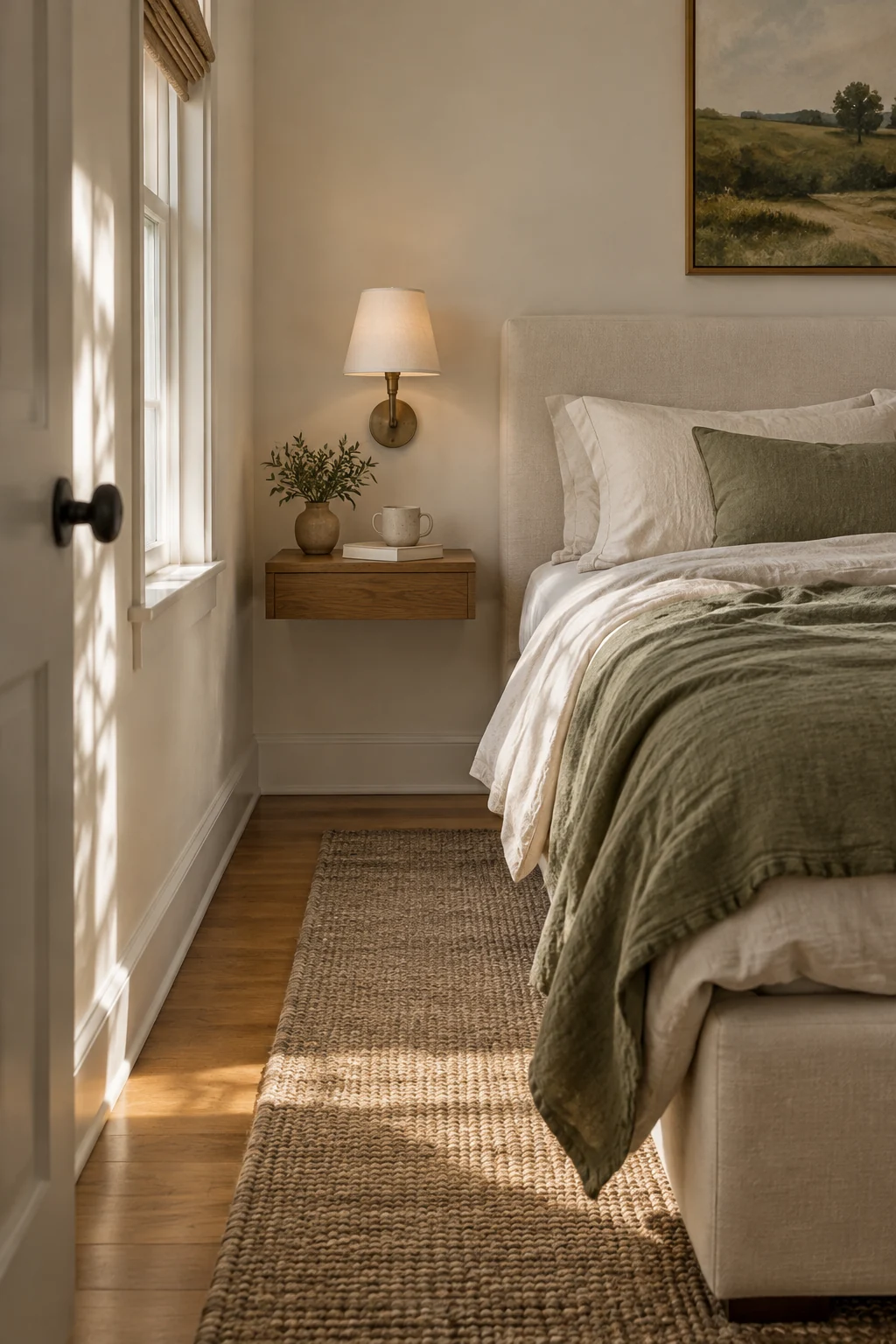
A wall-mounted ledge can hold water, glasses and one paperback while leaving the floor visible. Choose a depth that lets you reach the items without leaning over the edge of the bed. Test its location with a cardboard template before drilling. Anchor the shelf to the wall as the maker directs, use hardware suited to the wall and expected load, and check the rental rules before changing a wall.
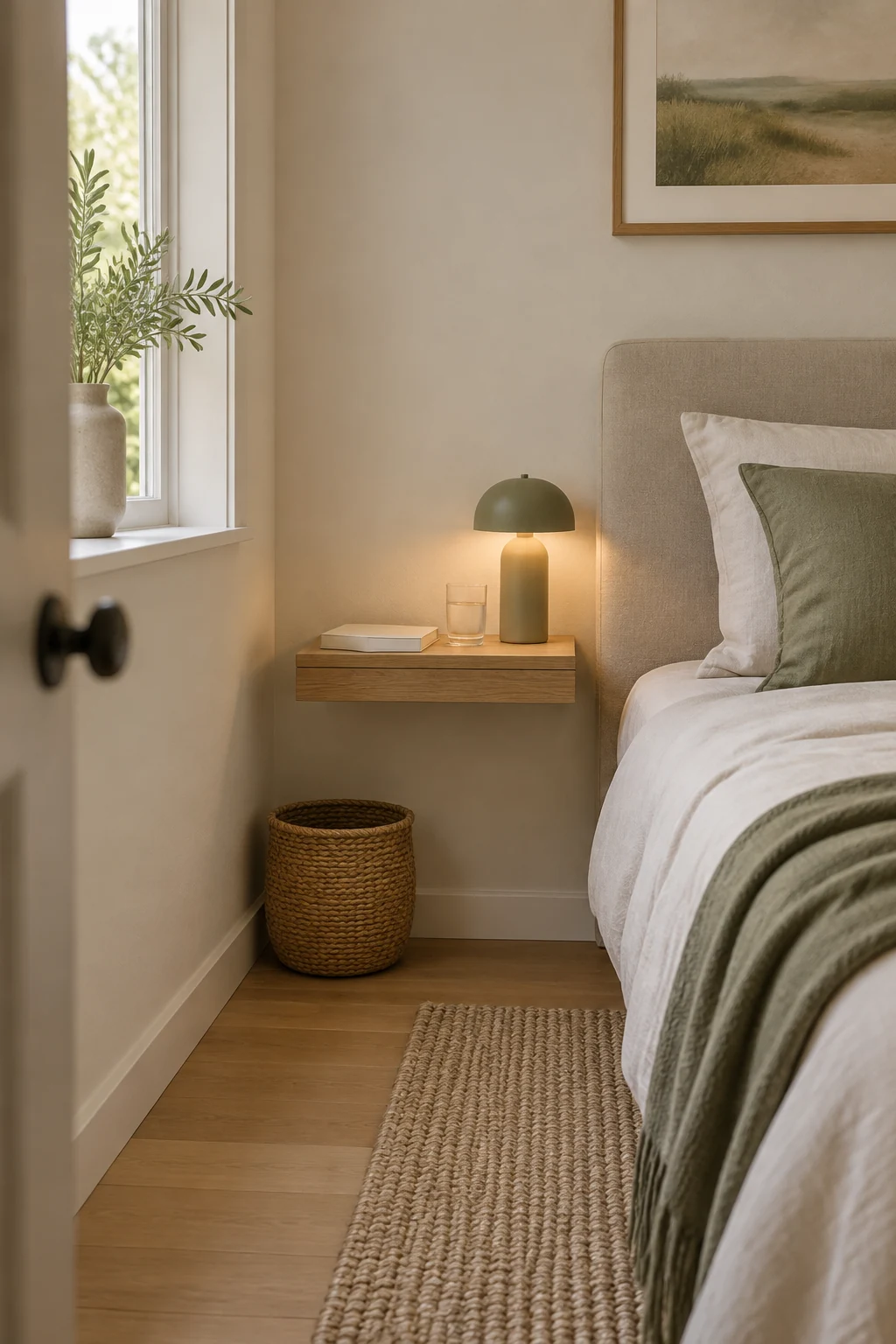
A shelf will not conceal charging cables on its own. If you need power, plan the outlet and cord route at the same time. Do not run cords under rugs or through a doorway. If you cannot mount anything, a freestanding slender table may be a better fit than a shelf balanced where it should not be.
Move the light off the tabletop
When the surface is barely wide enough for a mug, a plug-in wall sconce can free it up. Mount it where you can reach the switch from bed and where the shade will not hit your head when you sit up. A cord cover can make a plug-in version look calmer without pretending it is hardwired. If you rent, check the wall and outlet plan first.
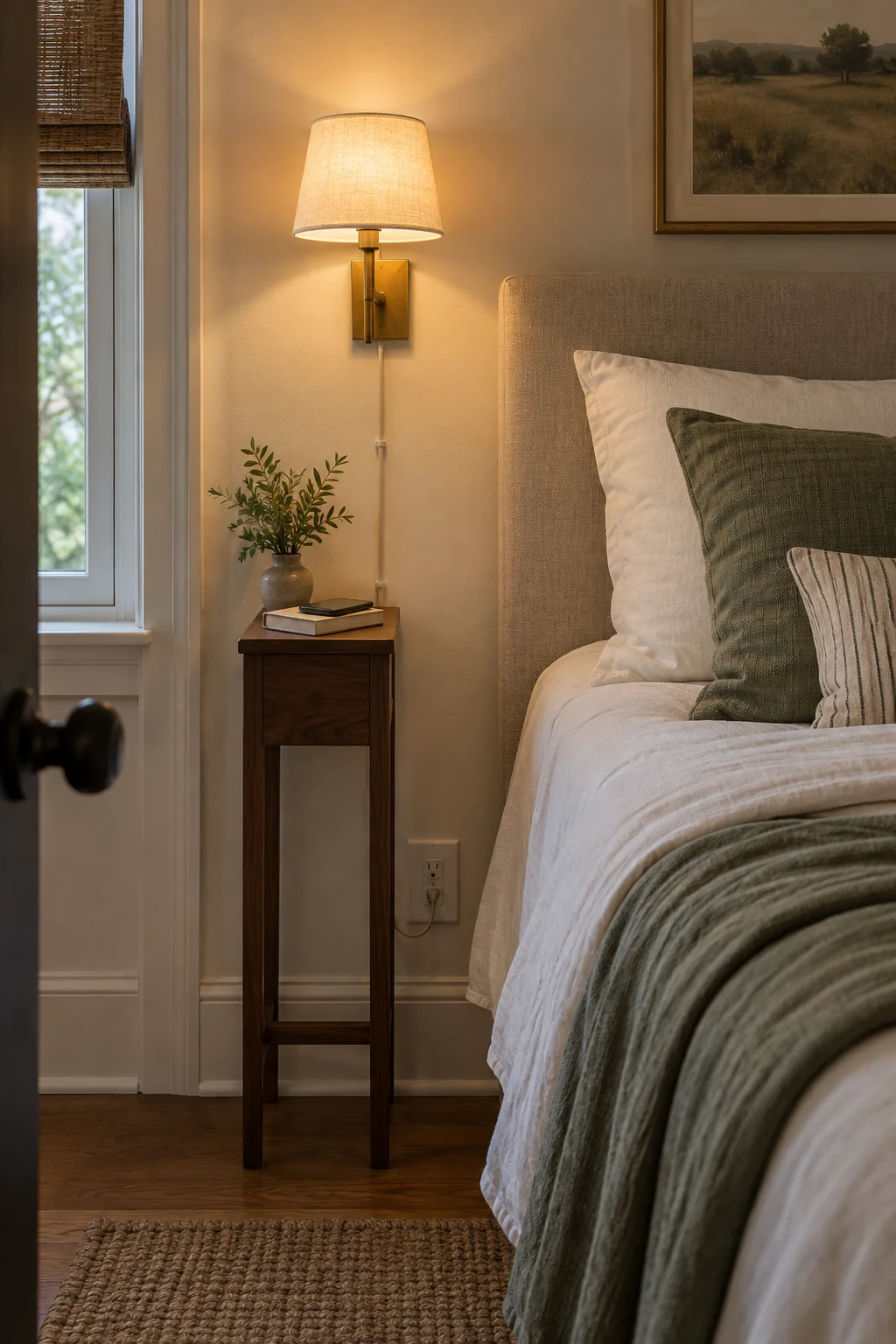
Keep the light warm enough for evening and strong enough to read by. In the fourth illustration, the lamp has moved to the wall, so the slim table is left for a book and phone. It is a layout idea, not a recommendation for a specific fixture.
When there is no room for a table at all
One side of a bed can be too close to a doorway or wall for any floor-standing nightstand. A short shelf beside the pillow and a compact wall light may do the whole job. You could also set a small ledge behind the headboard only if it is securely installed and nothing heavy can fall onto the bed. Do not force symmetry by squeezing in furniture that catches a shoulder or blocks the door.
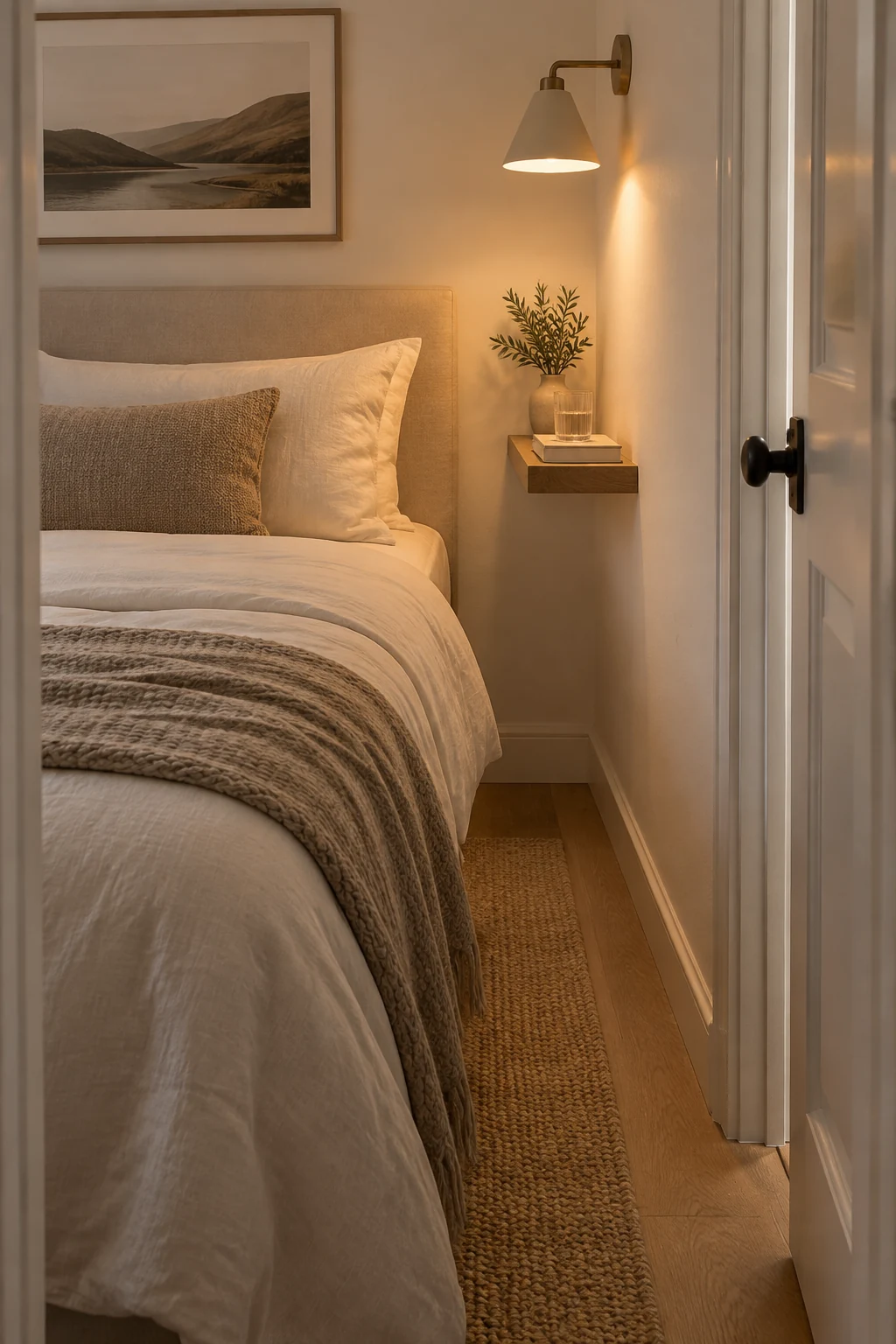
I would keep the bedding and the wall palette quiet here. The open floor, not an extra object, does the work of making the room feel less crowded. For a broader material and color direction, the warm Japandi bedroom guide covers a soft, restrained approach without making every surface empty.
The five-minute bedside test
Before ordering, tape out the furniture footprint and put a box at its proposed height. Lie down, reach for a glass, sit up, get out of bed and open every nearby door or drawer. If any step feels awkward, change the depth or position before choosing a finish. A good small-bedroom bedside setup is one you can use half-asleep.