A fall reading corner works when the page is easy to see, the mug has a stable place to land and you can get up without moving a basket.
I’d start with the chair and lamp already in the room. Shift the light, clear the side table and add one throw if you use it. The seasonal part can be small. Getting the corner to work after sunset matters more than getting every object to match.
First, sit in the chair you already have
Open a real book in your normal reading position. Where do your elbows go? Can your feet rest comfortably? Is the side table close enough to use without a stretch? These are more useful questions than whether the chair looks cozy from the doorway.
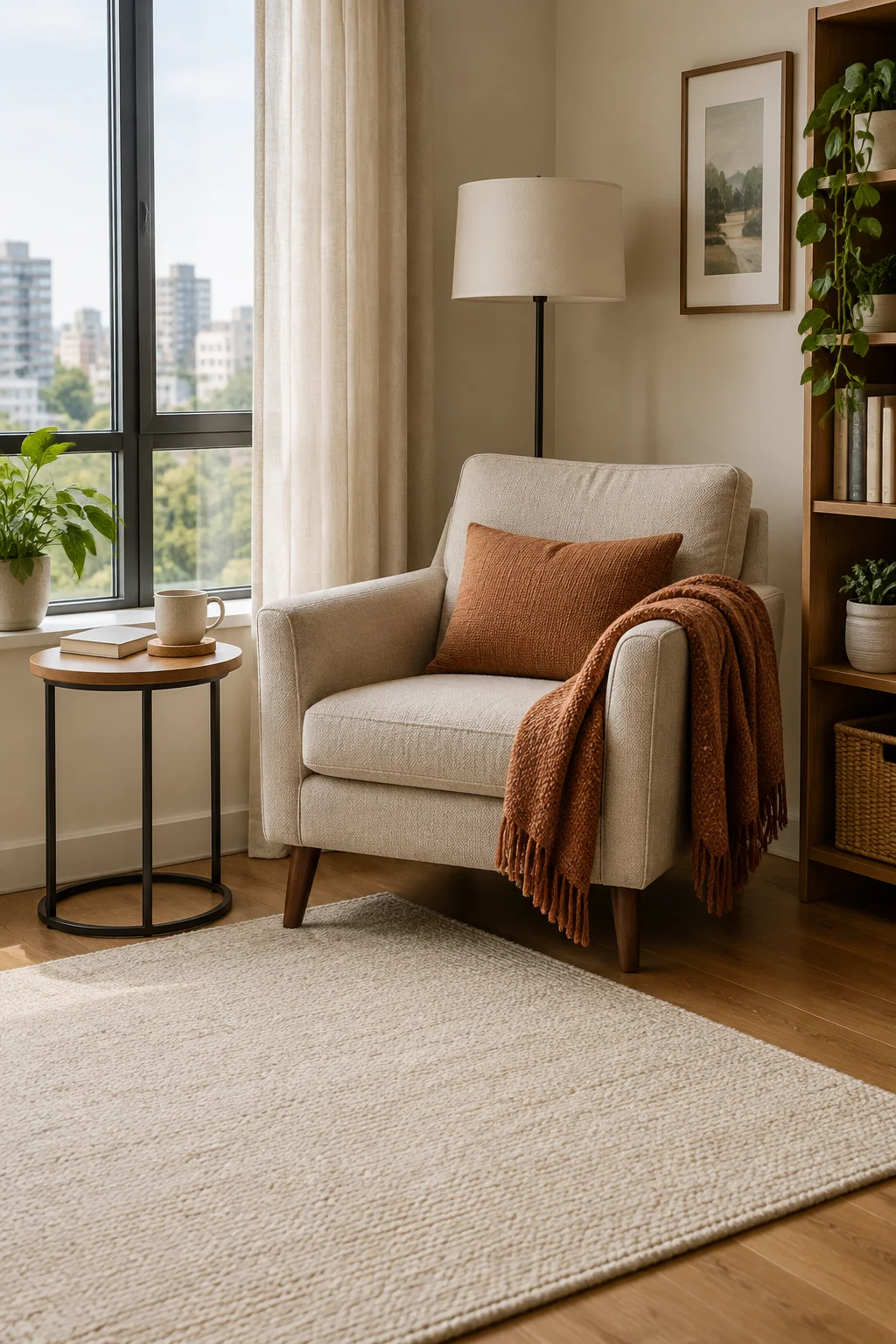
If the chair is by a window, try the corner at the time you expect to read. Daylight changes, and a spot that looks lovely in the morning may need a lamp by late afternoon. Don’t assume that being beside glass settles the lighting question. If there’s no room for a table at all, these small bedroom bedside ideas for when a nightstand will not fit may help.
I would resist adding a stool just to complete the picture. Put one there only if it helps you sit and doesn’t obstruct the route through the room. In a small apartment, an open piece of floor can be more valuable than another upholstered object.
There is no universal chair-to-table measurement that will make this work for everyone. Test the reach with your furniture and body. If you need to lean awkwardly to set down a cup, change the position before you worry about the styling.
A cozy glow and a readable page are different jobs
Soft light across the room sets a mood. A reading lamp puts light where you need it. I’d separate those jobs rather than dim every light until the room looks cinematic and the book becomes work.
Southern Lights Electric’s guide to layered lighting distinguishes general room light, task light and accent light. For this corner, general light and task light are the useful starting pair. You don’t need to buy a third fixture merely to satisfy a styling formula.
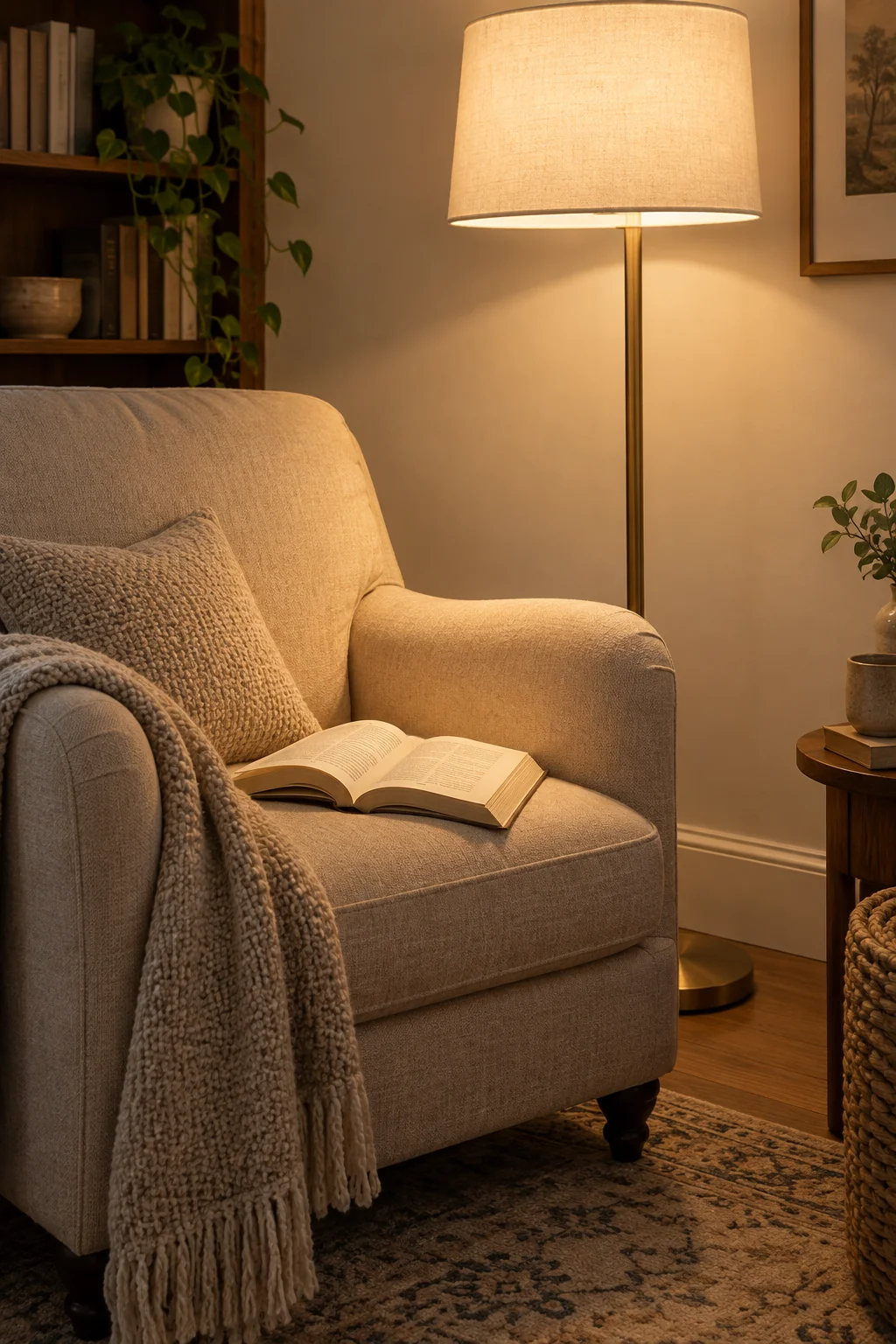
Try placing the reading lamp to the side and slightly behind the chair, then check the page from your seated position. The exact spot depends on the lamp, shade and chair. Move it if you see the bare bulb, if your hand throws a distracting shadow or if the light bounces off glossy pages.
Keep the lamp stable and use it as the manufacturer intends. A fixture that hangs over the chair shouldn’t be balanced against furniture. Run cords away from walking routes, without trapping them under furniture legs or putting them where a door can pinch them. If reaching the outlet means crossing the room with a loose cord, choose another position.
Warm color is a styling preference, not proof of enough light. ENERGY STAR explains that lower color-temperature values such as 2700-3000K look warmer, while higher values look cooler. That number describes the color of the light, not how bright the page will be.
I’d choose a comfortable light color, then judge the actual page. Can you see the small print without leaning in? Is there glare? Can you adjust the light independently of the rest of the room? An attractive shade isn’t a substitute for answering those questions.
The American Academy of Ophthalmology says reading in dim light does not harm your eyes, but good lighting can make reading easier and keep your eyes from tiring as quickly. So I wouldn’t sell this corner as a health fix. I would make it easier to use.
Let the table be a table
A stack of decorative books, a vase and a large candle can fill the surface before you sit down. My version leaves a landing spot for a mug on a coaster and the book you’re reading. If a lamp stands on the table, account for its base first.
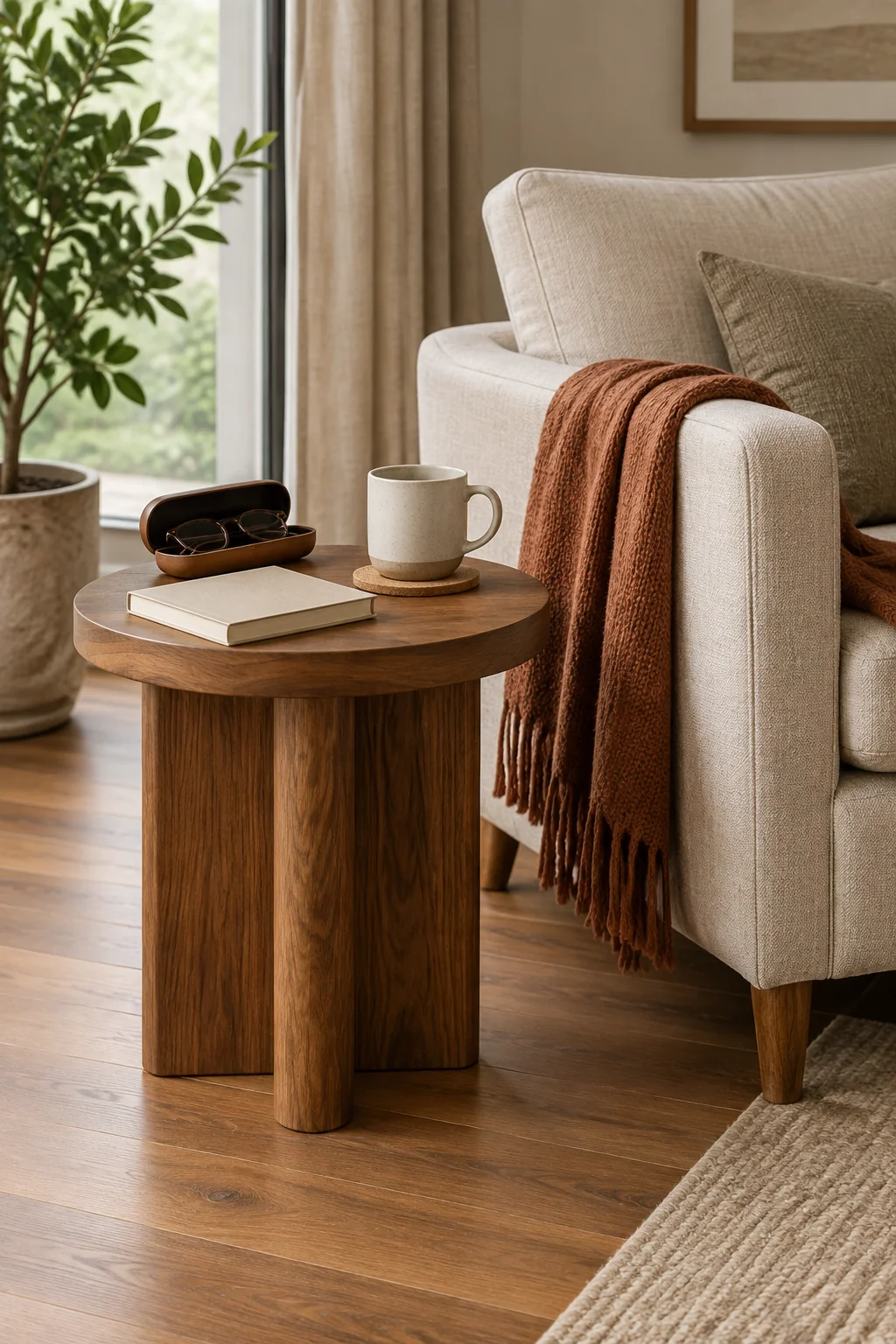
Try the table with your usual mug, not an empty styling cup. You need a stable surface you can reach without knocking into the lamp or chair arm. Keep drinks away from electrical parts. A crowded tray may look tidy while making every object harder to set down.
A small table doesn’t need extra height from a teetering stack of books. If the table itself is the wrong height, moving it or trying another piece you own is a better test. The books can go back on the shelf. The coffee table version of this idea is in small living room coffee table ideas.
Glasses, a bookmark or a remote can have a place, but they don’t all need to be on display. If there is a drawer, use it. If there isn’t, keep the surface selective. I prefer a corner that can handle a normal evening without requiring a reset after every sip.
One autumn detail can carry the season
I’d choose a rust, brown or muted olive throw and stop there, much like the three changes in my fall bedroom edit. Fold it over the chair arm if you reach for it, or keep it elsewhere if it slides onto the floor. It doesn’t need to drape in a perfect diagonal.
If the chair already has enough texture, skip the extra pillow. A cushion that takes up the seat is decoration you have to remove before doing the thing the corner is for.
For a stronger seasonal note, an autumn print on an existing wall or a warm-colored cushion cover can work. I wouldn’t add dried stems beside a hot lamp or light a candle near a trailing blanket. Keep textiles and paper away from heat sources, and follow the fixture’s safety instructions. A five-object fall mantel layout uses the same restraint.
Check it after dark before calling it finished
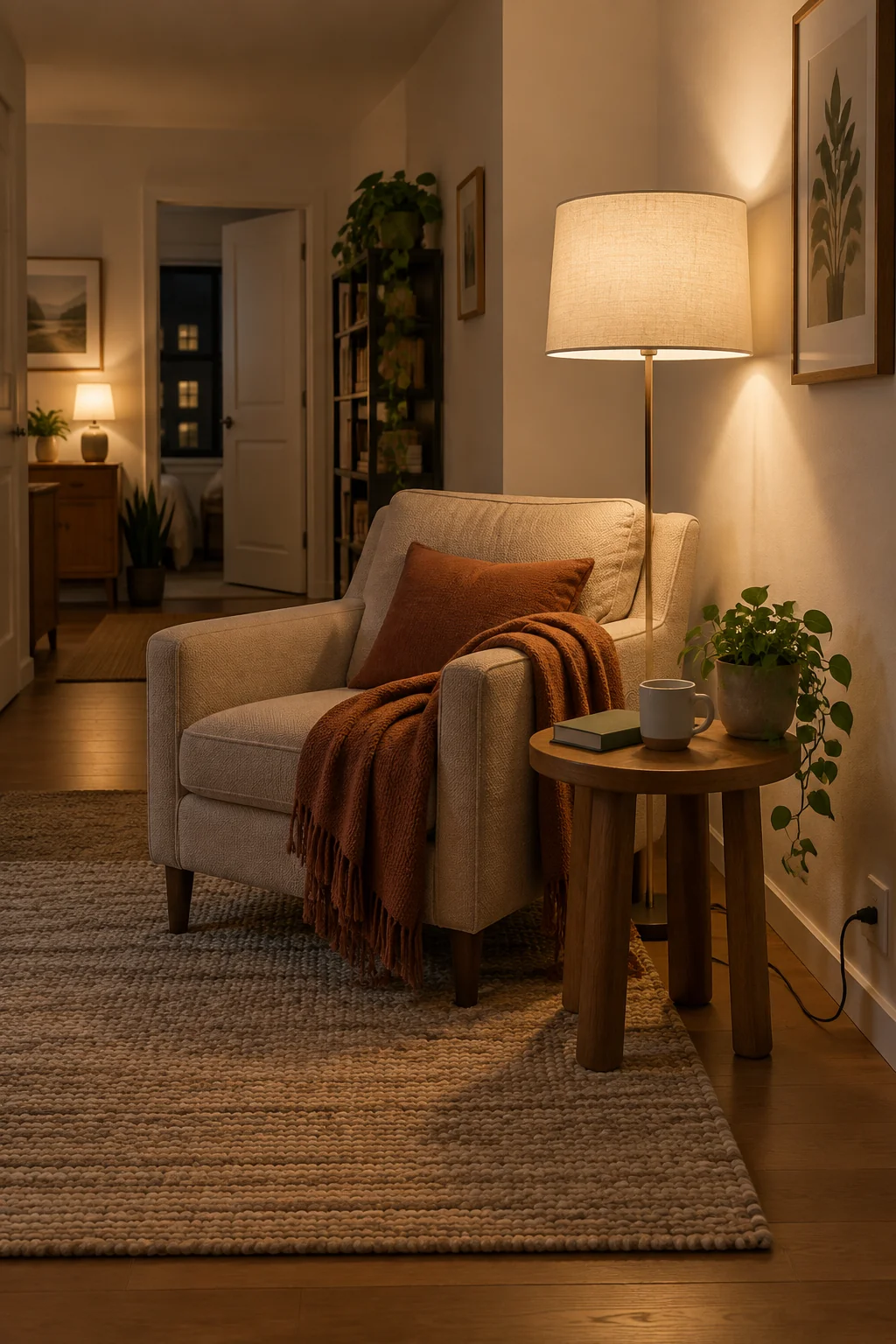
Turn on the lights you actually use at night and sit down again. The corner may need more room light, a different lamp angle or a clearer route past the chair. Make those changes first. A darker photograph isn’t evidence of a better reading setup.
Then try the small routine: open the book, set down the mug, get up, walk past the chair. Nothing should need to be moved out of the way. If it does, remove the least useful object rather than squeezing everything closer.
Lighting reference: ENERGY STAR’s explanation of color temperature. Color and brightness are separate choices; fixture and bulb compatibility should follow the manufacturer’s guidance.