A bookshelf can go wrong in two directions. It can be a wall of spines with nothing to rest the eye on, or it can be so full of small objects that it looks like a yard sale. The shelves that look styled sit somewhere in the middle, and they get there with a few simple rules rather than with expensive pieces.
If your shelf looks stuffed right now, this is how to decorate a bookshelf in an afternoon with the books and objects you already own.
Start by Taking Everything Off
Pull every book and object off the shelf and wipe it down. It feels like extra work, but you cannot edit what you can still see through. With the shelf empty you also notice the shape of it: how tall each opening is, where the light falls, which sections are easy to reach.
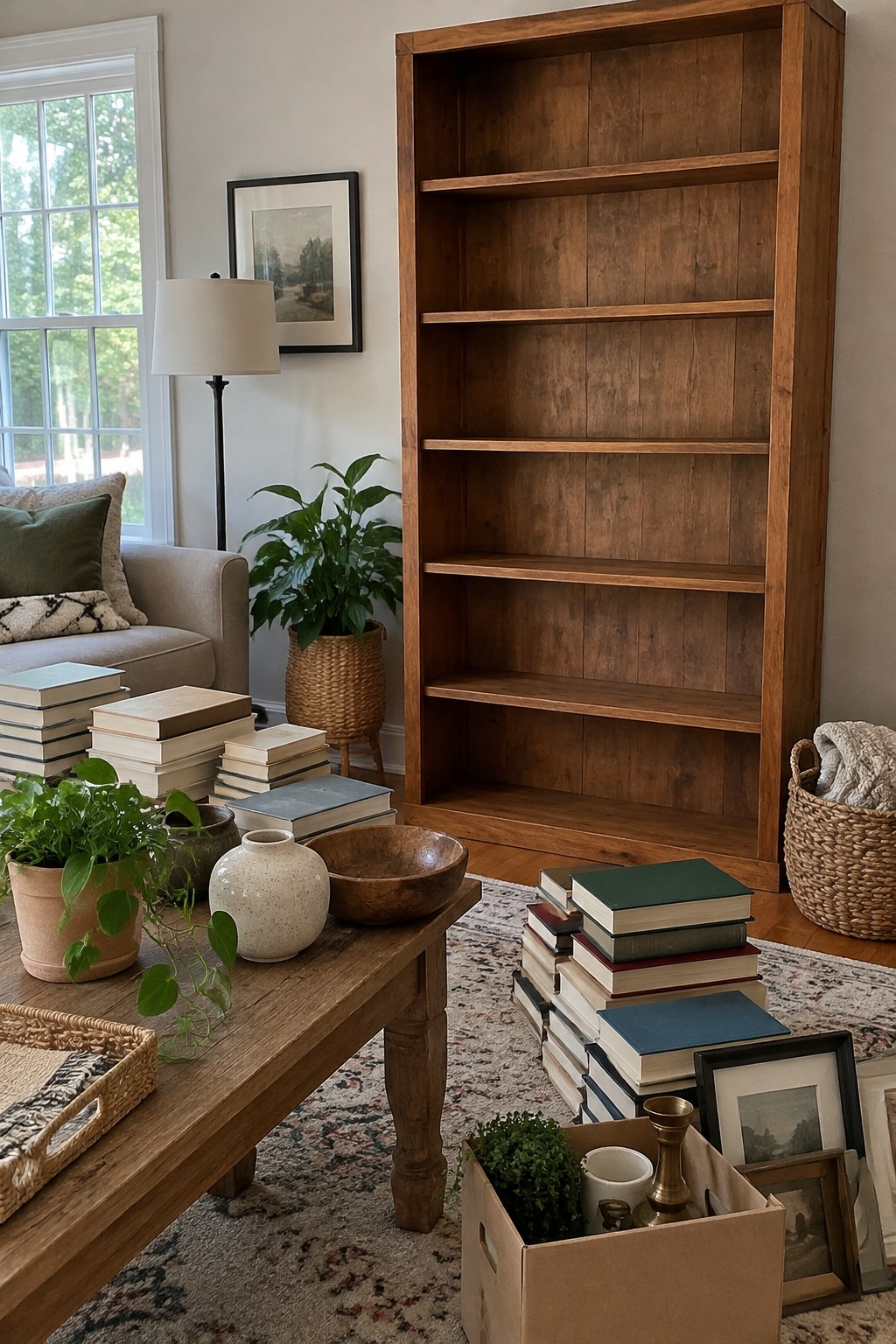
Put your things on a table or the floor and sort them into three piles: books, objects and things that do not belong on a shelf at all. The third pile usually holds more than you expect. Chargers, loose papers and old candles go there.
Group Books by Color or Size Before You Place Them
Books are the base of the whole look, so sort them first. Two groupings work well. You can sort by color, which gives a calm, planned look, or by height, which makes a neat run of spines. Mixing both in one shelf tends to look random.
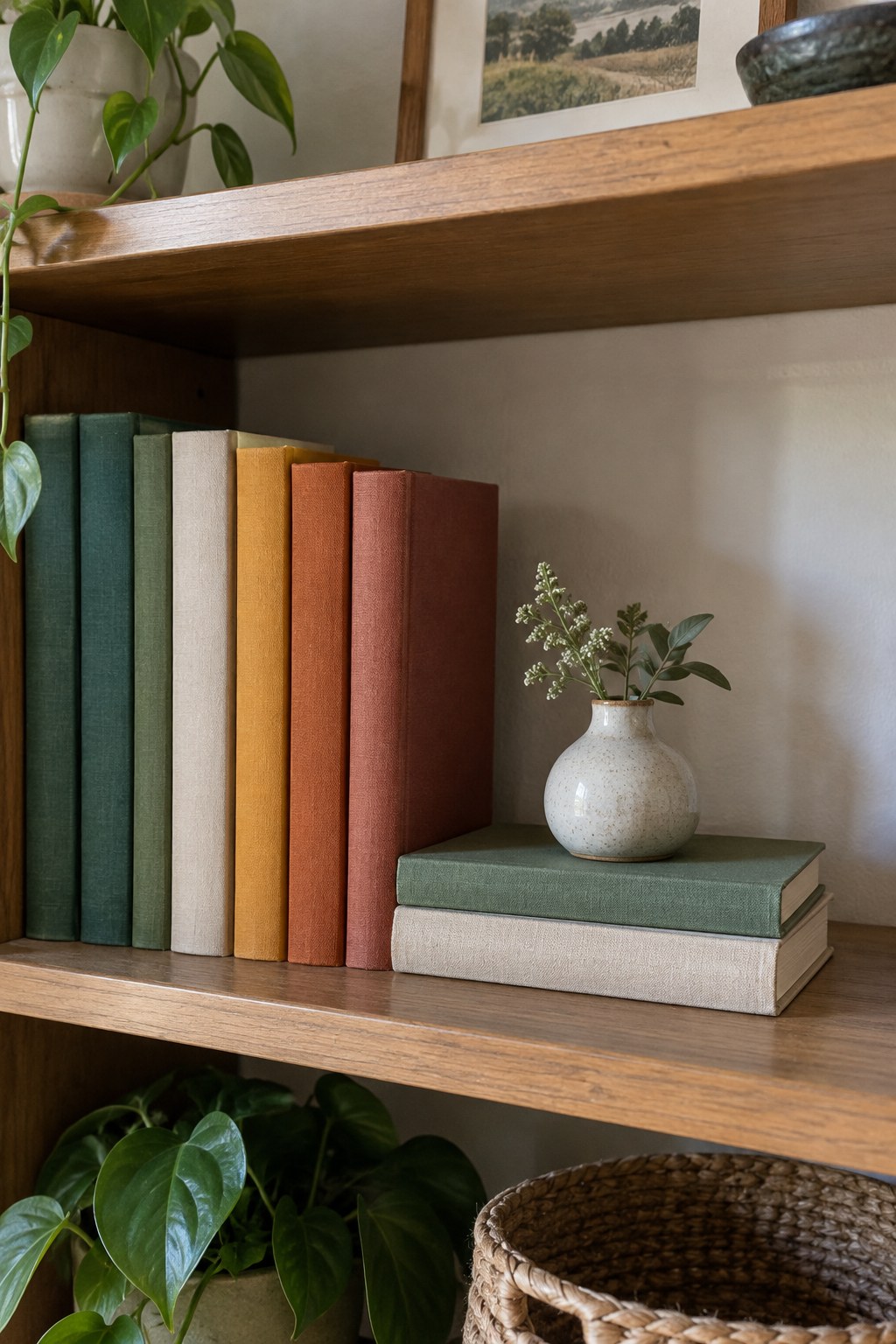
Do not line up every book vertically. Fill about two thirds of each opening with upright books, then lay a short stack on its side next to them. The stack gives you a flat surface for a small object, and it breaks the row. If you like the look of large art books on a table, our guide to styling coffee table books uses the same stacking idea.
Add Objects in Odd Numbers
Once the books are in, place objects in groups of one or three. A small vase, a ceramic bowl and a framed photo make a better group than four matching items. Vary the height: one tall, one medium, one low. Keep them close to a stack of books so they look placed.
A good test is to look at the shelf from across the room and squint. If you can see three or four clear groups, you are done. If it reads as one gray blur, take two things away.
Leave Real Empty Space
This is the rule most people skip. Leave at least one opening or half an opening with almost nothing in it. Empty space is what makes the other shelves look intentional, and it gives the eye somewhere to rest. If a bookshelf feels heavy, the answer is nearly always fewer things. One styled shelf is enough is the same idea applied to seasonal decor.
Bring In Something Green or Soft
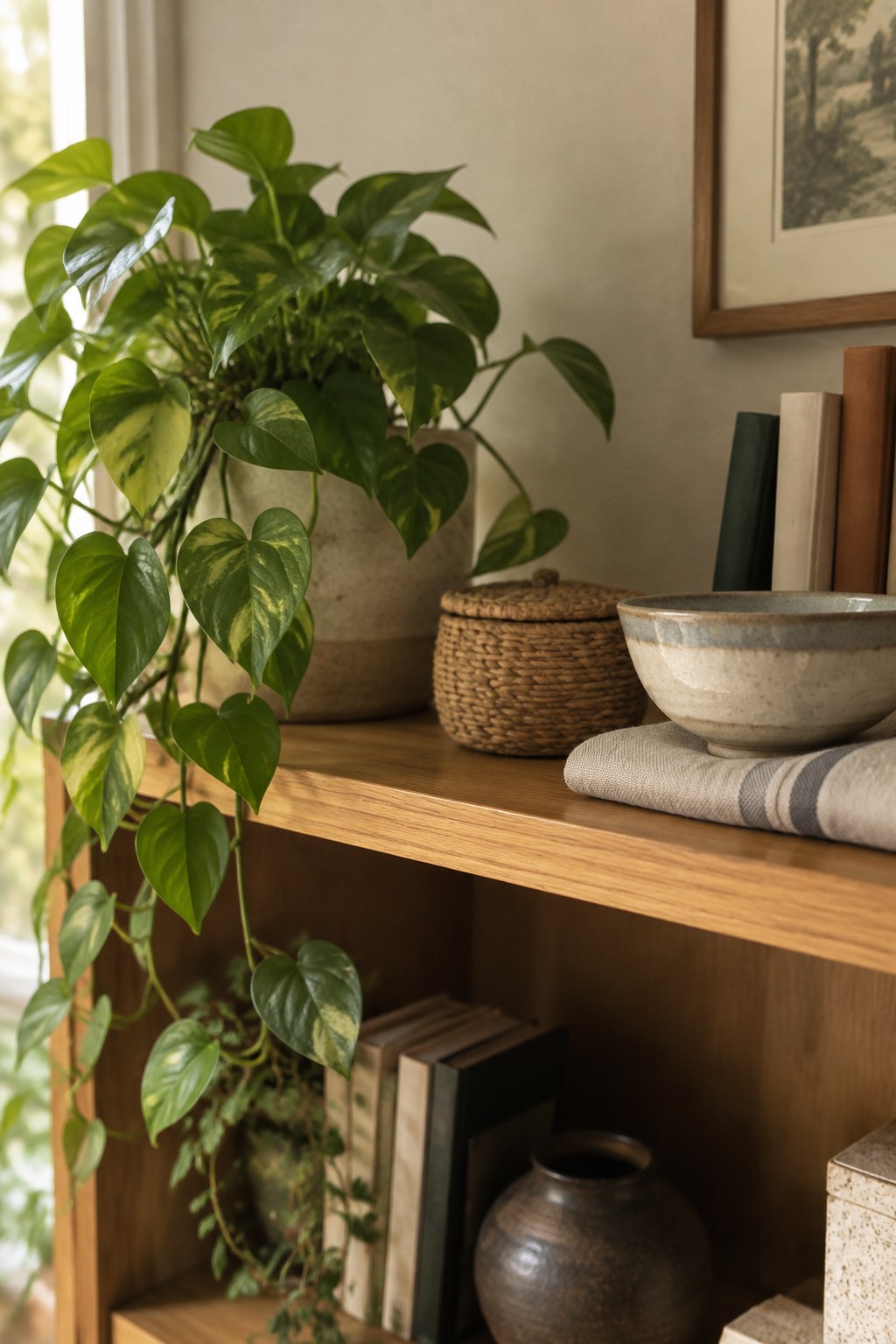
A shelf made only of books and ceramics can look hard. Add one soft element: a trailing plant, a small basket, or a folded linen cloth under a bowl. Plants work best on the upper shelves where they can hang down. Our plant shelf ideas show a few ways to do it in small spaces.
Repeat One Thing Across the Shelf
Pick one small repeat so the shelf feels connected: a brass finish, a wood tone, a color that appears three times. It does not need to match exactly. It just needs to show up again somewhere else on the shelf so the eye moves across it.
Edit Once It Is Done
Leave the shelf alone for a day, then look at it again with fresh eyes. Take one thing away, and then stop. Styled shelves stay good when you change one item at a time. When the time comes to switch for the next holiday, this guide to what to keep on a shelf shows what can stay and what can go.
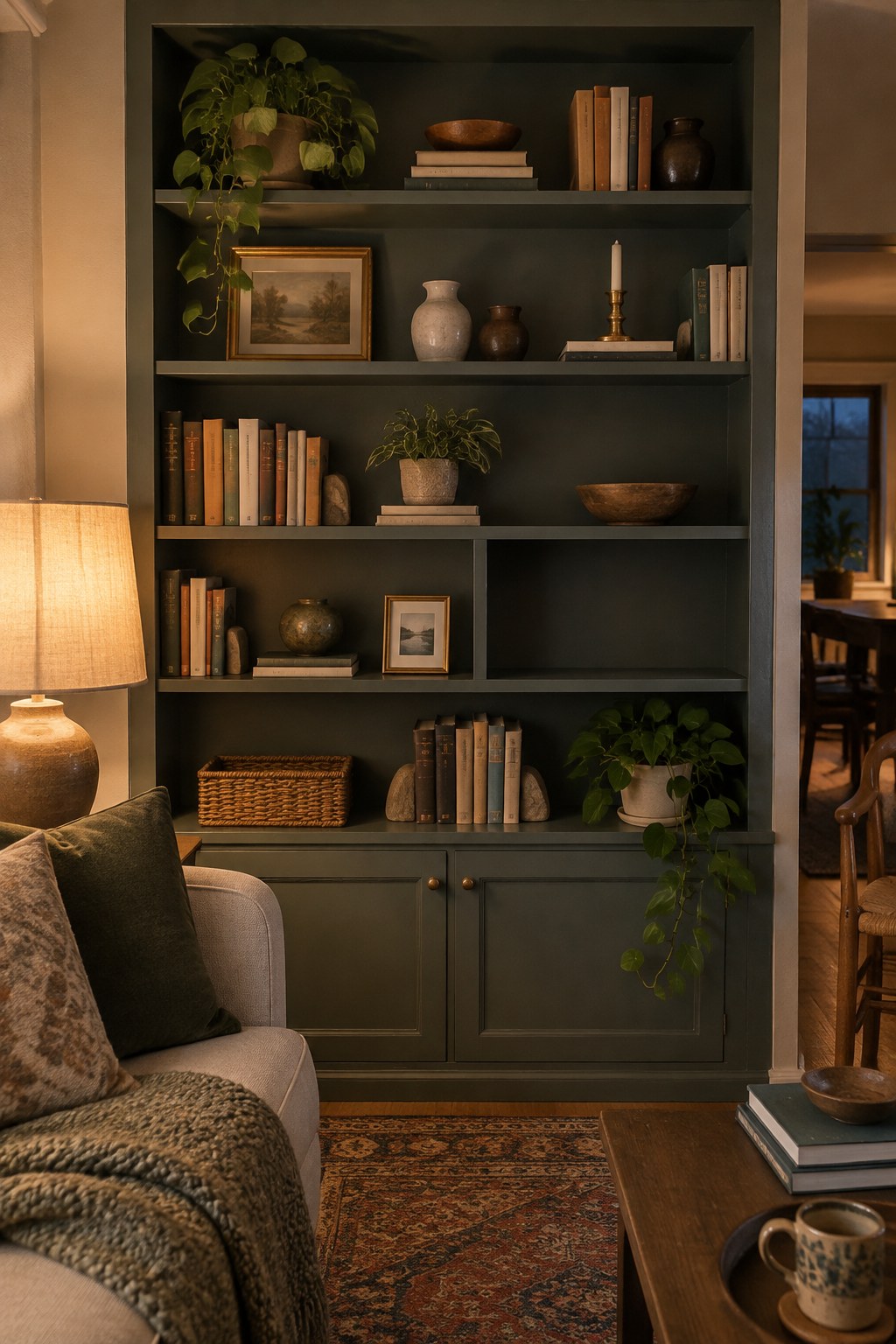
A styled shelf is one where each piece has some room around it. Start with the empty shelf, sort the books, group the objects and leave a little space.