Some years, the day after Halloween, the house flips straight to Christmas. But winter is a long stretch, and a lot of it comes before the tree and after it is boxed up again. Most of us feel it in the house before we decide anything: the light goes flat at four o’clock, the floors get cold, and the rooms look a little summery for the season.
You do not need more Christmas decor to fix that. You need a few small changes that make the house read as warm and slow for the next three months. Here is how I would do it, room by room, with what you already own.
Start With the Light
Winter evenings begin early, so the light does most of the work. Turn off the overhead fixture and use two or three lamps at different heights instead: one on a side table, one low on a shelf or console, one by a chair. Warm bulbs make the biggest difference of anything on this page. If your lamps are fighting a cool white bulb, change the bulb first. Our layered lighting guide shows where each light goes in a living room.
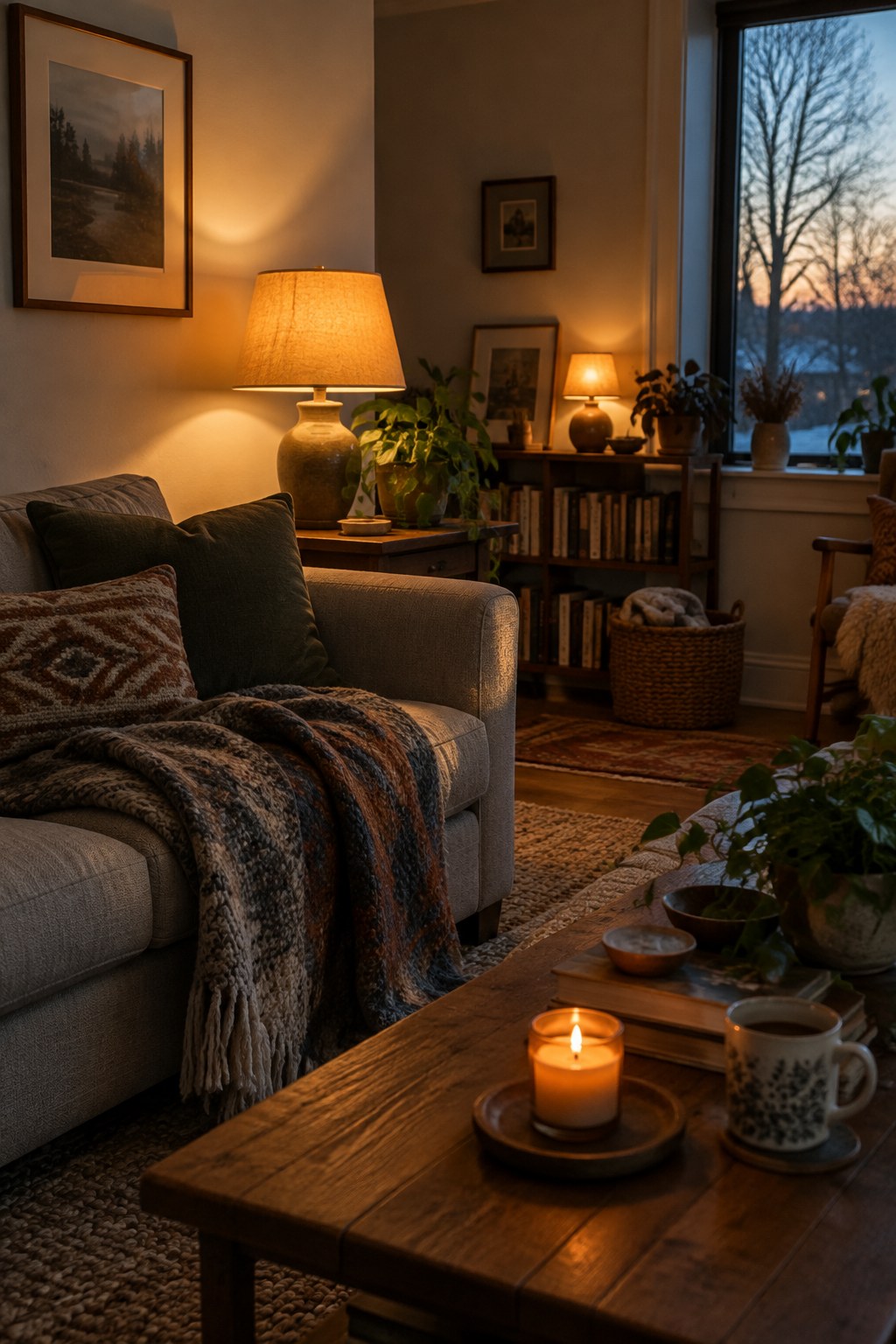
A candle or two on the coffee table finishes the job. Light them when you sit down. A room lit from below eye level feels like winter in a way a bright ceiling light never will.
Swap Your Textiles
Summer cotton and linen look thin by November. Pull them off the sofa and bed and bring out wool, knit, flannel and chunky weaves. Stick to two or three colors so it reads as calm: cream, oatmeal, a deep green or rust.
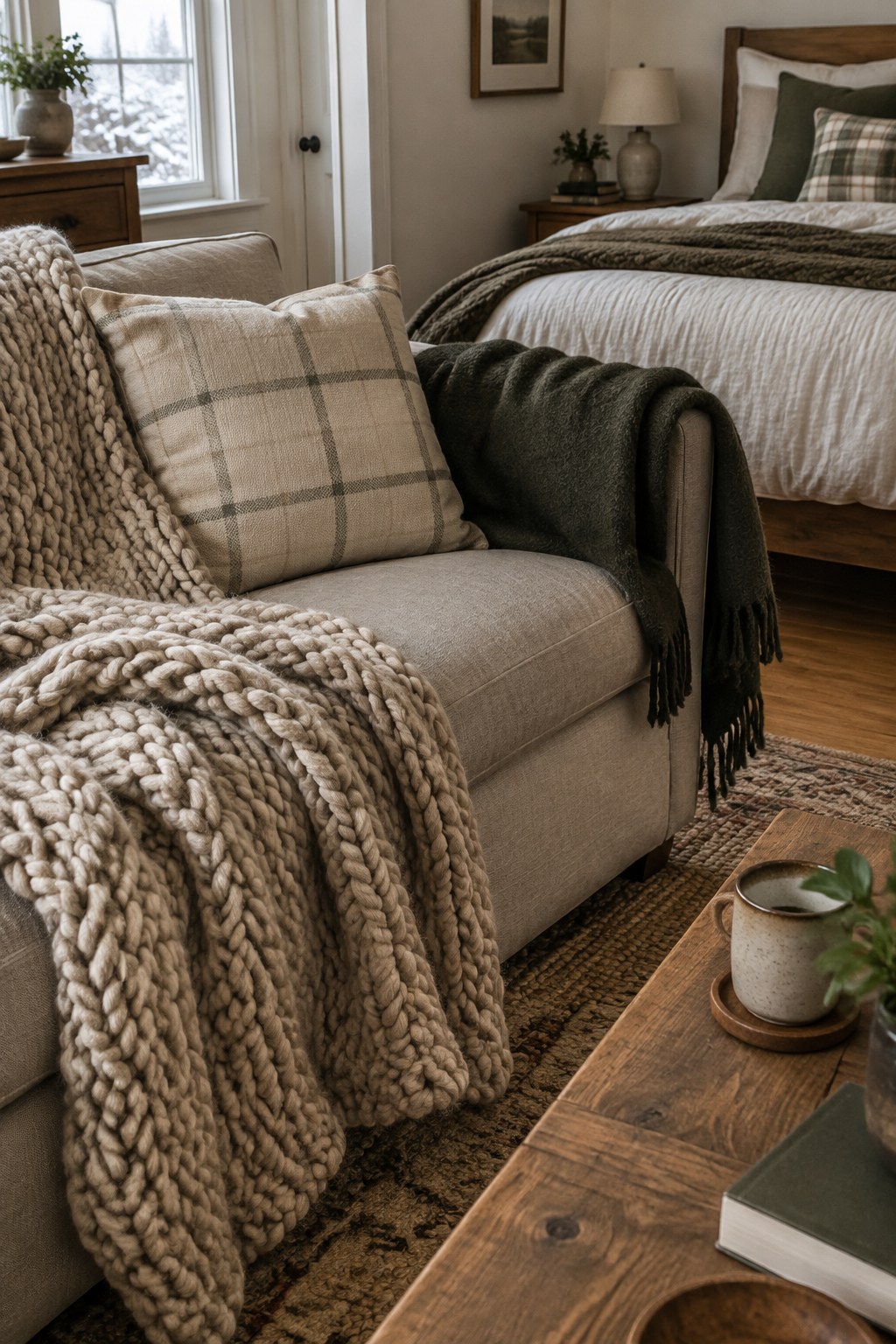
Layer in threes. On the sofa, one throw folded over an arm, one pillow in a heavier fabric, one that matches the room. On the bed, a quilt plus a throw at the foot. If you want a longer version of the bedroom idea, our three bedroom changes carry over into winter almost unchanged. Drafty windows are the other half of a cold room, and these fixes for a drafty apartment cost very little.
Give Winter One Corner
You do not need to winterize every room. Pick one corner and make it the spot where the season lives: a chair near a window, a small table, a throw, a lamp, and a stack of books or a mug.
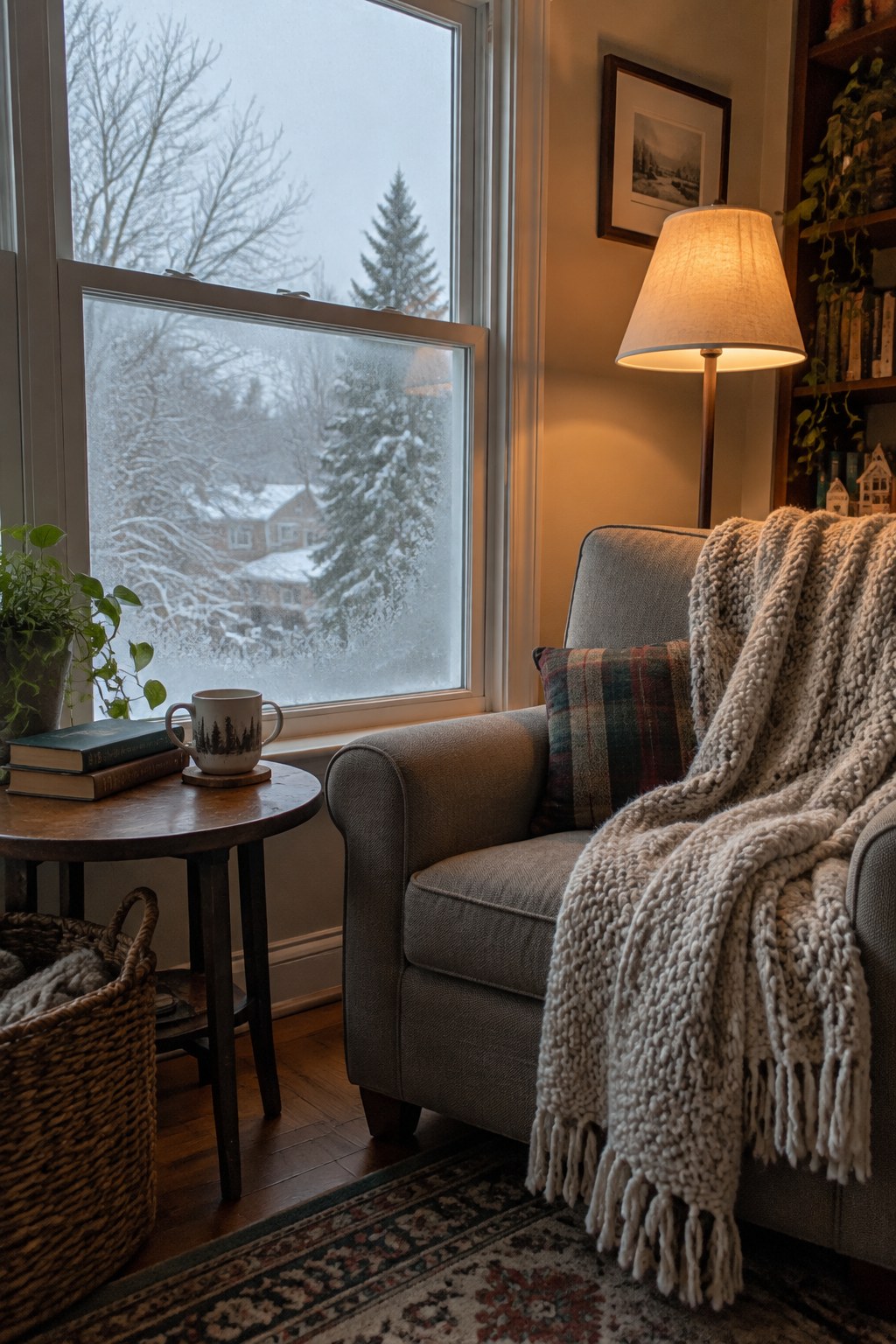
If you want ideas that work after dark, this reading corner is built for the early evenings that winter brings. The same layout works for January.
Let the Entryway Say Winter First
The entryway is the first thing people see, and the first place winter piles up: wet boots, scarves, coats that have nowhere to go. A tray for shoes, a few hooks for the heavy coats and a small basket for hats keeps it calm. Hang one wool coat or scarf where it shows, and the space already looks like the season.
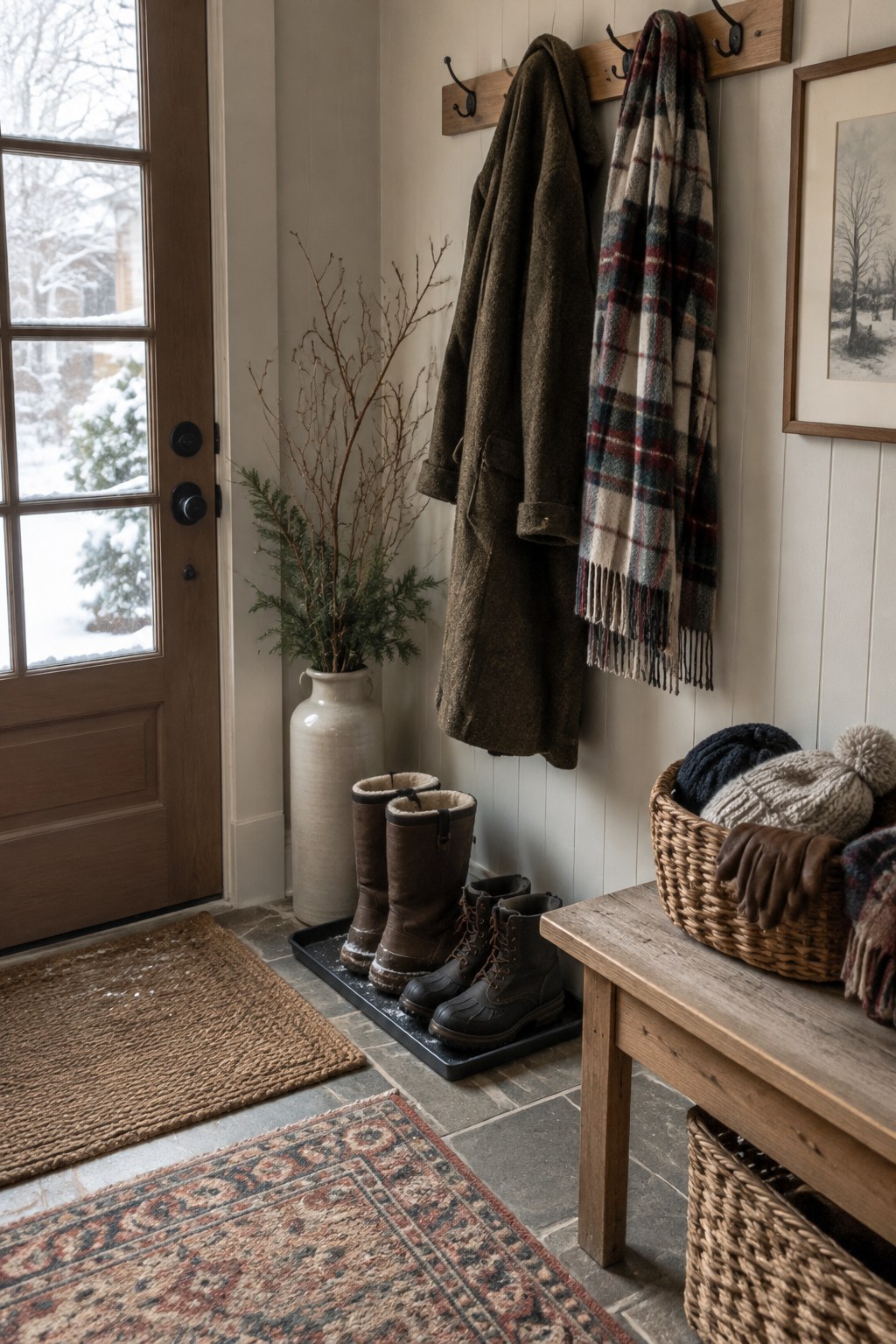
For small hallways, our post on winter storage for a small entryway has layouts that fit in a tight spot.
Bring in Something Living and Quiet
A few branches in a tall vase, a bowl of pinecones, a small evergreen in a pot. None of these says Christmas, and all of them say winter. Keep the palette soft and the shapes simple. One vase on the table does more than a dozen small objects.
Put Some Things Away to Make Room
Winter decor looks best on clear surfaces. Pack away the bright summer accessories, the light bowls and the thin coastal prints, and leave a bit of empty space on each shelf. The room will feel warmer because it is quieter. If you want a way to keep the house feeling lived in without clutter, the lived-in look is a good place to start.
Keep It Small and Let It Stay Through February
The best part about this approach is that nothing on it has to come down on December 26th. Warm light, heavy textiles, one corner and a clear entryway keep working until the first week of spring. Pick one change tonight, usually the lamps, and add the next one over the weekend. By the time the cold really sets in, the house will already feel ready for it.