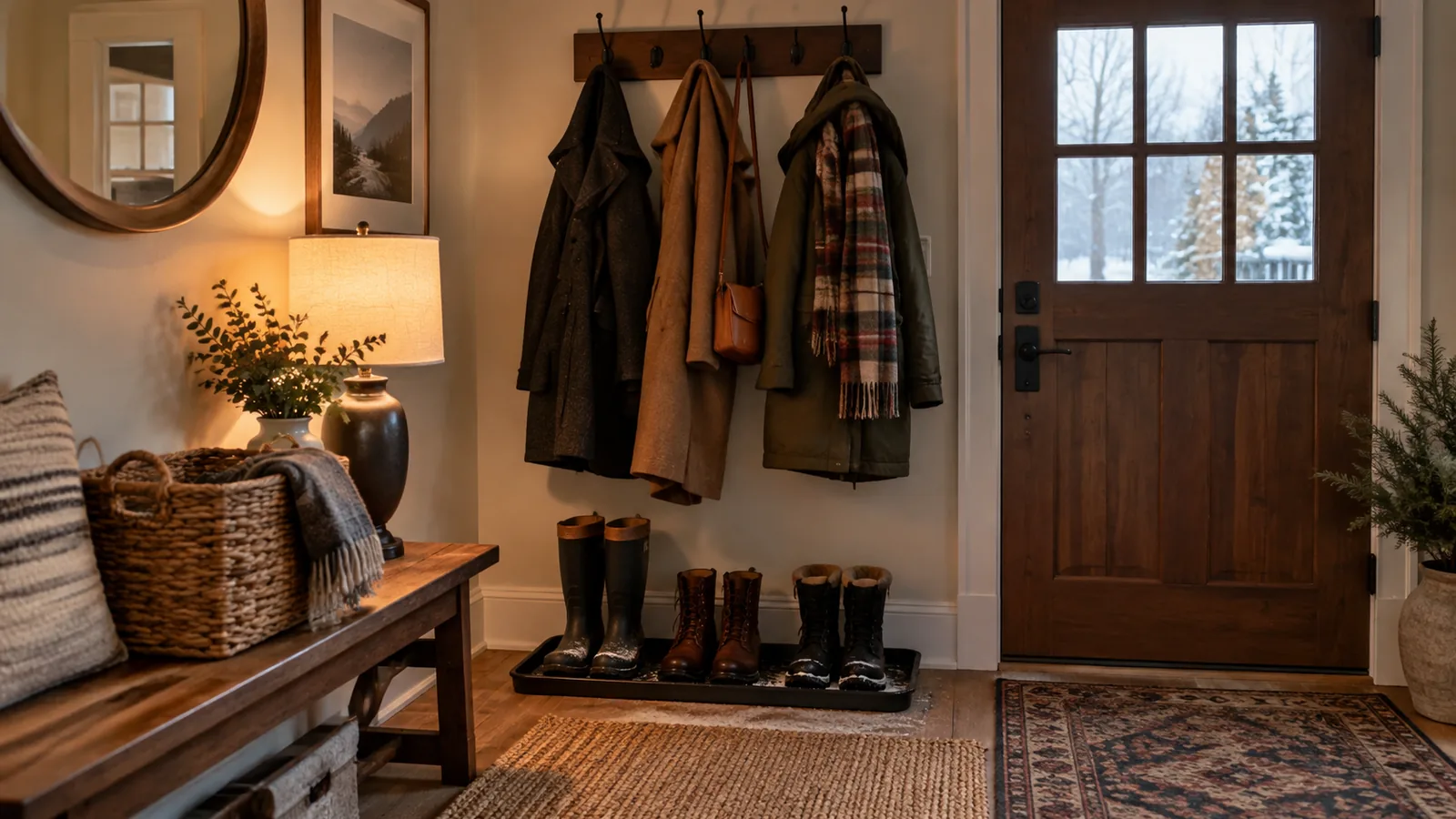
A small entryway gets through winter on four pieces: a boot tray for wet shoes, wall hooks at two heights for coats, one basket per person for hats and gloves, and a doormat inside plus one outside. That combination keeps water off the floor and puts every cold-weather item within one step of the door.
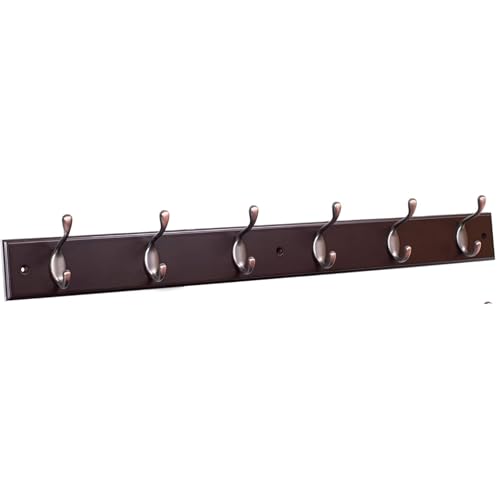
BIRDROCK HOME Oval Hook Coat and Hat Rack | 6 Hooks| Wall Mount | Brown Finish | Bronze Hooks
Start with the floor, because winter is wet
The boot tray is the piece that pays for itself first. A tray with a raised edge holds two or three pairs of boots and keeps the meltwater contained. Put a small towel or a mat beside it for anything soaked through. If the tray slides on hard flooring, a strip of non-slip shelf liner underneath holds it. A rug under the rest of the setup works the same way, and this rug size guide helps if the entry shares space with the living room.
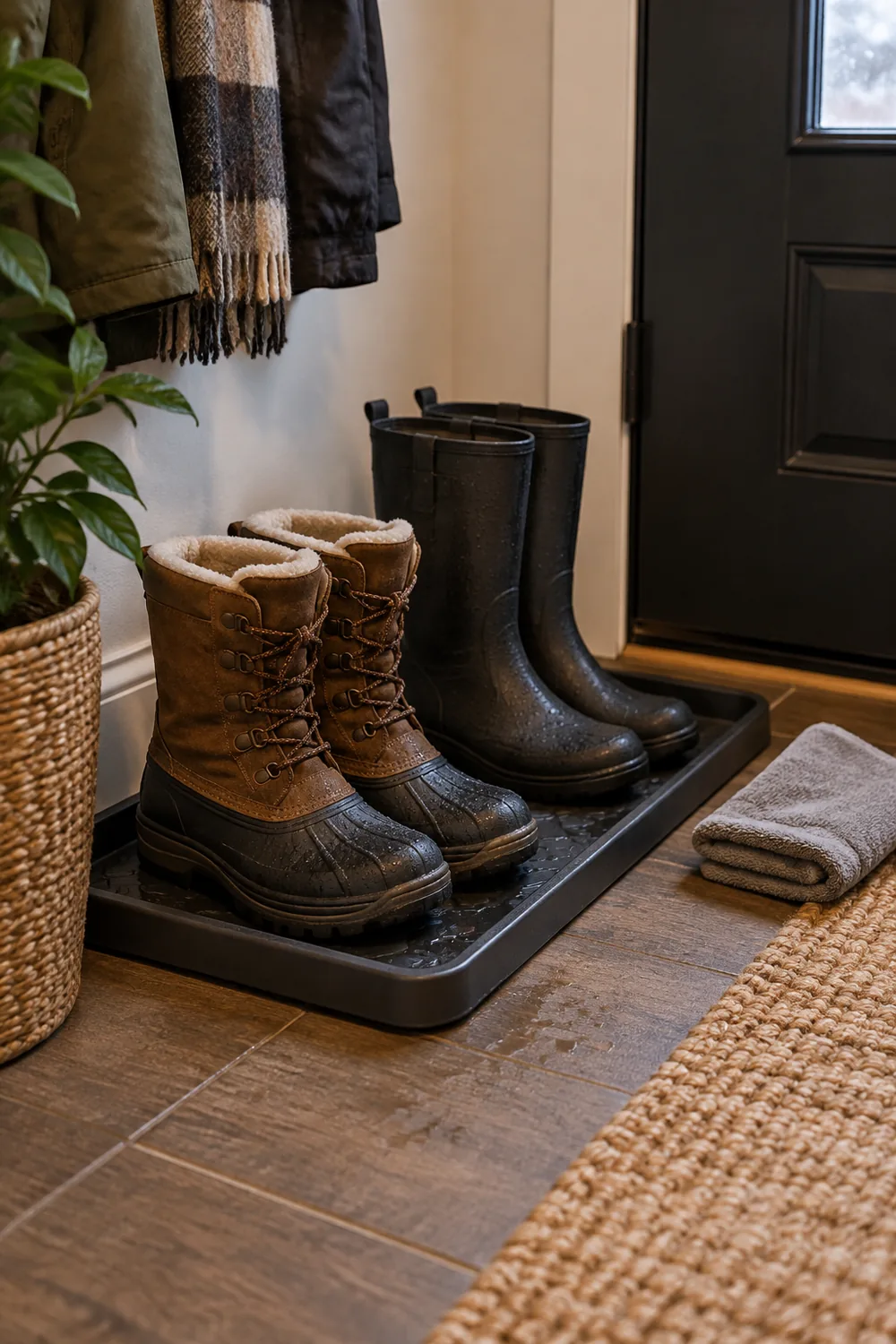

BIRDROCK HOME Large Rubber Boot Tray, Black, 34x14in | Outdoor or Indoor Shoe Mat for Entryway – Shoe Tray with Raised Edge for Boot Storage or Dog Bowl Mat…
Hang hooks at two heights
A row of hooks beats a coat closet in a small entry, because wet coats need air to dry. Mount one row at adult height and a second row lower if kids or shorter household members use the space. Give each person two hooks, one for the coat and one for the bag, and the wall does the work of a closet. Measure before you buy, the same rule as in this narrow shoe cabinet guide, because an entry wall is usually narrower than it looks.
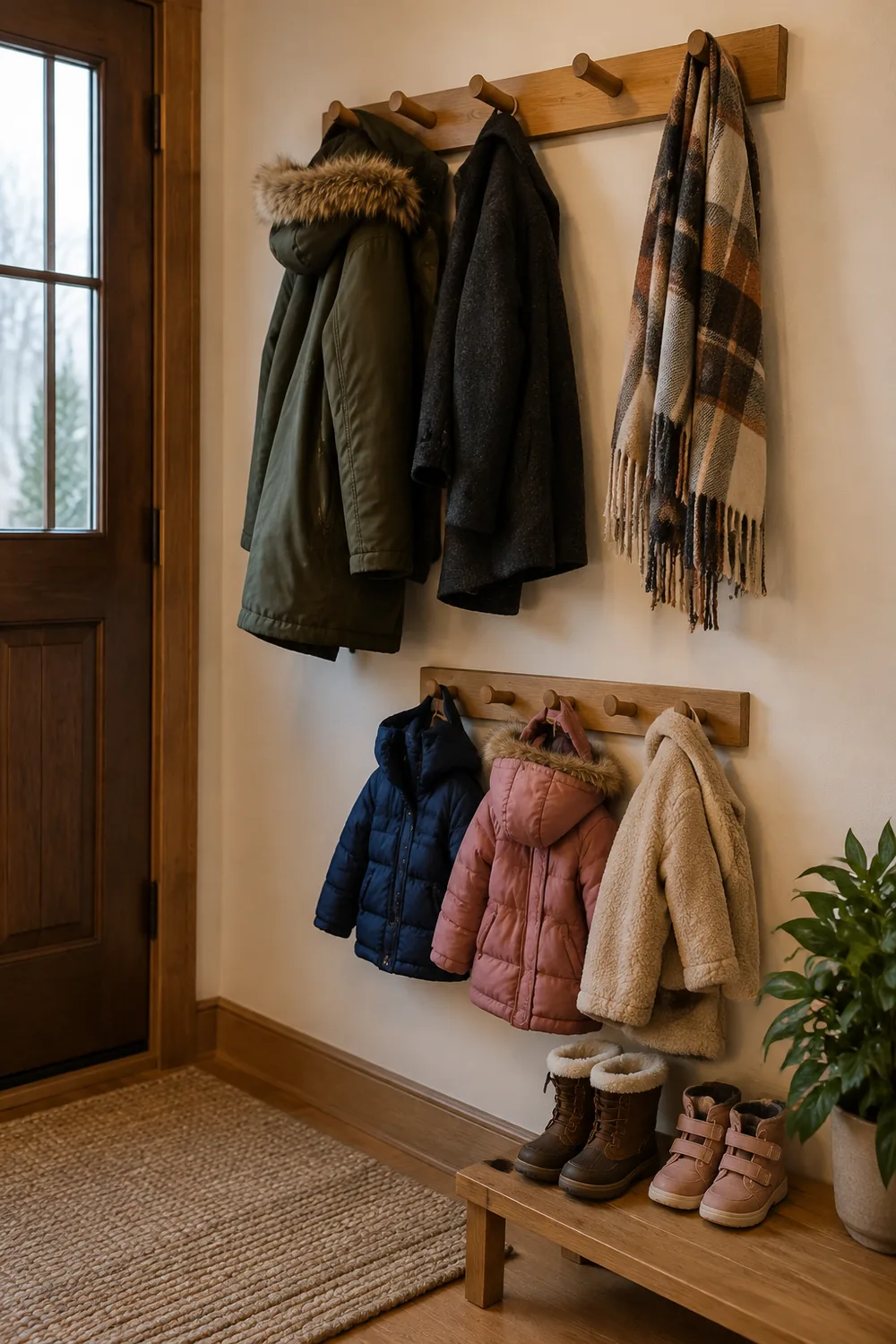

Cast Iron Tri Leg Coat Hooks (5 Pack) Wall Mounted Farmhouse, Decorative, Rust Proof for Exterior or Interior Wall Hooks, Vintage Hooks for Hanging Coats,…
Give every person one basket
Hats, gloves and scarves are the items that migrate around an apartment. A basket per person on a bench or a shelf ends that. Everyone’s small things go in their own basket when they walk in, and the same basket is where they find them on the way out. An entryway bench with storage underneath holds the baskets and gives you a seat for boots; these entryway bench ideas cover the sizes that fit a small foyer.
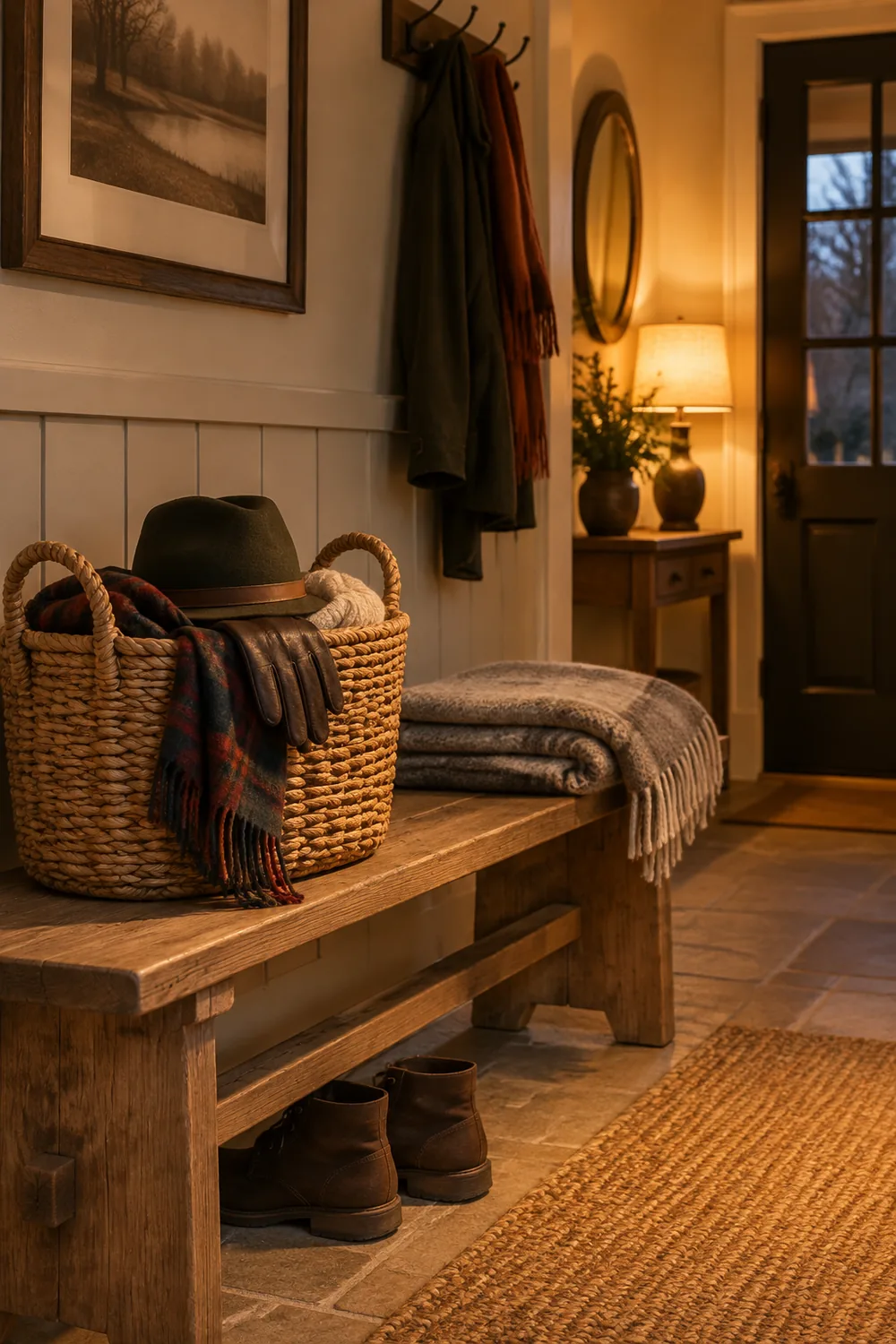

SONGMICS Shoe Bench, Storage Bench, Entryway Bench with Cushion | Shoe Shelf with Seat, Space-Saving, Modern Style, 31.9"W, Camel Brown and Ink Black ULBS057K01
Use both sides of the door
The outside doormat takes off the snow and grit, and the inside mat catches the water. One mat cannot do both jobs. Outside, a coarse scraper mat; inside, an absorbent one. If your building does not allow anything outside the door, a boot scraper just inside the threshold does the first job instead. The door itself can carry the season too, as in this fall door decor guide, which works for renters with no drilling.
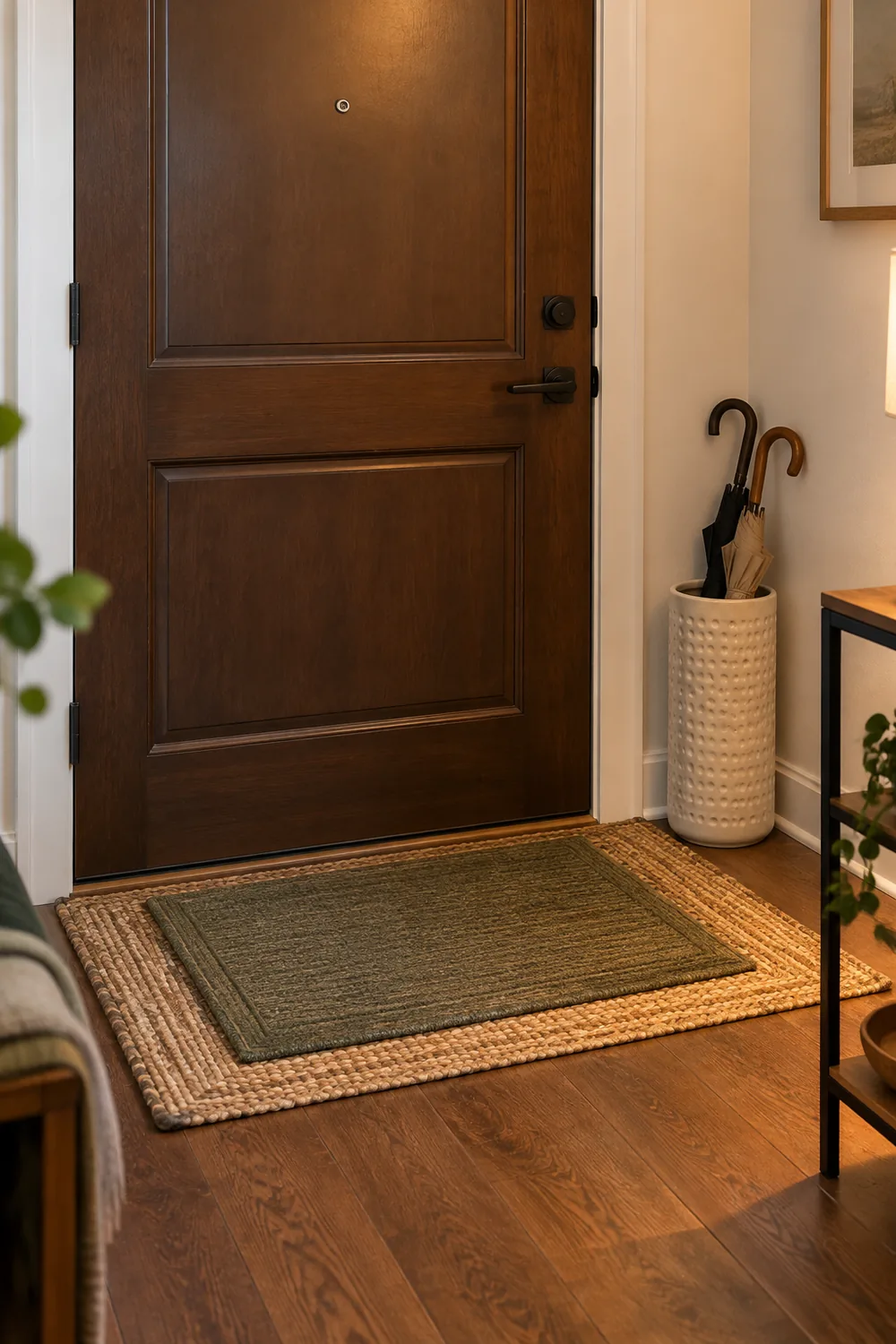

Buffalo Plaid Rug 28 x 43 Inches Fall Outdoor Front Door Decor Checkered Mat, Cotton Washable Hand-Woven Rug for Layered Doormat, Autumn Thanksgiving Carpet…
Light the entry for dark afternoons
Winter means coming home in the dark. A small lamp on a console or a plug-in sconce by the door is kinder than the overhead light, and it makes the entry feel finished instead of purely functional. If outlets are scarce, a battery lantern on a shelf does the same job.
Move out what winter does not need
A small entry earns its space by rotation. In October the light jackets and the tote bags move to a bin on a closet shelf, and the heavy coats and boots take their hooks. Keep only one week of outerwear by the door. Everything else lives elsewhere until the weather turns back, and the entry stays a passage instead of a storage room.
The five-minute weekly reset
Winter entries fail slowly, one wet glove at a time. Once a week: empty the boot tray, wash or shake the inside mat, return stray gloves to their basket, and clear anything that does not belong to the season. Five minutes keeps the system a system. This small fall entryway setup shows the same pieces styled for the season.