A narrow shoe cabinet can make an entryway calmer, but the number that matters is not the seller’s shoe capacity. It is the floor space left after the front door and drawers open. I would measure that clearance first, then compare the actual cabinet depth, width and drawer shape. The product scenes below are illustrations based on current Amazon US listings, not photos of a purchase or test.
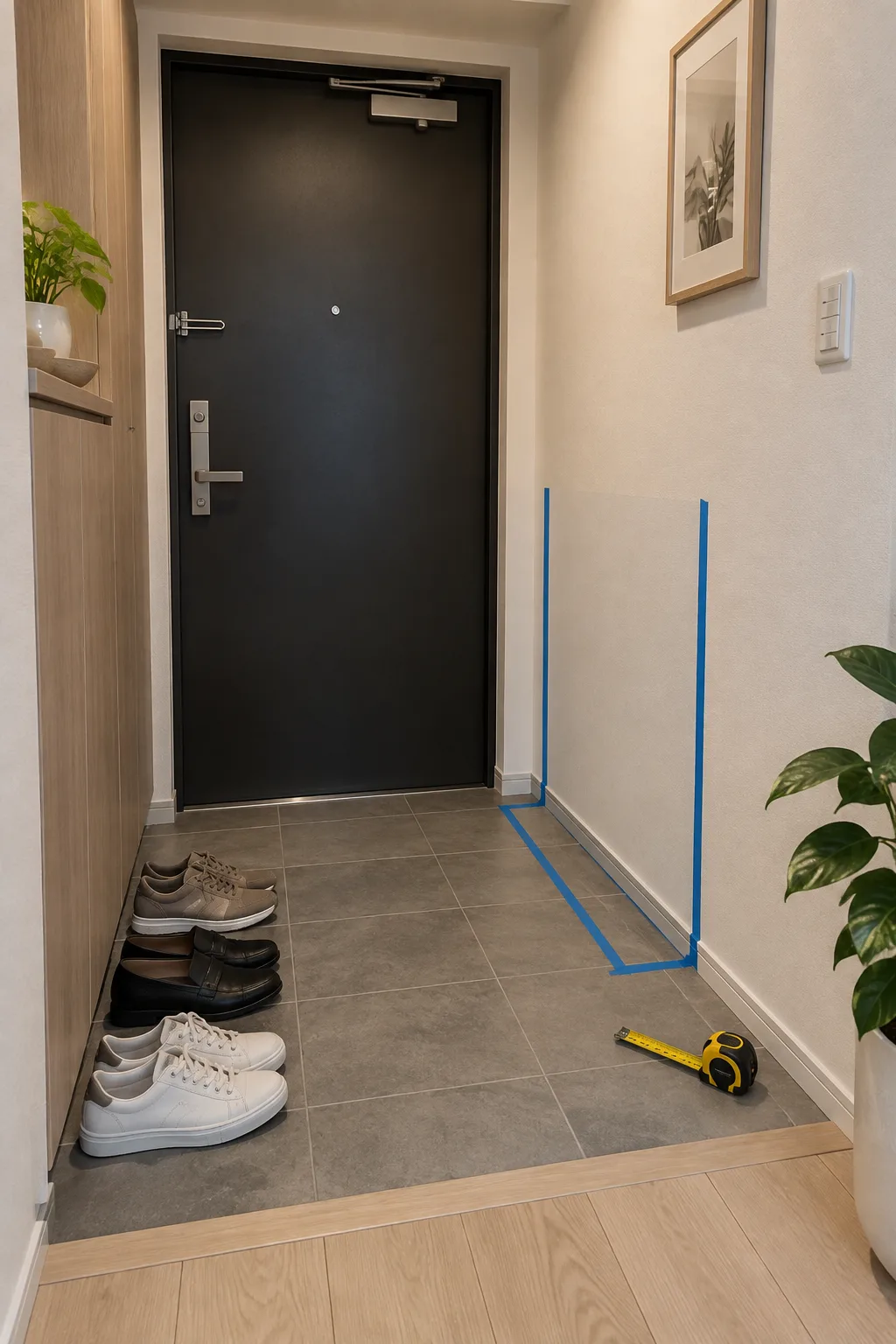
Tape the footprint before choosing a finish
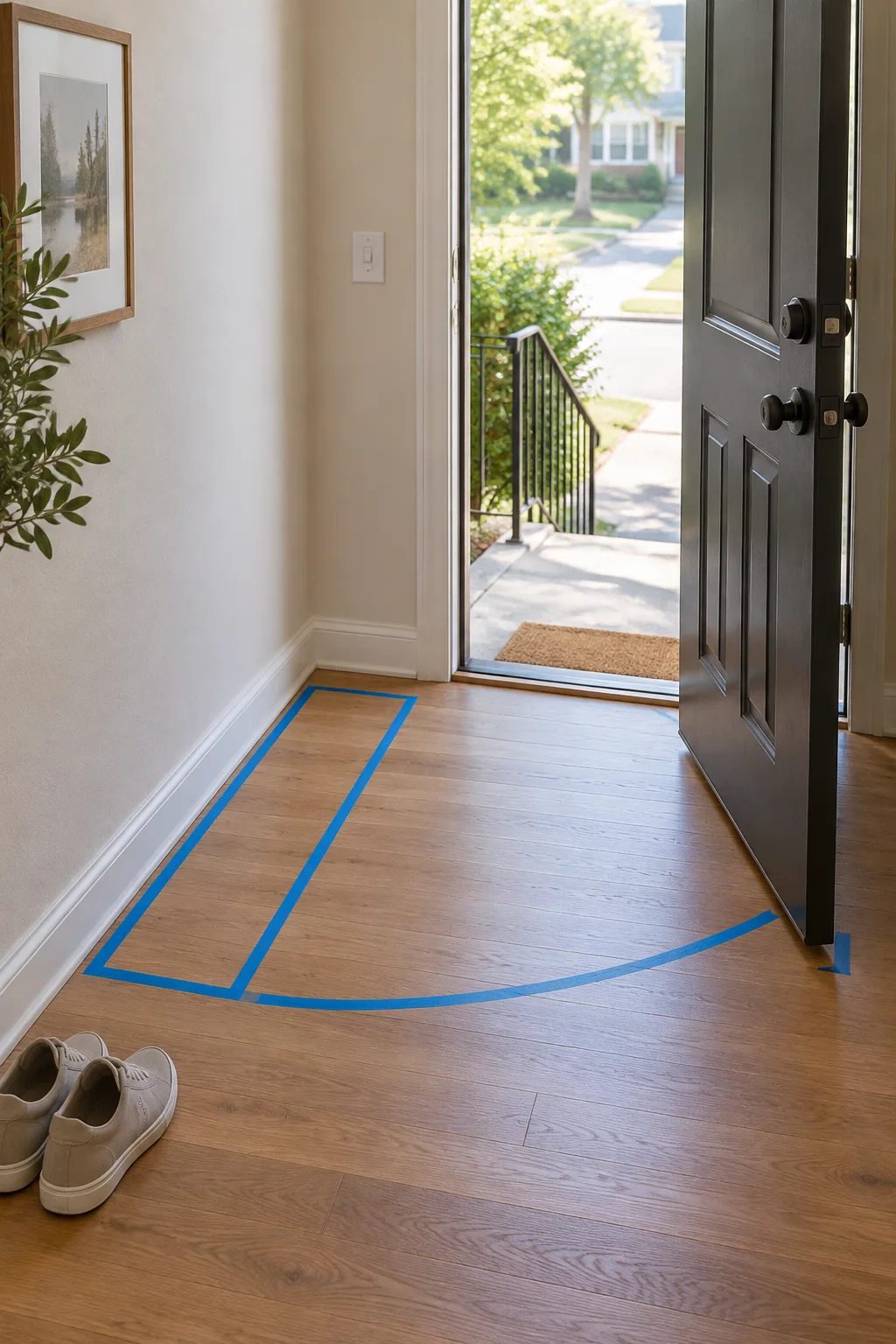
Measure the wall where the cabinet would sit and mark its footprint on the floor with removable painter’s tape. Open the front door fully, then walk past the taped rectangle. A flip drawer also needs space in front while it is open. Compare that temporary outline against each listing’s depth rather than relying on the word “slim.” If the door clips the tape, move the cabinet or choose a shallower layout.
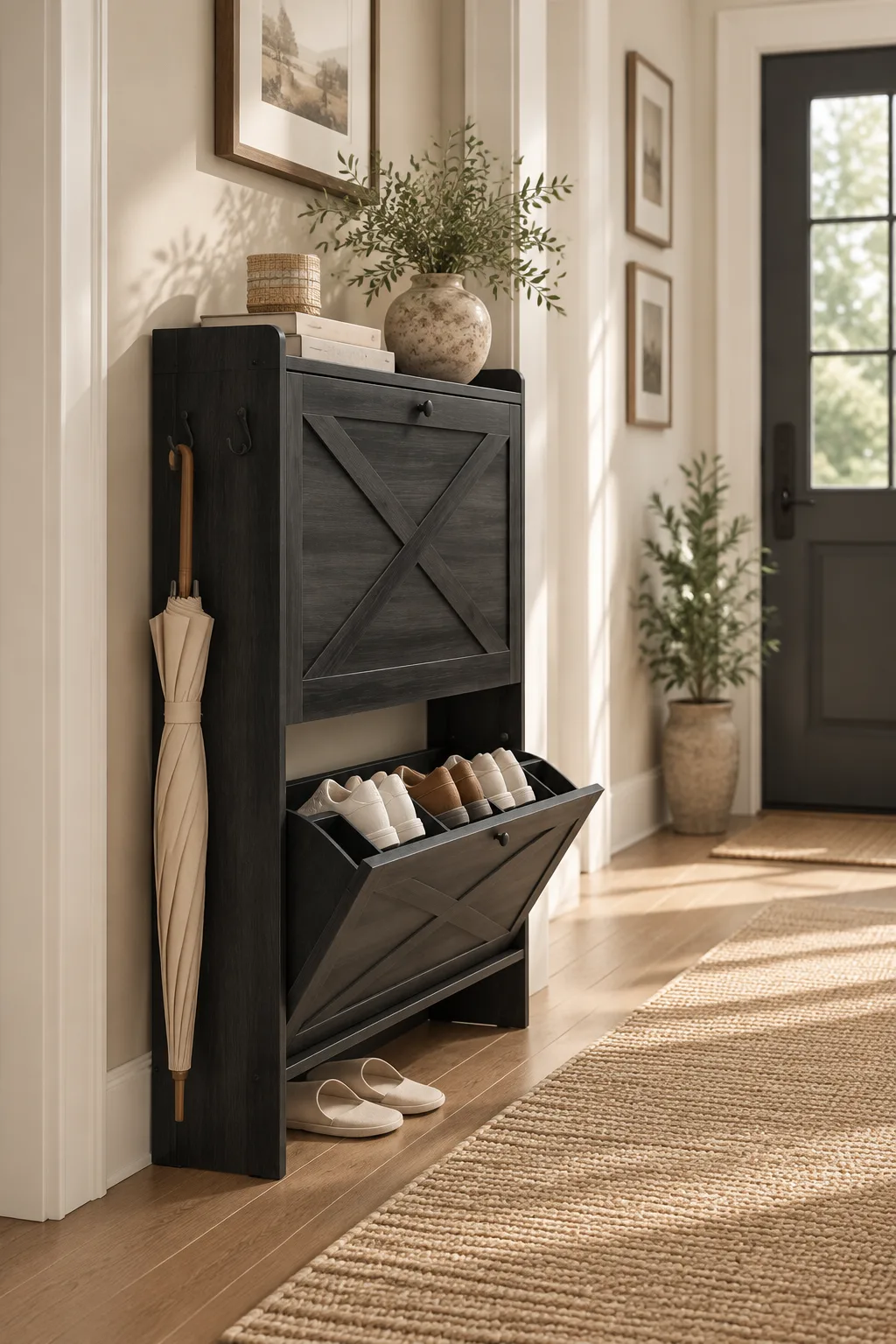
Two flip drawers when floor space is tight
The black VASAGLE two-drawer cabinet has farmhouse X-front panels, side hooks, an open base and an anti-tip kit according to its Amazon US listing. The listing says it holds 14 to 16 pairs, but that varies with shoe size and whether you remove a divider for boots. The raised base lets you clean underneath. Its black finish is a strong visual choice; place it against a quiet wall instead of adding more dark pieces to an already narrow hall. Check the current listing dimensions and price before ordering.


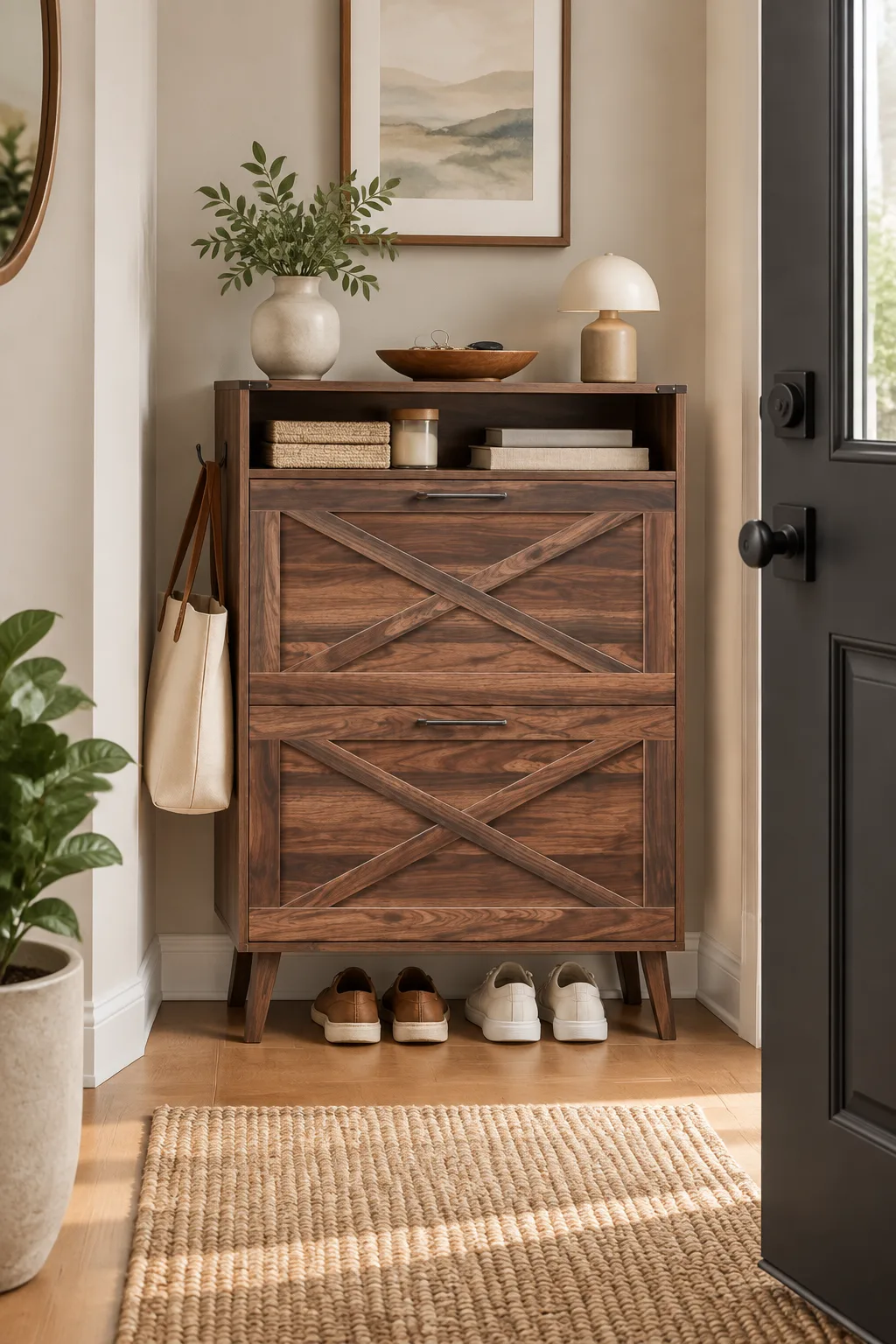
A walnut option with room for keys
The Joaxswe two-drawer cabinet lists a 9.45-inch depth and adds an open shelf and two side hooks. That is useful if the top currently collects keys and mail. Its listed shoe capacity is “up to 16 pairs,” not a promise for bulky sneakers or boots. The walnut finish suits warm wood floors, but the extra open shelf needs a little discipline: leave a spot for a key bowl rather than filling it with display objects.
Check the wall fixing and the shoes you actually wear
Any tall, shallow cabinet should be secured as its instructions require; do not treat the supplied anti-tip hardware as optional decor. Check the wall type and use the fixings suited to it. Keep the most-used shoes near the easiest drawer and measure your tallest pair before assuming boots will fit. IKEA’s STÄLL shoe cabinet instructions also call for wall fixing, a useful reminder that a narrow footprint trades depth for height, not stability.
If you need somewhere to sit to put shoes on, a flip cabinet is not a bench. Compare the four seating and storage shapes in our entryway bench guide instead. If the taped footprint works and you prefer hidden storage, pick a finish you can live with all year, anchor it, and keep the top clear for the things you reach for on the way out.
The VASAGLE and Joaxswe Amazon US listings were checked for dimensions, design and availability before the illustrative photos were made; purchase options are presented in the Content Egg comparison card above. See also the IKEA STÄLL product instructions for the wall-fixing principle.