Space heater vs electric blanket: on a cold evening in a small apartment, which one costs less to run? Keeping the whole place warm so one person isn’t cold on the sofa is the most expensive way to stay comfortable, and this winter it costs more: the U.S. Energy Information Administration expects residential electricity prices to rise about 3%, and slightly higher consumption on top of that to push electricity bills up about 4% for homes that heat mainly with electricity.
I’ve reached for both on plenty of cold evenings without ever knowing what each choice actually cost me, so I pulled the official numbers and did the math. Every assumption is spelled out below, so you can swap in your own rate and your own devices.
The assumptions behind the math
Nothing here is a guess dressed up as a fact. These are the inputs:
- Electricity price: 18.16 cents per kWh, the U.S. average residential rate for August 2026 from the EIA’s Electric Power Monthly (Table 5.6.A), marked preliminary. It’s a national average for a calculation scenario, not your rate. Yours is printed on your bill.
- Space heater: 1,500 watts on high, 750 watts on low. These are the illustrative settings used for the math, not a claim about every model on the market.
- Electric blanket: 100 watts as the working example. Blanket wattage varies by model and heat setting.
- Usage: 4 hours on the sofa in the evening, or 8 hours overnight for the blanket.
The figures assume the device draws its full wattage the whole time, so they are the maximum cost for those hours: a heater cycling on its thermostat, or a blanket on a lower setting, uses less. The label or manual of your own device has its real wattage.
The formula behind every figure below: watts ÷ 1,000 × hours × your price per kWh.
Space heater vs electric blanket: what each one costs
| Scenario | Per hour | Per evening (4 h) | Per month (30 days) |
|---|---|---|---|
| Space heater on high (1,500 W) | 27¢ | $1.09 | $32.69 |
| Space heater on low (750 W) | 14¢ | $0.54 | $16.34 |
| Electric blanket (100 W), evening use | 2¢ | $0.07 | $2.18 |
| Electric blanket (100 W), 8 h overnight | 2¢ | $0.15 per night | $4.36 |
I ran these numbers twice because I didn’t quite believe the gap the first time. A full night under the blanket costs about what the heater burns in half an hour on high. If one person needs to be warm in one spot, the electric blanket wins by a mile.
The math doesn’t compare the same job
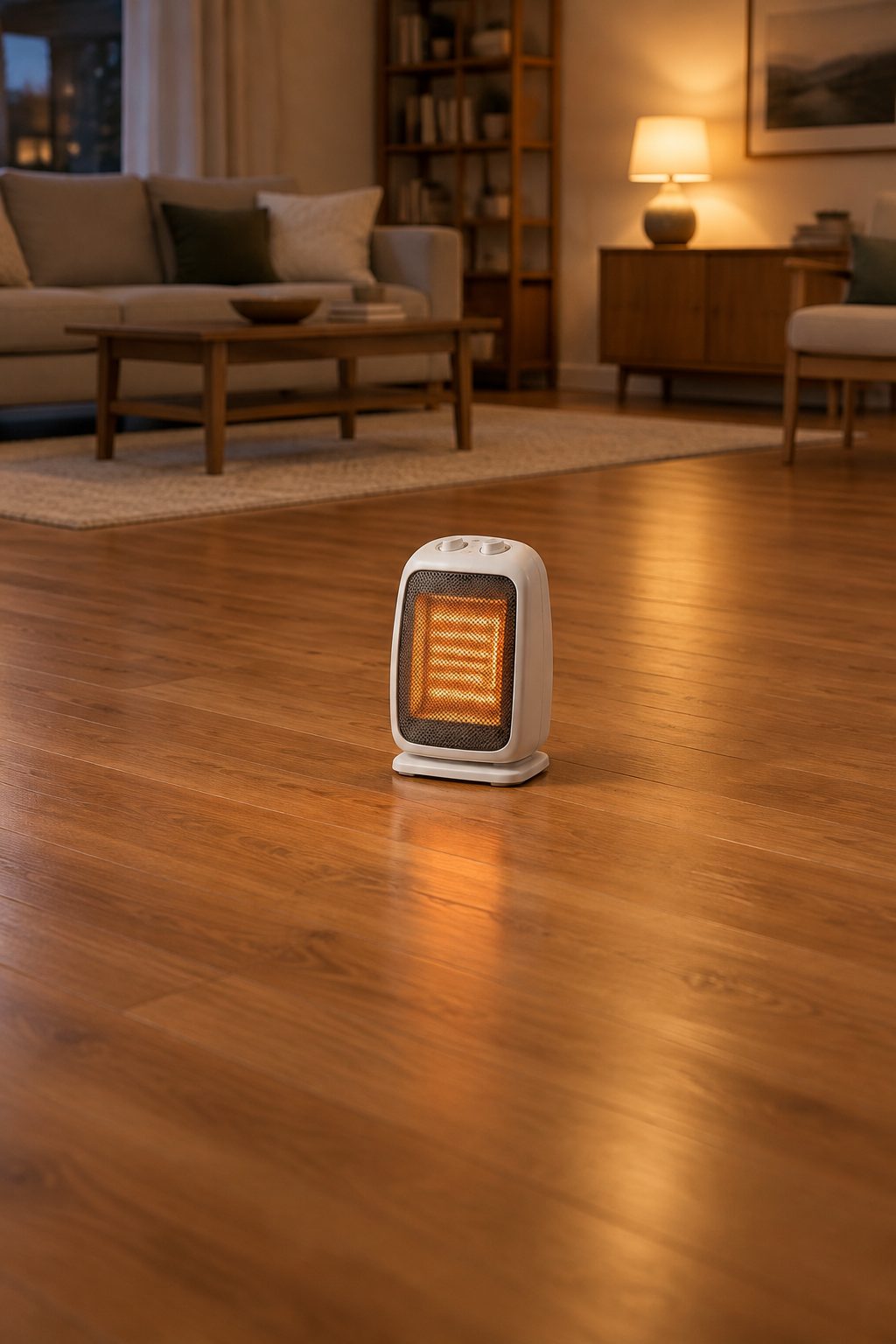
Here’s the catch, and it’s a big one: a space heater and an electric blanket don’t do the same work. A blanket warms the person under it. A heater warms the air in the whole room. That changes which one fits the moment:
- Alone on the sofa or in bed, the blanket is the cheap answer.
- If the room itself has to be comfortable (more than one person, kids playing on the floor, you moving around), only the heater can do that job, and the room’s size and drafts decide how hard it works.
- The blanket only warms the spot it covers; the heater has to warm the whole room, and it draws its wattage the entire time it’s on.
So this isn’t “same heat, different price.” They’re two different tools, and the cost gap is the tiebreaker for the moments when either one would work.
Space heater safety: the notes that matter more than the cents
This part outweighs every number above. The U.S. Consumer Product Safety Commission estimates portable heaters are involved in about 1,600 home fires a year, with an average of 70 deaths and 150 injuries (2020-2022 figures, published January 2026). Their core rules:
- Keep the heater at least three feet from curtains, bedding, furniture, and anything else that can burn.
- Plug it straight into a wall outlet, never an extension cord or power strip.
- Turn it off when you go to sleep.
That last rule is why “leave the heater on all night” isn’t a plan. An electric blanket is the option designed for overnight warmth, but only when the manufacturer says so: use it overnight only if the manual for your model explicitly allows it, and follow its timer and auto shut-off directions. Replace any blanket with a worn cord or a damaged controller.

Run the numbers with your own rate
Your electricity price is on your bill, in cents per kWh. If your rate is 24¢ instead of 18.16¢, multiply every figure in the table by about 1.3. If you pay less than the national average, scale down. The wattage of your device is printed on its label or in its manual.
The formula again: watts ÷ 1,000 × hours × price per kWh. A 1,500 W heater running one hour at 24¢: 1.5 × 1 × 0.24 = 36 cents. You can check the current national average any time in the EIA’s Table 5.6.A linked above, and the EIA’s Winter Fuels Outlook has this season’s price forecast.
Space heater vs electric blanket: which one should you reach for?
If the goal is one warm person in one spot, the electric blanket is the clear winner on cost: a month of overnight use runs about $4.36 at the national average rate, against nearly $33 for a month of four-hour evenings with a heater on high. If the room itself needs to be warm, the heater does a job the blanket can’t, and now you know what that job costs per hour.

At my place, the throw lives on the arm of the sofa and the heater comes out when the whole room needs to feel warm. Most small apartments end up using both at different moments, and that’s fine: the space heater vs electric blanket choice comes down to the job, not a winner. The point is to stop guessing what each choice costs. And if a heated throw is on your shopping list, I wrote up the details I’d check before buying one.