You measured twice. You found the center of the wall, marked the height every design article swears by, and hung the picture exactly where you were told to. That is the promise behind every guide on how high to hang pictures: get the number right and the wall works. Then you stepped back, and something was off. The picture was technically right and visually wrong, floating up there like it had nothing to do with the room.
I’ve had that exact moment above my own sofa, and it took me an embarrassingly long time to understand it: the most repeated rule for how high to hang pictures measures from the floor, but your eye measures from the furniture.
What the 57-inch rule actually says
Design press repeats one number so often it sounds like law: hang art so its center sits 57 inches from the floor. Architectural Digest explains the thinking behind it: 57 inches lands at roughly average eye level, and it is the height galleries and museums typically use, so art on a bare wall reads at a comfortable, consistent height.
Two things get lost in the retelling. First, that number is a starting point for empty walls, hallways, and gallery arrangements measured as one group. Second, the rule says nothing about what stands under the picture. In most living rooms, something does.
Where the rule breaks: the furniture is the real anchor
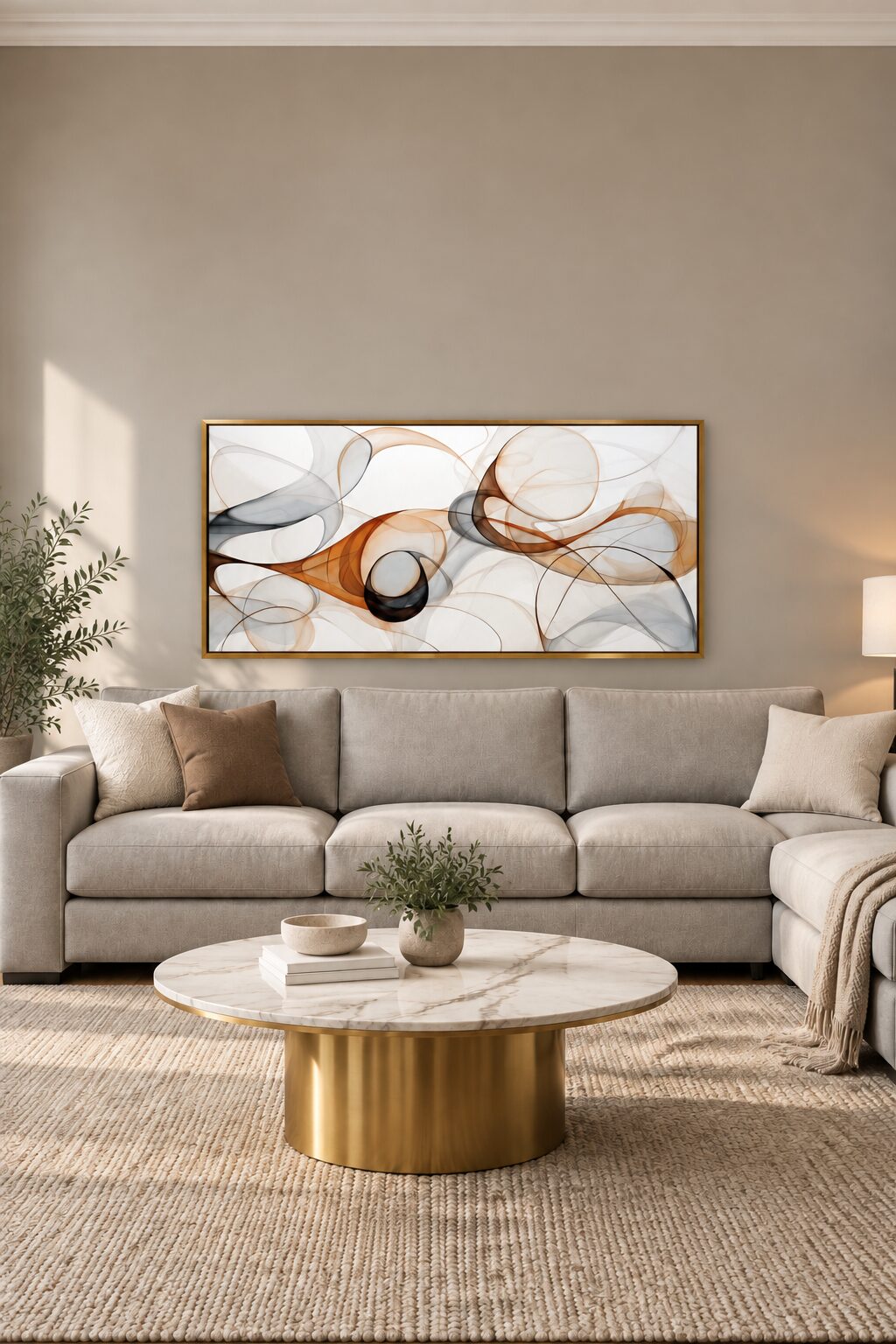
When a sofa, console, or sideboard sits below a picture, nobody reading the room does the math from the floor. The eye checks the relationship between the frame and the furniture. A picture hung at a textbook-correct height can still leave a wide, bare band of wall above the sofa back, and that gap is what reads as wrong. The art looks like it is drifting away from the scene instead of belonging to it.
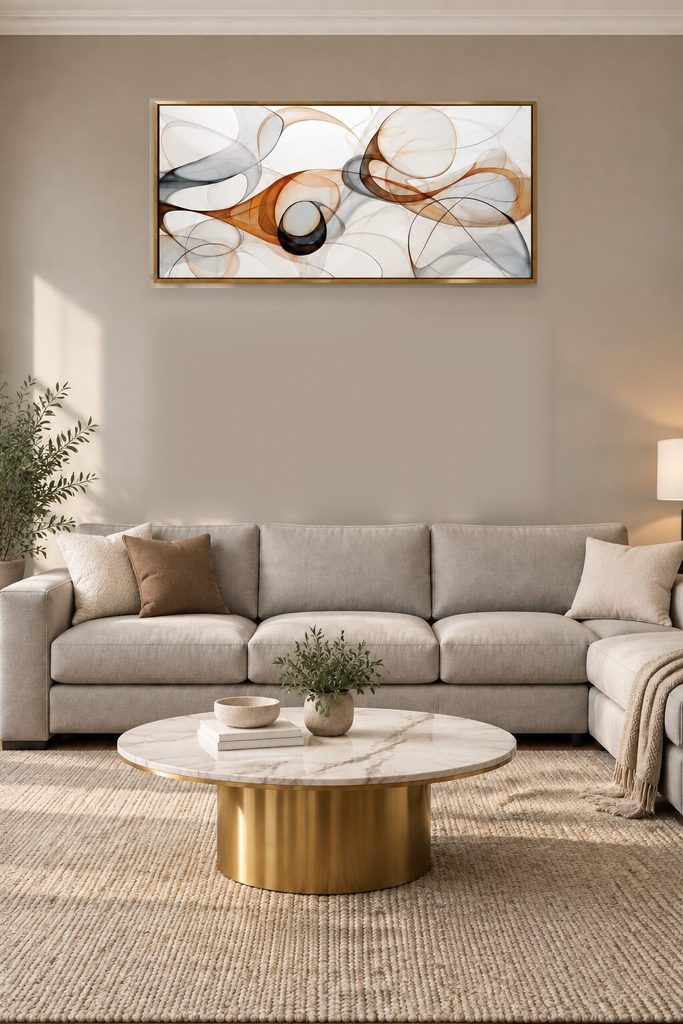
Now lower the same piece so its bottom edge sits just above the sofa back. Nothing else changes: same room, same art, same wall. Yet the whole wall settles, and the picture and the sofa finally read as one composition instead of two strangers sharing a wall. That is how high to hang pictures over a sofa: low enough to belong to it.
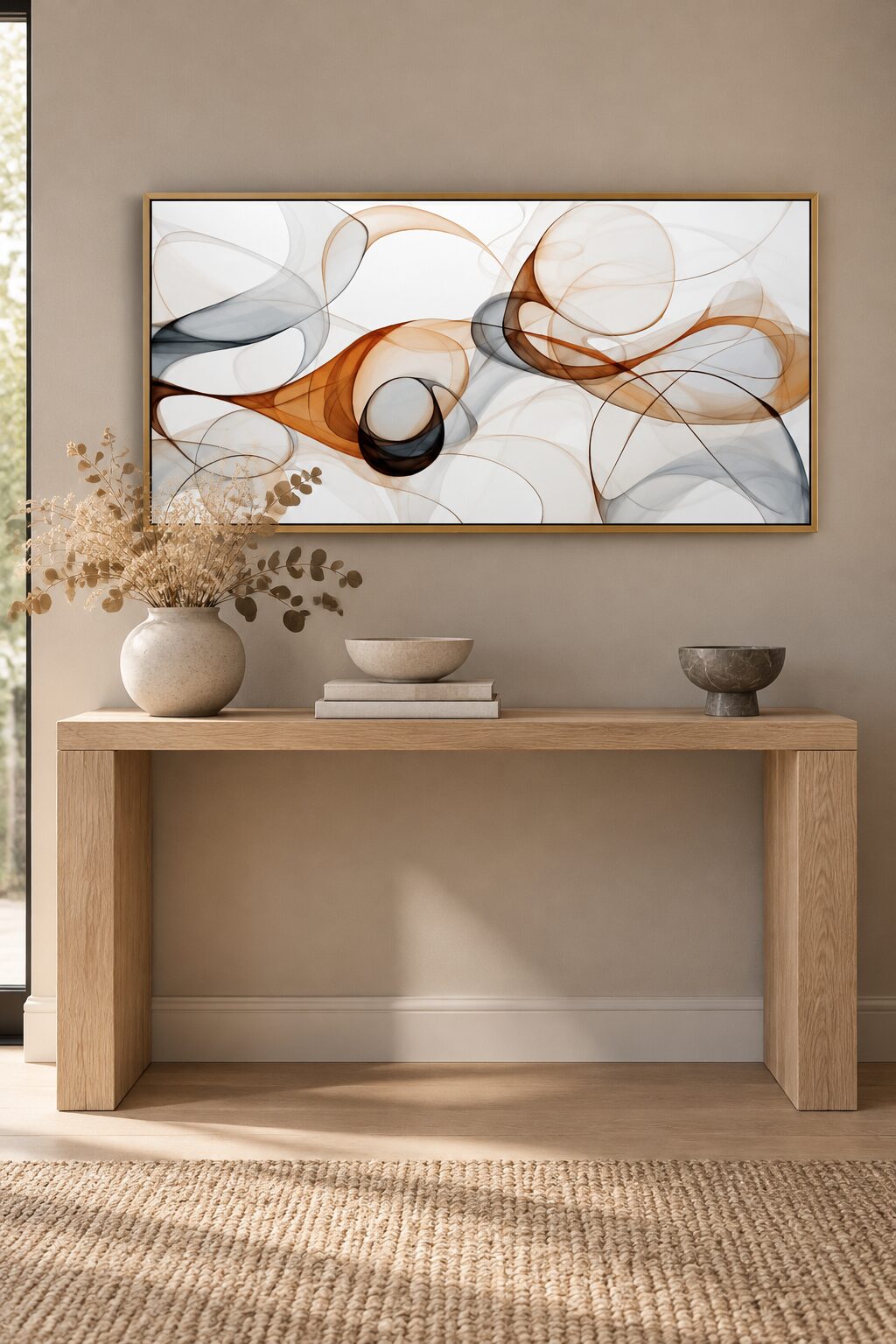
Furniture gets its own numbers in design press. Architectural Digest’s guidance, quoting designer Tyson Ness, is to hang art about 6 to 8 inches above a console or sideboard, and slightly more over a sofa, where the frame has to clear leaning pillows. The same furniture-first logic decides what belongs above a TV.
How high to hang pictures: which anchor to use, when
- Bare wall, hallway, staircase: the floor rule earns its keep here. Center the picture at about 57 inches from the floor and you are done.
- Above a console, sideboard, or mantel: measure from the furniture instead. About 6 to 8 inches of air between the surface styling and the frame keeps them connected.
- Above a sofa: a little more breathing room than a console, but far less than a bare wall. The frame should feel like it belongs to the sofa, not the wall.
- A room you mostly sit in: check the height from the seat where you actually spend time, not only from standing at the door.
- A gallery wall: treat the whole arrangement as one picture. Anchor the center of the group, then build out from it. If you are starting the arrangement from zero, these DIY wall hanging ideas give you pieces to mix in.
If the blank wall itself feels unfinished, a picture-frame molding wall sets a grid that makes every hanging decision easier, and the styling rules for a wall built around a screen translate well to art-led walls too.
A two-minute check before you drill
- Cut a paper template the size of the frame and tape it to the wall. Live with it for a day if you can.
- Look at it from where you actually sit, and from the doorway where you actually enter. Both views count.
- When a piece of furniture stands below, center the picture on the furniture, not the wall, if the two disagree.
- If the picture seems to float, lower it a small step at a time. Pictures hung slightly low read as cozy; pictures hung high read as lost.
The piece in these photos
The artwork in every scene above is a real piece: the KLAKLA abstract framed print, 40 by 20 inches, in a slim gold frame. I used the same print in each photo, and in the sofa pair the only thing that changes is where it hangs. A wide, horizontal format like this one is forgiving above sofas and consoles, because it echoes the shape of the furniture below it.
The 57-inch rule is a fine default for a blank wall. It was never meant to overrule the furniture your eye is actually using as a reference. When the two disagree, let the furniture set the height. Nudge the picture up or down until it reads as part of whatever stands below it, the way the lower hang in the room above pulls the print and the sofa into one composition.