The simplest way to hide TV cords on a small living room wall is a paintable, self-adhesive cover over the visible run. My first choice for a small living room is usually the reversible one: put the furniture where it belongs, measure the outlet path, and cover the visible section on the wall. That is different from running a power cord inside the wall.
Sketch the route before you peel the adhesive
Look at the actual wall outlet and the back of the TV. Is the outlet directly below the screen, or would the cover need a corner? How far is the bottom edge of the screen from the top of the console? Measure that distance and check the length of each section in the kit. Leave access to the plug and any adapter instead of sealing everything behind a fixed panel.
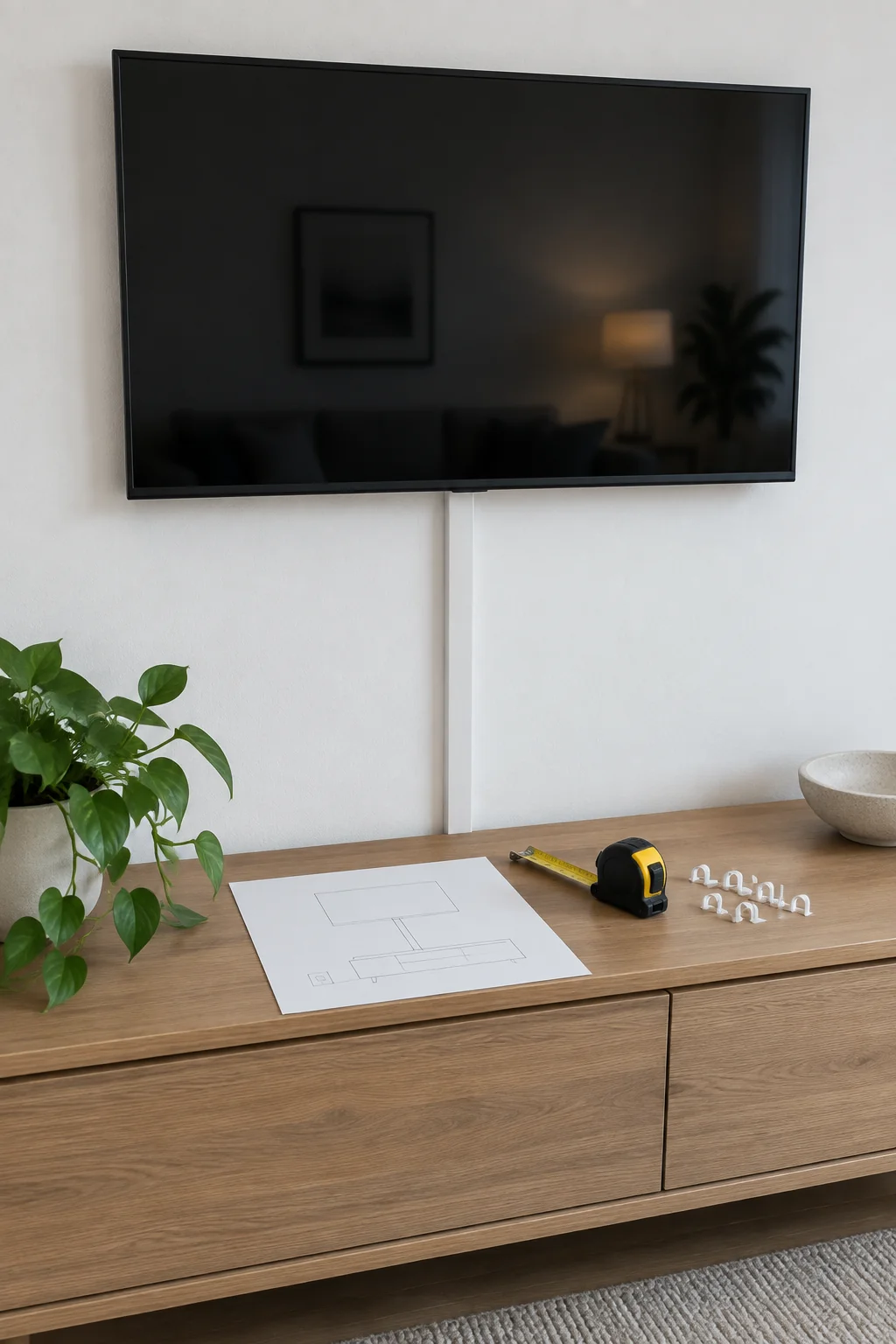
A beige surface raceway for a warm wall
On a cream or beige wall, a narrow half-round raceway reads more like a trim detail than a loose black cable. The D-Line 157-inch beige kit has ten 15.7-inch sections, a 0.78-inch by 0.39-inch profile, self-adhesive backing and fittings. Check your cable thickness and wall finish before choosing it, and follow the manufacturer’s instructions for suitable cords.
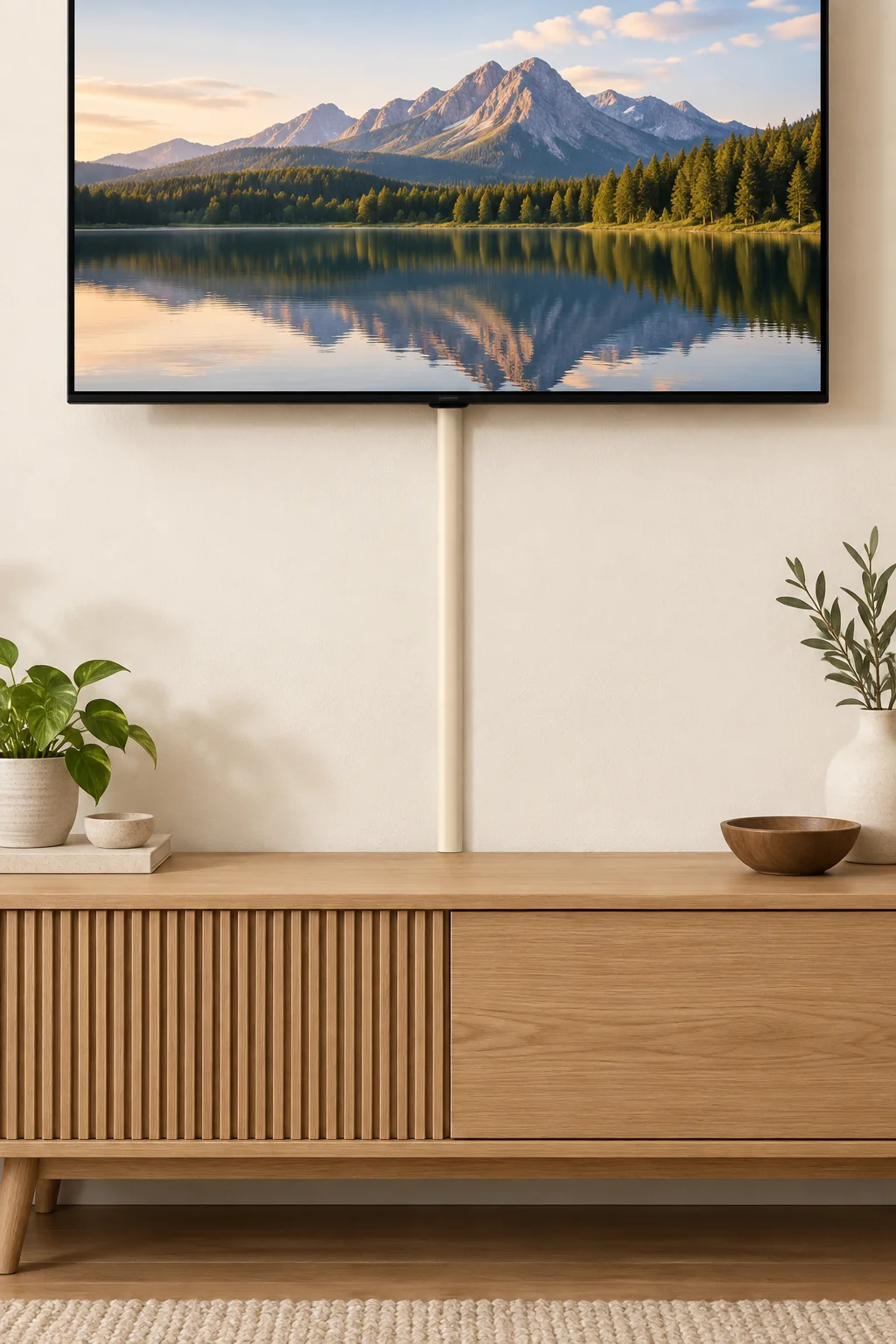
A white option if the wall is white
The Legrand Wiremold CordMate II kit is another on-wall option. Legrand describes it as a paintable, self-adhesive nonmetallic raceway for concealing cords and low-voltage cables. The Amazon listing is for a white 120-inch, 12-piece kit; use the actual product dimensions and manufacturer guidance rather than judging capacity from a styled photo. Paint the cover to match the wall only if the product’s instructions permit it, and test the color first.
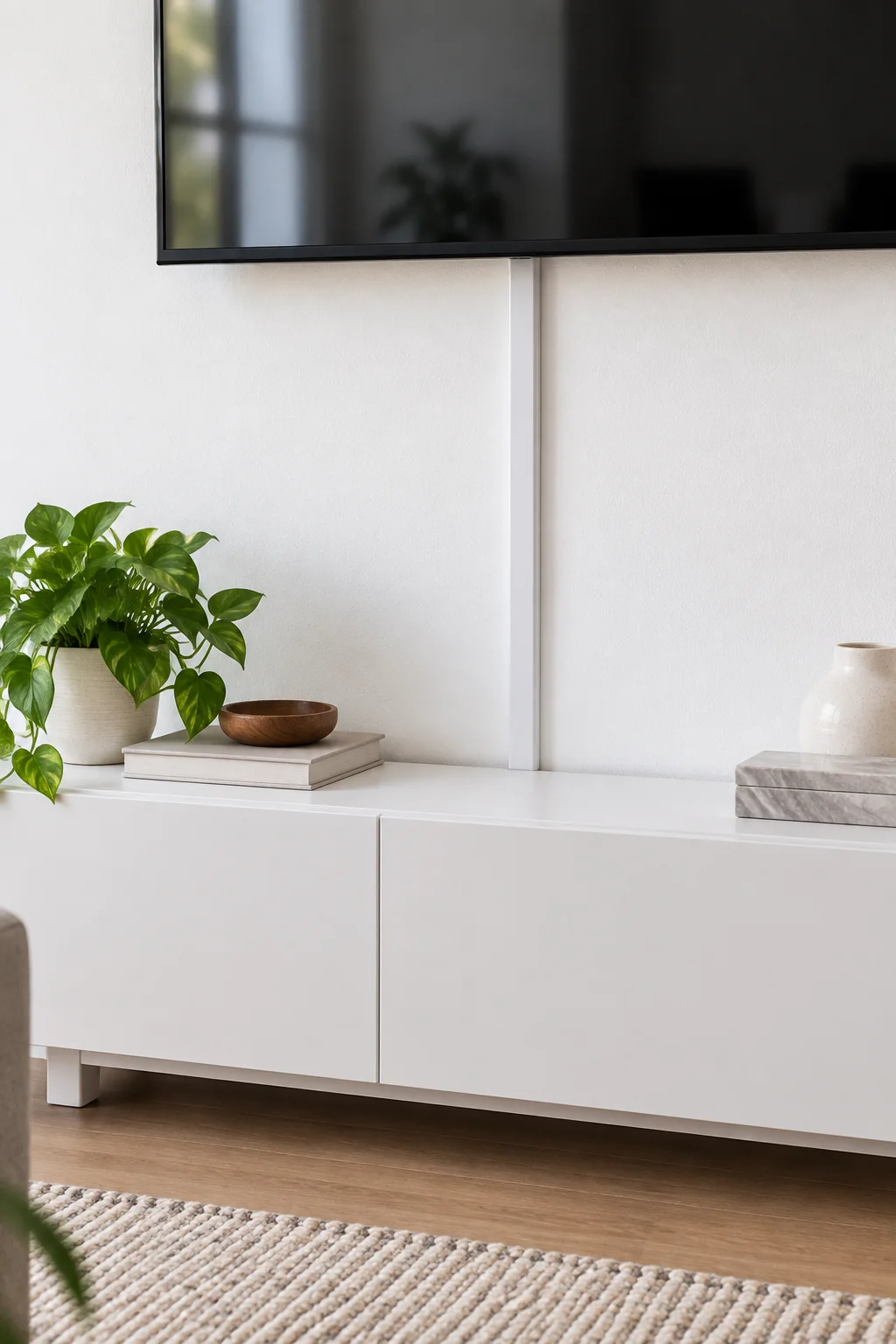


Sometimes the console does most of the work
Before adding a long cover, see how much cable disappears behind a closed media console. The visible run may only be the short stretch from TV to furniture. Keep the outlet and plugs accessible, give electronics the ventilation their manuals require, and do not coil extra cable tightly beside heat-producing gear. If the console cannot safely hold the equipment and its cords, rethink the layout rather than forcing it.
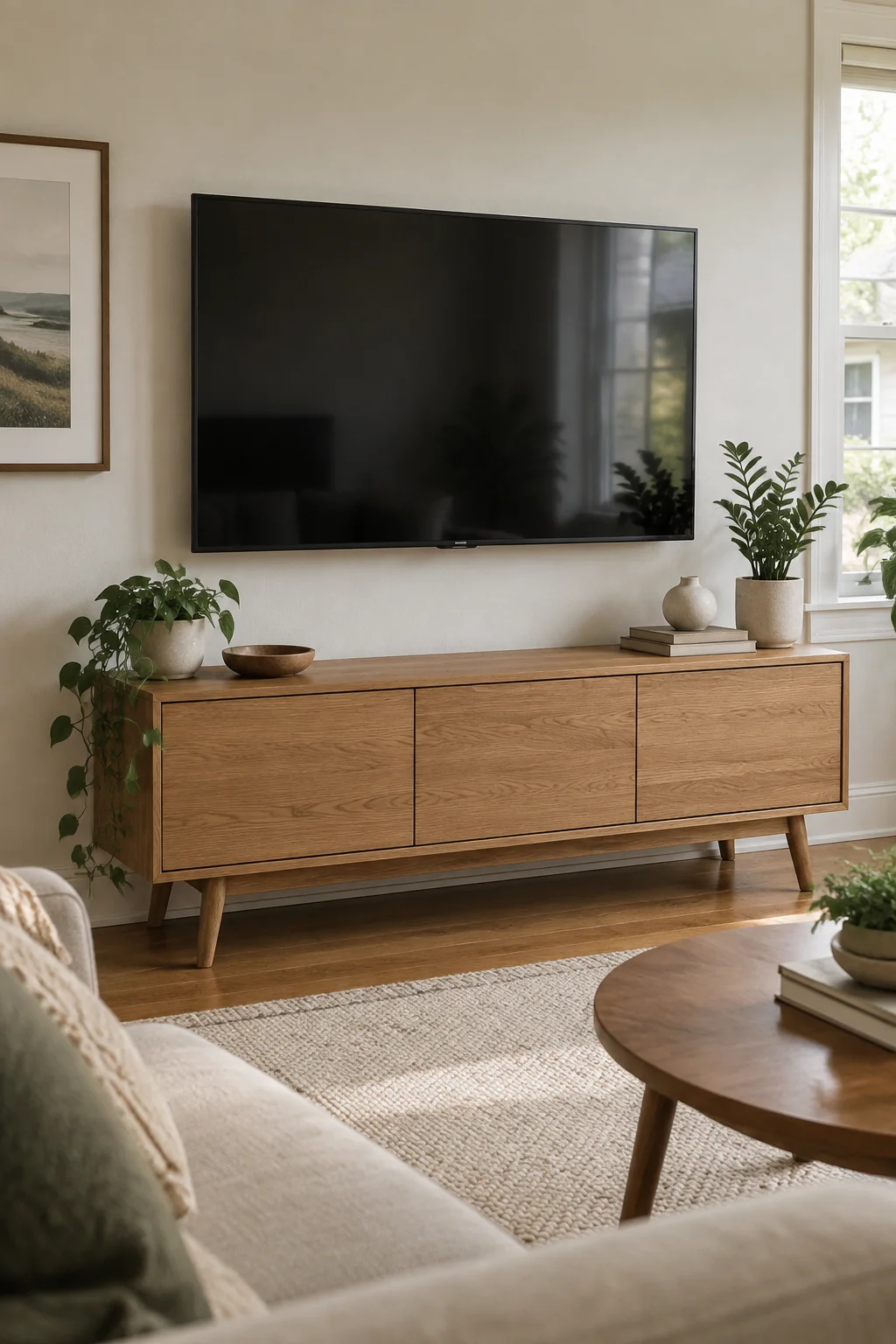
What not to hide inside a wall
Do not feed a TV power cord or extension cord through a hole in the drywall to make it vanish. PowerBridge’s electrical-safety guidance explains that ordinary flexible cords are not a substitute for in-wall wiring. If you want no visible surface run at all, ask a qualified electrician about a properly installed outlet or a suitable listed in-wall power solution and local requirements. Keep low-voltage signal cables and line-voltage power separate as directed by the relevant product instructions. A surface raceway is the simpler design decision here, not permission to improvise concealed wiring.
For the rest of the wall, see the site’s minimalist TV wall ideas. That article tackles composition; this one is about the cord path.