Last July I stood in the garden section of Tractor Supply holding a measuring tape and doing math in my head. The stock tank in front of me was 8 feet across, 2 feet deep, and $179. I had exactly the right amount of backyard to fit it, one determined friend coming over on Saturday, and zero patience for the kind of above-ground pool that takes three weekends to install. Two hours after we got the tank home, I was sitting in cold water with a book and a strong feeling that I’d made the right call.
Stock tank pool ideas run from genuinely simple (tank, hose, done) to more involved setups with decking, filtration, and a shade structure. Most of what you’ll find online skips the part where things go sideways. This covers that part too.
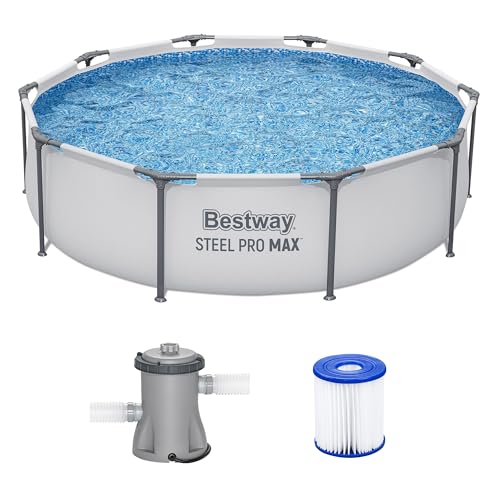
Bestway Steel Pro MAX 10' x 30" Above Ground Pool, Round Metal Frame Outdoor Swimming Pool Set with Filter Pump & Type I Cartridge, Gray
The Stock Tank Pool Ideas Actually Worth Your Time
There are a few directions stock tank pool setups tend to go, and the one that’s right for you depends mostly on how much space you have and how long you want to spend on it in year one.
| Setup Type | Best For | Approx. Cost | Effort |
|---|---|---|---|
| Bare tank, no deck | Testing the concept, renters, small patios | $180–$280 | Low |
| Tank + filtration | Anyone who wants to use it more than once a week | $280–$380 | Low–Medium |
| Tank + filtration + wood deck surround | Small yards where it needs to look intentional | $400–$600 | Medium |
| Inground stock tank pool | Permanent installation, larger budgets | $800+ | High |
Most people land on option 2 or 3. The bare tank setup is fine for a weekend or two, but once you’re in it every other day, you’ll want filtration. The water situation gets bad fast without it.
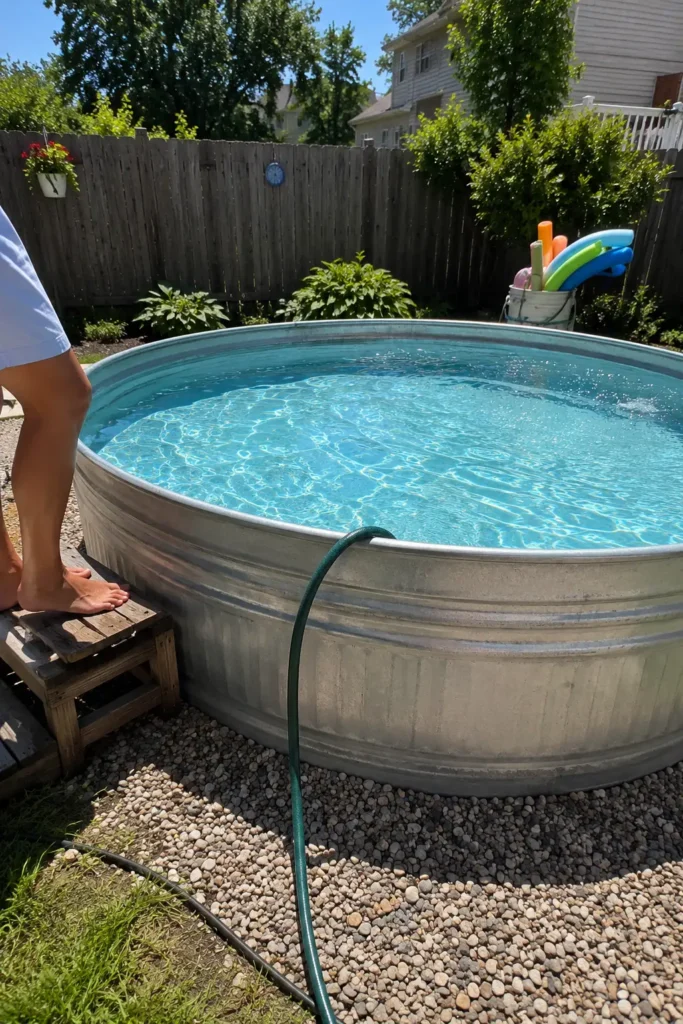
Filtration for a Stock Tank Pool: What You Actually Need
This is the part that trips people up most often. The tank itself is the easy part. Water maintenance is where stock tank pool ideas either succeed long-term or turn into a green, lukewarm situation you don’t want to get into.
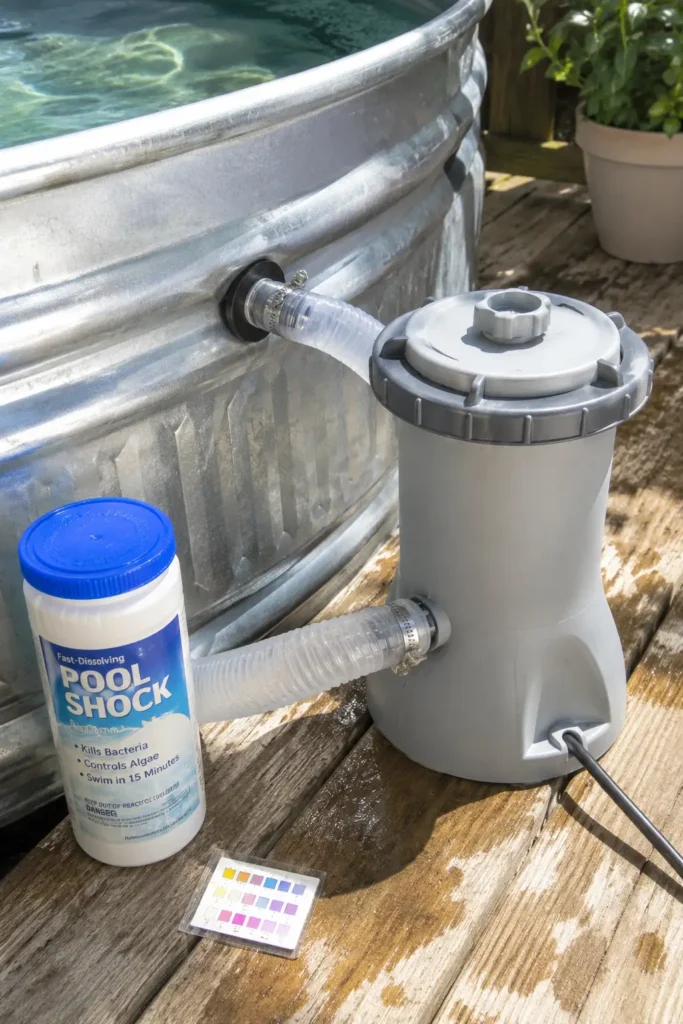
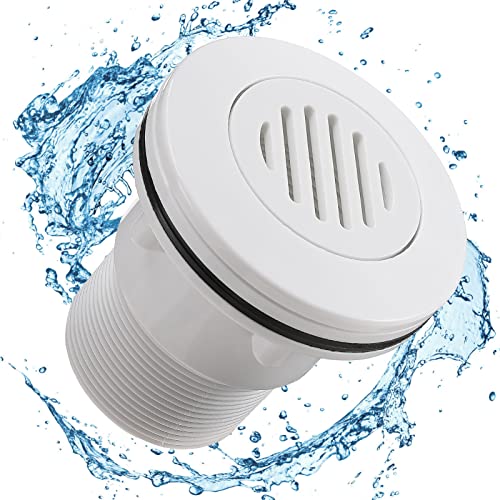
You have two main options for keeping the water clean. The first is a small Intex or similar pump-and-filter combo meant for above-ground pools, the kind that runs around $60–$80 and plugs into a standard outlet. It handles the job for a tank up to about 10 feet. The second option is a dedicated stock tank pool filtration kit, which tends to be easier to set up (the inlet fits the pre-drilled hole on most galvanized tanks) but costs more, usually $120–$180.


Whatever you choose, plan to run it at least 6–8 hours a day and treat the water with a small amount of chlorine or a non-chlorine alternative every few days. The exact routine will depend on how many people are using it and how much sun it gets. A tank that sits in full sun will need more chemical attention than one with afternoon shade.
On chemicals: pool test strips are cheap and worth buying in bulk. Check levels every couple of days at the start until you know how your particular setup behaves. It takes maybe five minutes and saves you from having to drain the whole thing.
Stock Tank Pool Deck Ideas: The Upgrade That Changes Everything
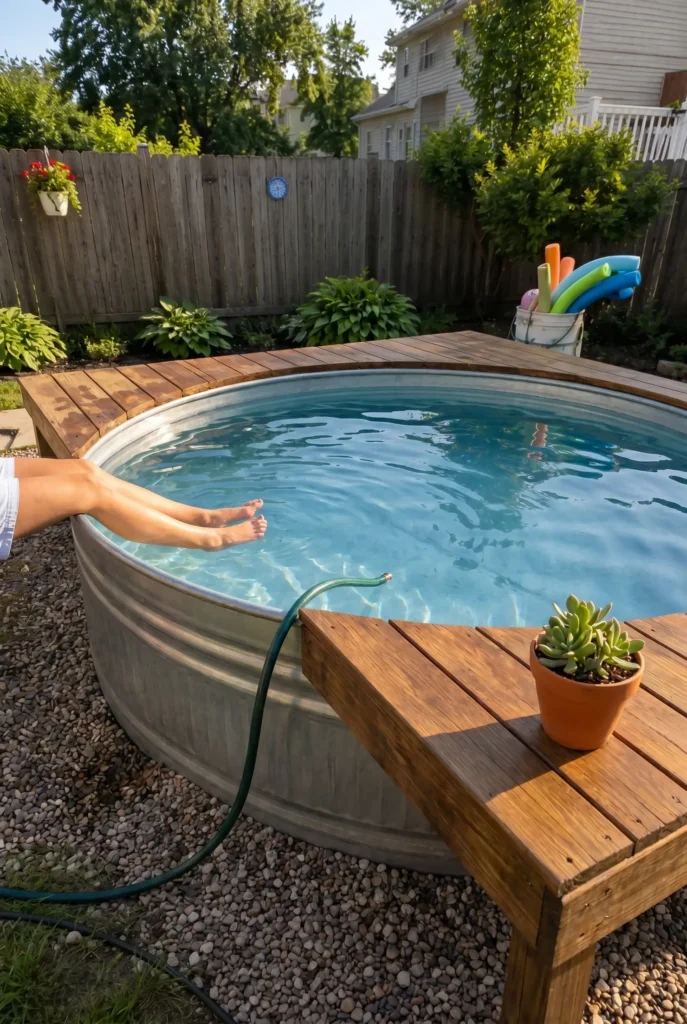
If you’re going to spend any real time in this pool, a deck surround is worth the extra day of work. It takes the setup from “that thing in the yard” to something that actually looks like it was planned. It also solves a practical problem: getting in and out of a 2-foot-deep tank without stepping directly onto grass or gravel gets old fast.
The most common version is a simple L-shaped or three-sided wood platform built from pressure-treated 2×6 boards on a 2×4 frame, sitting at the same height as the tank rim. You don’t need to be a carpenter. The cuts are all straight lines and the whole thing can go together in a Saturday afternoon with a circular saw and a drill. Total materials for a basic three-sided surround: around $80–$120 in lumber depending on the size of your tank.
Before you build: pressure-treated lumber shrinks a bit as it dries, so leave a small gap between boards for drainage. Also think about stain color before you buy wood. The finish sets the whole mood of the space and it’s the thing you’ll regret rushing. I tested a few options on our deck last spring and it saved me from a choice I would have hated by August.
See how that process went: I tested 7 deck stain colors so you don’t have to.
Small Yard Stock Tank Pool Ideas
The main advantage of a stock tank over any other pool option is the footprint. An 8-foot round tank takes up about 50 square feet, less than a queen-sized bed. Even a 6-foot tank, which is plenty deep and holds around 400 gallons, works in a space not much bigger than a parking spot.

A few approaches that work well in tight yards:
- Corner placement with a two-sided deck: push the tank into a yard corner and build deck on the two open sides. It anchors the setup visually and gives you a platform for drinks and towels without taking over the whole yard.
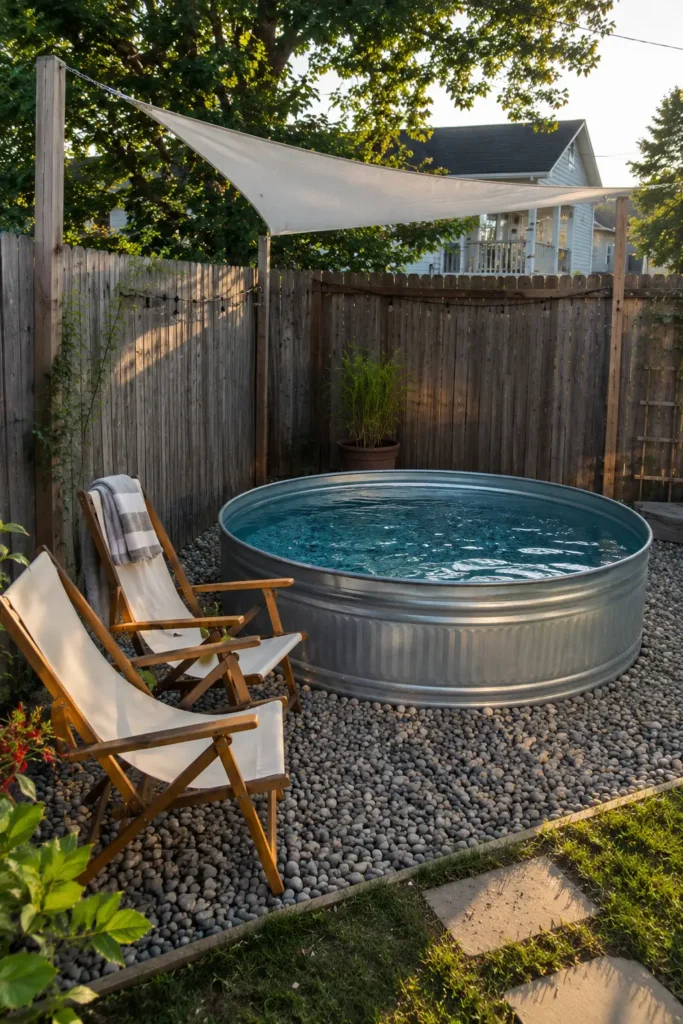
- Gravel pad instead of deck: if the budget is tight or you’re renting, a 10×10 gravel base around the tank looks intentional and drains well. River rock holds up better than pea gravel once wet feet start walking on it.
- Oval tank for narrow spaces: if your usable yard runs longer than it is wide, an oval stock tank fits where a round one won’t. They cost $50–$100 more and are harder to find, but the shape matters in some layouts.
- Shade structure overhead: a shade sail or simple pergola slows down heating and evaporation, and it turns the pool corner into a room instead of just a tank sitting in the grass.
Making It Look Like It Belongs There
Galvanized steel reads as industrial or farmhouse depending on what’s around it. What changes the reading is pretty small stuff.
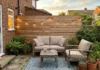
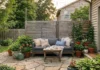
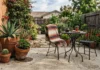
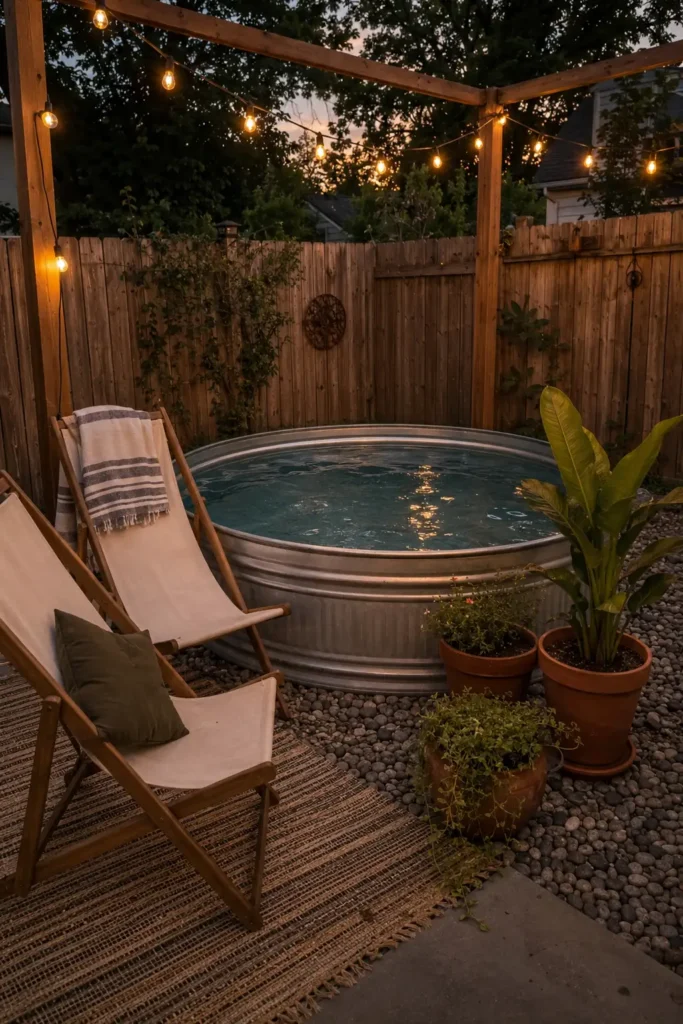
Outdoor string lights above the pool area (warm-toned bulbs, not cold LED) make the space usable into the evening. An outdoor rug under the deck or next to the tank gives the whole corner a defined edge. A couple of plants in terracotta pots at different heights warm up the metal without competing with it. None of this costs much and most of it you probably already own or can find secondhand.
On the backyard side: if the pool is the main event, it helps to have the surrounding space match the energy. A clean, simple approach to the yard itself makes the pool feel intentional. If your backyard is still figuring itself out, this guide on backyard landscaping ideas on a budget has a lot of the same logic applied to the rest of the space.
What I’d Do Differently (Honest Version)
A few things I got wrong on the first round:
I bought a pump that was slightly too small for the tank and upgraded it six weeks later. Save yourself the double purchase: check the gallons-per-hour rating before you buy and aim for a full water pass every 1–2 hours.
I also skipped the drain plug on the first fill. Most galvanized tanks don’t come with a bottom drain, and at the end of the season I was moving water out with a submersible pump for two hours in September sun. A rubber grommet and a PVC ball valve before the first fill takes 15 minutes and costs under $10.
Get a pool cover. Not for looks, but for keeping leaves, bugs, and whatever else out of the water when you’re not in it. A cheap round cover or a tarp cut to size works fine.
Everything else is pretty forgiving. If you’re thinking about it, this is probably the summer to do it.