I spent a month testing deck stain colors so you don’t have to make the same expensive mistakes I did
I stood in the stain aisle at Home Depot for 45 minutes. Forty-five minutes staring at a wall of color swatches that all looked like slightly different shades of brown, with names like “Cedar Naturaltone” and “Semi-Transparent Driftwood Gray” and “Redwood Blend,” with zero idea which one would actually look good on my deck. I grabbed seven samples from three different brands, took them home, and spent four weekends testing, sanding, cleaning, brushing, waiting, and watching.
If you are staring at that same wall right now wondering what color to stain your deck, here is the short version: driftwood gray is the most forgiving color across wood types and house styles, and semi-transparent stain hides imperfections better than transparent without looking like paint.
Deck stain comes in three opacities: transparent (lets the wood grain show, least protection, needs reapplication yearly), semi-transparent (some color with visible grain, the standard choice for most decks), and solid (hides the wood completely, acts like paint, lasts longest but peels over time). The color you pick matters less than picking the right opacity for your wood.
How I tested these deck stain colors
I used pine deck boards, the most common decking material for homes built in the last 20 years. Each board got a full clean and light sand, then two coats of stain applied with a brush (not a roller, because rollers leave uneven edges on boards). I waited 48 hours between coats, then let the final coat cure for a full week before taking photos, walking on them, and putting pots and furniture back. I checked each sample at 1 week, 2 weeks, and 1 month to see how they held up under full sun, morning dew, and evening shade. Before starting, I checked the prep and stain type recommendations from This Old House to make sure I was using the right base method.
The 7 deck stain colors I tested
I picked seven shades across three opacity levels and five brand lines. These are the colors you will see in every Home Depot, Lowe’s, and Amazon search for deck stain colors. Nothing exotic, nothing custom. I wanted to test what real people are actually buying.
| Color | Brand | Opacity | Result after 1 month | Best for |
|---|---|---|---|---|
| Driftwood Gray | Ready Seal | Semi-transparent | Excellent, barely faded | Gray/beige houses, modern styling |
| Natural Cedar | Thompson’s WaterSeal | Transparent | Good, subtle natural look | New pine decks, rustic homes |
| Dark Walnut | Ready Seal | Semi-transparent | Good initially, 25% fade | Dark trim, modern farmhouse |
| Charcoal | Olympic | Solid | Rich but high maintenance | Modern, bold statements |
| Redwood / Mahogany | Thompson’s WaterSeal | Semi-transparent | Good rich color, slight fade | Warm brick houses, Mediterranean |
| Tan / Beige | Seal-Once | Semi-transparent | OK, lacked depth | Safe neutral, blends with any house |
| Semi Cedar Tone | Behr (Home Depot) | Semi-transparent | Very good, held color well | Classic wood look, great for pine |
1. Driftwood Gray, the safest bet
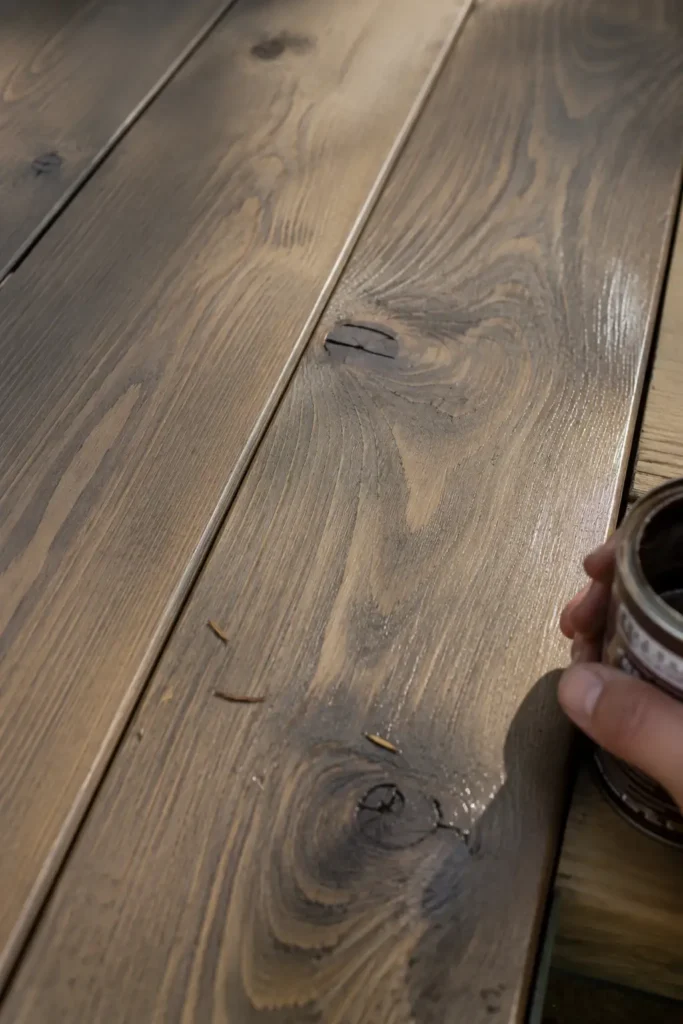
This was the surprise winner. I was nervous about gray on wood. Gray can go blue or purple or straight-up cold. Ready Seal’s Driftwood Gray did none of that. It landed as a warm, dusty gray-brown that looked like weathered beach wood. On pine, it covered the orange undertones that untreated pine has without making the wood look painted.
After a month with full afternoon sun, it faded maybe 10%, the least of all seven samples. No peeling, no blotchiness.

Ready Seal Exterior Wood Stain
2. Natural Cedar, best for wood purists
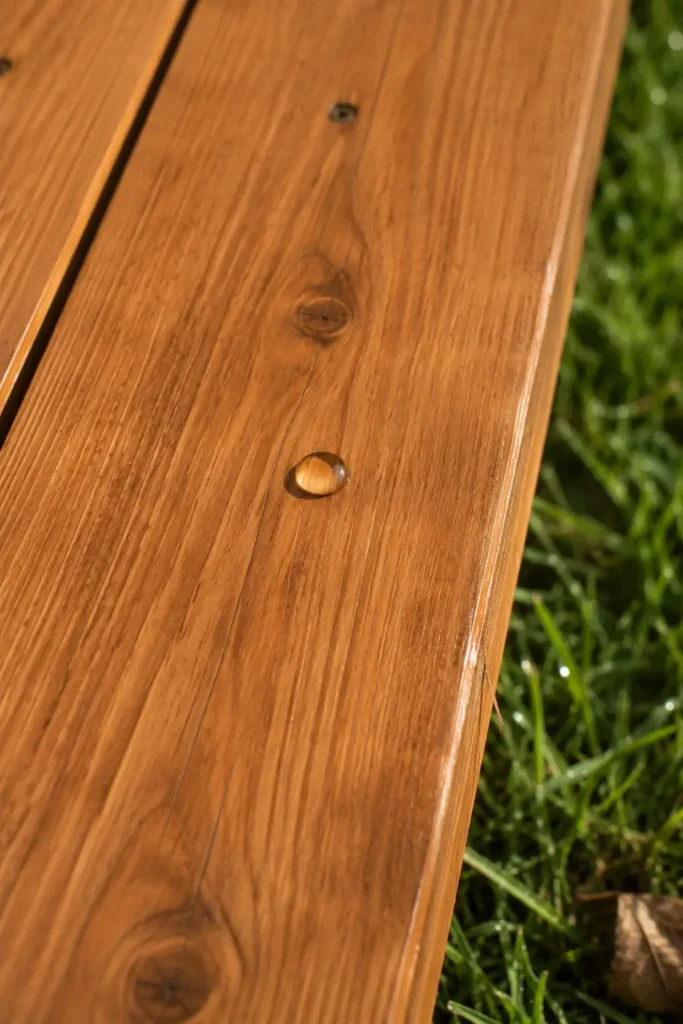
Thompson’s WaterSeal Natural Cedar is about as close to clear as stain gets. It deepened the natural grain of the pine and added a slight warm amber tone, but it did not hide any imperfections. Every knot, every uneven sanding mark, every stain from the old deck furniture showed through. If your deck boards are new or in excellent shape, this gives you that “just built” look. If your deck has seen some life, transparent stain will show all of it.
The water beading on Thompson’s is genuinely impressive. Water sat on the surface for hours without soaking in. That is the real value of this option: if your main goal is protection and you want the wood to still look like wood, transparent Natural Cedar is your choice.
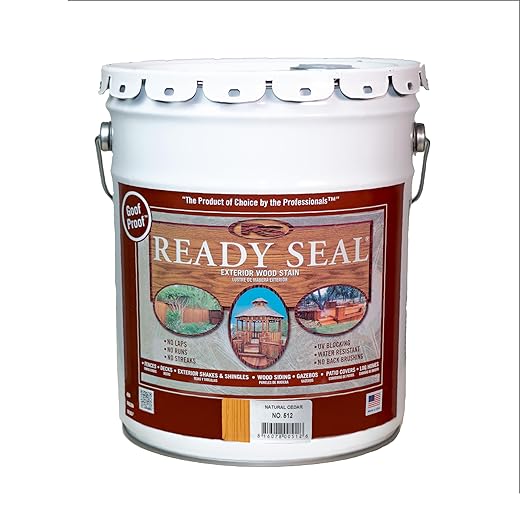
Natural Cedar Stain Ready Seal Exterior Wood Stain
3. Dark Walnut, beautiful but demanding
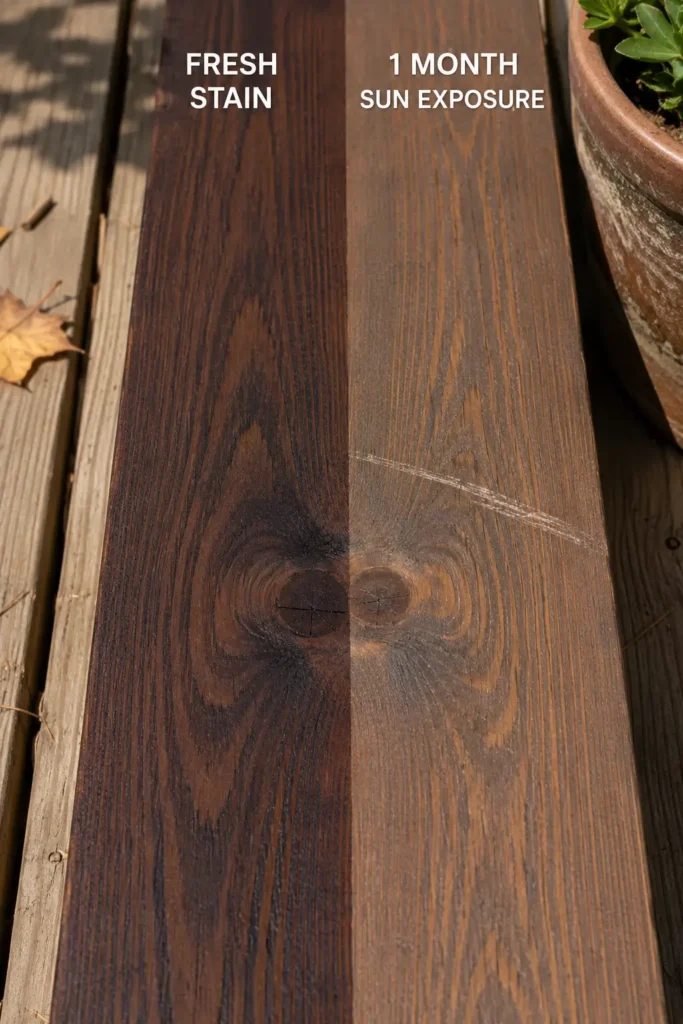
I wanted to love Dark Walnut. The first two days after application, it looked incredible. Rich, deep brown with visible wood grain underneath, like a piece of walnut furniture stretched across the deck. Then the sun hit it for a week. By day ten, the color had visibly lightened. By the one-month mark, it was closer to a medium brown than dark walnut, maybe 25% lighter than the initial application.
Dark colors absorb more heat and UV, so they degrade faster. That is just physics. If you want dark deck stain colors, plan to reapply every year. Dark walnut looks fantastic for about two weeks. After that, you are maintaining a memory of a color rather than the color itself.
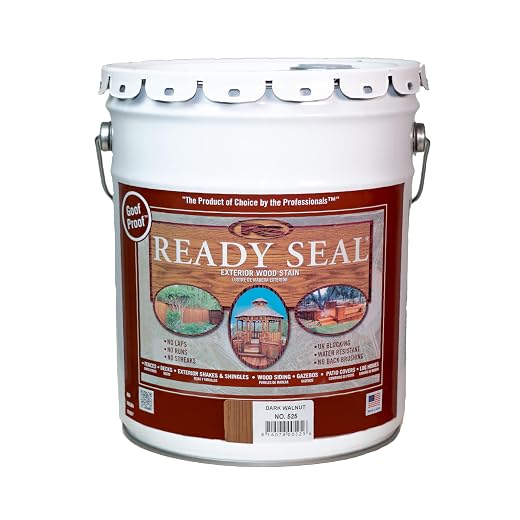
Dark Walnut Ready Seal Exterior Wood Stain
4. Charcoal, the commitment option
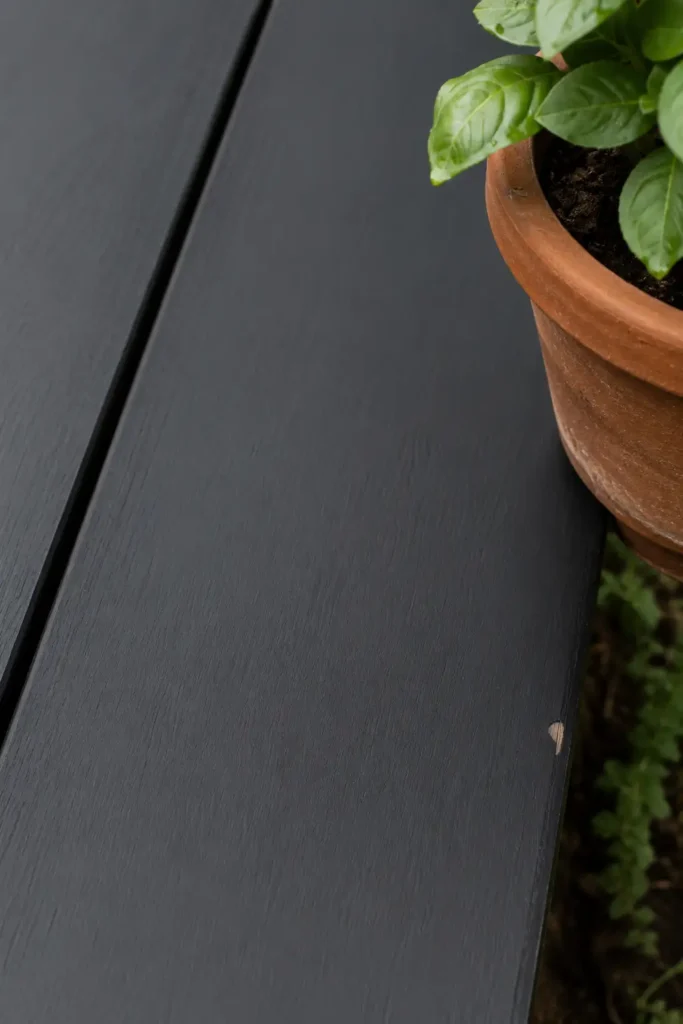
Solid stain is a different category entirely. Olympic Charcoal is more paint than stain. It sits on top of the wood rather than soaking in. The coverage was total: no grain, no knots, just a flat matte black-gray surface. It looked modern and intentional, like a carbonized wood deck.
The problem is maintenance. Solid stain does not fade much (maybe 5-10% in a month), but when it fails, it peels in patches instead of wearing evenly. If you go with solid deck stain colors in a dark shade, plan for the strip-and-reseal cycle every 2-3 years. Every imperfection in the wood becomes a peeling risk.

Charcoal Deck Stain 1 Gal Messmer's
5. Redwood and Mahogany, warmth for brick houses
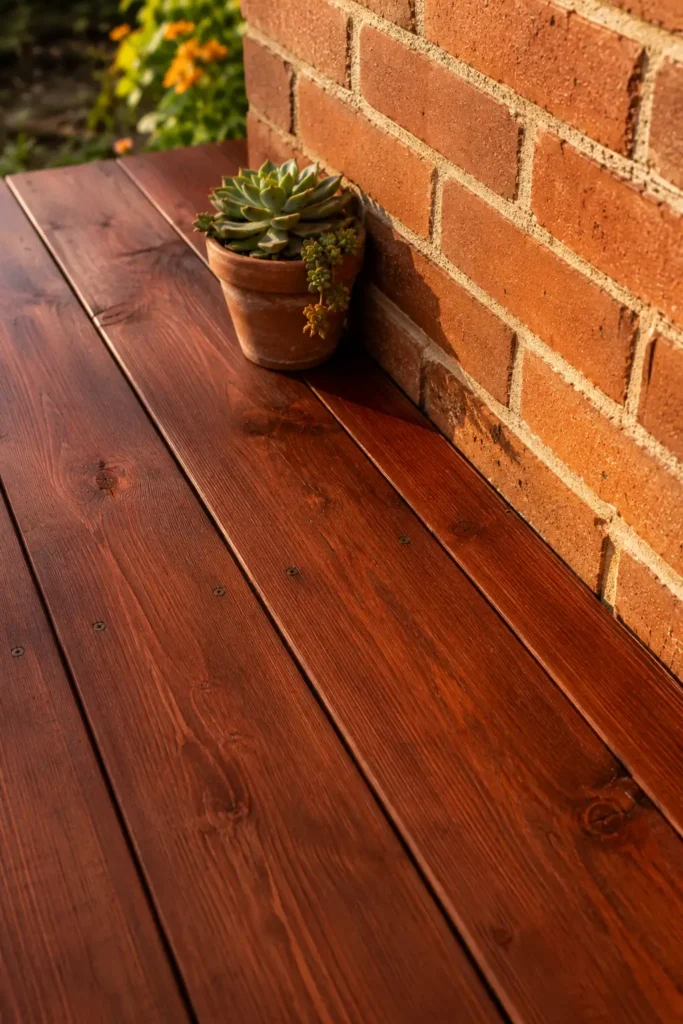
Thompson’s WaterSeal in Redwood is a rich reddish-brown that adds warmth to any setting. On my test boards, it looked particularly good next to warm-toned brick and terra cotta pots. If your house has brick or stone with warm undertones, this is a strong candidate. The color held reasonably well over the month, maybe 15% fade, and wore evenly without patchiness.
This shade works best for Mediterranean, Spanish, or craftsman-style homes where warm wood tones feel natural rather than dated. It is also one of the few deck stain colors that complements a flower garden without clashing with green foliage.

Armstrong-Clark Oil-Based Wood Stain for Decks
6. Tan and Beige, safe but boring
Seal-Once’s Tan is a light beige-brown that does exactly what it promises: it adds a slight warmth without changing the character of the wood. It is the deck stain equivalent of a white t-shirt. It works with everything, stands out with nothing, and nobody will compliment it or criticize it. If your goal is “I just want my deck to look clean and not think about it again,” Tan is fine. If you want your deck to actually look like something, pick a different color.
Performance was solid. Seal-Once uses a nano-penetrating formula that bonds well with wood fibers. Minimal fade, no peeling. It does the job, but it won’t make anyone stop and notice your deck.

Thompson’s WaterSeal Semi-Transparent Waterproofing
7. Semi Cedar Tone (Behr), the best classic wood color
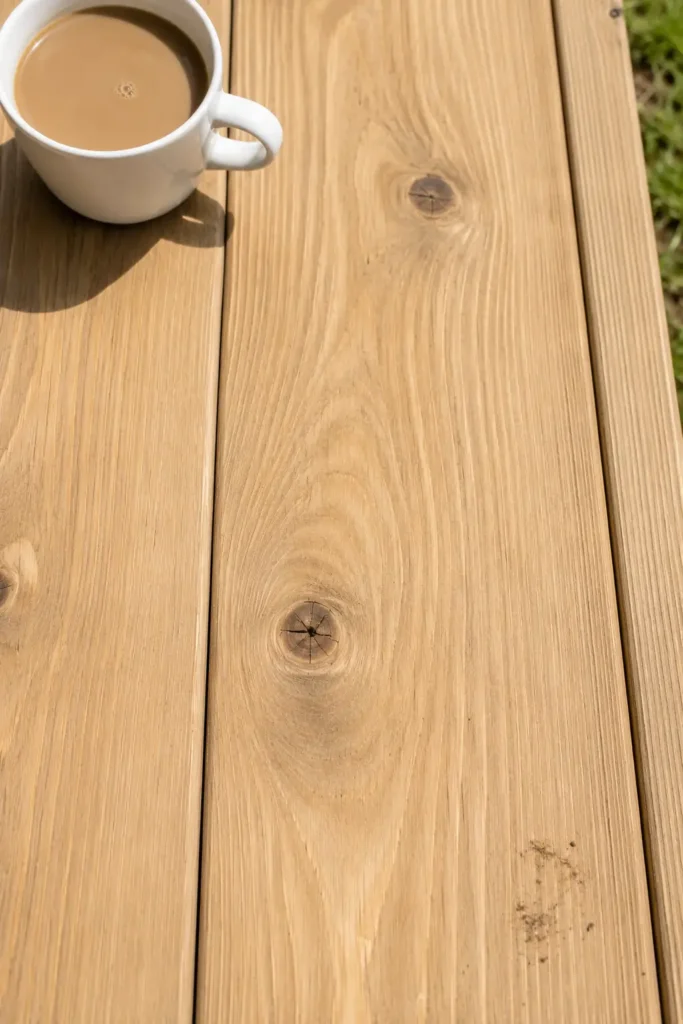
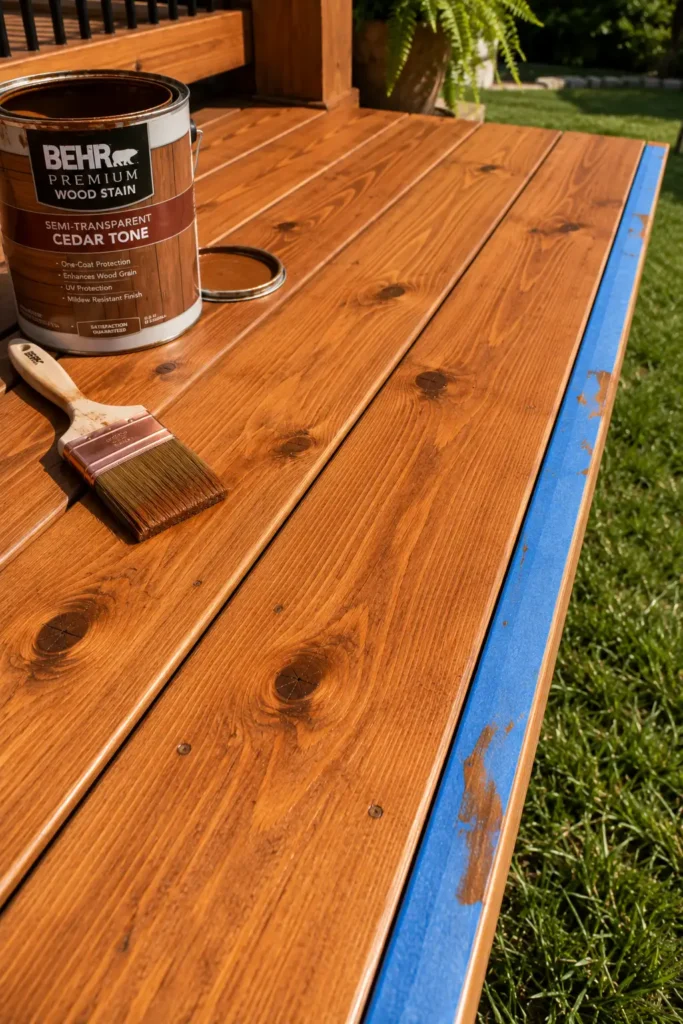
I saved Behr’s Semi-Transparent Cedar Tone for last because it was the best all-around traditional wood color I tested. It hits the sweet spot between a warm goldenbrown and a natural cedar hue, with enough pigment to cover minor imperfections without hiding the grain. It is the color most people picture when they think “stained wood deck.”
Behr’s stain is thicker than Ready Seal or Thompson’s, so application is slightly harder. It dries fast, so you need to work in small sections. But the color retention at one month was excellent, maybe 10% fade. If you want your deck to look like classic stained wood and you are willing to put in the extra effort during application, Behr Cedar Tone is the one.

DEFY Ultra Semi-Transparent Outdoor Wood Stain and Sealer in One
How to choose deck stain colors based on your house
The color of your house exterior is the single biggest factor in how a deck stain will look. Here is a quick reference based on what I saw with my samples:
- Gray or blue house: Driftwood Gray or Charcoal. Avoid warm reds and orange-toned stains.
- White or cream house: Everything works. Cedar Tone and Dark Walnut look classic. Driftwood Gray looks modern.
- Brick (red/warm tones): Redwood, Mahogany, or Cedar. Avoid gray, it clashes with red brick.
- Beige or tan house: Driftwood Gray or Cedar. Keep it warm but not orange.
- Dark or black house: Charcoal or Dark Walnut. Go bold or go home.
What I learned the hard way (so you do not have to)
I made every beginner mistake during this test so you can skip them. Here are the ones that cost me time and money:
- Do not trust the swatch card. The color on a Home Depot rack card looks nothing like the color on your actual wet wood. Buy a sample quart and test on a hidden board.
- Your wood matters more than the stain. The same Driftwood Gray looked different on new pine vs. weathered pine vs. pressure-treated wood. What your deck is made of changes everything.
- Sunlight changes everything. A color that looks perfect at 9 AM in the shade can look washed out at 2 PM in full sun. Look at your test boards at three different times of day before deciding.
- Do not stain in direct sun. The stain dries too fast and leaves lap marks. I ruined one board learning this. Wait for a cloudy day or work in sections small enough to keep a wet edge.
- One coat is not enough. Every single one of my samples looked streaky after one coat. The second coat made them all look like the product photos.
Budget breakdown: what this actually costs
A 200-square-foot deck (roughly 12×18 feet, a common suburban size) costs between $60 and $180 for stain alone depending on brand and quality. Ready Seal and Thompson’s WaterSeal sit around $60-80 for a 5-gallon pail. Behr and Olympic are closer to $100-120. Seal-Once is the premium option at $150-180 for the same coverage.
If you hire someone, add $400-800 for labor depending on your area. But this is genuinely a weekend DIY project if your deck is in good shape. The total cost of doing it yourself: about $80 for stain, $15 for a brush, $10 for cleaner, $5 for painter’s tape, and a Saturday afternoon.
Which deck stain color should you pick?
If I had to pick one color for my own deck right now: Driftwood Gray from Ready Seal. It looked the best after a month, it matched my gray house without clashing, and it hid the imperfections that ten-year-old pine boards inevitably have. My second choice would be Behr Semi Cedar Tone if I wanted a classic wood look and was willing to put in the extra application care.
Dark Walnut and Charcoal look dramatic for about two weeks. After that, you are fighting UV fade and maintenance. If you love the look and are OK with annual reapplication, go for it. Just know what you are signing up for.
If you are planning a full backyard refresh this season, the deck is where I would start. It is the foundation of your outdoor space the same way flooring sets the tone inside. Once you have the right stain color down, everything else (furniture, plants, privacy screens) falls into place.
And if you are wondering whether the same stain can work for indoor pieces, I have been experimenting with dark walnut finishes on indoor furniture too. Short answer: yes, but you need a different product. Do not use deck stain on your coffee table.