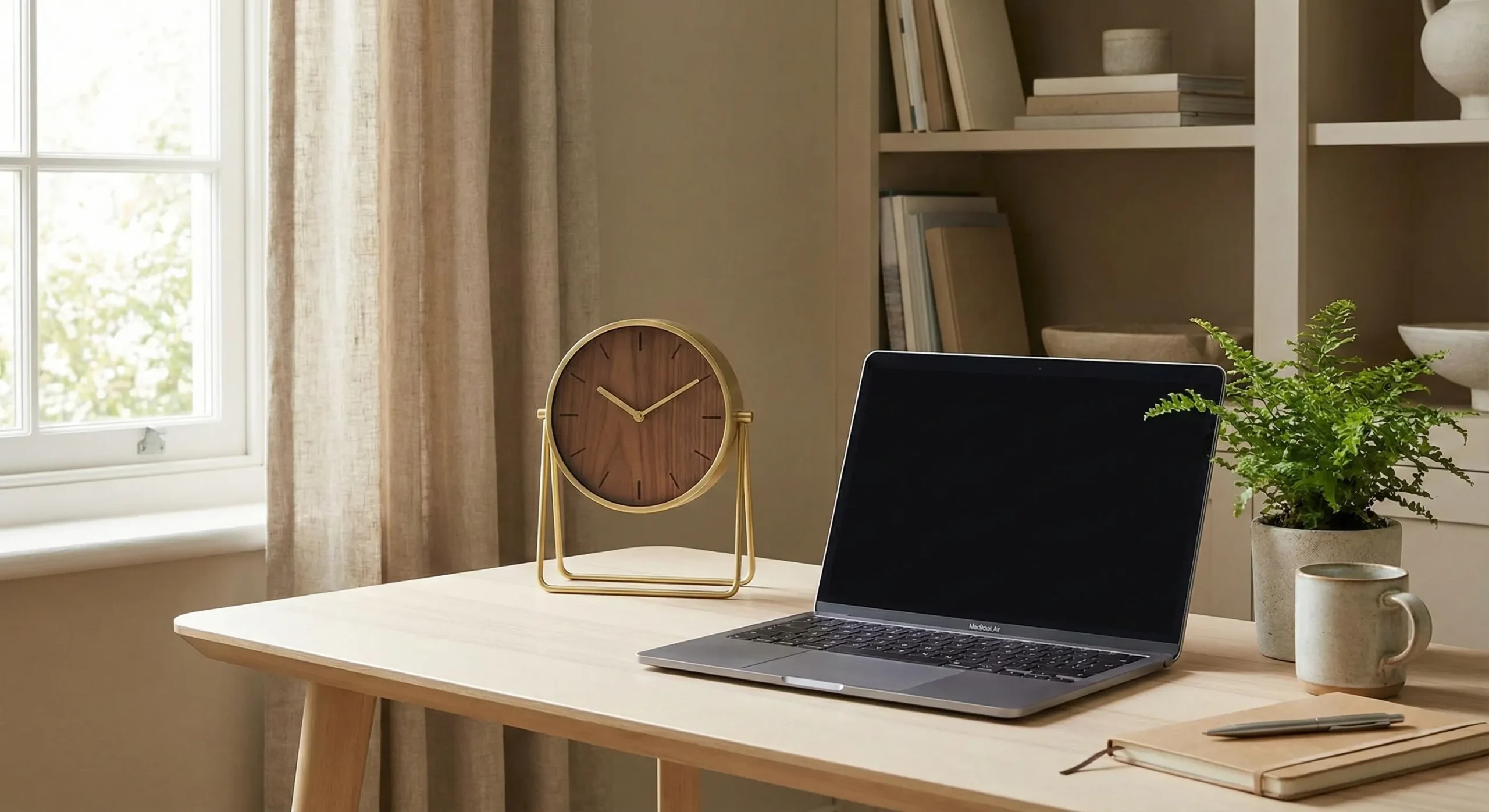
The Desk Clock That Became the Heart of Your Workspace

I spent months working from a desk that felt incomplete. Something was missing, but I couldn’t figure out what. Then a friend suggested a desk clock, and honestly? I hesitated. My phone already showed the time. My computer had a clock in the corner. Why add another one?
But here’s what I didn’t expect: that small clock changed how I worked. It wasn’t just about telling time. It became a focal point, a quiet presence that helped me stay grounded during long sessions. The way a desk clock becomes part of your daily routine, sitting there quietly marking time while you work, until one day you realize you’ve been glancing at it every few minutes without even thinking about it.
If you’re considering a desk or shelf clock, you’re probably facing the same questions I had. Which one? Where does it go? Does it actually matter? Let’s walk through what you need to know to choose the right clock for your space.
How to Choose a Desk or Shelf Clock
Choosing a desk or shelf clock isn’t just about picking something that looks nice. You need to consider how it’ll function in your specific space, how it fits with your existing decor, and what you actually need it to do. Let’s break down the key factors that should guide your decision.
Start with size. Measure the space where you plan to place the clock. For a desk, you typically want something between 4 and 8 inches in diameter or width. Anything smaller gets lost among your papers and supplies. Anything larger starts competing with your monitor or taking up valuable workspace. For shelves, you have more flexibility, but you still want to maintain proportion. A clock that’s too large overwhelms the display. One that’s too small disappears.
Think about visibility, too. Where will you be when you look at this clock? If it’s on your desk, you’ll likely be sitting directly in front of it, so readability from that angle matters. If it’s on a shelf across the room, you need larger numbers or a display that’s clear from a distance. Consider the lighting in the space as well. A clock with poor contrast won’t help you if you can’t read it in your office’s typical lighting conditions.
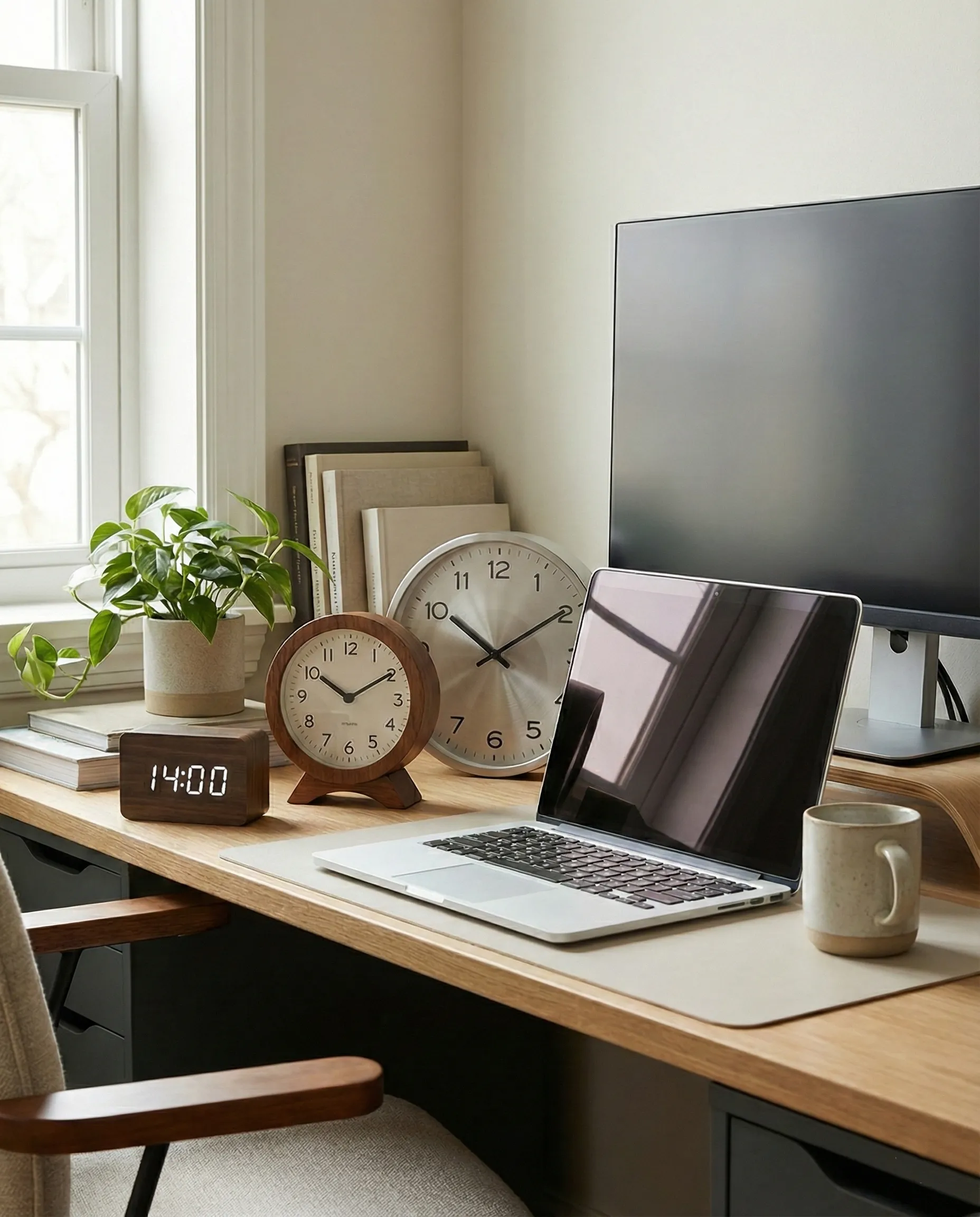
Now, analog versus digital. This choice affects both style and function. Analog desk clocks work best for traditional and rustic spaces, but only if you choose one with a quiet mechanism: otherwise the ticking becomes distracting in a quiet home office. They add warmth and character, and they work beautifully in spaces where you want decorative elements that feel timeless. Digital desk clocks are practical for workspaces, but skip the overly bright LED displays unless you need them for accessibility, they can create glare that strains your eyes during long work sessions. Digital clocks excel when you need precise time at a glance, and they often include additional features like date, temperature, or alarm functions.
Noise level matters more than most people realize. If you’re placing a clock in a bedroom or a quiet home office, the ticking of an analog clock can become a constant distraction. Some people find it soothing, but many find it interrupts their focus. Test the clock if possible, or look for models specifically designed to be quiet. For workspaces where you need silence, digital clocks eliminate this concern entirely.
Power source is another practical consideration. Battery-powered clocks offer the most flexibility in placement, no need to worry about outlet locations or visible cords. They’re also portable if you want to move them around. Plug-in clocks eliminate battery replacement, but they limit where you can place them and add cable management to your setup. Mechanical clocks are beautiful but require regular winding and maintenance.
Style matching matters, but it’s not just about picking something that matches your color scheme. Consider the overall aesthetic of your space. A sleek modern desk calls for a minimalist clock. A traditional home office with wood furniture works better with classic or vintage styles. Industrial spaces can handle bold, statement-making clocks. When coordinating with your existing home decor, the goal is cohesion, not matching.
Budget ranges vary widely. You can find functional desk clocks starting around $15 to $20, but they’re often basic and may lack the quality you want for a piece that sits in your daily view. Mid-range options between $40 and $100 offer better materials, quieter mechanisms, and more thoughtful design. High-end clocks above $100 typically feature premium materials, exceptional craftsmanship, and sometimes mechanical movements. Decide what matters most to you: function, aesthetics, or both.
Finally, consider what functionality you actually need. Do you want an alarm? Temperature display? Date? Multiple time zones? Each feature adds complexity and cost, so be honest about what you’ll actually use. A simple clock that does one thing well often beats a complicated one that does many things poorly.
Styling and Placement Guide
Once you’ve chosen your clock, placement becomes the next challenge. Where you put it affects both its functionality and how it contributes to your space’s overall aesthetic. Let’s look at the best practices for different locations.
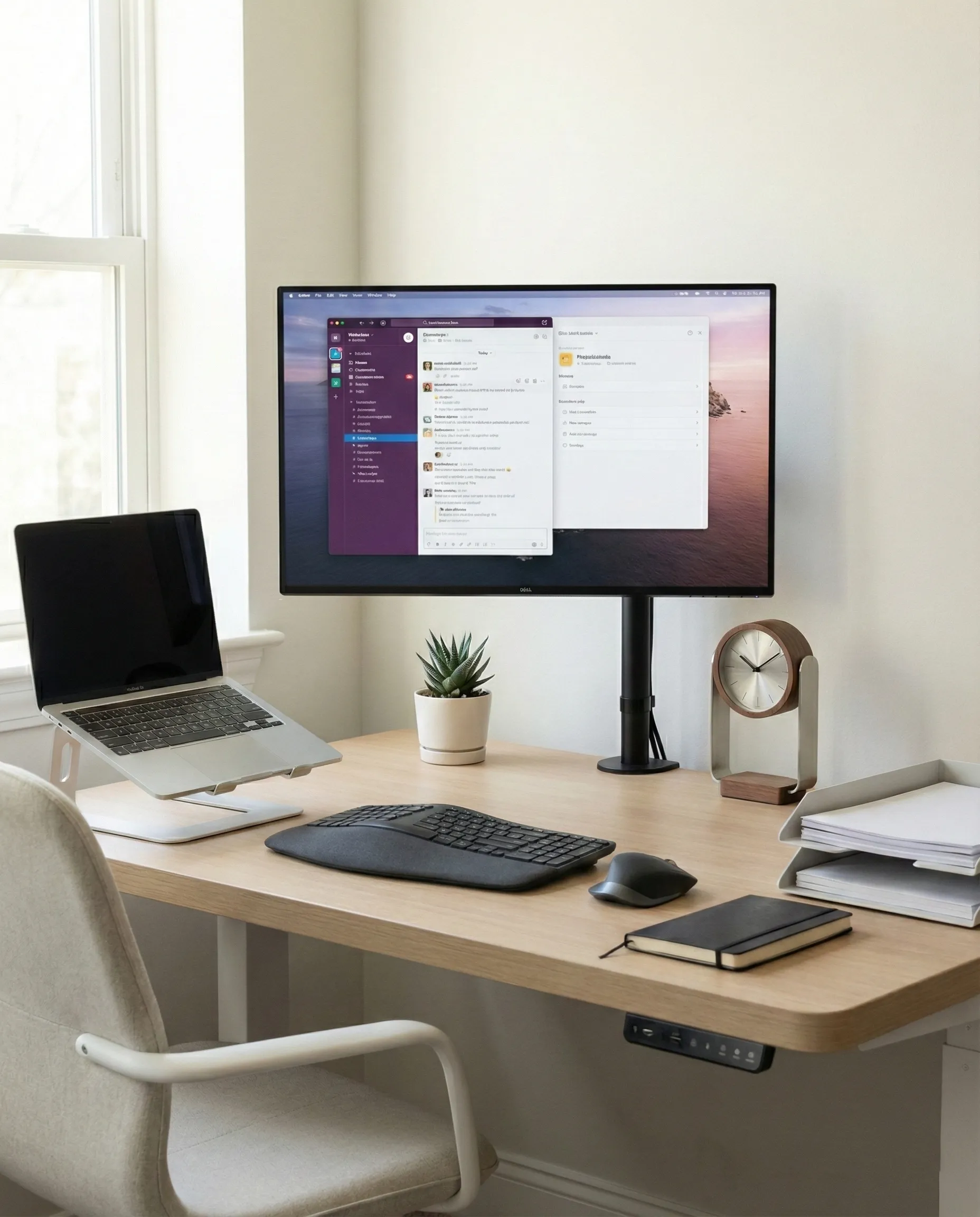
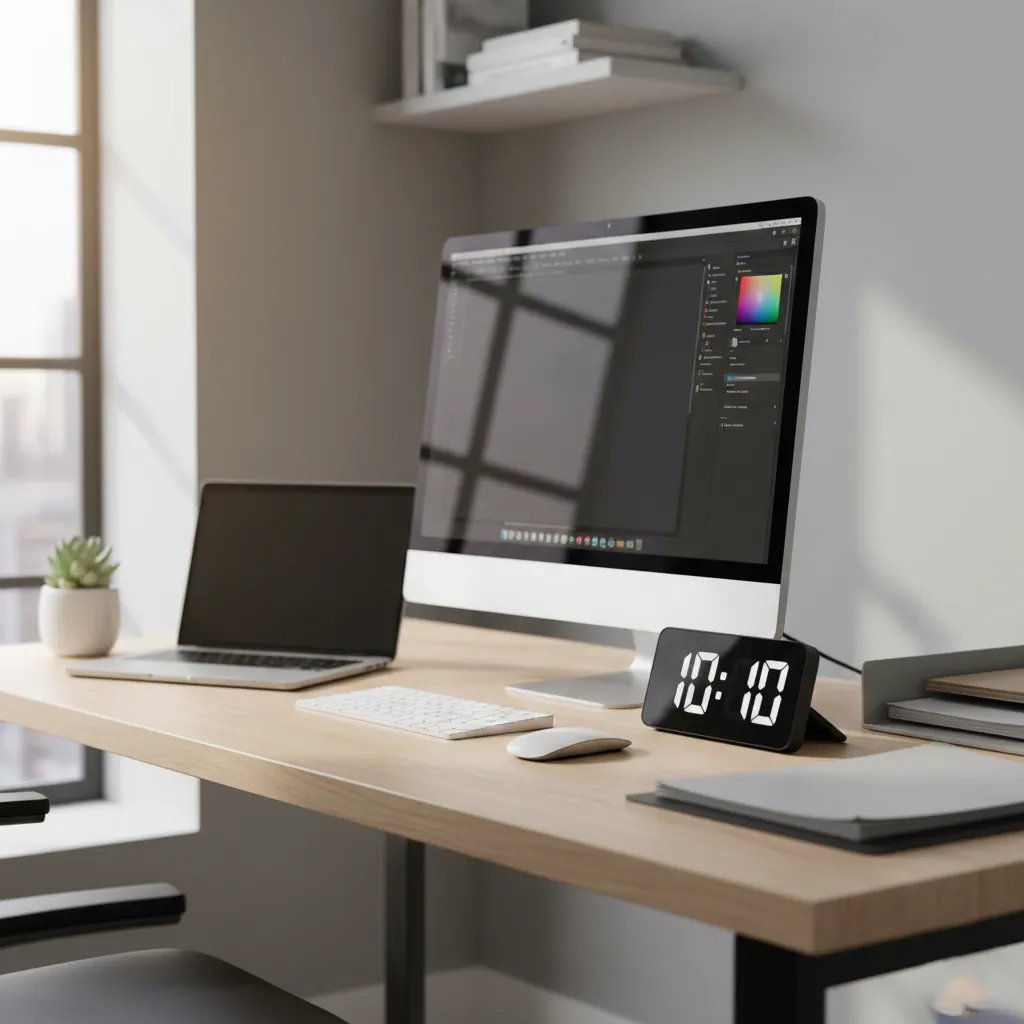
For desk placement, position the clock where you can see it without turning your head. The ideal spot is usually to the side of your monitor, slightly behind your keyboard area. This keeps it in your peripheral vision without competing for attention with your screen. According to ergonomic guidelines for workspace design, avoiding placing it directly in front of you between you and your monitor, that creates visual clutter and forces your eyes to refocus constantly.
Height matters, too. The clock should sit at roughly eye level when you’re in your normal working position. If it’s too low, you’ll have to look down, which breaks your workflow. If it’s too high, it feels disconnected from your workspace. For most standard desks, this means the clock should sit on the desk surface or on a small riser, not mounted high on a wall above your desk.
On shelves, clocks work best when they’re part of a curated display rather than standing alone. Group them with books, plants, or other decorative objects to create visual interest. The key is balance don’t let the clock dominate the shelf, but don’t let it get lost either. Consider the height of surrounding items. A clock placed between taller books creates a natural focal point. One placed next to a tall vase might get overshadowed.
Style coordination goes beyond matching colors. Think about the overall mood you want to create. A minimalist clock reinforces clean, uncluttered spaces. A vintage clock adds warmth and character to traditional rooms. An industrial clock brings edge and texture to modern spaces. The clock should feel like it belongs, not like it was added as an afterthought.
Color considerations depend on your goals. Sometimes matching your clock to existing decor creates a cohesive, harmonious look. Other times, a contrasting color creates a deliberate focal point. If your space is mostly neutral, a clock in a bold color can add interest. If your space is already colorful, a neutral clock provides balance.
Creating focal points is especially effective with decorative clocks. A beautiful vintage clock can anchor an entire shelf display. A modern minimalist clock can serve as the centerpiece of a clean desk setup. When you want the clock to be a statement piece, give it space to breathe. Don’t crowd it with other items. Let it command attention.
For small spaces, every item needs to earn its place. Choose clocks that serve multiple purposes, perhaps one with storage, or one that doubles as a lamp. Or select a clock that’s so visually appealing it justifies the space it takes. In compact workspaces, wall-mounted options or clocks that attach to monitor stands can free up valuable desk real estate. When working with limited space, small space design solutions often involve choosing items that maximize both function and style.
Desk-Specific Placement Tips
When placing a clock on your desk, think about your workflow. Position it relative to your monitor and keyboard so you can check the time with a quick glance, not a full head turn. Most people find the right side works best if you’re right-handed, since your mouse hand naturally moves in that direction. Left-handed users often prefer the left side for the same reason.
Avoid glare and reflection issues by positioning the clock so it doesn’t catch direct light from windows or overhead fixtures. If you have a digital clock with a bright display, angle it slightly away from your direct line of sight to reduce eye strain. For analog clocks with glass faces, be mindful of how light reflects off the surface during different times of day.
Maintain clear sightlines. Your clock shouldn’t block your view of your monitor or create visual barriers. If you have multiple monitors, place the clock so it doesn’t interfere with your screen setup. Keep cables tidy if you’re using a plug-in model, nothing ruins a clean desk aesthetic faster than a tangle of cords.
Cable management for digital clocks is worth planning ahead. If you’re using a plug-in model, consider using a desk grommet or cable management system to keep cords organized. Battery-powered clocks eliminate this concern entirely, which is one reason many people prefer them for desk setups.
Shelf and Mantel Styling
On shelves and mantels, clocks become part of a larger decorative story. Creating height variation is key to an interesting display. Place your clock at a different height than surrounding items. If you have tall books, position the clock lower. If you have low objects, elevate the clock on a small stand or stack of books.
Balance matters, too. Don’t cluster all your decorative items on one side of the clock. Distribute visual weight evenly. If the clock is on the left, add some interest on the right. This doesn’t mean perfect symmetry-asymmetry often looks more natural and interesting, but it does mean considering the overall composition.
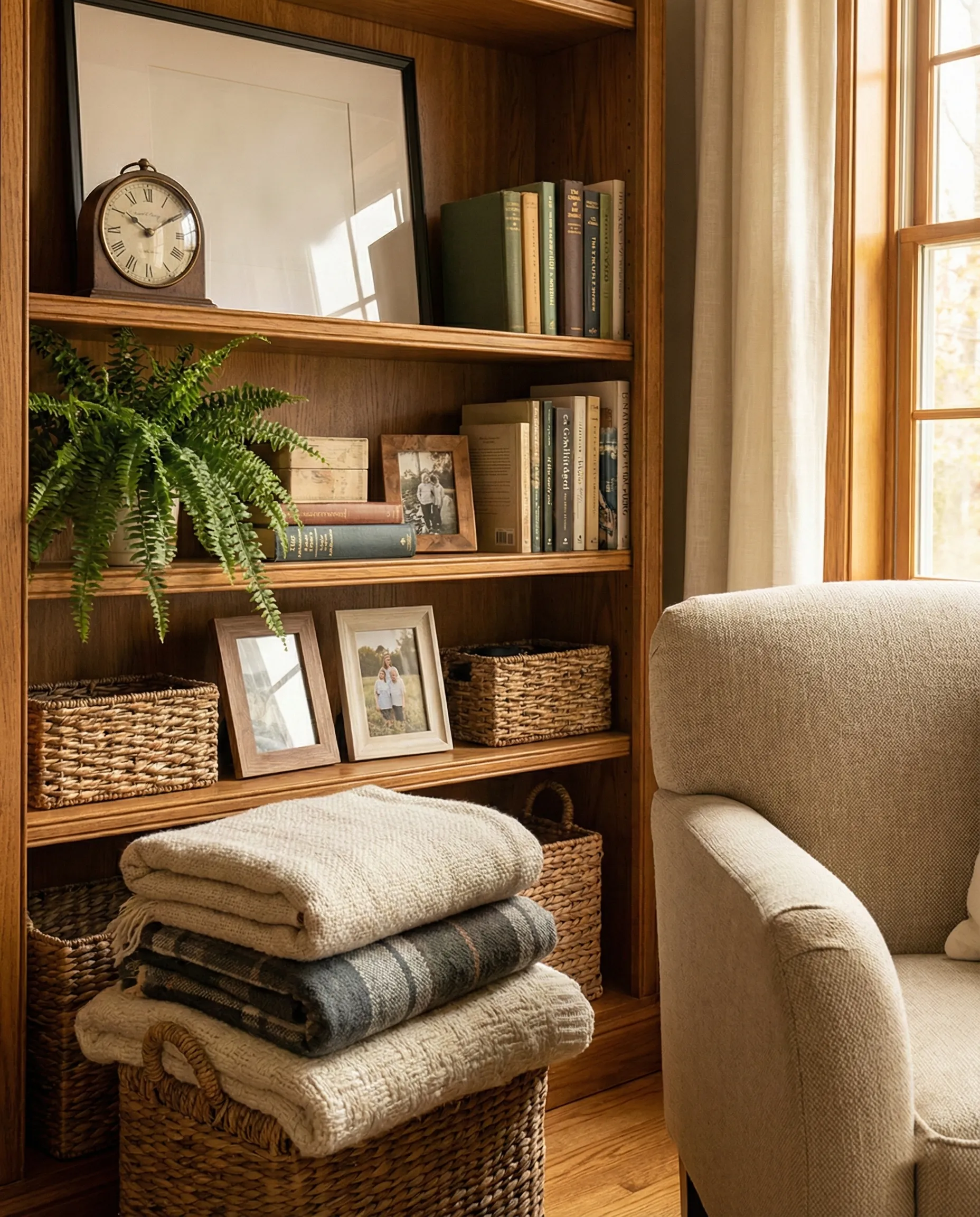
Grouping with other items creates cohesive vignettes. A clock paired with a small plant, a favorite book, and a photo frame tells a story. Think about what these items say together. Do they share a color? A style? A theme? The clock should feel like part of the group, not separate from it.
Seasonal styling considerations let you refresh your display without major changes. In winter, pair your clock with cozy elements like candles or warm-toned accessories. In summer, lighter, brighter items create a fresh feel. The clock itself might stay the same, but how you style around it can evolve with the seasons.
Clock Types and Styles
Understanding the different clock styles available helps you make an informed choice that matches both your aesthetic preferences and your functional needs. Each style brings its own character and works best in specific contexts.
Classic and vintage styles work best in traditional spaces, home offices with wood furniture, or rooms where you want to add warmth and character. These clocks often feature Roman numerals, ornate details, and materials like brass, wood, or marble. They feel timeless and add a sense of history to a space. If your bedroom decor leans traditional or you want to create a more formal atmosphere, classic styles are a natural fit.
Modern and minimalist clocks bring clean lines to contemporary spaces. They’re perfect for home offices with sleek furniture, modern living rooms, or anywhere you want a clean, uncluttered look. These clocks often feature simple faces, minimal numbers or no numbers at all, and materials like metal, glass, or concrete. They fade into the background while still providing function, which makes them ideal for spaces where you want the clock to be present but not prominent. This approach aligns with minimalist design principles that prioritize function and simplicity.
Industrial and rustic styles add character and texture. These clocks work well in spaces with exposed brick, reclaimed wood, or other raw materials. They often feature distressed finishes, visible mechanisms, or materials like aged metal or weathered wood. If you want your clock to be a statement piece that adds personality, industrial and rustic styles deliver.
Artistic and decorative clocks are statement pieces. These might feature unique designs, artistic interpretations of time, or clocks that double as sculpture. They work best when you want the clock itself to be a focal point, not just a functional item. Use them in spaces where you have room to let them shine, and pair them with simpler surrounding decor so they don’t compete for attention.
Digital options prioritize functionality. They’re ideal for workspaces where you need precise time at a glance, or for people who prefer the clarity of digital displays. Many digital clocks include additional features like date, temperature, alarms, or multiple time zones. They work well in modern spaces, home offices, or anywhere function takes priority over decorative appeal.
Quick style matching guide: Match traditional clocks to traditional rooms, modern clocks to contemporary spaces, industrial clocks to raw or urban-inspired interiors, and artistic clocks to spaces where you want a conversation piece. The goal is cohesion; your clock should feel like it was always meant to be there.
Care and Maintenance
Keeping your desk or shelf clock functional and looking good requires some basic maintenance. The good news? Most clocks are low-maintenance items that just need occasional attention.
Regular cleaning depends on the material. For metal clocks, a soft, slightly damp cloth removes dust and fingerprints. Avoid harsh chemicals that can damage finishes. For wood clocks, use a wood-specific cleaner or a barely damp cloth followed by a dry one. Glass faces need gentle cleaning to avoid scratches, use a microfiber cloth and avoid paper towels that can leave residue.
Battery replacement timing varies. Most battery-powered clocks will run for a year or more on a single battery, but this depends on the clock’s features. Clocks with additional functions like alarms or backlights may drain batteries faster. Replace batteries when the clock starts running slow or stops entirely. Keep spare batteries on hand so you’re not left without a working clock.
Dust prevention helps keep mechanisms running smoothly. Regular dusting prevents buildup that can interfere with moving parts. For analog clocks, dust can settle into the mechanism and affect accuracy. A soft brush or compressed air can help remove dust from delicate areas without damaging the clock.
Handling delicate mechanisms requires care. If you need to move an analog clock, do it gently. Avoid shaking or jarring it, which can damage the mechanism. When cleaning, don’t apply pressure to the face or hands. If your clock stops working and you’re not comfortable troubleshooting, consider taking it to a professional rather than attempting repairs yourself.
Troubleshooting common issues: If hands are stuck, the mechanism may need cleaning or the battery may be dying. Dim displays on digital clocks often indicate low battery. If a clock runs fast or slow, check the battery first, then consider whether temperature changes might be affecting it. Most issues are simple to resolve with basic troubleshooting.
Gift Selection Guide
Desk and shelf clocks make thoughtful gifts because they’re both functional and decorative. But choosing the right clock for someone else requires understanding their space, style, and needs.
For home office workers, prioritize functionality. Look for clocks with clear displays, quiet mechanisms, and features that support productivity. Digital clocks with date displays or multiple time zones can be especially useful for people who work with clients in different time zones. Consider their desk setup: do they have space for a larger clock, or would something compact work better?
For decor enthusiasts, style comes first. Choose clocks that match their existing aesthetic. If they love vintage decor, a classic clock fits perfectly. If their space is modern and minimal, a sleek contemporary clock shows you understand their style. Pay attention to the colors and materials they already use in their space.
Age-appropriate considerations matter, especially for kids’ rooms versus adult spaces. Children’s clocks should be durable, easy to read, and perhaps include fun elements like colors or shapes. Adult spaces can handle more sophisticated designs. For teenagers, consider clocks that bridge the gap ,stylish but not overly childish.
Occasion matching helps you choose appropriately. Housewarming gifts might lean toward decorative clocks that help new homeowners personalize their space. Graduation gifts could be functional clocks for new workspaces or dorm rooms. Retirement gifts might be more luxurious, statement-making clocks that celebrate a milestone.
Personalization options add a special touch. Many clocks can be engraved or customized with names, dates, or messages. This works especially well for milestone occasions or when you want to create a truly unique gift. Consider whether the recipient would appreciate personalization or prefer a more universal design.
Budget-friendly gift ideas exist at every price point. Thoughtful doesn’t have to mean expensive. A well-chosen clock in the $20 to $40 range can be just as meaningful as a more expensive option if it matches the recipient’s style and needs. Focus on quality and appropriateness rather than price alone.
Choosing the right desk or shelf clock comes down to balancing function and style. You need something that tells time reliably, fits your space appropriately, and contributes to your overall decor. But you also want something that feels right, that becomes a natural part of your daily routine rather than just another object on your desk or shelf.
Start with your space and your needs. Measure where the clock will go. Consider how you’ll use it. Think about the style of your room. Then find the clock that fits. It doesn’t have to be perfect sometimes the clock that works best is the one that feels right, even if it wasn’t what you originally imagined.
A well-chosen clock becomes more than a timepiece. It becomes part of your workspace, part of your daily rhythm, part of how you experience your space. Take your time choosing, and trust that when you find the right one, you’ll know.