A small table can hold a fall centerpiece or dinner, and the trick is to make sure it never has to hold both at once. This post contains Amazon affiliate links, so I may earn a small commission if you buy through them, at no extra cost to you. The photos are AI-generated illustrations of the setups described, so use them as a visual guide.
Measure the table before you pick the centerpiece
A round table around 36 inches across seats two people comfortably, and a 42-inch one squeezes in four. Each place needs roughly 20 inches of width and about 12 inches of depth for a plate and a glass. That leaves very little in the middle, so the centerpiece should fit inside a footprint of about 10 by 10 inches. Anything wider than that ends up on someone’s plate.
Keep it low enough to talk over
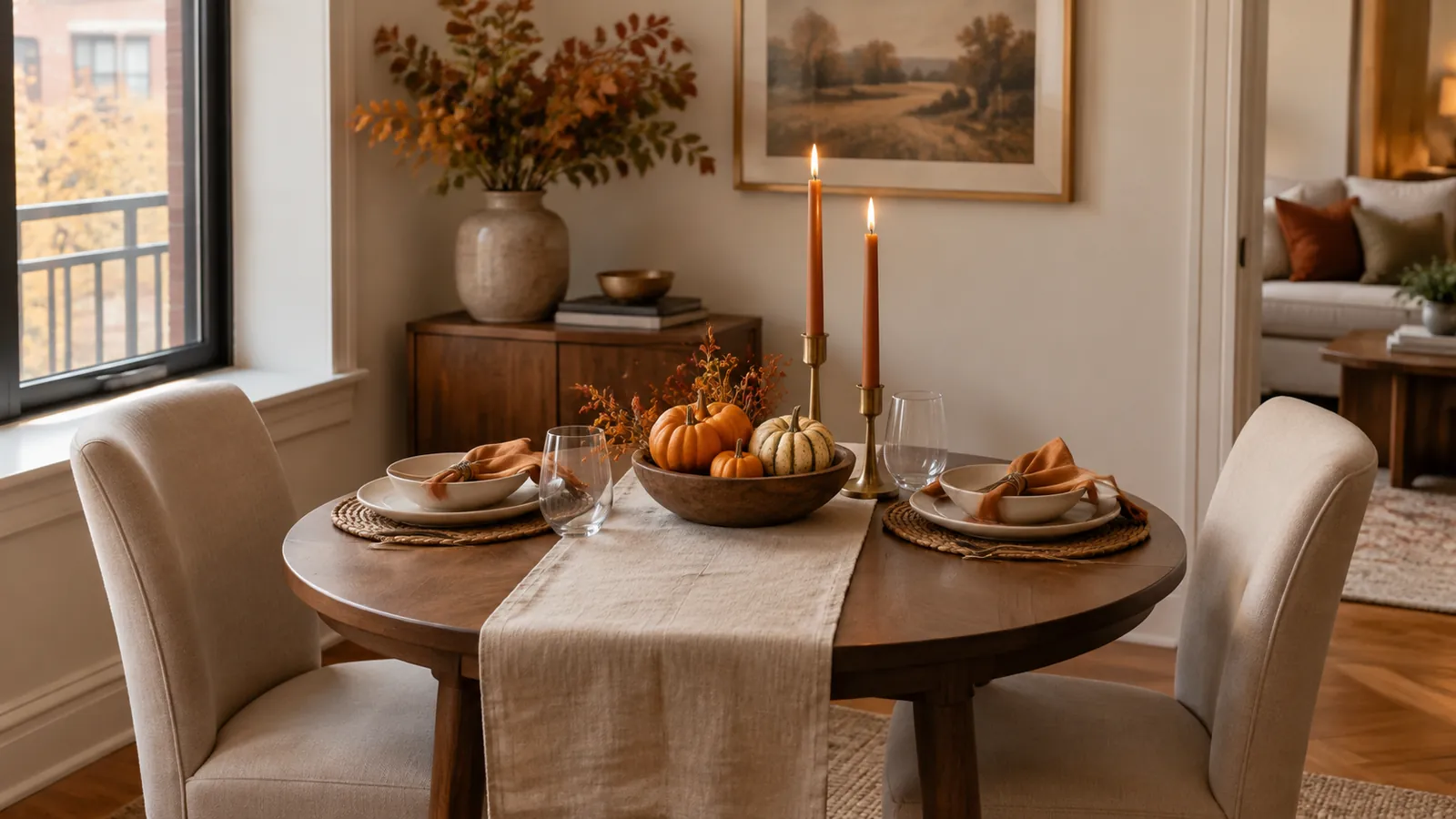
The usual rule is to stay under about 12 inches tall, so people can see each other across the table. A short bowl of mini pumpkins, a low vase with a few dried leaves, or a small tray with one candle all pass. A tall branch arrangement looks great in a photo, but it blocks the conversation and has to be moved before every meal. If you want height, put it on a shelf or sideboard instead. The same logic applies to a small fall dining nook, where the table is the busiest surface in the room.
Start with a runner, not a pile of objects
A table runner gives the centerpiece a base, so a few objects look planned instead of scattered. Choose one that is about 12 to 14 inches wide and long enough to hang a few inches over each end. In a small apartment, a flat linen or cotton runner in rust, oat or olive reads as fall without needing a single pumpkin. If you have a dark wood table, a lighter runner helps the objects stand out.
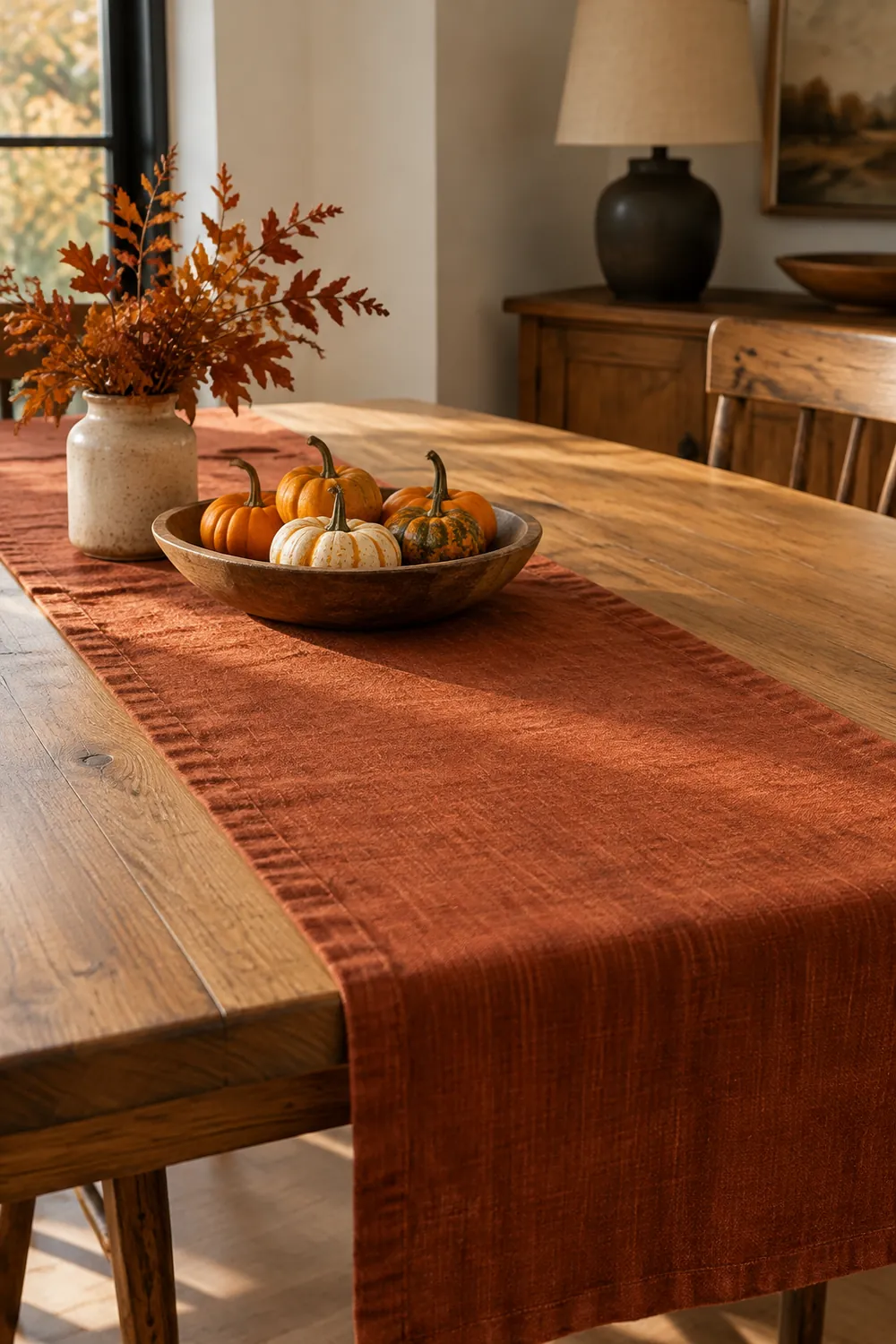


Candles: use holders that are stable and clear of anything dry
Taper candles in short metal or ceramic holders add the warm, low light that makes fall dinners feel cozy. Keep flames well away from dried leaves, paper and fabric, and never leave a lit candle unattended. The same caution I would use around the stove applies here, and the kitchen counter post covers where decor should and should not sit. A battery-operated taper is a fine swap if the table is crowded or you have pets.
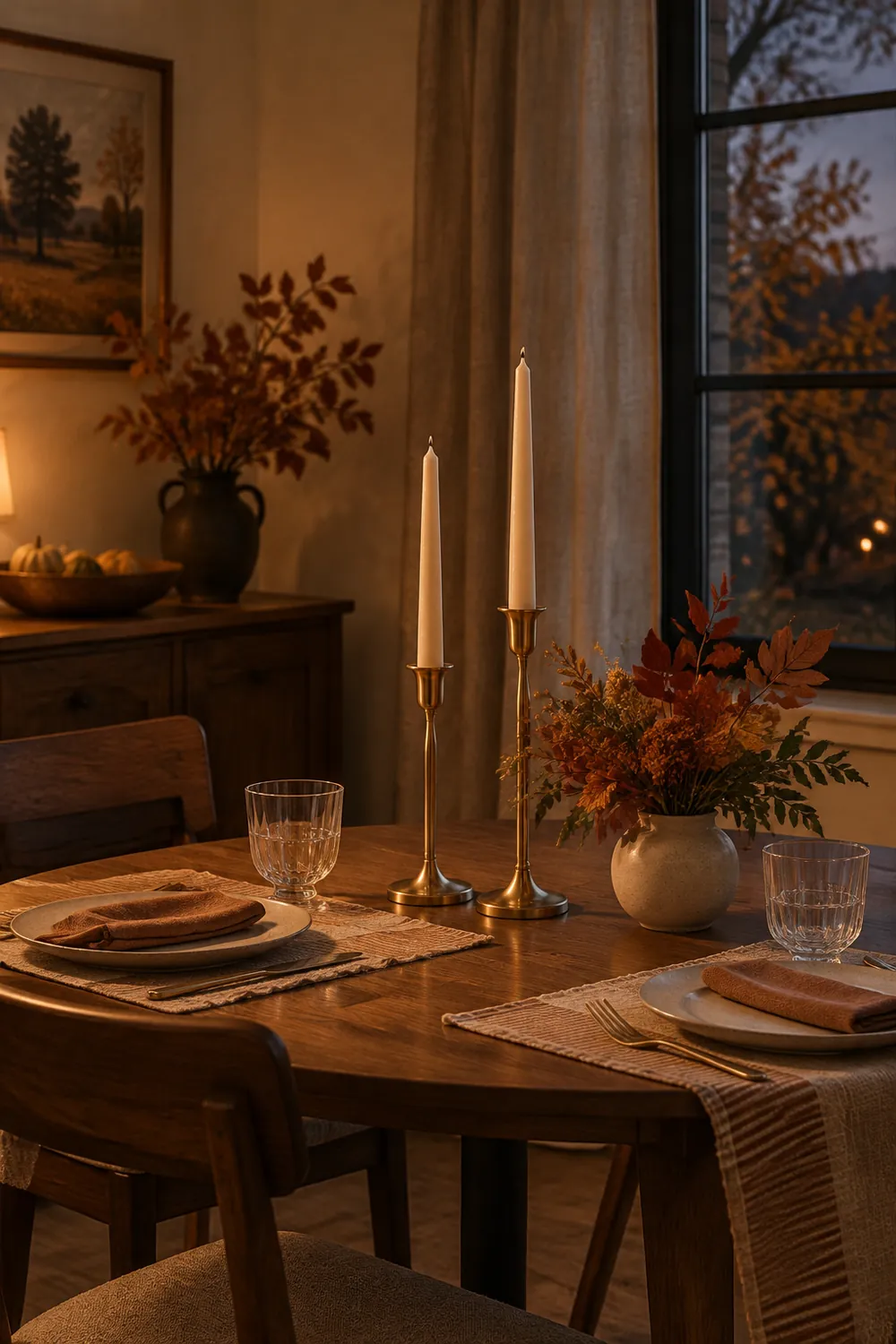
Use a tray so the whole thing moves in one go
A small wooden or rattan tray, about 12 inches across, lets you lift the whole centerpiece in one move. Put the mini pumpkins, a candle holder and a few leaves on it, and you can slide it to the sideboard when plates come out. This is the same trick as the five-object mantel layout: a few well-placed pieces beat a crowded surface.
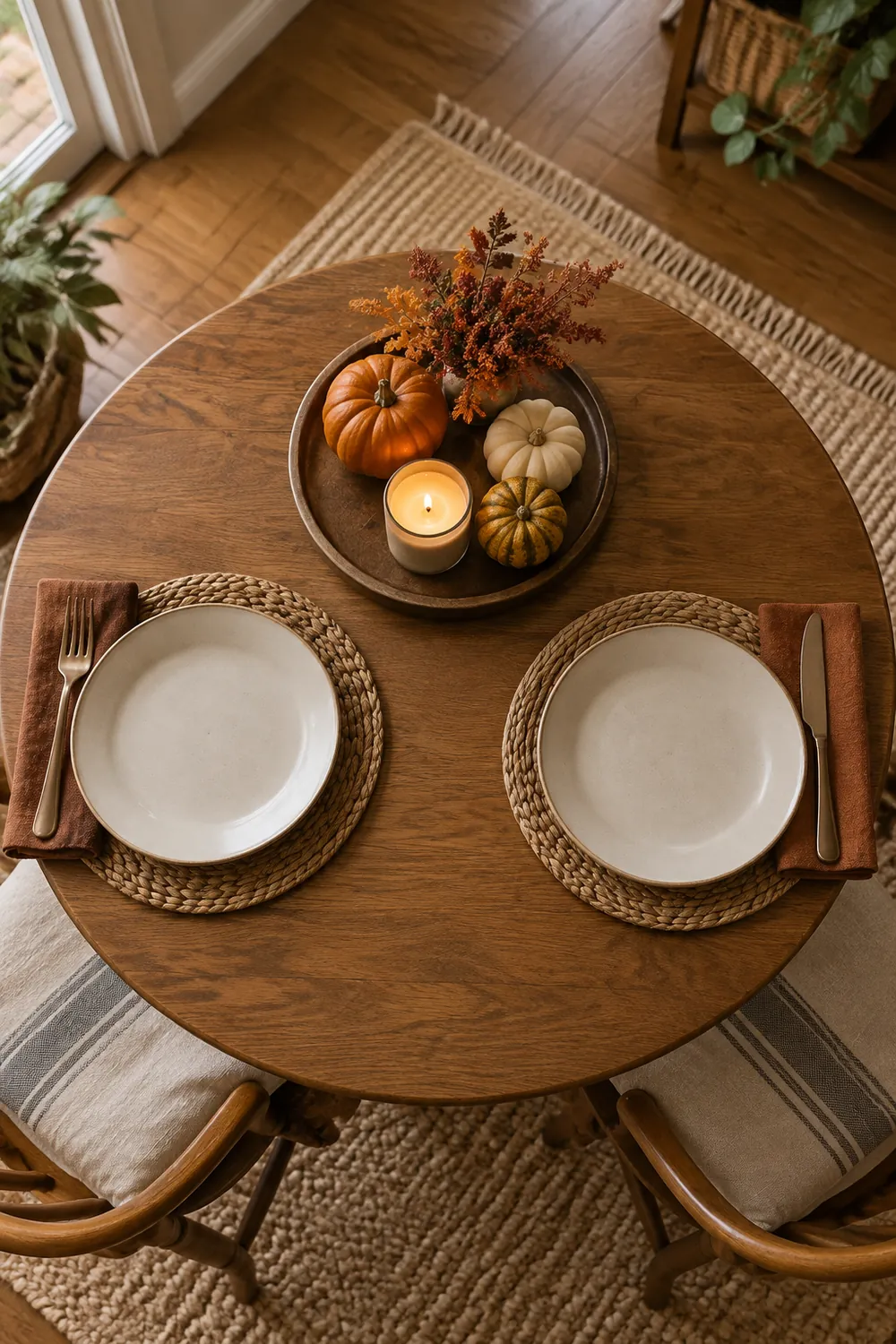
What to leave off a small table
Skip the table scatter and the large faux garlands, because they eat up the space you need for food. Avoid scented candles right at the table, since strong fragrance competes with dinner. And resist adding a fourth or fifth object. If the center of the table has more than about four items, take one away.
Let the rest of the room carry the season
If the table stays simple, you can put a bit more fall into other spots. A chunky throw on a chair works well, and the layering ideas in the small sofa throw guide carry over to dining chairs. A single wreath at the door, like in the small fall entryway post, ties it together without adding clutter to the table.
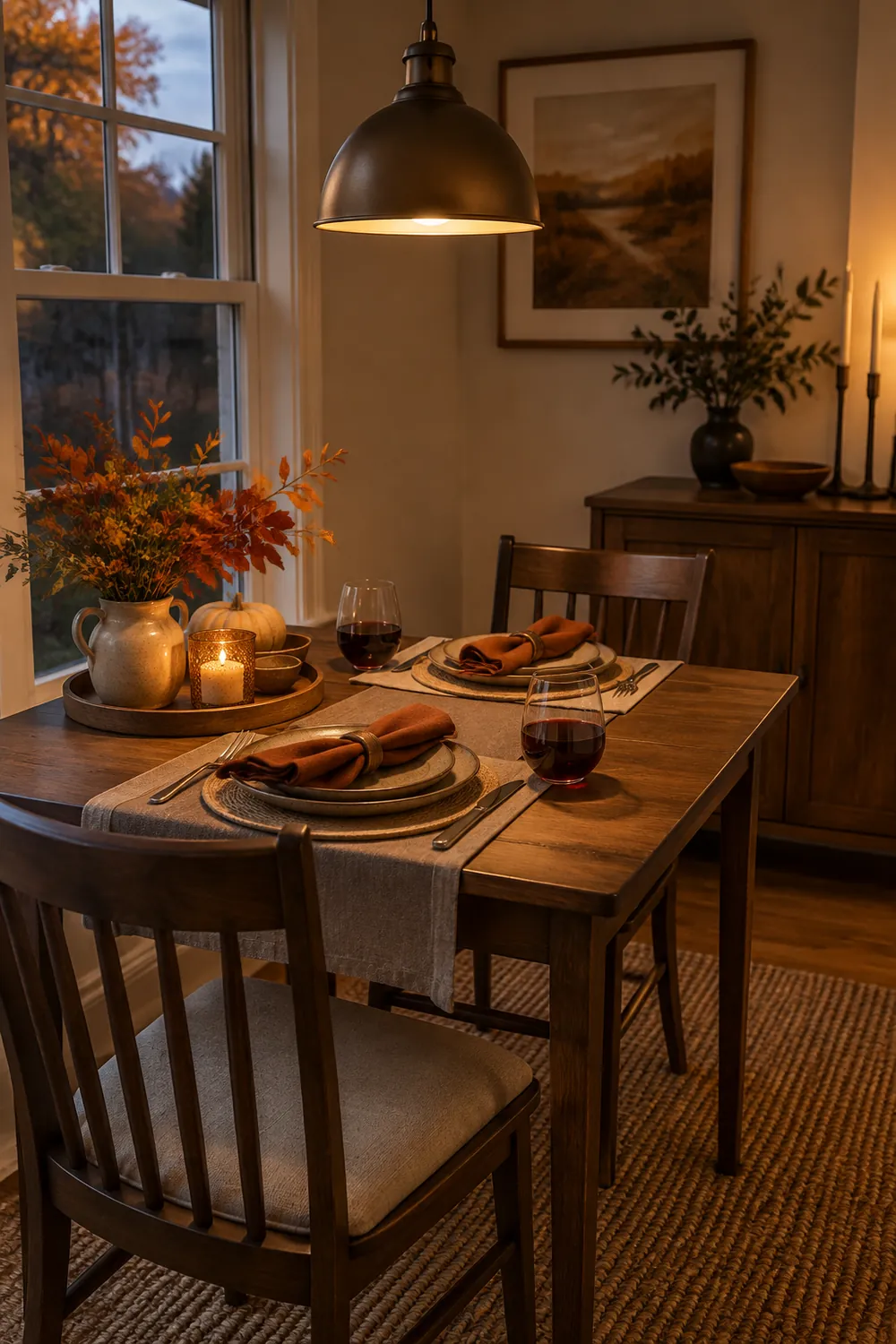
A quick setup you can repeat
Lay the runner, set the tray in the middle, and add the pumpkins and one candle holder. Check that nothing is taller than a standard water glass plus a couple of inches. Set the two place settings and see whether there is a hand’s width between the plate and the tray. If not, shrink the tray or move it to the edge. That takes about five minutes, and it resets just as fast.