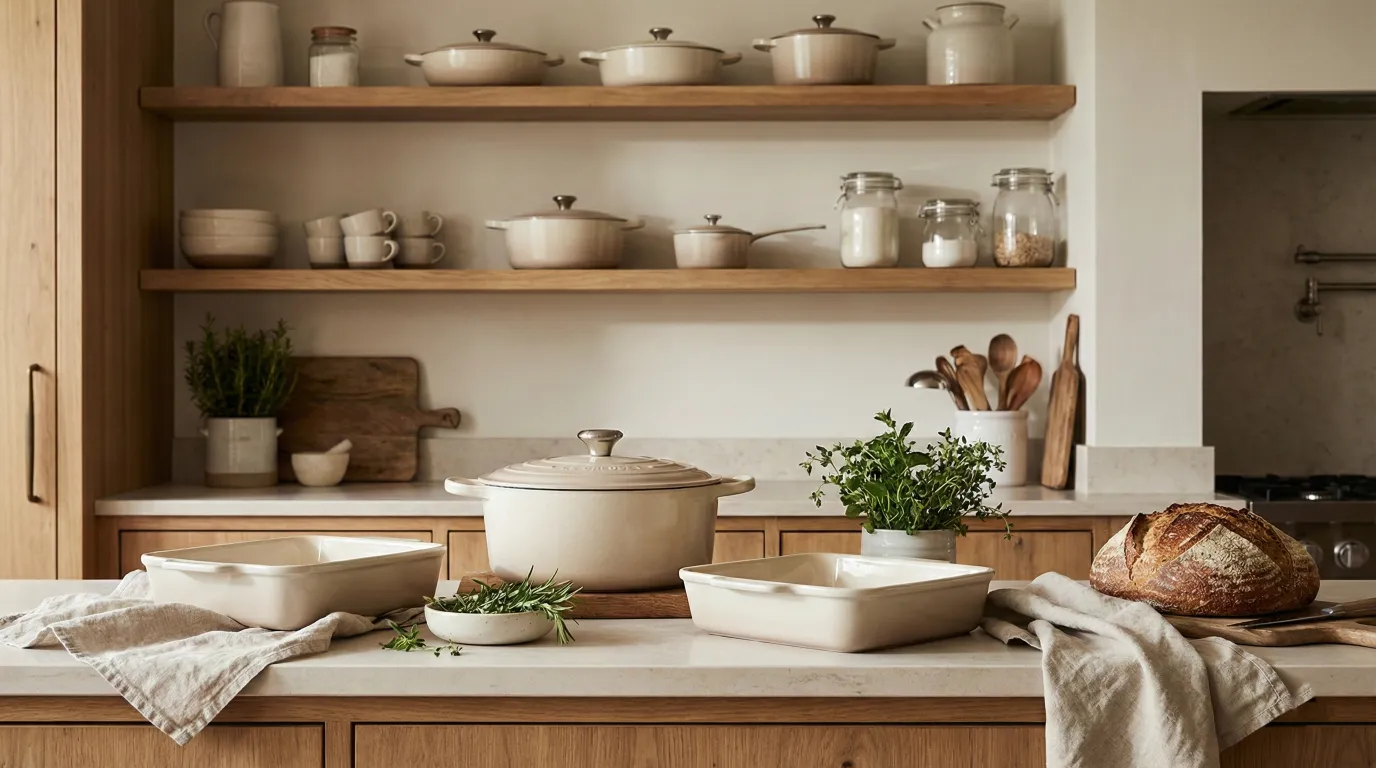
The best fall kitchen counter I can picture isn’t the one with the most pumpkins. It’s the one where dinner can still happen at 6 p.m. without moving a centerpiece first.
My plan: one small cozy zone, nowhere near the stove, and the rest of the counter left for real work. The illustrations here show that idea in a few layouts. They’re not photos of a kitchen I’ve redone. This post contains Amazon affiliate links, so I may earn a small commission if you buy through them, at no extra cost to you.
Start with where you actually cook
Before you add anything orange, stand at the counter and notice where your hands go. The cutting board, the sink, the stove and the spot where the grocery bags land already have jobs. Those spots stay clear. The decorating happens in whatever space is left over.
In a small kitchen that left-over spot is often a corner by the window or the end of the counter near the fridge. That’s where I’d put the fall zone. If you only have a narrow run of counter, shrink the zone instead of squeezing the cooking area. Our four zones for a blank kitchen wall use the same logic on the wall side: decide what must stay open, then decorate what remains.
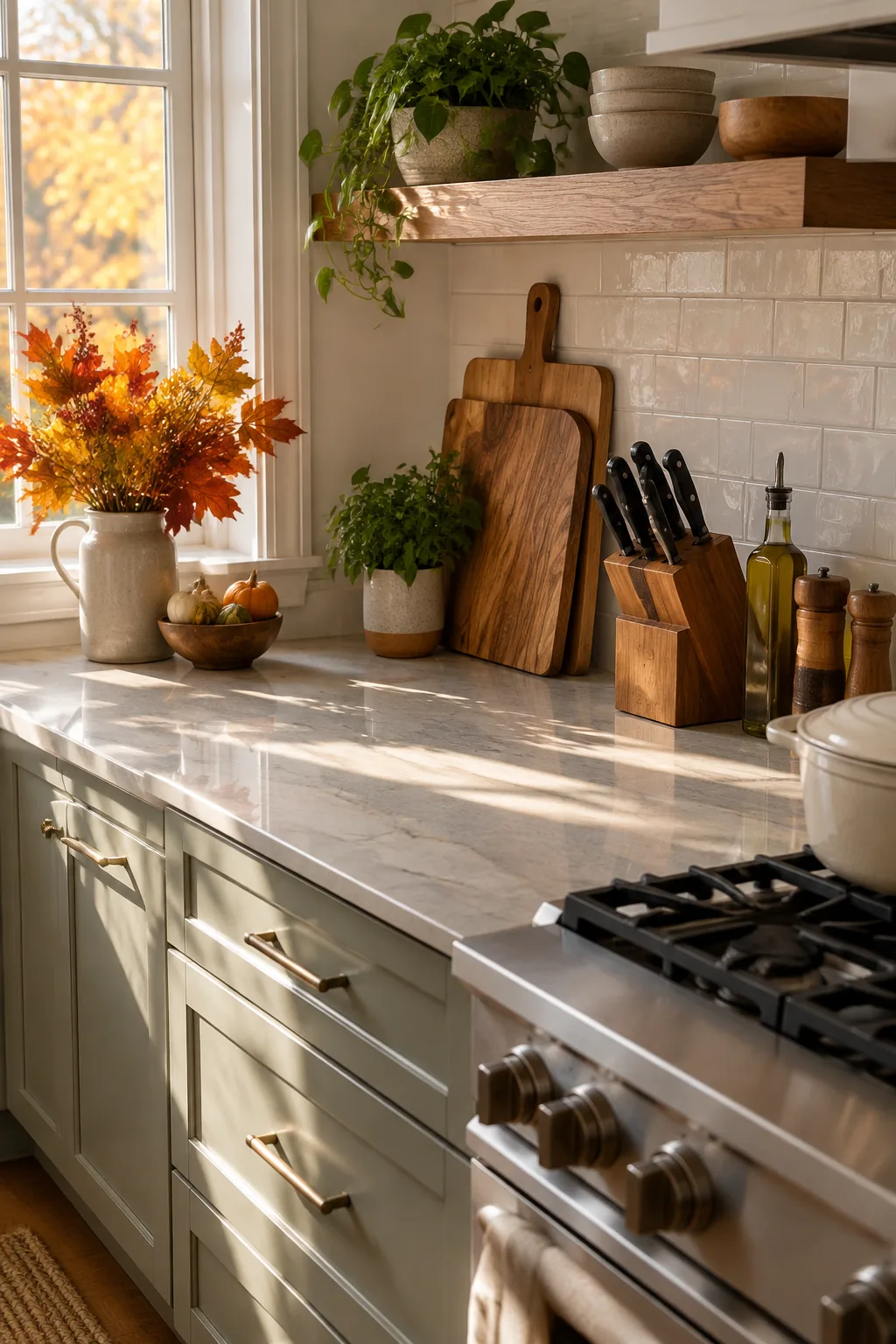
Give the cozy part one tray
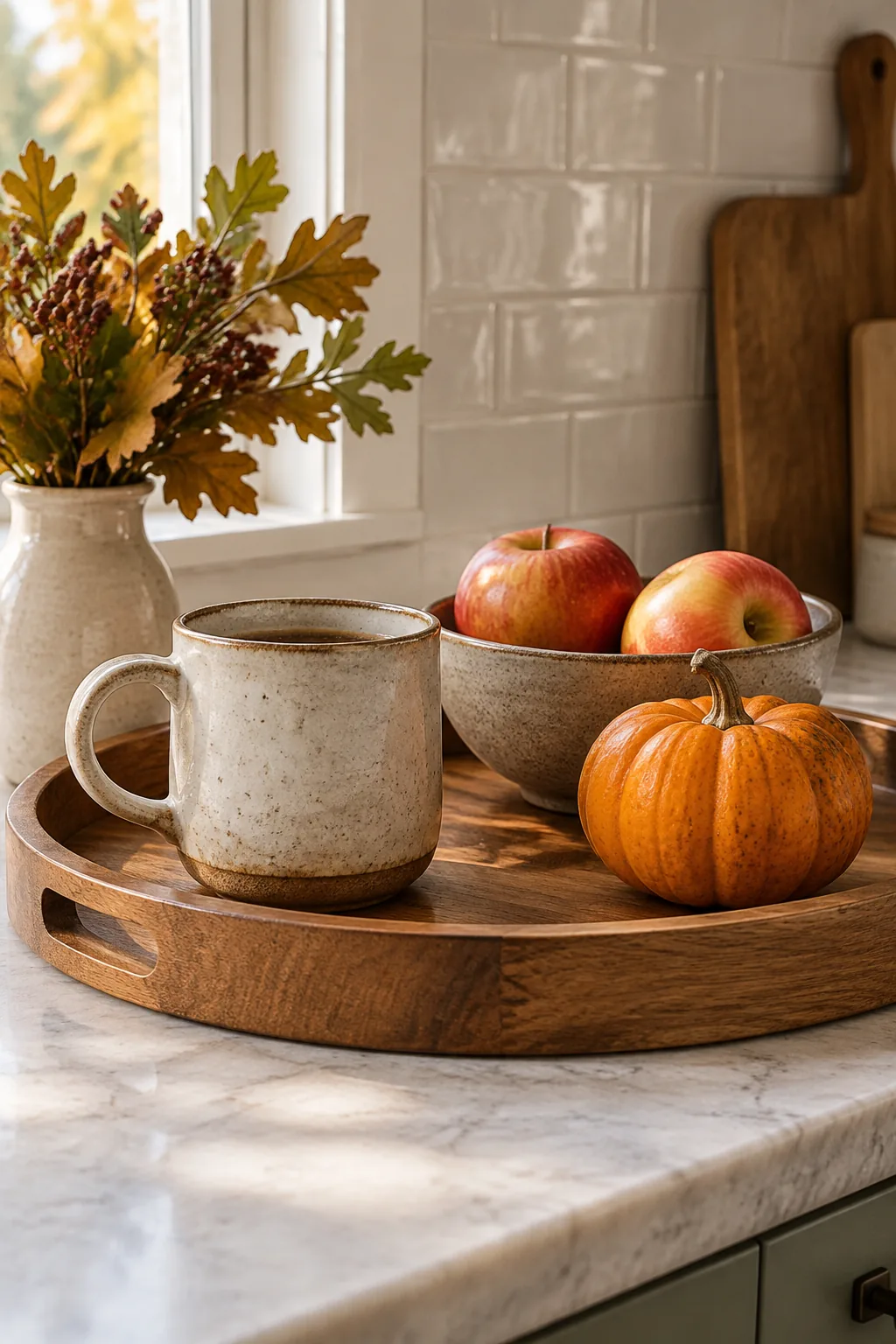
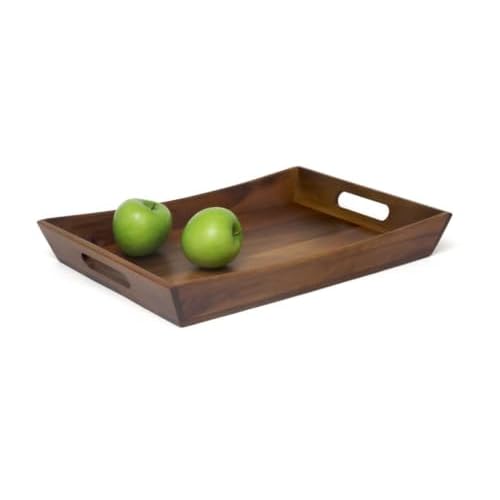
A single wooden tray does a lot of the work. Put a mug, a small pumpkin and a bowl of apples on it and the whole group reads as one decision instead of five loose objects. It also moves in one lift when you need the counter back.
I’d keep the colors close: cream, rust and a bit of warm wood. A white or cream pumpkin looks calmer than a bright orange one next to a marble or white counter, though that’s a taste call, not a rule. Real apples are a nice detail if you’ll eat them. Skip anything that will sit and go soft.
If you want the same restraint somewhere else in the house, the five-object fall mantel layout is the version for a mantel. It’s the same idea of fewer, better placed pieces.

The stove edge stays boring
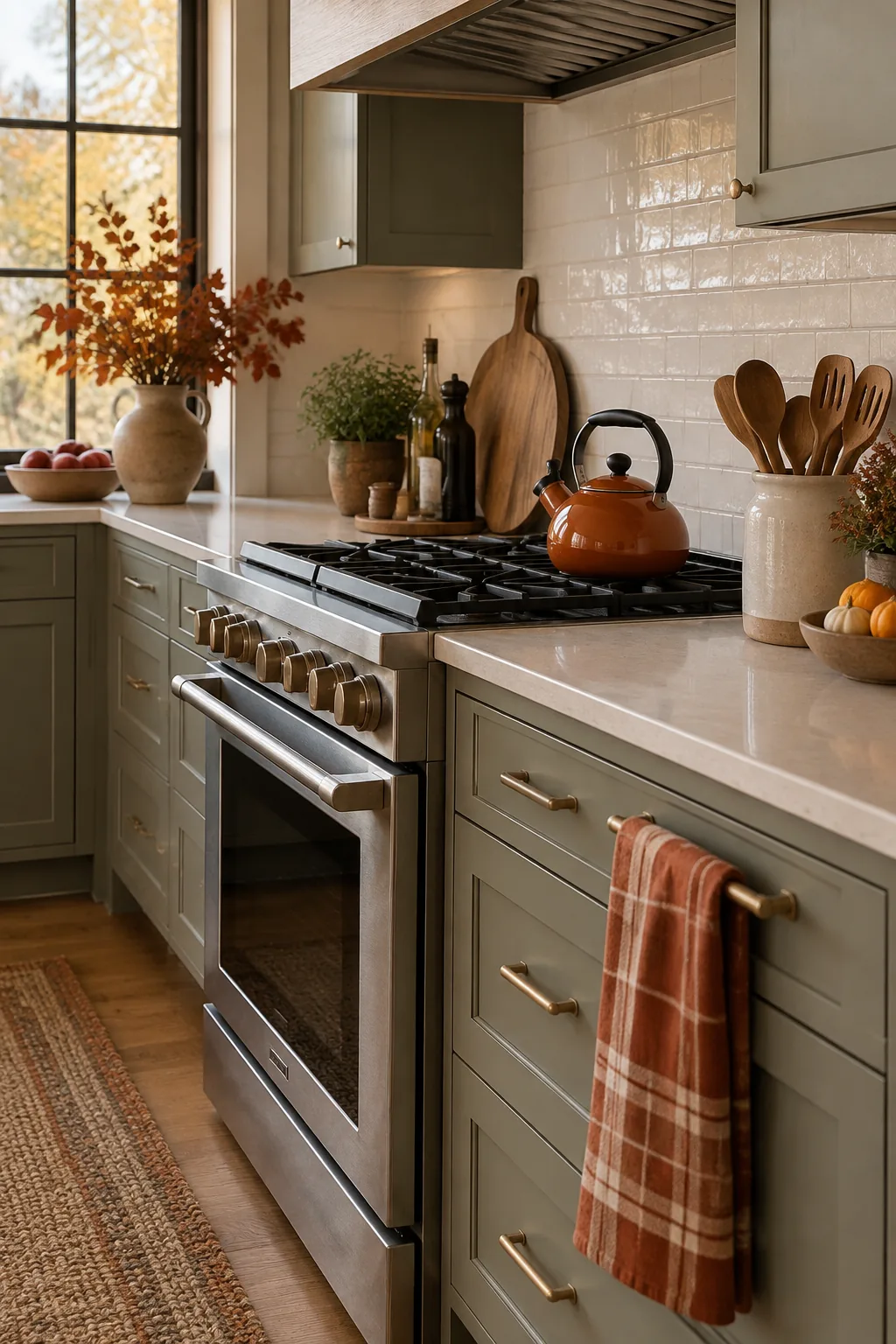
This is the part I’d be strict about. NFPA’s cooking tip sheet says to keep anything that can catch fire away from the stovetop, and lists oven mitts, wooden utensils, food packaging, towels and curtains as examples. So the fall zone doesn’t go next to the burners, and neither does the dried-leaf jar or the pretty paper bag.
In practice that means the tray lives at the other end of the counter, and the dish towel hangs on a drawer or oven-door handle that isn’t over a burner. If you like a seasonal towel, a plaid one is an easy swap. Just hang it where a flame can’t reach it.
Keep the wipe-down easy
A styled counter is only cozy if it’s clean. FoodSafety.gov’s basic advice is to wash hands, utensils and surfaces often, and that gets harder when the counter is covered in small objects. One tray beats a dozen scattered pieces because you can lift it, wipe, and set it back.
I’d also avoid parking decor where raw food or the cutting board goes. A pumpkin that has to move every night stops being decor and turns into a chore. If your pantry is the real source of clutter, this pantry organization story is a candid look at how a tidy system can slip, and it shows how fast a tidy system can slip.
Look at it in the evening light
A kitchen looks different at night. Turn on the lights you actually use and check the counter again. If you have under-cabinet lights, they can make a small pumpkin and a bowl of fruit look warm without adding a single extra object.
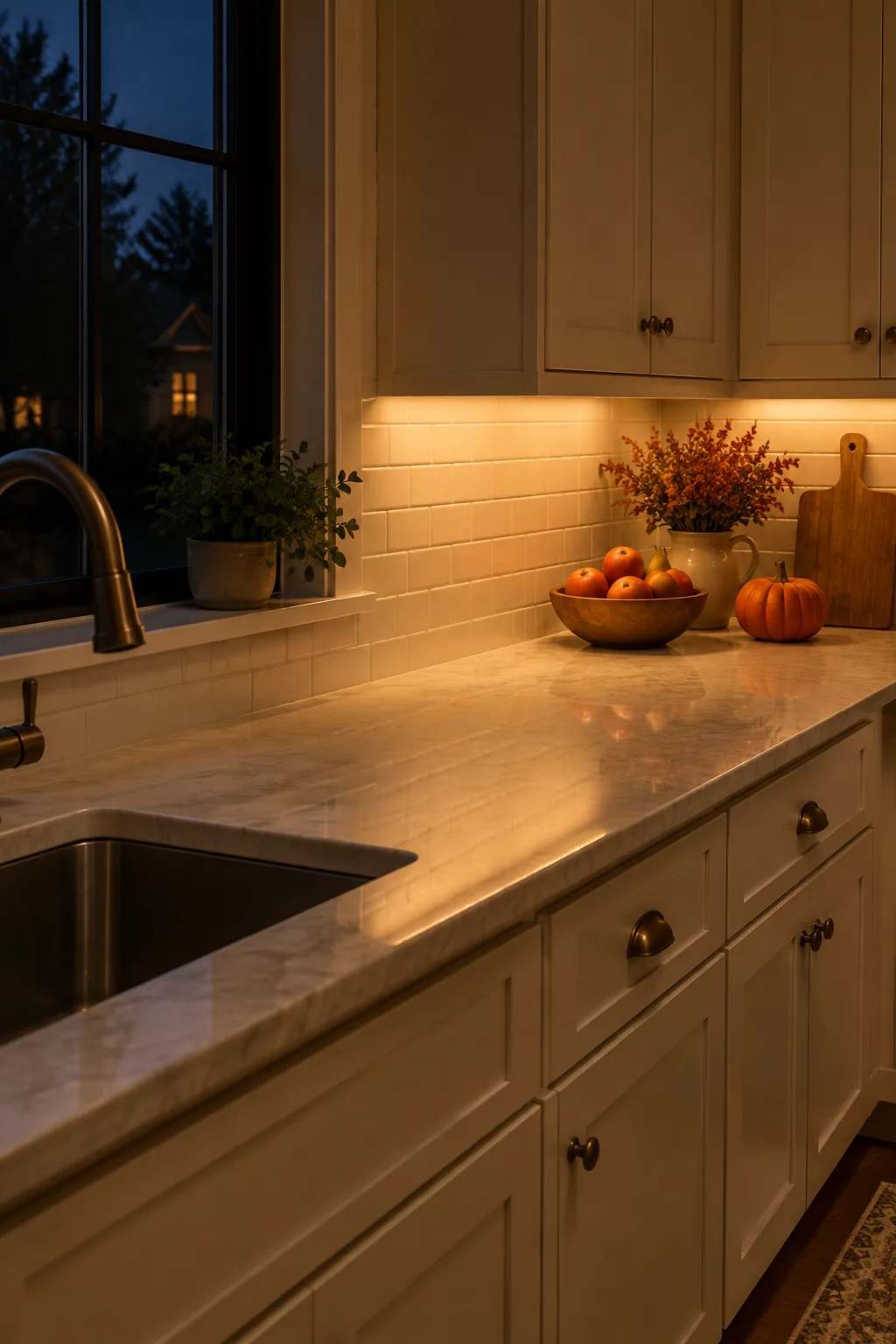
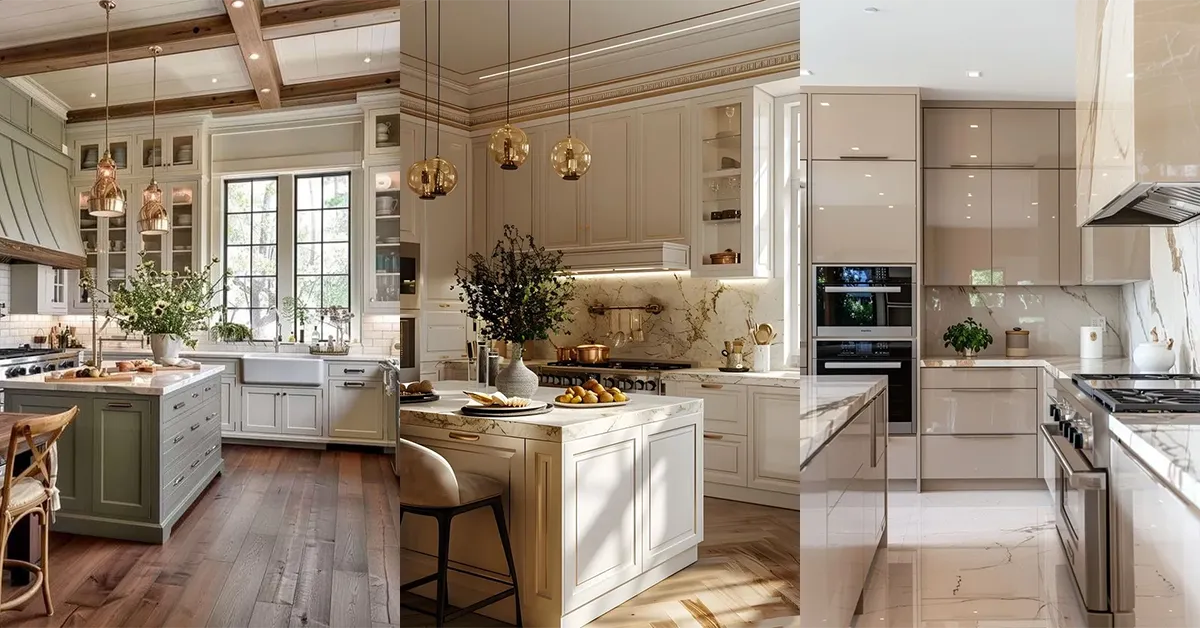
This is also the time to check the path. Can you reach the sink, the stove and the trash without bumping the tray? If not, move the zone or trim it. A kitchen with an open island has a bit more room to play, so the kitchen island ideas may give you a second spot to try.
How I’d fit the zone to your counter
The zone should bend to the shape of your kitchen. Here are the three layouts I’d think about first. None of them needs a purchase.
On an L-shaped counter, the short leg is usually the quiet one. Put the tray there, tucked into the corner, and keep the long run for chopping and plating. The corner hides a little clutter, which is a plus, but check that you can still reach the outlet if you use it for a kettle or a mixer.
In a galley kitchen the counter is narrow and every inch counts. Here I’d shrink the idea: skip anything with a flame and use a small pumpkin and a single stem in a jar. A galley is also the layout where stove safety matters most, because the stove and the decor are never far apart. Keep the zone at the far end, away from the burners.
If you have an island or a peninsula, you get a second surface that doesn’t touch the cooking line. That’s the easiest place to be generous. A low bowl of apples and a runner would look good there, and it can be cleared in ten seconds when someone needs to roll out dough or do homework.
What I’d leave off the counter
Here’s my short no list. It’s all taste except the stove point above.
Dried leaves and faux garlands near the stove are the first to go. They look nice and they’re exactly the kind of light, dry material the NFPA sheet tells you to keep away from the burners. Anything tall near the hood or the cabinet door that swings open is next, since you’ll bump it twice a day. And I’d skip a big centerpiece on the main prep surface, because it gets moved every night and eventually ends up on a chair.
Anything you can’t wipe also gets a second look. A fabric pumpkin can sit on a shelf, but on a counter near the sink it collects splashes and crumbs. Glass, ceramic, wood and real produce clean up fast, so I’d choose those for the counter itself.
A two-minute reset that keeps it cozy
Putting it back has to be easy, or the counter won’t stay nice. Here’s the routine I’d try. After dinner, lift the tray, wipe the counter and the underside of the tray, and put it back. Once a week, swap the apples or any fruit that has started to soften, and shake out the towel.
If you find the tray keeps drifting toward the cooking area, that’s a sign the zone is in the wrong spot, not that you need more discipline. Move it a foot or two and see if it holds. I’d rather change the layout once than nag myself every evening.
So that’s one zone, one tray, a quiet stove and a quick look at night. Fall fits in around dinner without taking over.