To keep a carved pumpkin from rotting, wash the outside, scrape the inside clean, spray it with a 10 percent bleach solution, seal the cut edges with petroleum jelly and keep it between 50 and 60°F. Light it with a battery tea light instead of a candle. Those steps come straight from South Dakota State University Extension’s pumpkin preservation guide, and they can take a jack-o’-lantern from a few days to a week or more.
Start with a pumpkin that will last
Preservation starts in the patch. Virginia Cooperative Extension horticulturist Ashley Edwards says to wait until pumpkins are fully mature before carving and to skip any with soft spots or stem damage, because weak stems accelerate decay. Carry the pumpkin by the bottom, never by the stem. A pumpkin that goes into carving with a bruise or a broken stem is already rotting; no spray fixes that.
Clean before you cut
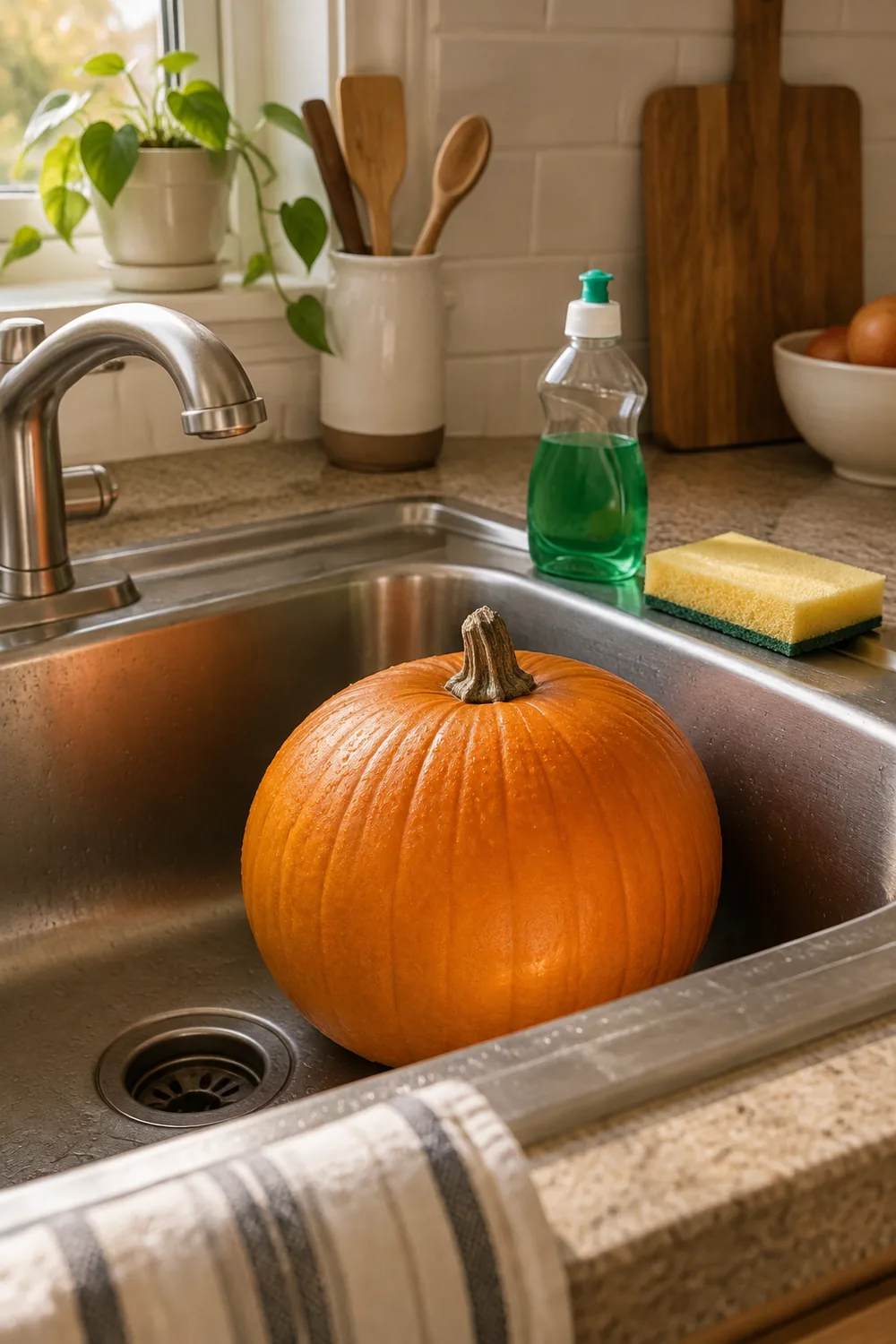
Wash the rind with dish soap and water before the knife goes in, and wipe your carving tools with rubbing alcohol, especially if you carve more than one pumpkin. Then scrape the inside thoroughly. SDSU Extension is direct about why: the seeds and fibrous strands are extra surface area where rot organisms grow, so the cleaner the cavity, the slower the decay.
Spray it with a 10 percent bleach solution
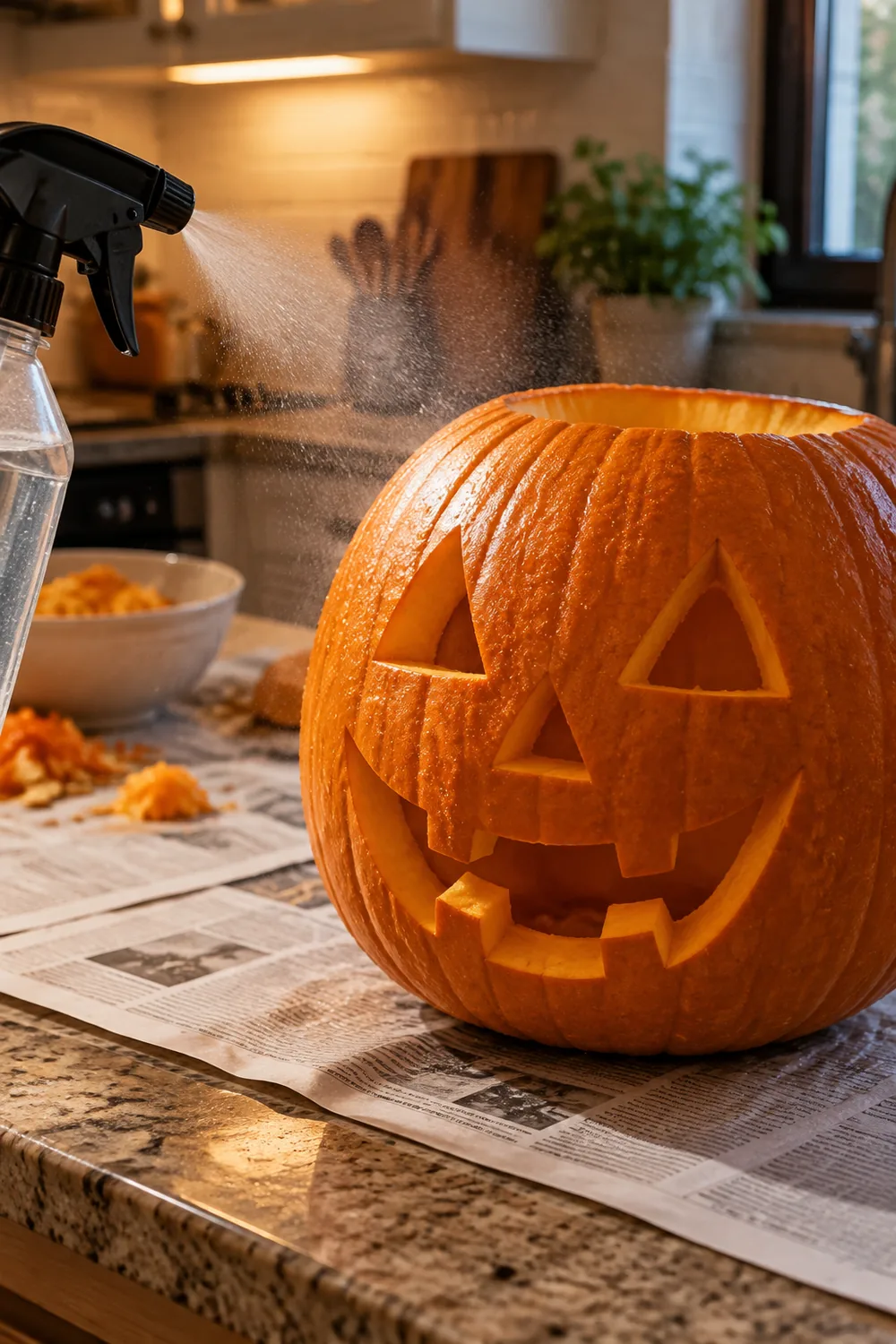
Once the carving is done, mix 1 part household bleach with 9 parts water and dip, wash or spray the whole pumpkin, inside and out. The bleach kills the bacteria and fungi already on the surface. Let it dry before you bring it inside or set it on fabric, because bleach solution can spot upholstery and rugs.
Seal the cut edges
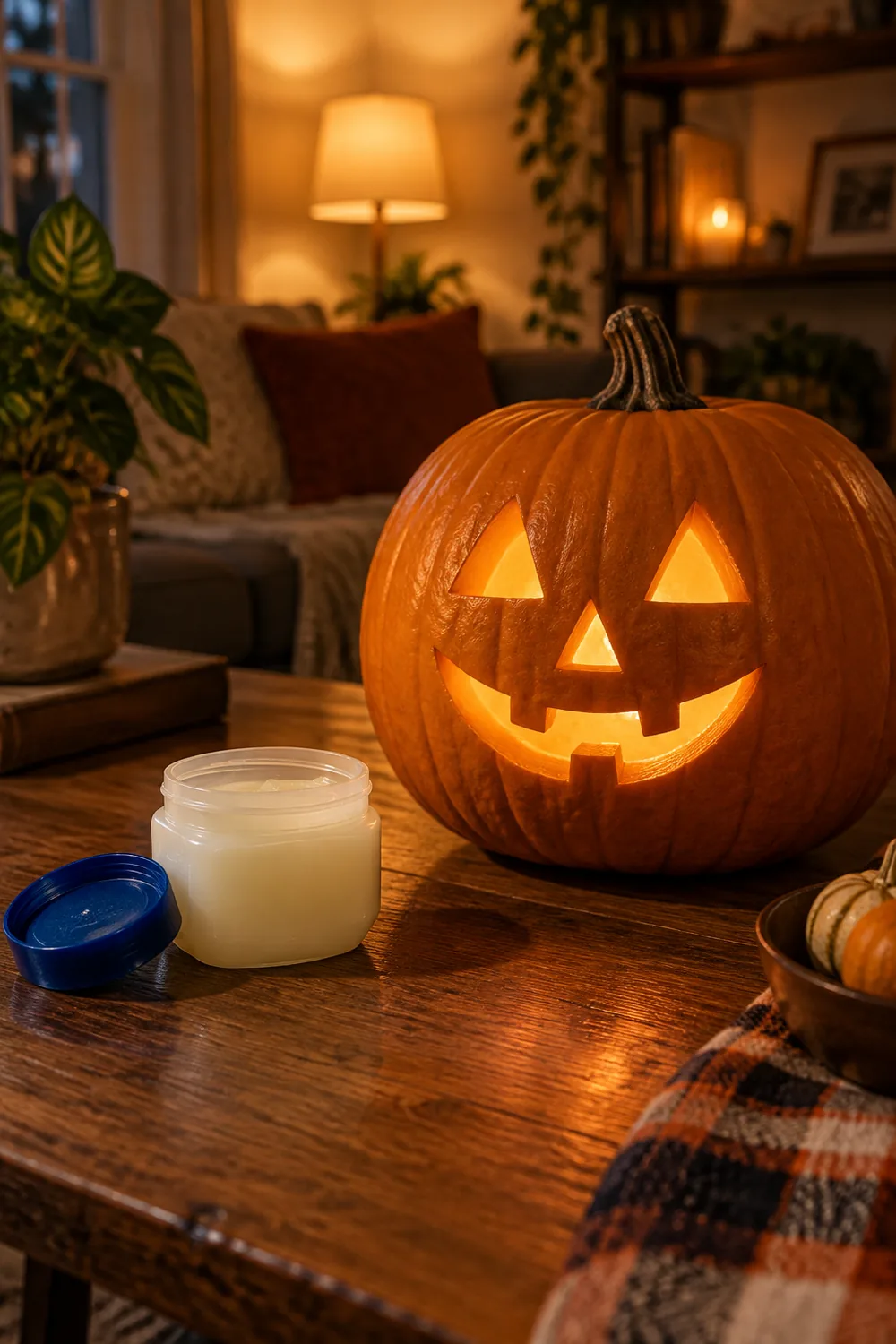
A carved pumpkin loses moisture through every cut, and a dry pumpkin collapses into itself. Rub petroleum jelly over the exposed cut surfaces to lock the moisture in. Reapply after rain or every couple of days if the pumpkin lives outside. The same jelly works on the scraped inner rim.
Light it without a flame
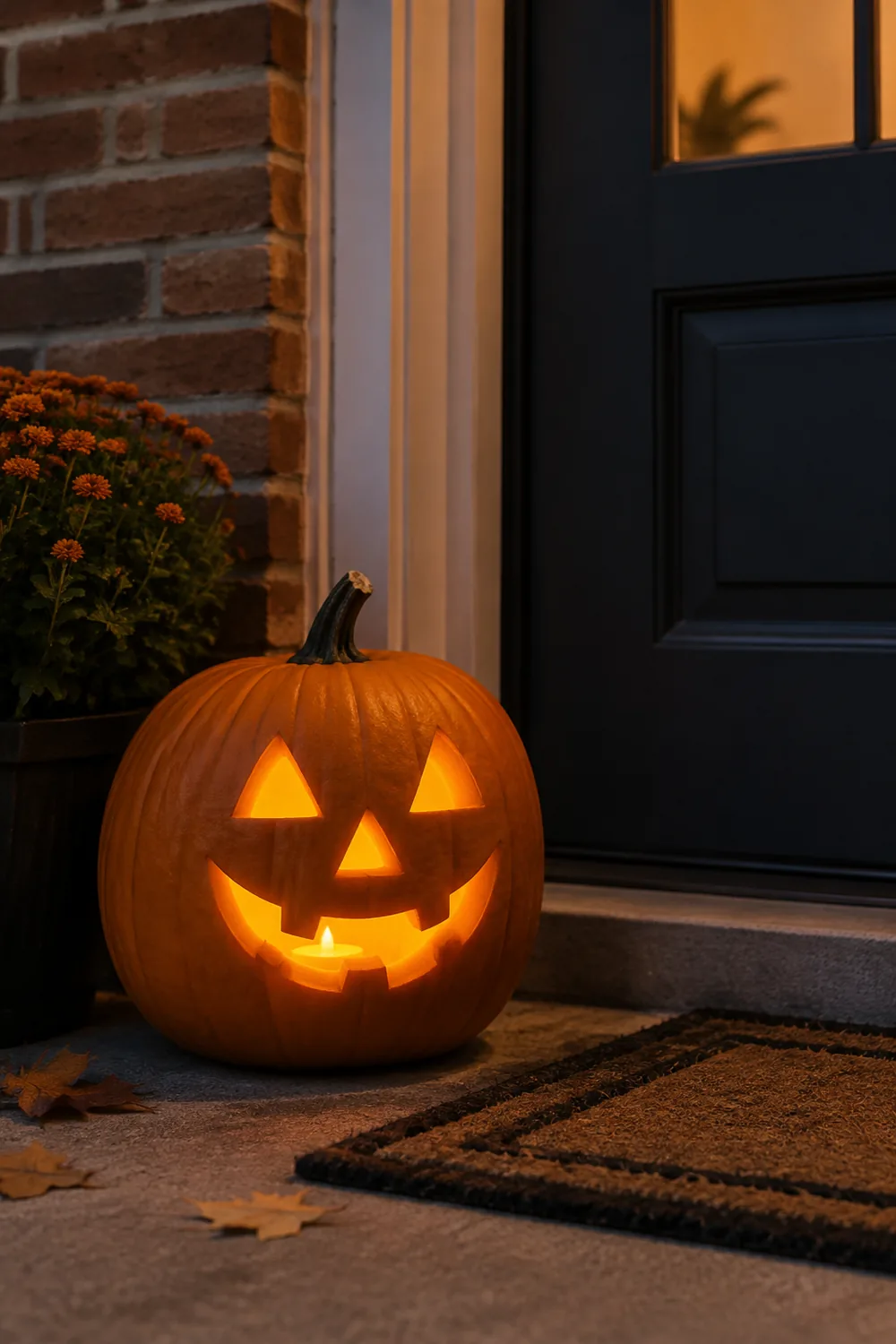
SDSU Extension recommends an electric light or glow stick over a candle, because a candle cooks the inside of the pumpkin and speeds up spoilage. A battery tea light or a small LED pumpkin light gives the same flicker without the heat. It is also the safer choice on a doorstep with a doormat and a wreath nearby; NFPA’s winter holiday safety tips treat open flames near decorations as a leading fire cause. The same no-flame logic runs through this Halloween window that glows after dark.
Keep it in the 50 to 60°F range
Temperature decides how fast the clock runs. SDSU puts the sweet spot at 50 to 60°F: warmer air feeds the bacteria, and a hard freeze damages the tissue so it decays fast once it thaws. A covered porch or an unheated entryway usually lands in that range in October. On a warm afternoon, bring the pumpkin into the shade; on a frosty night, bring it inside.
Time the carving
Even well treated, a carved pumpkin is on a countdown. Carve two to four days before Halloween, not two weeks before. If the neighborhood sees your jack-o’-lantern early and it starts to slump, a soak in cold water for a few hours firms it back up for one more night. If you want pumpkins on display for the whole season, keep some uncut, as in these no-carve pumpkin ideas, which last for months instead of days.

The short version
Pick a mature pumpkin with no soft spots. Wash it, scrape it, spray it with bleach solution, seal the cuts with petroleum jelly. Battery light, not a candle. Fifty to sixty degrees, carved a few days before the night. For more small-space Halloween styling, see the one-spooky-shelf approach and this small Halloween bathroom.